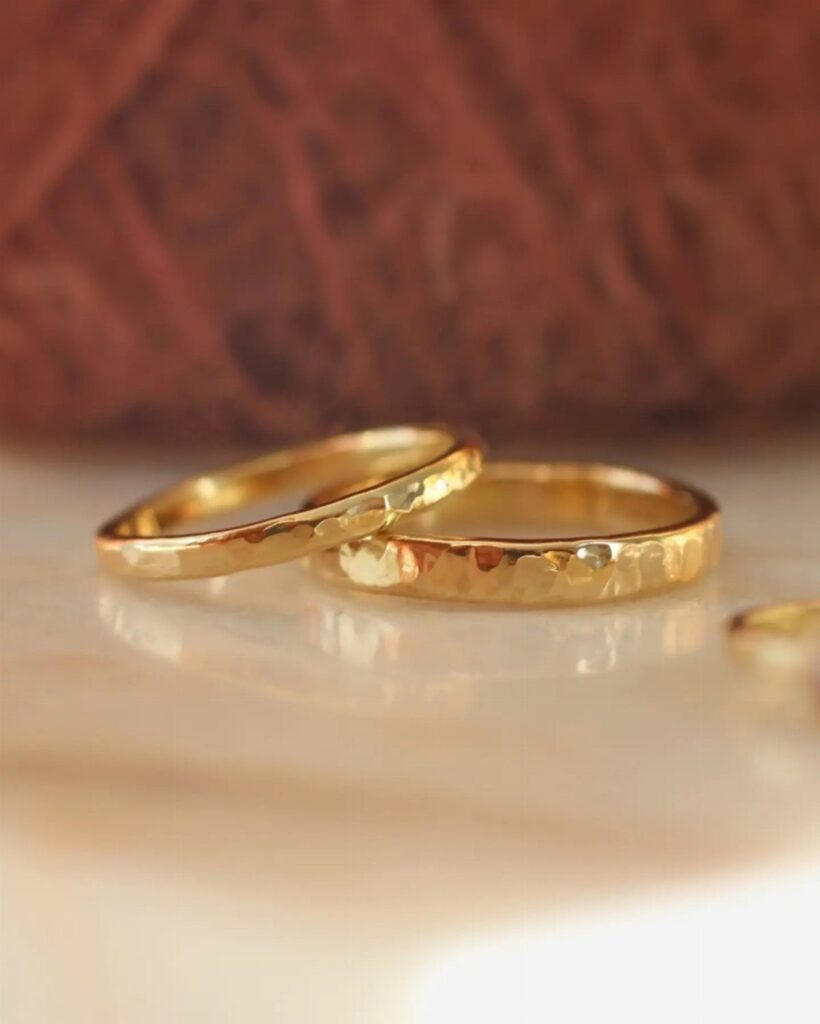
The list runs from a plain hammered gold band to diamond and gemstone bands, with mixed-metal, vintage, nature-inspired and engraved styles in between.
Which one suits you depends on how the ring will be worn: a band that sits flush against your engagement ring needs a matched set, while one worn alone has more freedom, and a hard daily routine rules out some metals before style even comes up.
1. Diamond and Gemstone Bands
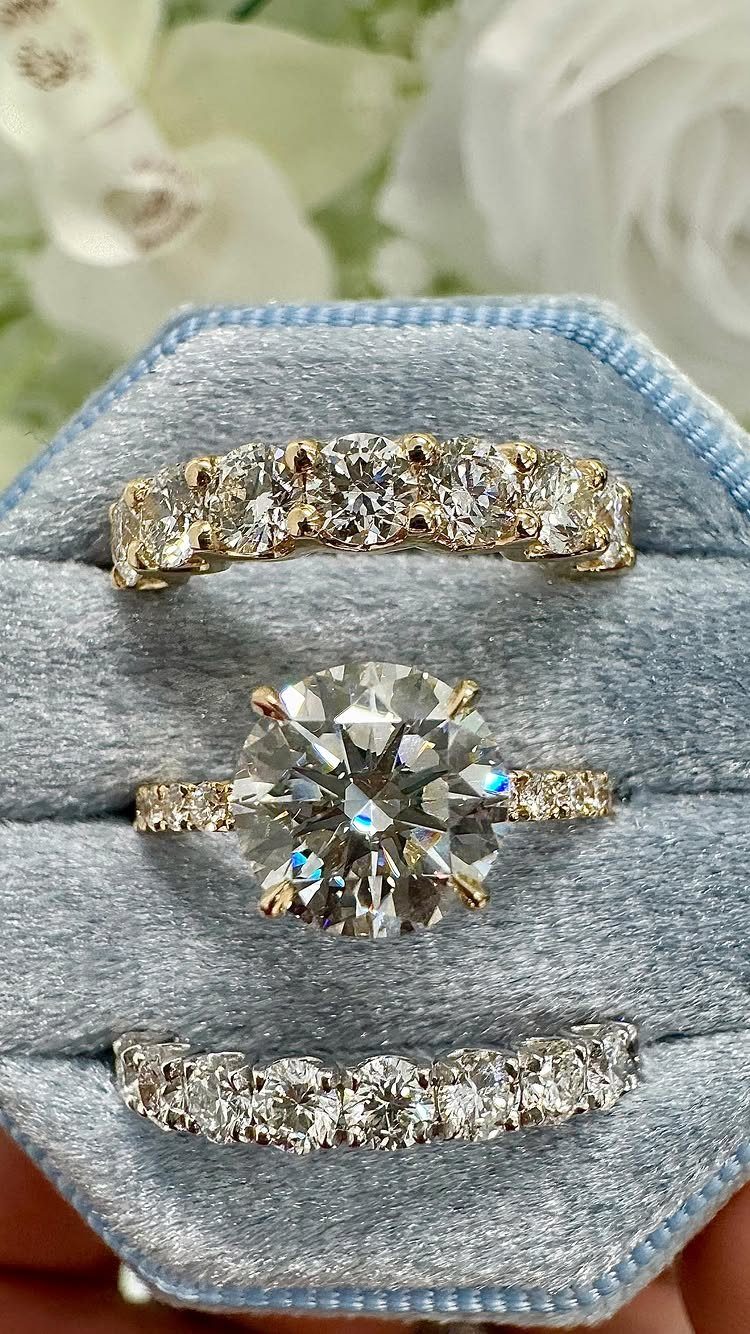
Gold bands set with diamonds give a wedding ring more personality than a plain metal circle, and they sit comfortably beside a solitaire. Matching the gold tone across all three pieces keeps the stack looking like one set.
Gemstones in place of diamonds are the other route. Colored stones add character, though a band with stones all the way around costs more than one with a few.
For daily wear, I would pick a setting that sits low and snug against the engagement ring.
2. Wedding Bands
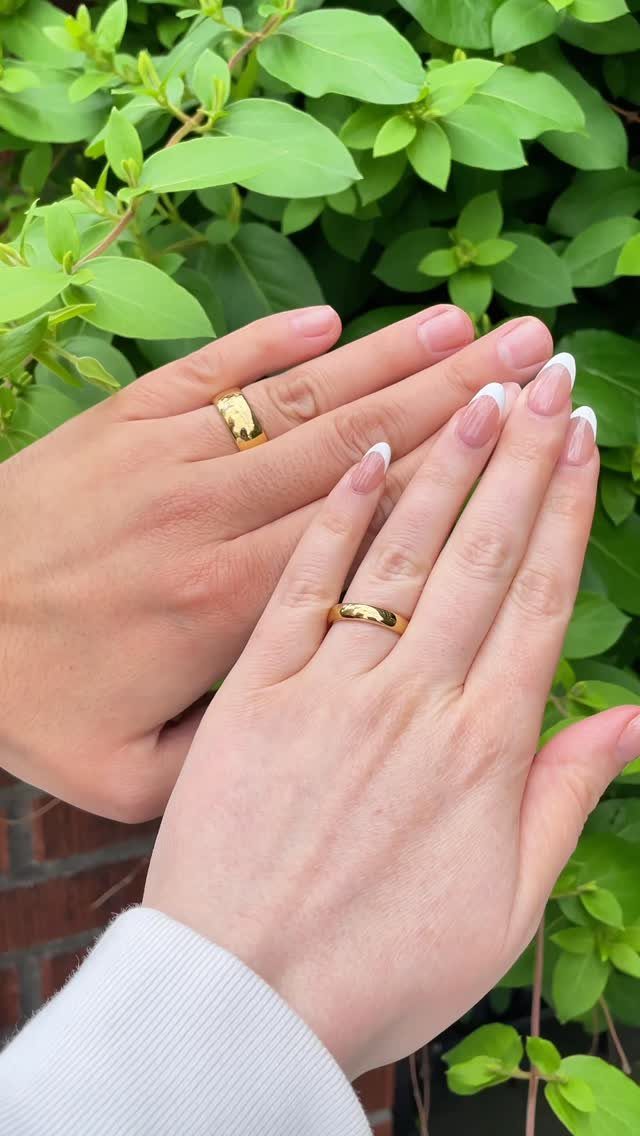
A plain gold band is the easiest ring to live with, and it never goes out of style.
Width is the real decision: a wide band reads bold, a thin one reads quiet, and the two can be paired as a couple.
Try both on first, because a width that looks right in a photo can feel different on your own hand. On a tighter budget, this is the style where you spend least and regret least.
3. Mixed-metal Rings
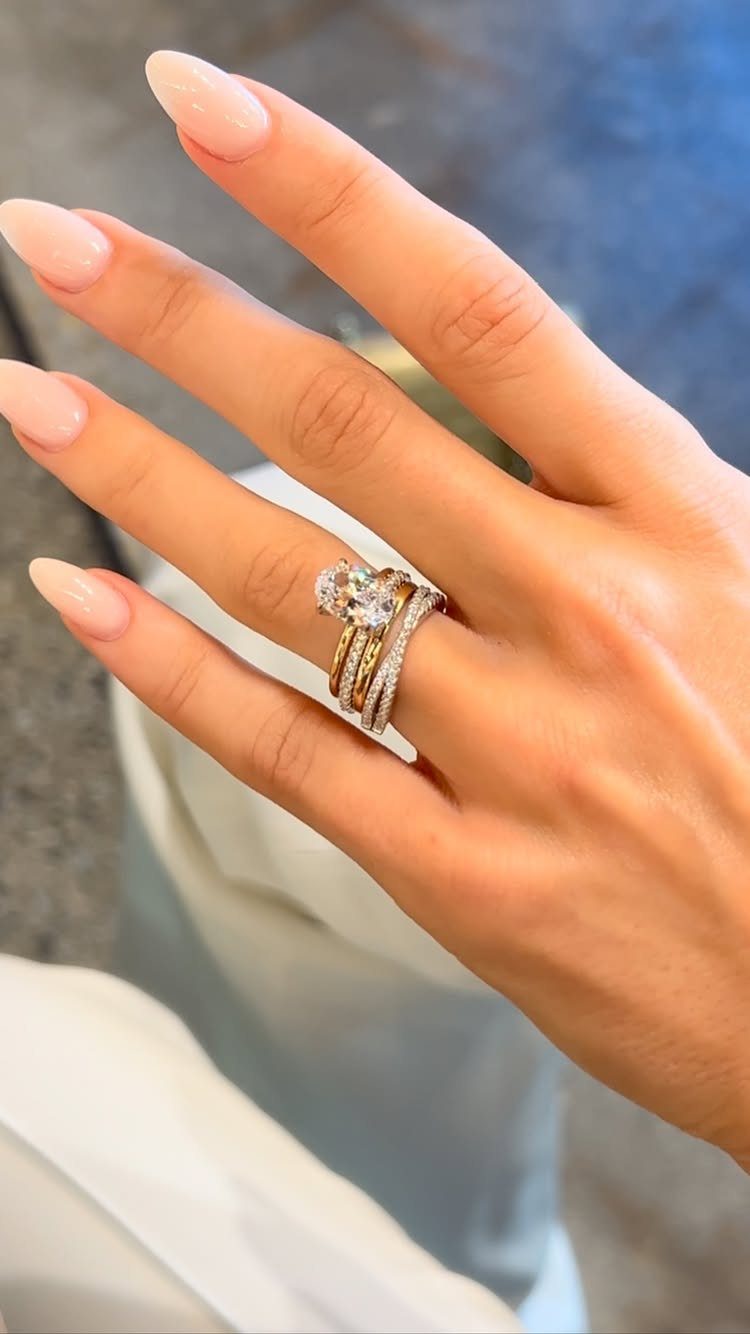
Mixing gold and silver tones answers a question many couples face: your engagement ring is one metal and your jewelry box holds another. Stacking different tones side by side means you never have to choose.
I like it best when one metal clearly leads and the other plays a supporting role, since an even split can look accidental. Bring your engagement ring to the jeweler so the tones can be compared in person.
4. Vintage and Antique Styles
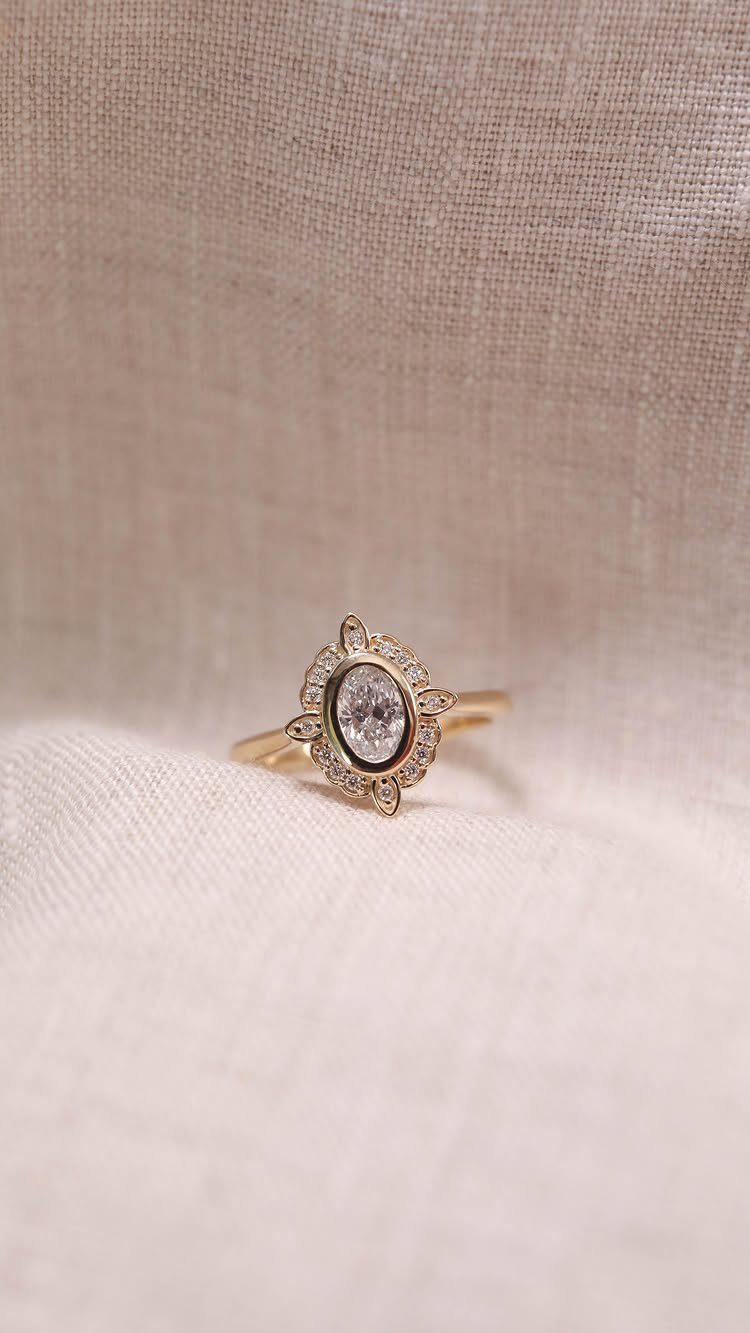
An oval center diamond ringed by a decorative halo gives the look of an older ring, and the detailing is where the charm lives.
Look closely at the halo’s edges, since fine work is what separates a true vintage feel from a plain modern ring.
Gold suits this style warmly. A jeweler can tell you how the setting will wear over the years, because intricate designs have more places for dirt and snags than a simple band does.
5. Nature-inspired Designs
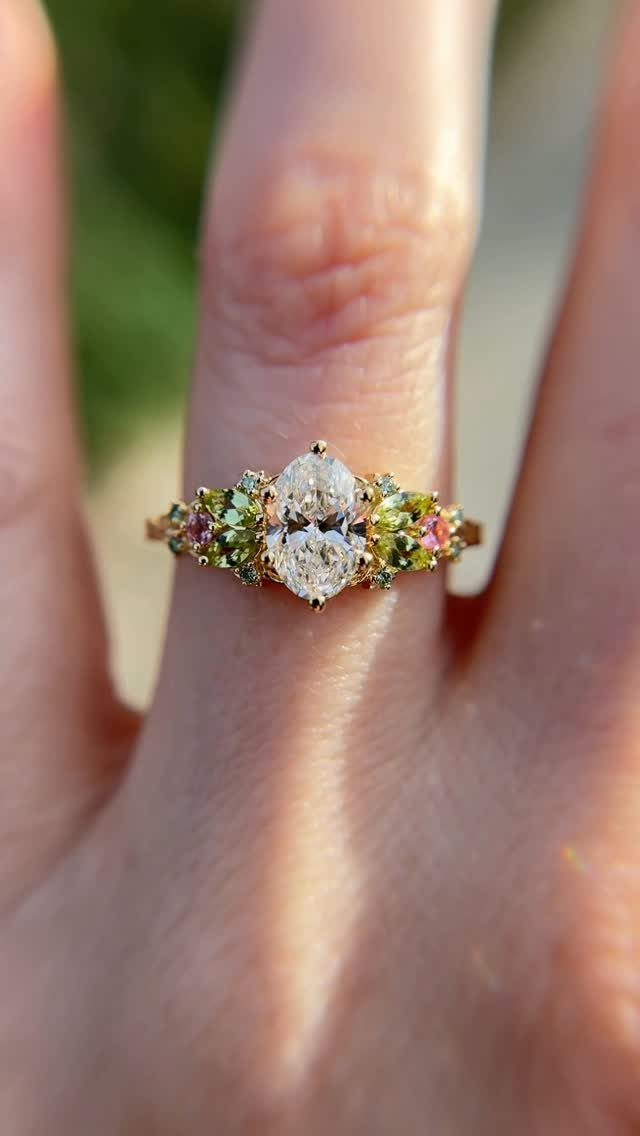
Leaf-like lines around an oval diamond, with colored side stones tucked in, make a ring that looks grown rather than manufactured. Gold keeps the whole thing warm.
If you want this feel without a full statement piece, I would keep the center stone classic and let the colored stones carry the nature theme. Pick shades you will still like long after this season’s favorites have faded.
6. Hammered Gold Bands
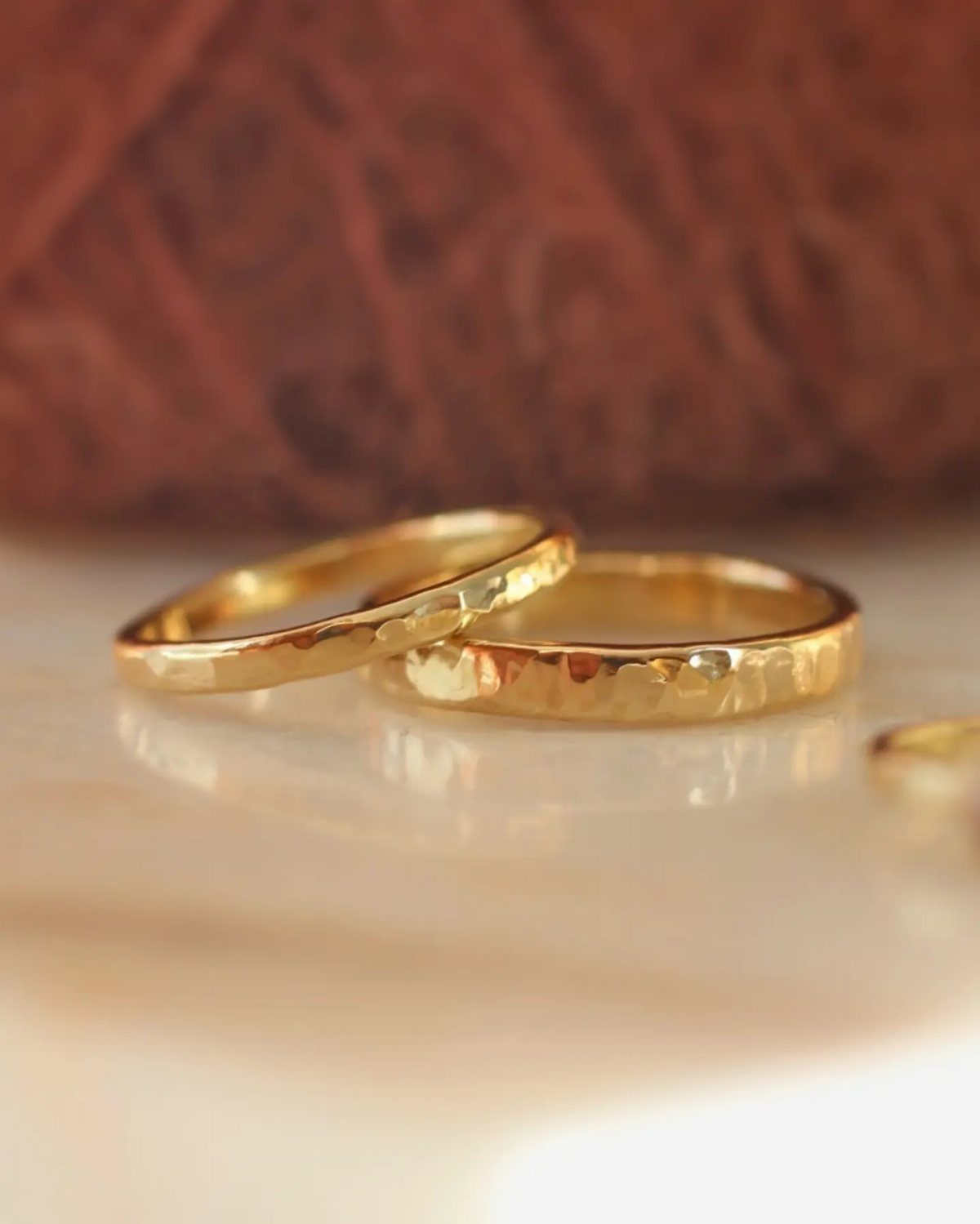
Hammered gold has a surface of small facets that catch light differently from every angle, which is why it looks lively on a plain band. A matching pair works well because the texture does the decorating.
The finish also hides everyday scuffs better than a mirror polish does, in my view. Have the jeweler show you the hammering on your exact width, since a thin band shows it differently than a wide one.
7. Matching Engagement Ring and Band Sets
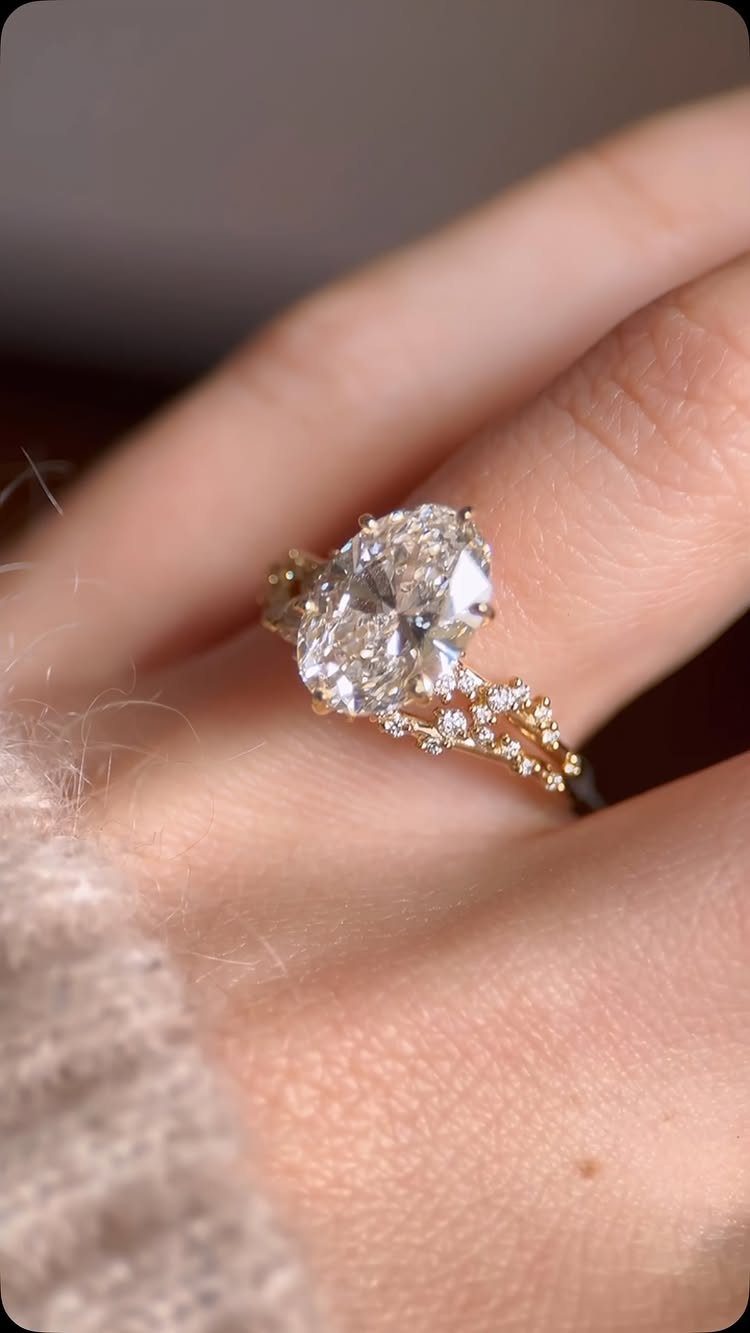
An oval solitaire with a gold band cut to sit beside it is the simplest set to wear, since the 2 pieces were designed as a pair.
The band’s gold tone matches the setting of the engagement ring, and the diamonds along the band echo the main diamond.
I would try both rings on together before buying, because a band that sits flush against the solitaire looks like one piece, while a gap can look like a mistake.
Buying them as a set also saves you the hunt for a band that matches.
8. Personalized Engraved Bands
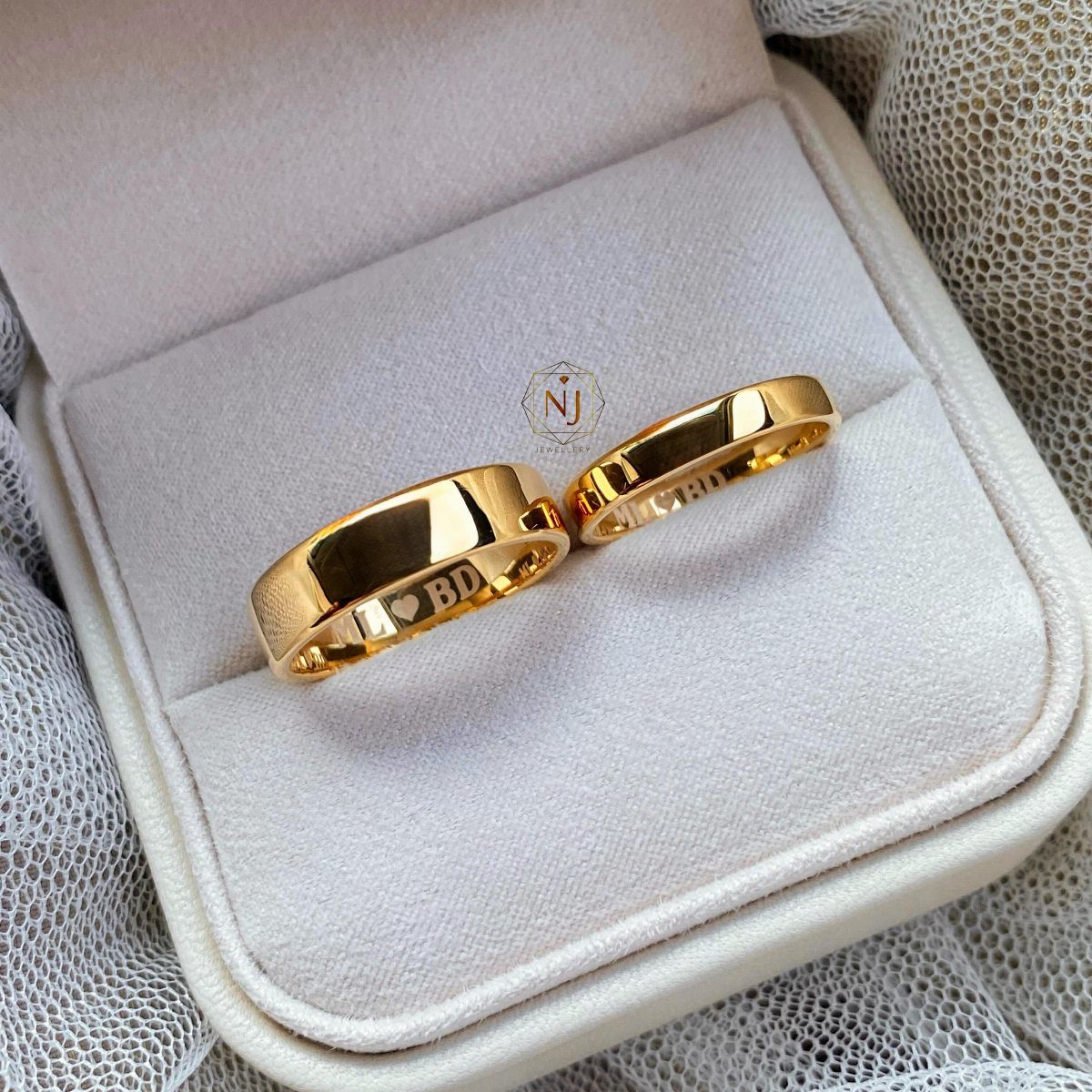
Initials and a small heart engraved inside a polished gold band turn a plain ring into something only the two of you can read.
Because the engraving sits on the inside, it stays private and never interrupts the shine on the outside.
Keep the text short. Keep engraving to a few characters, like initials, which stay legible, because a long phrase gets crowded on a narrow band.
Get a sample of the lettering style from the jeweler before you approve it, and confirm the spelling twice, since a mistake in gold is hard to undo.
Choosing the Right Metal
Metal changes how a ring looks, how much upkeep it needs, and how it wears over the years, more than most couples expect.
Yellow, white, and rose are the 3 gold colors you’ll see most often at the counter.
Yellow feels warm and traditional, white looks clean and modern but may need replating now and then, and rose is softer and a little more distinctive.
Platinum is naturally white and wears extremely well, so it’s my pick if you want a metal that stays that color.
Platinum weighs more than gold, runs higher in price, and picks up a soft patina as you wear it. Some people love that look; others have it polished away.
For a sleek, hard-wearing band at a lower or different price, look at tungsten, titanium, or cobalt. Many of them shrug off scratches, but resizing is harder than with gold or platinum, and sometimes impossible.
Budget Considerations
Start with your daily routine, not style photos.
One of you may want polished and traditional while the other needs a tougher band, and the two rings can differ without looking mismatched. A good jeweler can connect them through metal tone, finish, width, or engraving.
Set a number early, and say it out loud to each other. Band prices swing widely with metal, width, stone details, brand, and custom work, so a firm budget cuts the options fast.
Maintenance and Care
Find out how the ring gets serviced, and who does it, before you hand over payment. Can it be resized?
How often should it be checked? What upkeep will keep it looking its best?
Style tends to crowd these questions out, yet they start to matter the first month you wear the ring daily.
With the wedding date close, the calendar alone can settle which ring you buy.
A local jeweler helps here. A shop with easy walk-in service lets you try on bands, compare metals side by side, and return later with repair questions.
Frequently Asked Questions
How much do wedding rings cost?
Expect a wide range, since metal, band width, stone quality, brand name, and any custom work each move the price. Platinum costs more than gold, while tungsten, titanium, and cobalt usually land lower, though some priced differently than you’d guess.
Pick a hard number before you shop and say it to each other plainly; a fixed budget cuts the options down quickly.
Which finger does a wedding ring go on?
Most American couples, like many in the West, wear the wedding band on the left hand’s ring finger.
Slide the band on next to the engagement ring before you buy: a flush fit reads as a single piece, and a visible gap looks like an error.
Is the engagement ring the same as the wedding ring?
No. A big center stone is what sets most engagement rings apart, while wedding bands tend to be simple metal or carry small stones set along the band.
Buying the 2 as a matched set is an easy way to make them look like a pair.