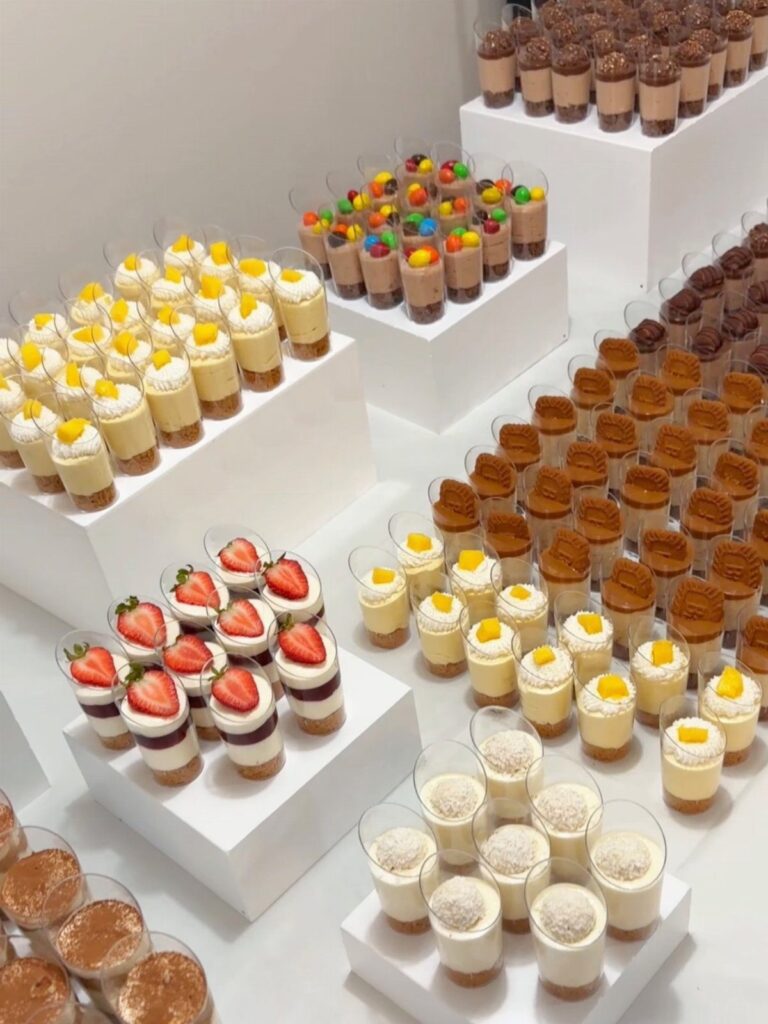
Service style swings the price more than most couples expect: a food truck handing sliders through a window sits at one end, and a plated dinner where every guest gets the same entree at the same moment sits at the other.
Guest count and formality decide which one fits: a casual crowd suits food trucks and a self-serve beverage station, while a formal reception earns plated dinner service, which costs more in labor than a buffet.
1. Buffet Service
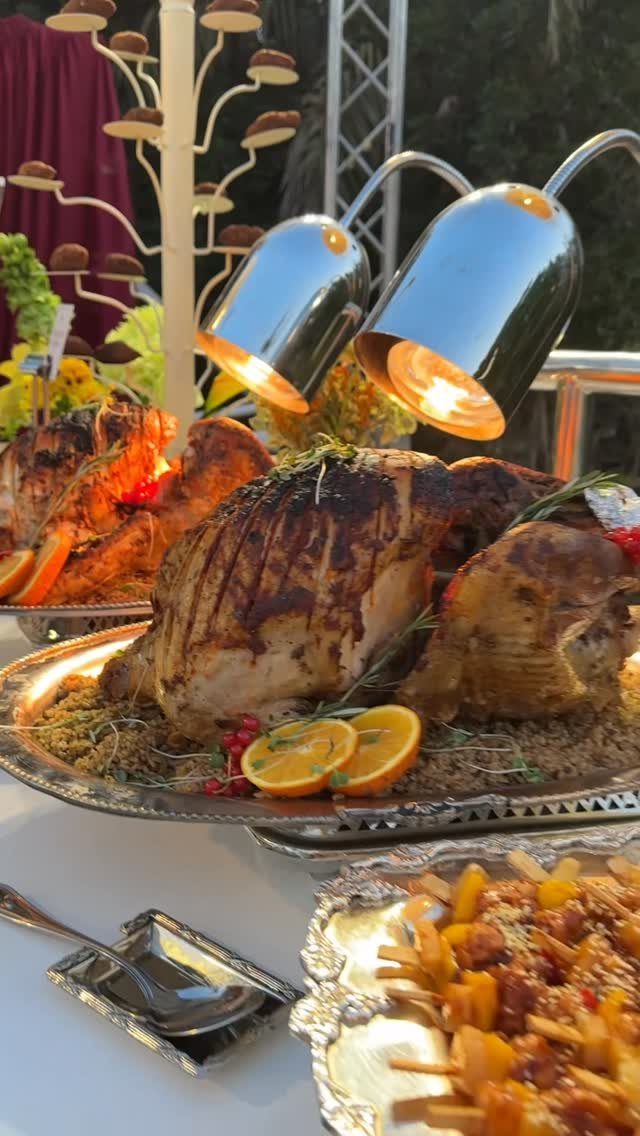
2 roasted turkeys under heat lamps tell you what a buffet does well: it puts several dishes in front of guests and lets each person build a plate.
For a couple with picky relatives or mixed dietary needs, that range is the appeal.
I would label every dish, including which ones are meat-free, so guests don’t have to ask. Keep the lamps on the hot items, and put the sides on both ends of the table if the guest count is large.
2. Shared Platters
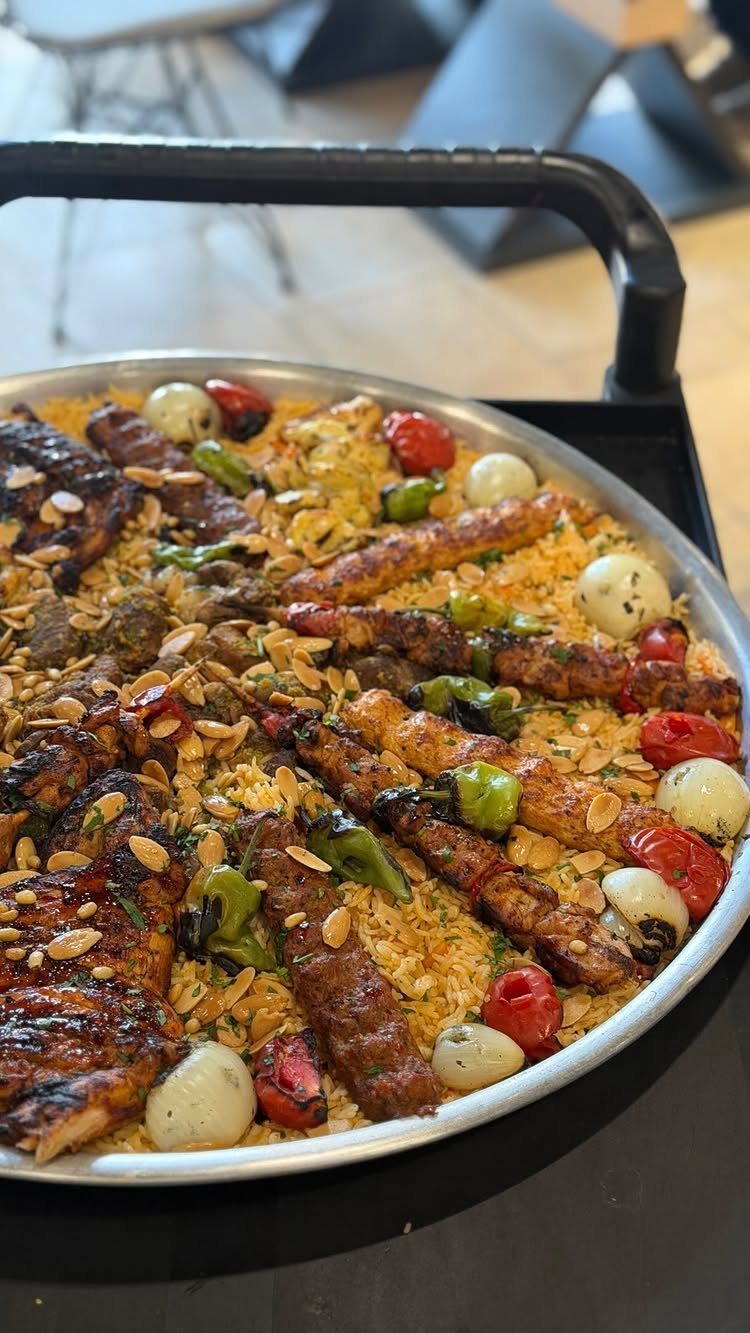
Serving dinner on one big platter, say yellow rice with grilled meats and roasted vegetables, makes guests pass, reach and talk over the food, and it cuts plating labor too.
I like it for tables of 8 or so, where strangers end up sharing a meal.
Ask your caterer to size each platter to a table’s headcount, and request a second one of the vegetable-heavy kind for guests who skip meat.
3. Mini Dessert Displays
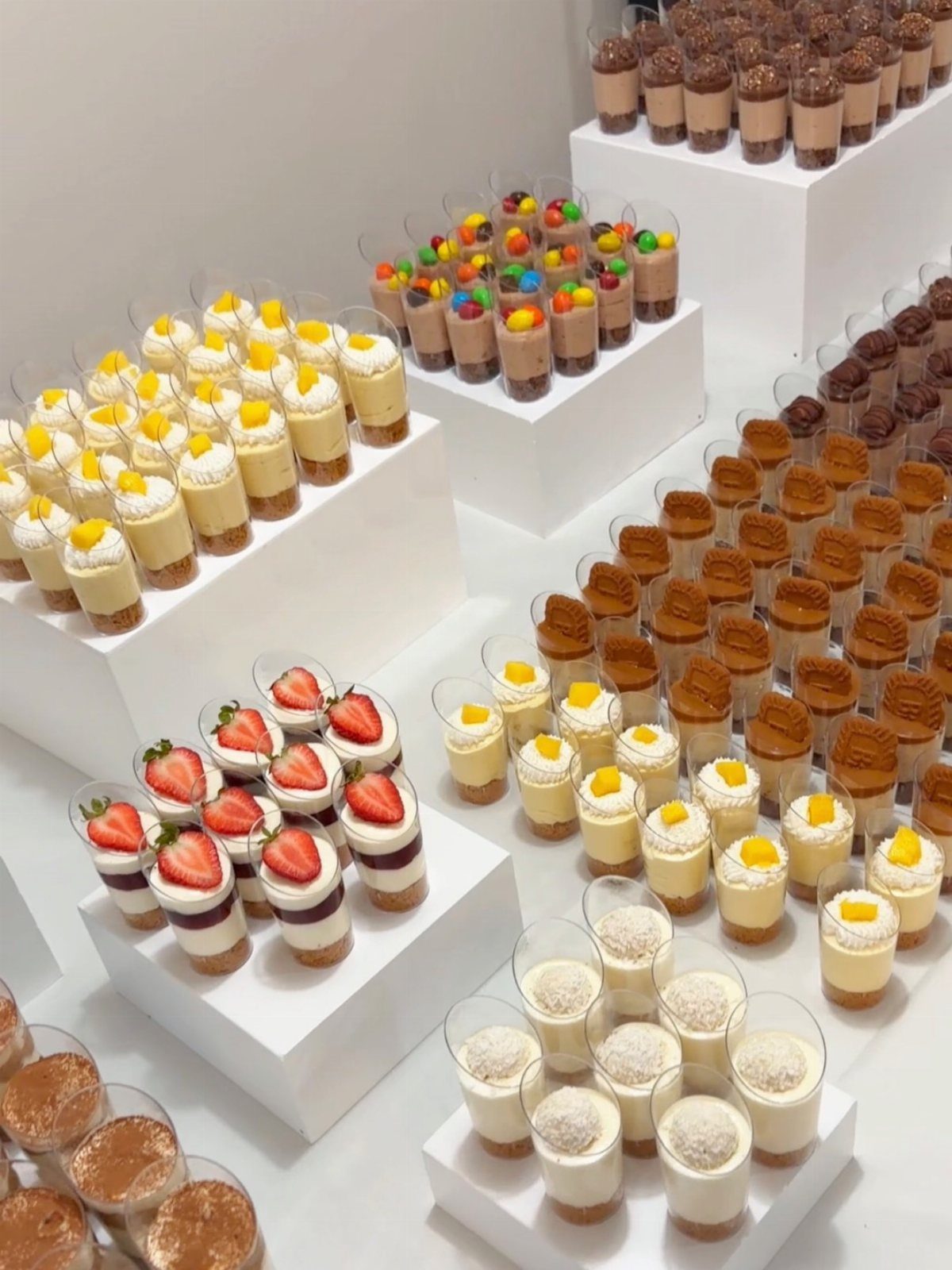
Mini desserts in small cups, like fruit and chocolate, set out on tiered stands let guests take two or 3 sweets instead of committing to a single slice.
That variety is the draw, and it suits couples who can’t agree on a single flavor.
White stands keep the focus on the desserts. Cups also keep portions neat, so I would set them out in rows by flavor and add a small sign for each.
4. Wedding Cake
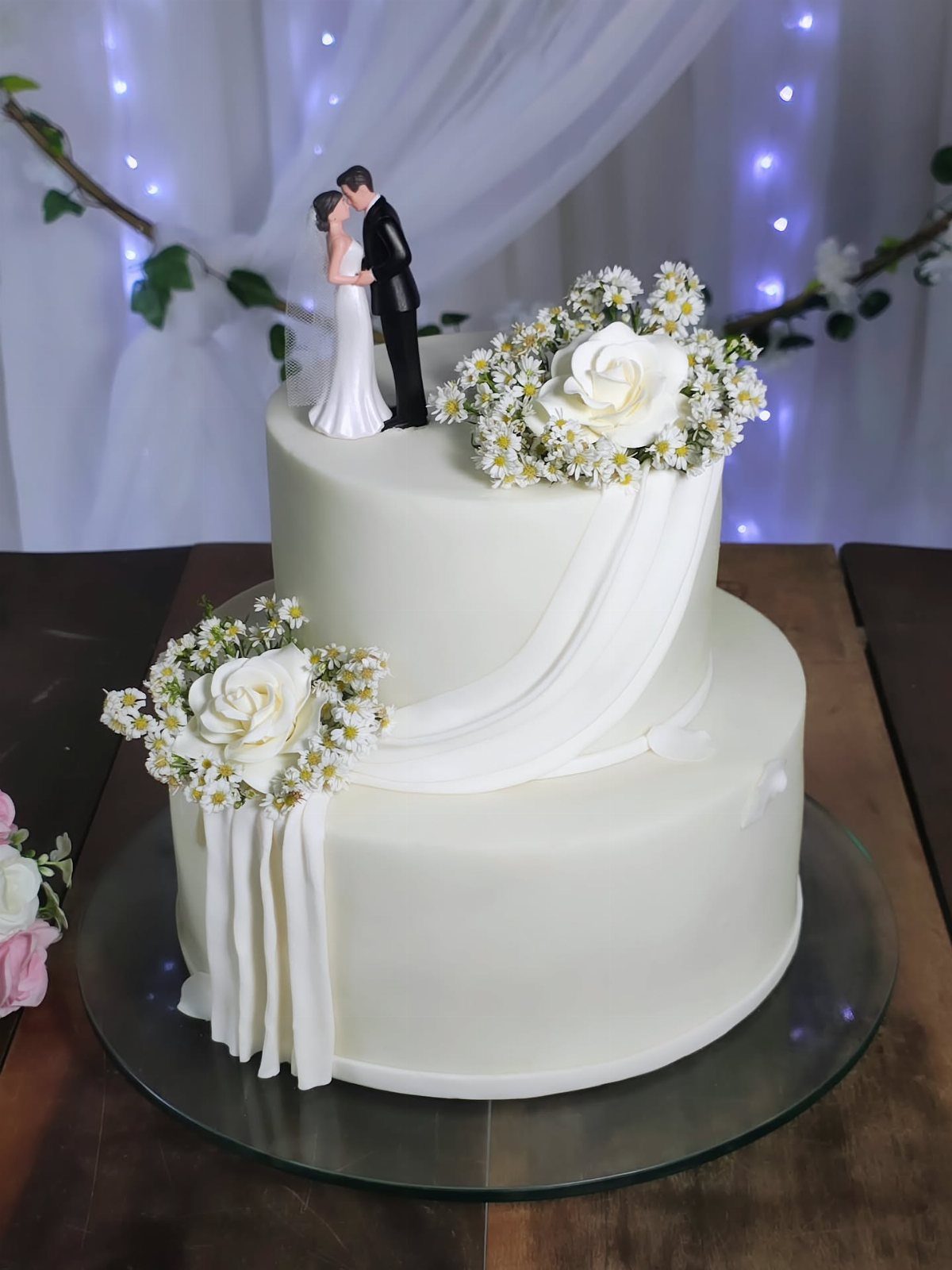
A two-tier cake keeps the tradition without the cost of a towering one, and white flowers with a bride and groom topper give it a classic look. For a modest budget, I think smaller tiers are the smart call.
Ask your baker about a sheet cake in the kitchen to cover extra servings.
5. Passed Hors D’oeuvres
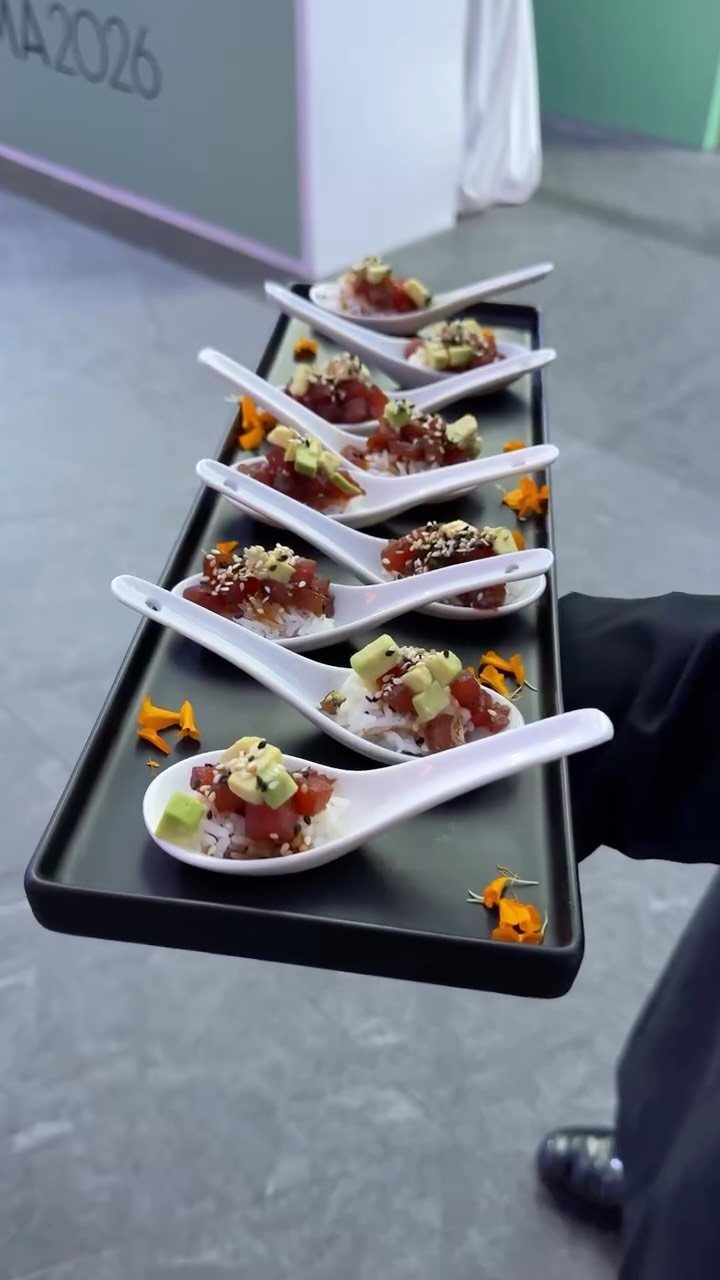
Spoons keep guests mingling, and I would choose them over anything that drips.
Passed trays work best during cocktail hour, when guests are standing and talking. Ask your caterer how many servers they will assign, since that sets how fast the trays reach everyone.
6. Custom Menus
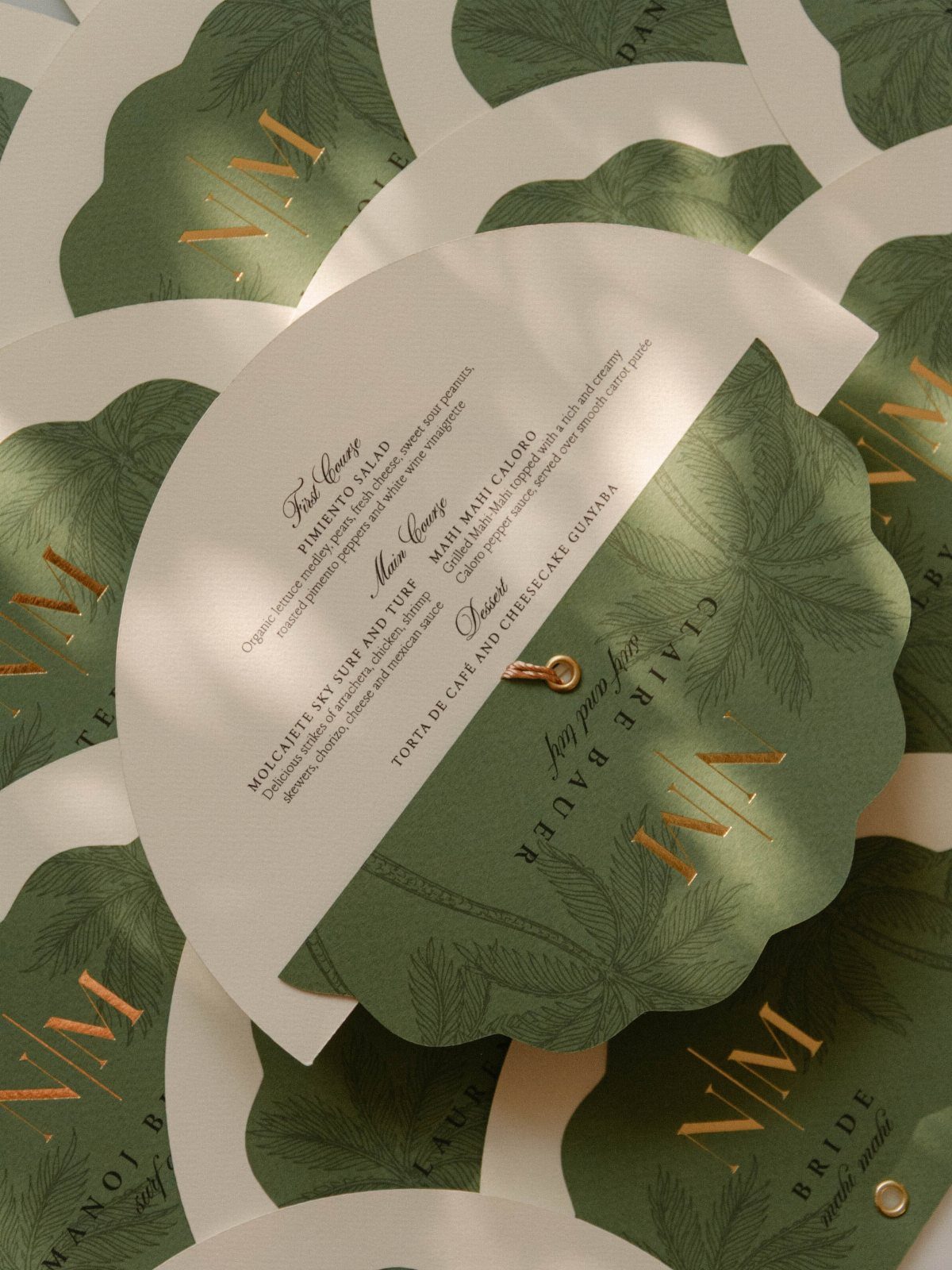
A printed menu at each seat, with courses like pimiento salad and mahi mahi, makes the meal feel planned around the guests. Putting a name on it, such as Claire Bauer, adds a personal touch.
Use it to carry your dietary needs: list the dishes you chose and mark what is vegetarian or allergen-free.
Green leaf designs can match your florals. Proof every name and dish twice before printing.
7. Signature Cocktails
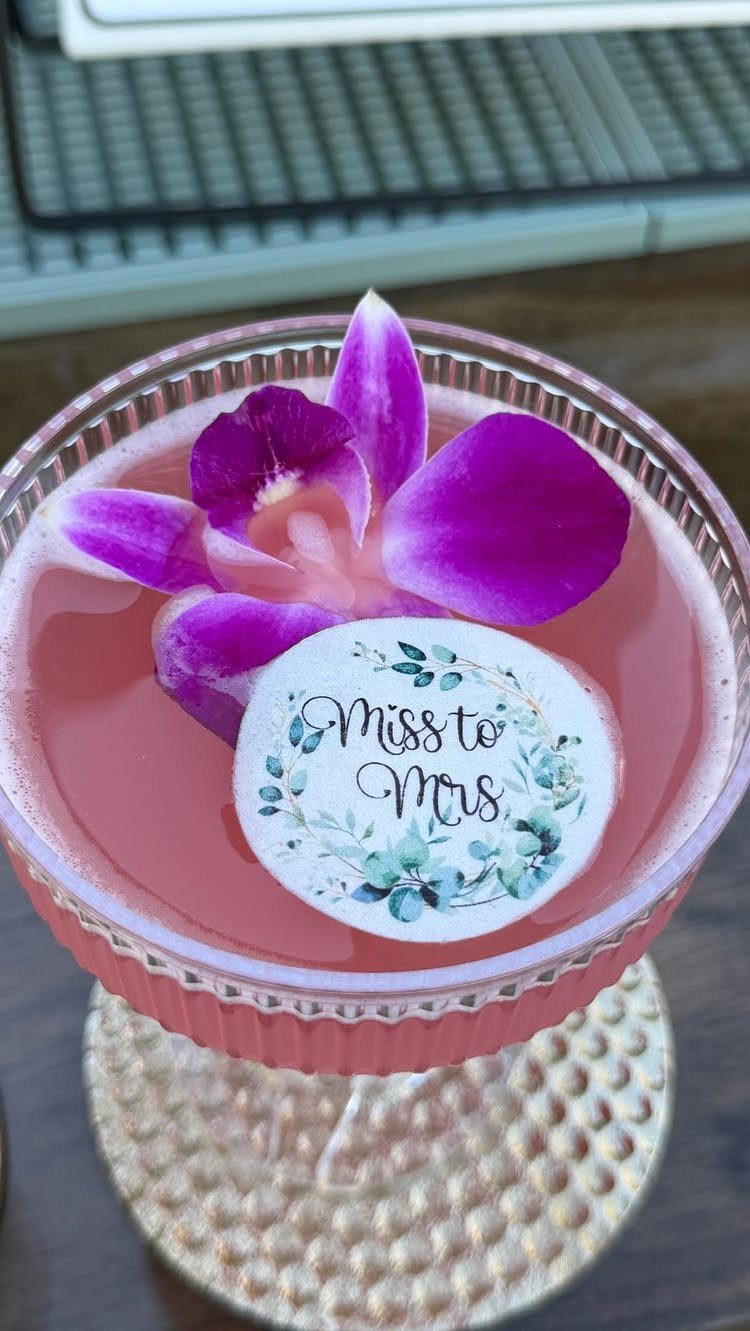
A single signature drink can carry your whole theme: pick one cocktail, match its color to your palette, and add a garnish or rim that echoes the day, like an edible flower or a printed wafer.
I like this better than a full bar menu, since a single named drink costs less to stock and still feels personal.
Pick a color that matches your florals, and ask the bartender to garnish each glass the same way.
8. Interactive Food Experiences
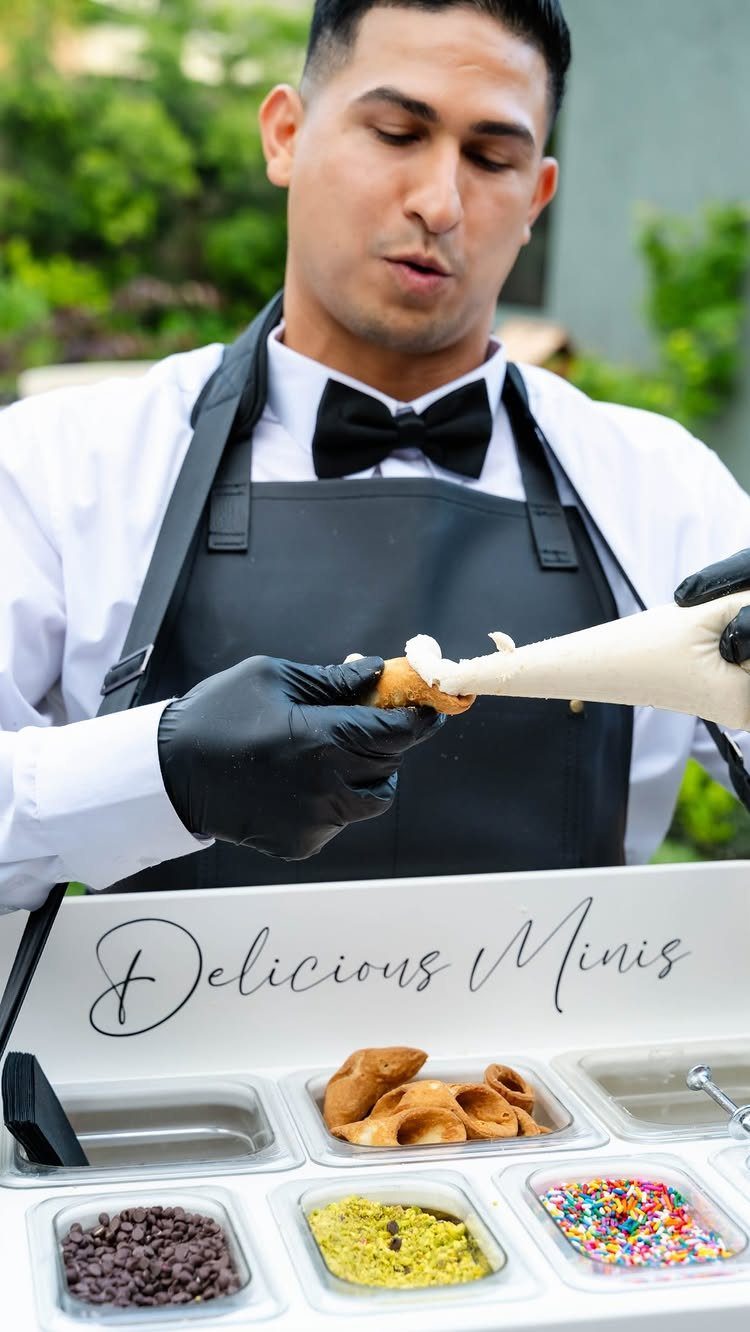
Cones filled with cream while guests watch, then topped from trays of chocolate chips, pistachios and sprinkles, turn dessert into something people stand around and talk about.
A chef in an apron at a station gives the line a focal point.
I would keep the toppings to 3 choices so the line moves, and add a sign so guests know what to expect. Ask your caterer how many staff the station needs.
“Starting at cocktail hour, whether it’s a bar snack, served bites, or a late-night mountain of French fries on a silver tray by the dance floor, you want your guests to access food at any time,” explains Marjorie Artieres, creative director of Pinch Food Design.
— Vogue
9. Food Trucks
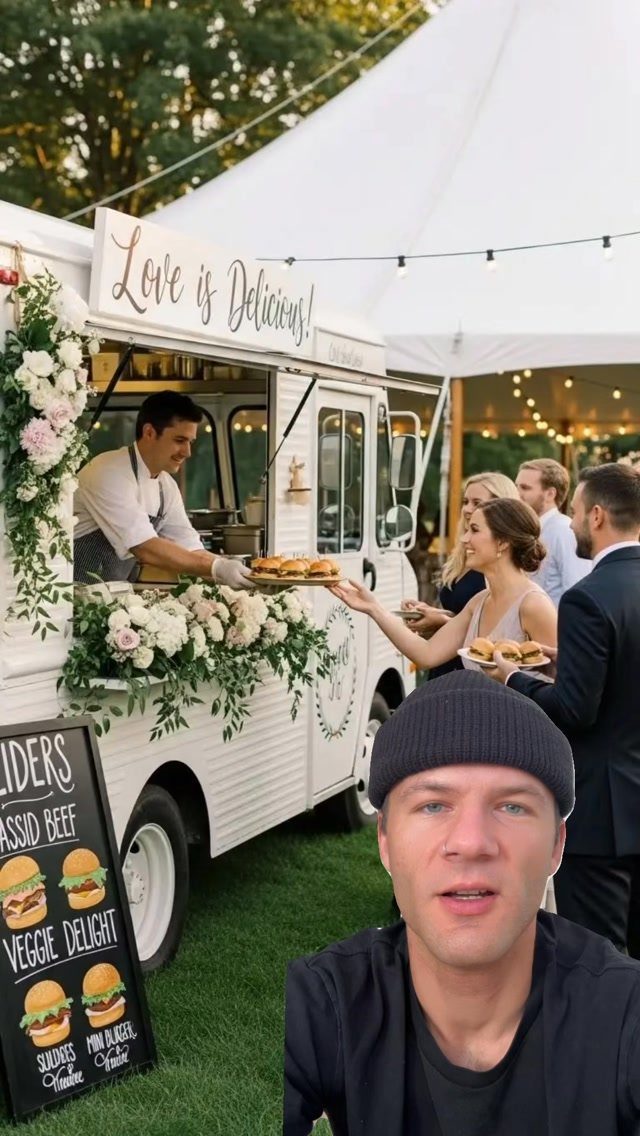
Sliders handed through a truck window under a tent make dinner feel like a block party, and "Love is Delicious!" on the sign sets the tone. For a casual wedding, I would pick this over a plated meal.
Ask the truck operator about the menu, the serving pace for your guest count, and whether a vegetarian option is on offer. Confirm the venue allows vehicles and has a flat spot to park.
10. Rustic Bread and Produce Station
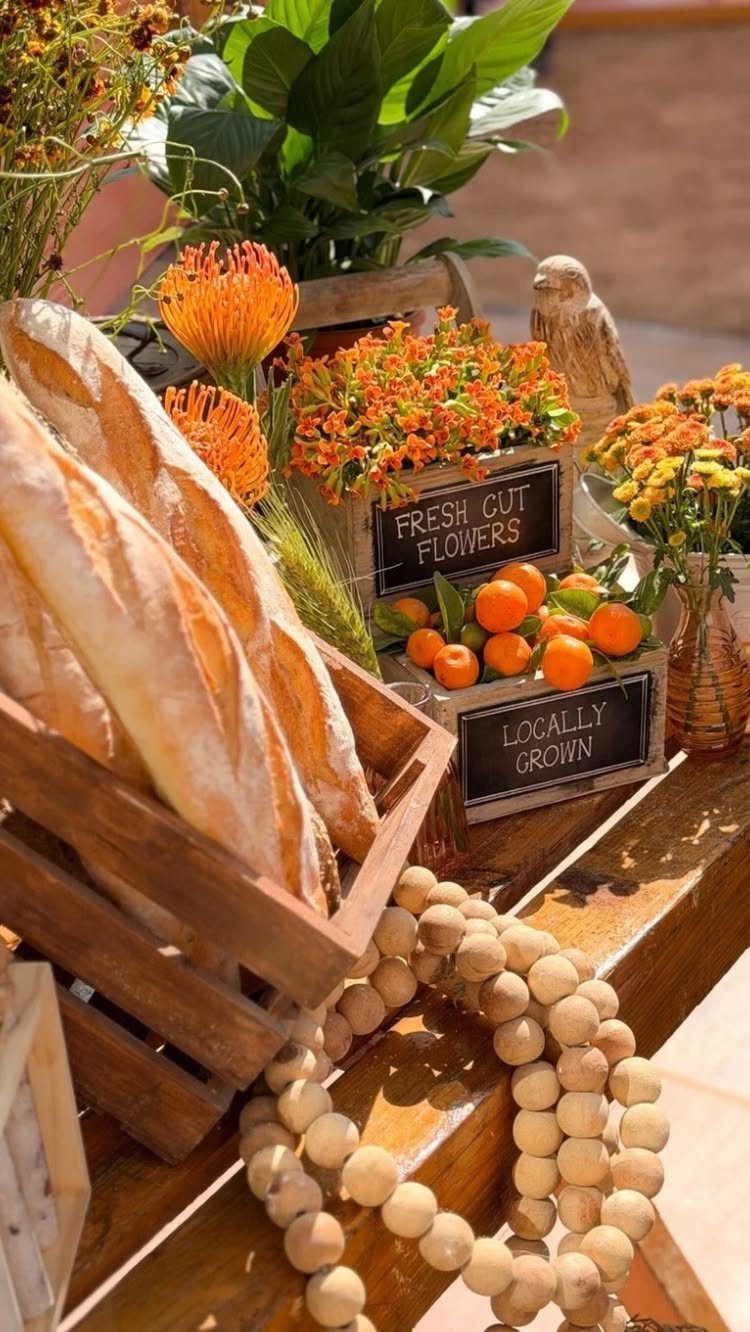
Baguettes standing in wooden crates, with oranges and a few orange flowers beside them, make a table that is both food and decoration. Chalkboard signs such as "LOCALLY GROWN" tell guests what they are looking at.
I would keep the signs handwritten and short. Choose fruit that matches your flower color, and ask the baker to deliver the bread close to serving time.
11. Plated Dinner Service
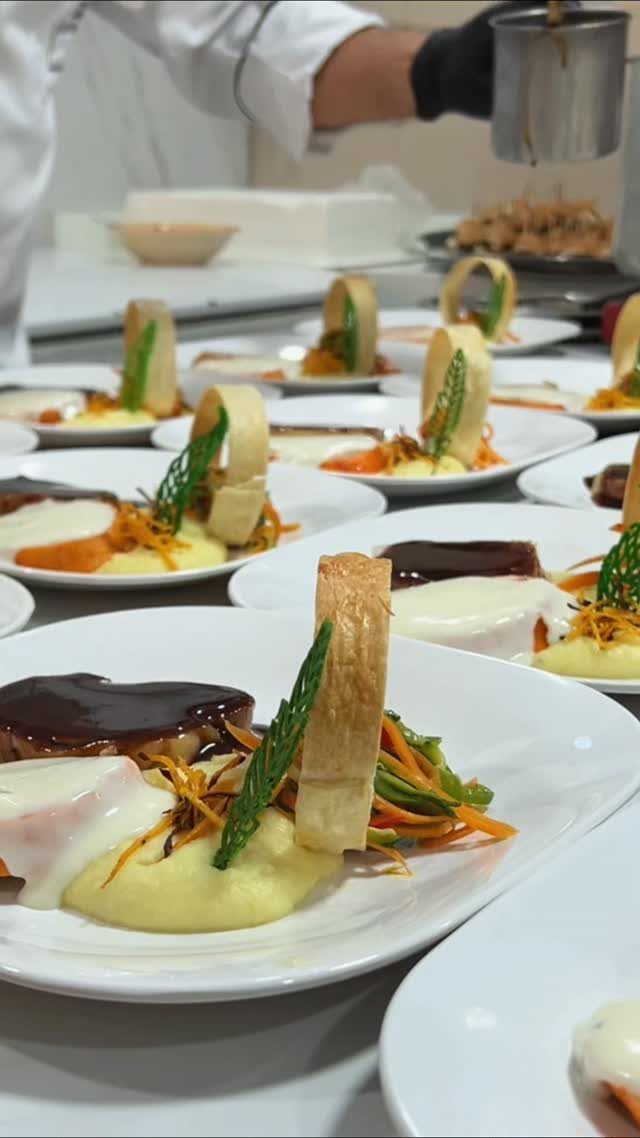
Identical plates, each with a glazed protein, a swipe of puree and a crisp garnish, give every guest the same meal at the same moment. That polish is why I would choose plated service for a formal reception.
Collect entrée choices on the RSVP, and ask your caterer how many servers they need to plate and deliver in one wave. Expect it to cost more in labor than a buffet.
12. Self-Serve Beverage Station
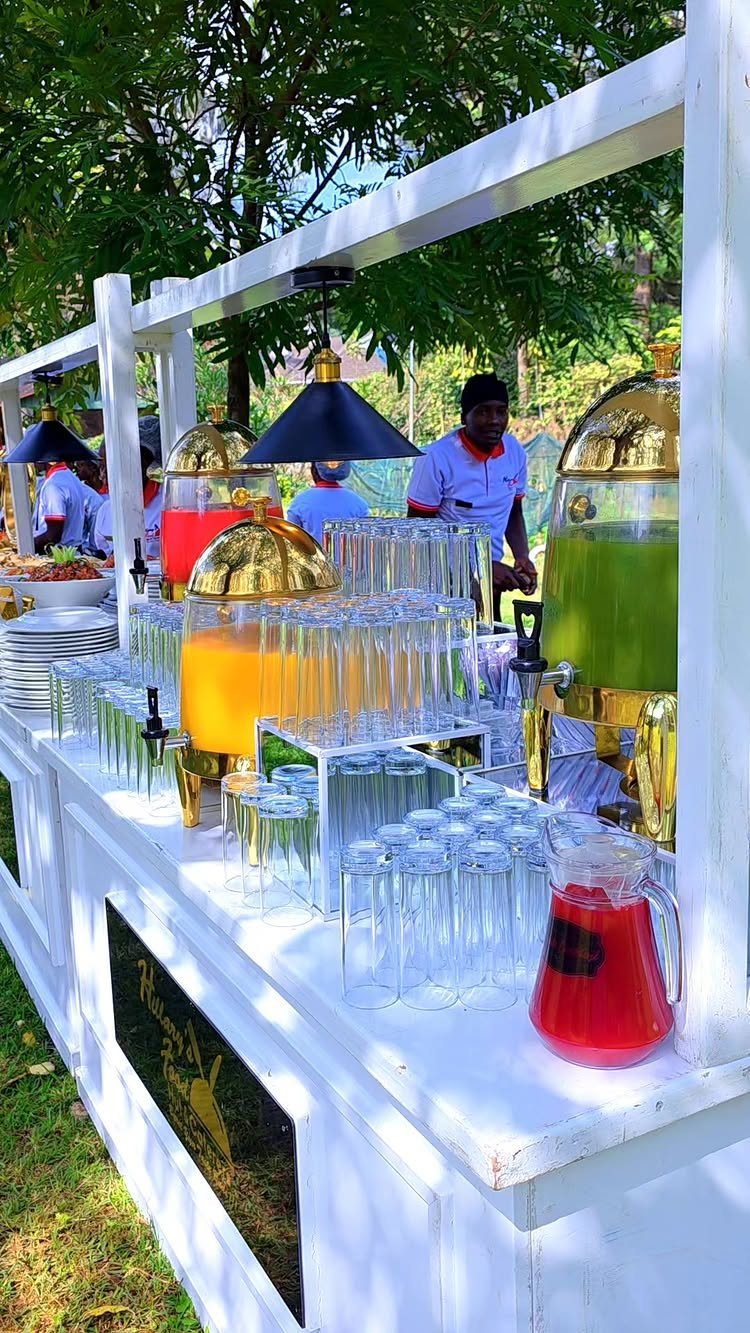
Large dispensers of red, yellow and green drinks, with rows of clear glasses beside them, let guests refill without waiting at a bar. Gold dispensers on a white counter look polished and keep the colors in view.
I would label each drink, including which ones are alcohol-free. Ask your caterer how often staff will refill the dispensers and restock glasses.
13. Traditional Indian Wedding Feast
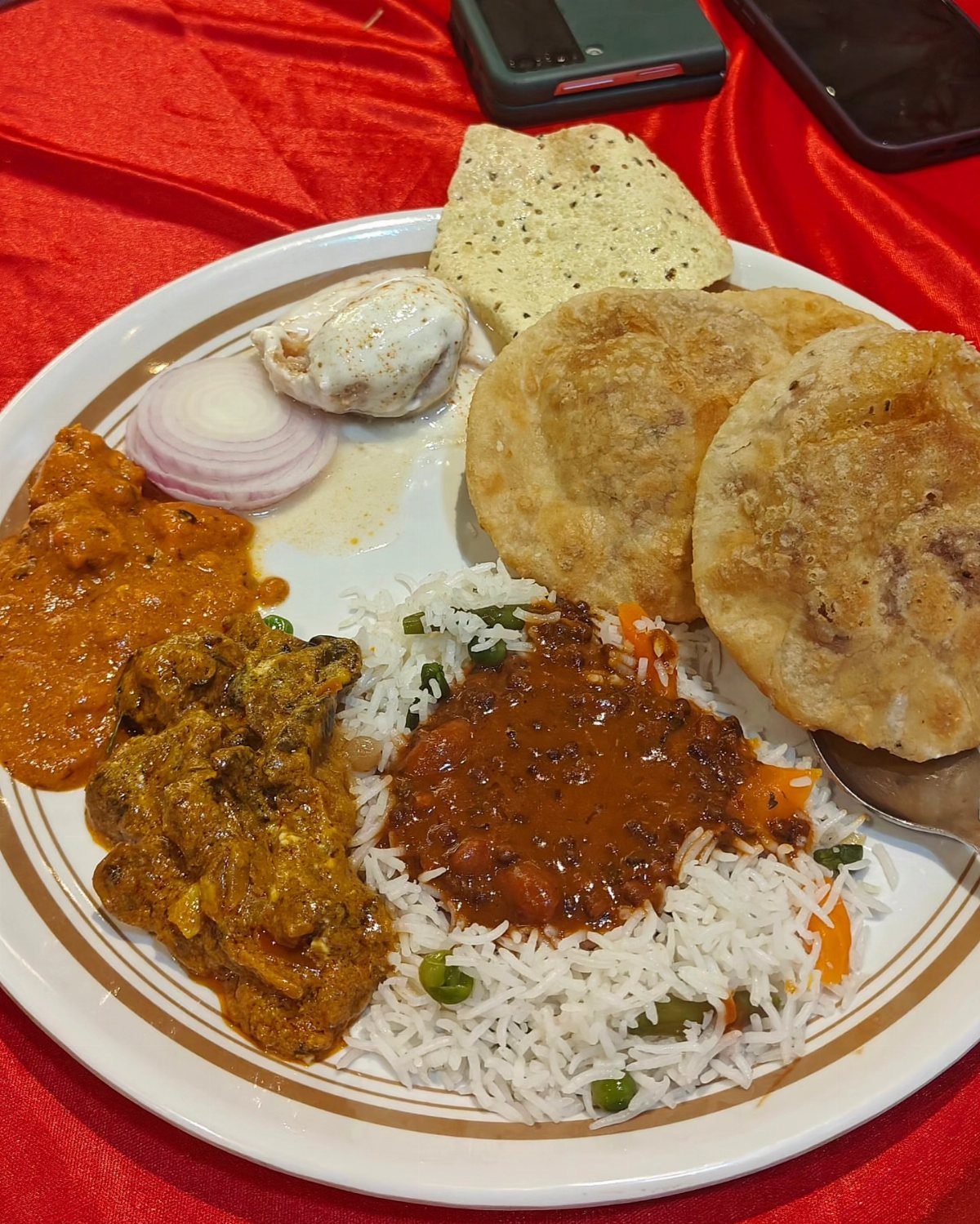
Rice, a curry, puris, papadum and a cooling spoonful of raita share one plate, and that spread is what makes an Indian feast feel generous.
A slice of raw onion on the side adds a sharp bite against the richer dishes.
Two other curries sit on that plate too, so I would ask your caterer to include at least one meat-free curry and to label it.
For a modest budget, I would pick a few well-made dishes over a long menu. Ask how the puris will be kept crisp until they reach guests.
Catering Costs
Service style, menu and guest count drive the catering bill, and the style you pick also shapes how the evening feels, how guests experience the food and how formal the night comes across.
Catering usually takes one of the largest shares of a wedding budget, so lock in a per-person number before you book anything else.
Ask every caterer for a written quote that lists what the price covers. Other quotes may bill those items separately, so a lower headline number can end up costing more.
Get the same quote structure from each caterer, then compare totals at your actual guest count.
Dietary Needs
Raise dietary needs in your first conversation with a caterer, before you sign. A good caterer can adjust the menu so guests who avoid certain foods for health reasons, or who are vegetarian, still get a real meal.
Collect restrictions on the RSVP, then send the caterer one clean list well ahead of the date. Ask how they handle each case in the kitchen, not just on the menu.
If you’re torn between several dishes, that’s fine. Customizing the menu with your caterer means you can build it around the foods you love and still cover everyone at the table.
Frequently Asked Questions
What is the cheapest food to cater for a wedding?
A buffet or a food truck is the budget-friendly route.
A buffet lets guests build their own plates from several dishes, and a truck serving something like sliders gives a casual wedding a block-party feel. Plated dinners cost more in labor, so I would skip them if money is tight.
How much does wedding food catering typically cost?
Most couples I see budgeting land somewhere between $35 and $150 a head, and the menu and the style of service push you toward one end or the other.
Food and drink tend to eat up a bigger slice of the budget than anything else, so I’d settle on a firm per-guest figure before signing with any other vendor.
Get every quote in writing with a line-by-line list of what’s included; a cheaper-looking price often leaves out things like staffing, rentals, or cake cutting that show up later as extra charges.
How much does it cost to feed 50 people at a wedding?
Feeding 50 guests can run from about $1,750 to $7,500, depending on the menu choices.
That range matches the $35 to $150 per-person spread. Service style moves the number most, so ask for a written quote that spells out what is included.