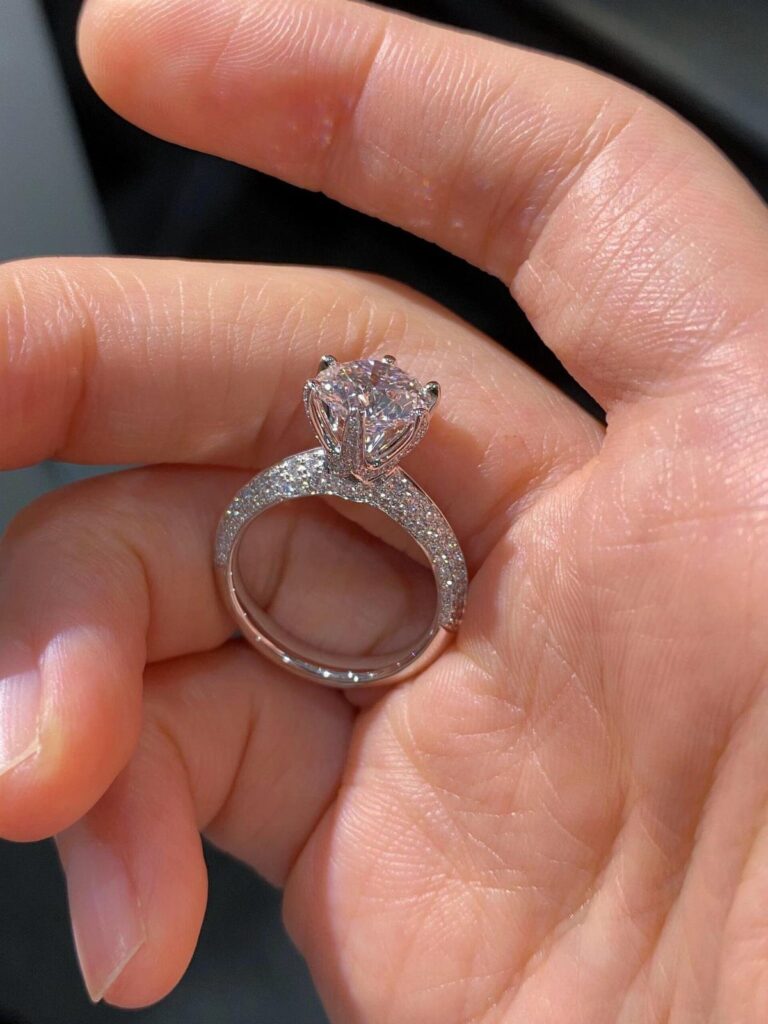
Every ring here is 3 carats, yet they run from three-stone settings to oval, emerald, pear and round cuts, and what separates them is how large the stone looks versus what it costs.
Cut and stone type set the price per carat: round costs the most, and a lab-grown diamond gives you the same 3 carats for less, though it resells for far less than a natural one.
1. Three-Stone Engagement Rings
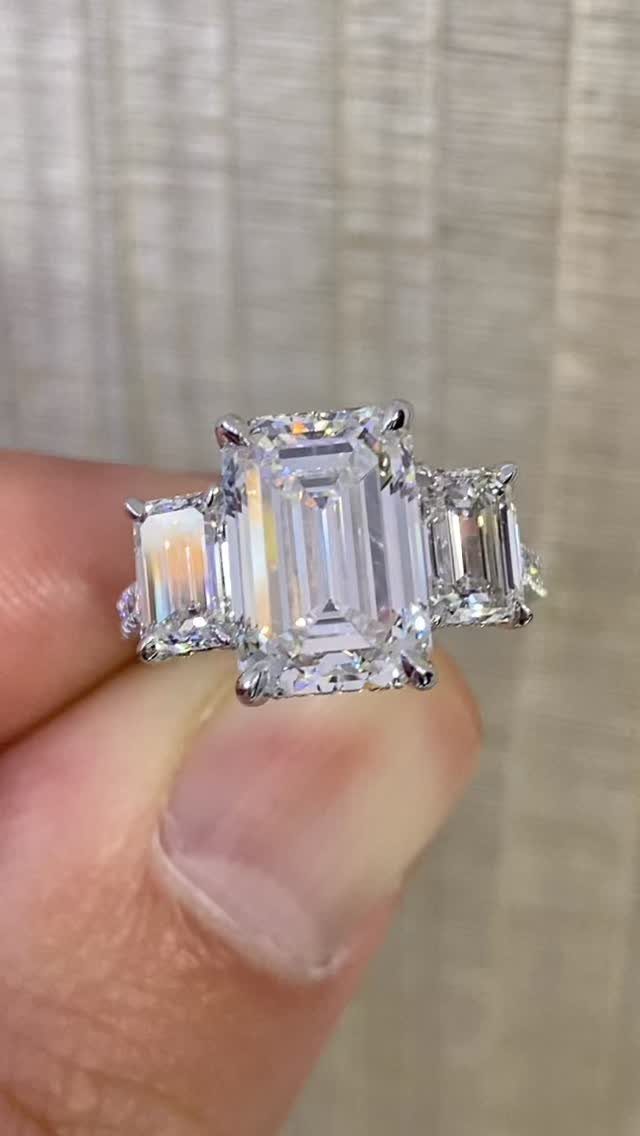
A three-stone setting reads as past, present and future, and that story is what I would pick it for. Three emerald-cut stones in a row, as in this one, give a long, clean line across the finger.
At 3 carats total, the stones can be split between the center and the sides, so ask how the weight is divided before you compare prices. A bigger center with smaller sides looks larger from above.
2. 3ct Oval Cut Diamond Rings
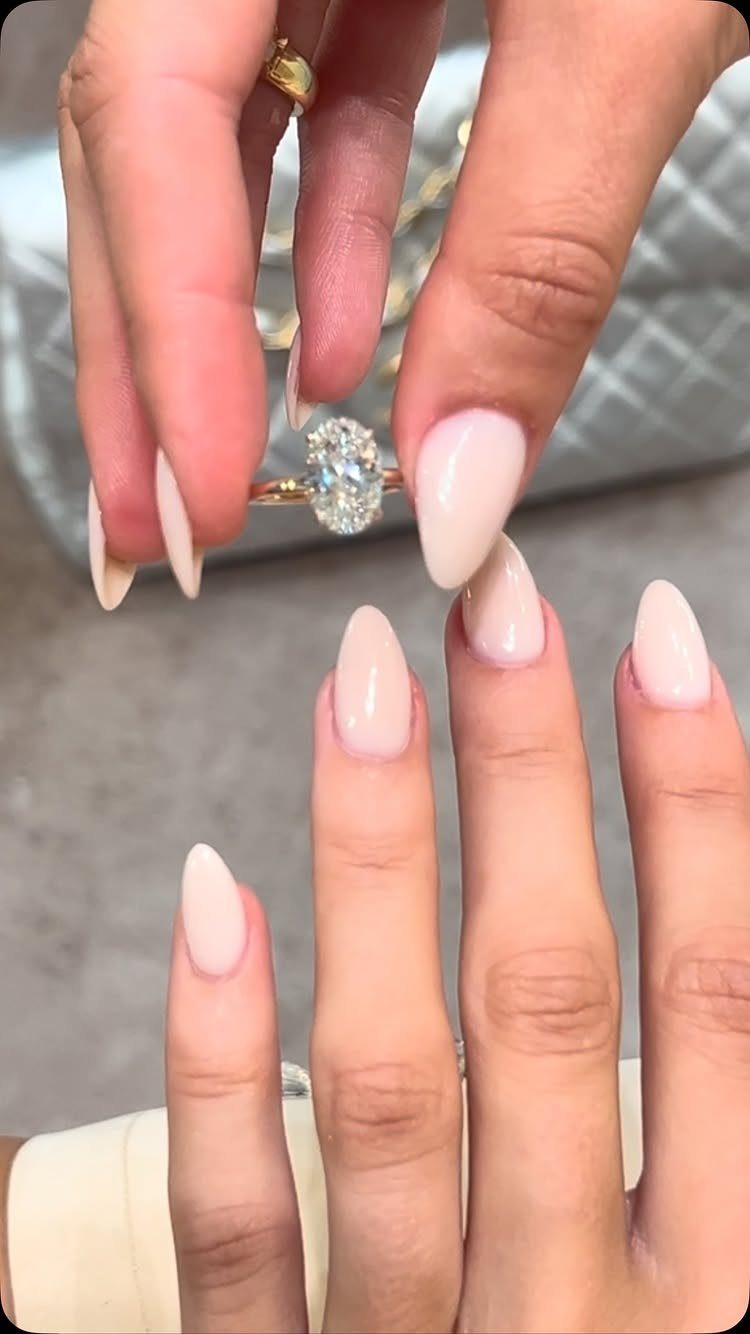
Oval is the cut I would look at first if you want a 3-carat stone to make the most visual impact. The elongated outline reads larger than its weight and flatters the finger.
Pair it with a gold band, as this one does, and the stone looks warm and quiet rather than flashy.
Compare ovals in person or in video, since shapes vary from stubby to slender, and pick the proportion you like best.
3. Emerald-Cut Diamond Rings
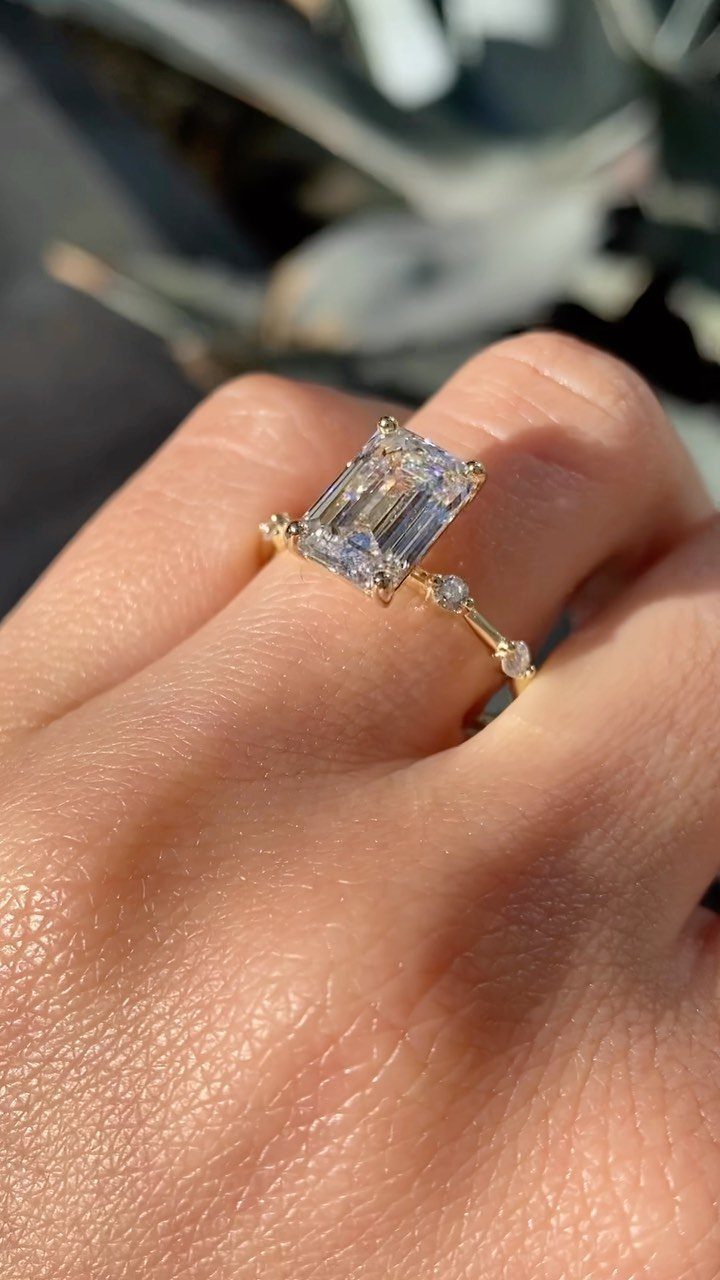
Long, open steps of light, not sparkle, are what make an emerald cut worth choosing. Set in gold with small side stones, the large rectangle looks calm and architectural.
Because the facets are so open, flaws show more than in a brilliant cut. Clarity gets my first look when I compare emerald cuts, and each stone deserves a viewing in person or on video before any money changes hands.
4. Pear-Cut Diamond Rings
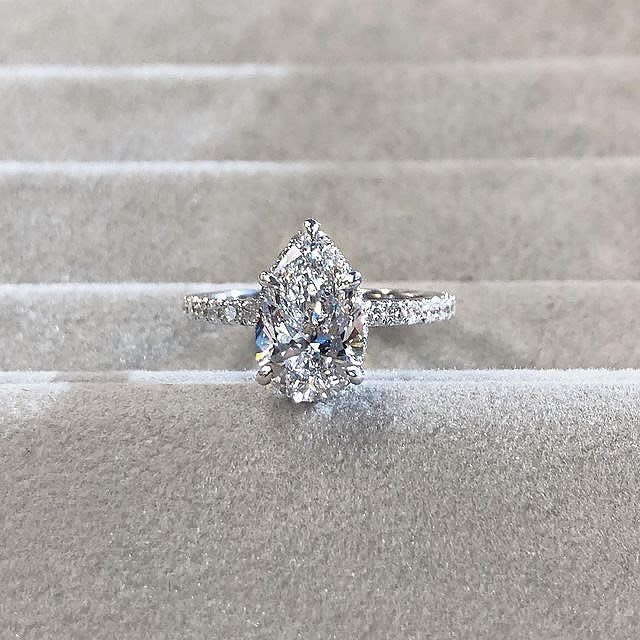
Pear cuts give you a teardrop with one point and one rounded end, and a delicate pavé band adds sparkle without competing with it. That pairing is what I like here.
Wear the point toward the fingertip for the classic look. Protect that tip, since points are the most exposed part of a stone, and ask your jeweler about a V-shaped prong to cover it.
5. Round-Cut Diamond Rings
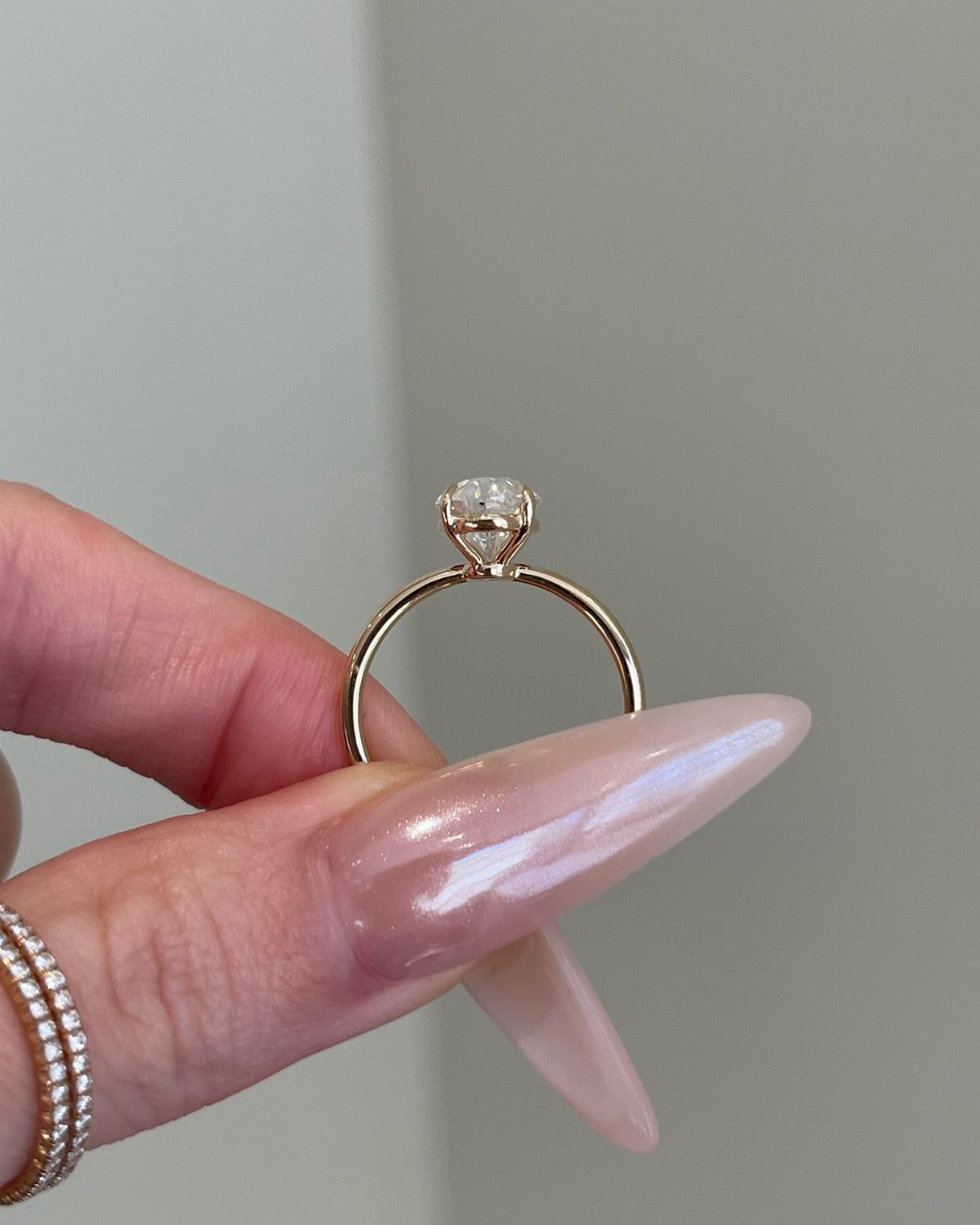
Nothing is more classic than a round brilliant solitaire on a slim gold band. At 3 carats it needs no extras, and the simple setting lets the stone do the work.
Round is also the cut I expect to cost the most per carat, so it is where a tight budget feels it first. If the number is firm, a lab-grown round gets you the size for less.
Lab Vs. Natural Diamonds
A lab-grown 3-carat diamond looks the same as a mined one. Even a jeweler with a loupe can’t tell them apart without specialized equipment, so your partner and your guests will see the same sparkle, brilliance and fire.
The price is the other draw: lab stones cost less than natural ones.
The cost is resale. A lab diamond does not hold market value the way a natural stone does, so buy it to wear, not as an investment.
If the ring is meant to stay on a hand for decades, that trade is easy to accept.
If you want something you could sell later and recover much of what you paid, a natural stone is the safer choice, and it will cost you more up front.
Customization Process
A custom ring starts with a consultation, and the best use of it is arriving with a short list.
Many jewelers let you pre-select favorite designs from an online gallery before your appointment, which saves time and keeps you from being steered toward whatever is in the case.
Bring photos of what you like and a firm budget. Ask to see loose stones as well as finished rings, since the stone and the setting can be chosen separately.
A design expert can help you refine the details so the ring suits the wearer’s hand and daily life. Ask to see a sketch or rendering before anything is made, and confirm in writing what you are approving.
Return Policies
Many retailers offer a 30-day return window on engagement rings, and it is worth checking before you pay.
Thirty days is enough time for the ring to be seen, worn and, if you are the one proposing, hidden safely until the big night.
Read the fine print.
Ask whether custom or resized pieces are covered, since made-to-order rings are often excluded. Ask whether the refund is cash or store credit, and who pays for return shipping and insurance.
Keep the paperwork, the certificate and the original box in one place. Count the days from delivery, not from the day you open the package.