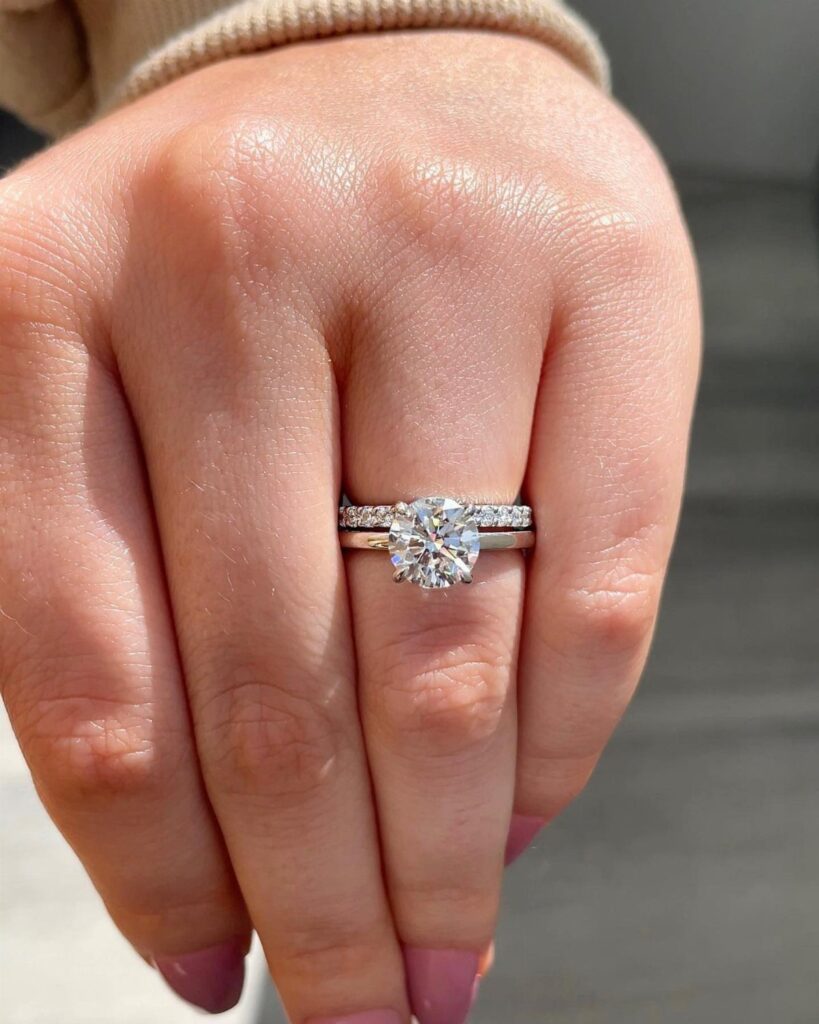
The cuts below run from round, which has settings and bands at nearly every budget, to triangle and rose, which often mean a custom order and a ring few people will have seen before.
Your own daily life should pick the cut: if you’re active, a bezel or protective prongs matter, since corners and points are the first spots to chip, and if you want maximum sparkle, round or radiant is the better bet.
1. Round Cut
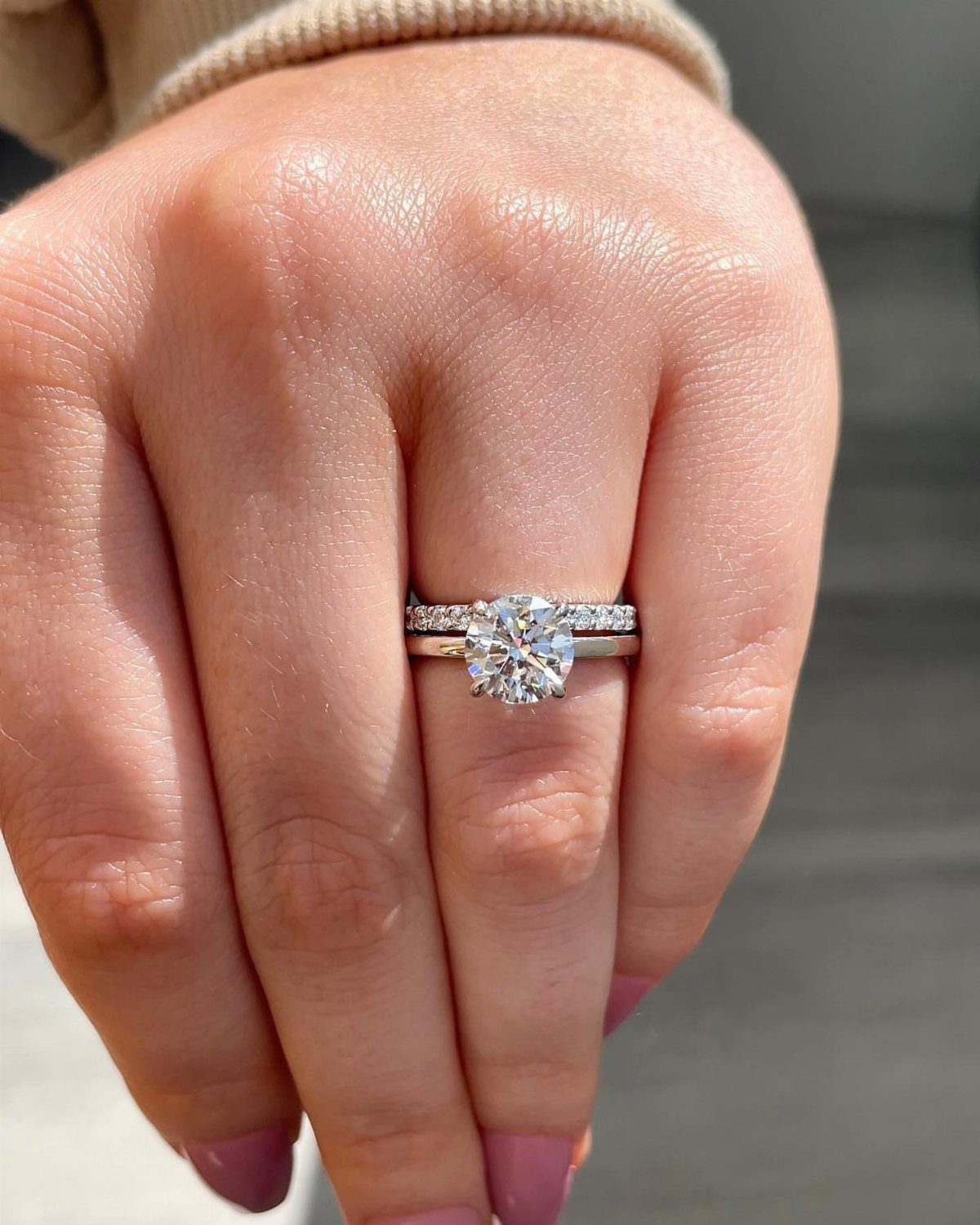
Round is the shape most couples end up with, and a round stone sits easily beside a matching band, so the pair reads as one piece.
If you plan to buy the engagement ring and wedding band together, I’d lean toward round. The shape is the most popular, so settings and bands are easy to find at nearly every budget.
Round gives up distinctiveness, since nobody will ask about a shape they see on every third hand. If you want people to ask about your ring, an oval, emerald or radiant cut will do that better.
2. Emerald Cut
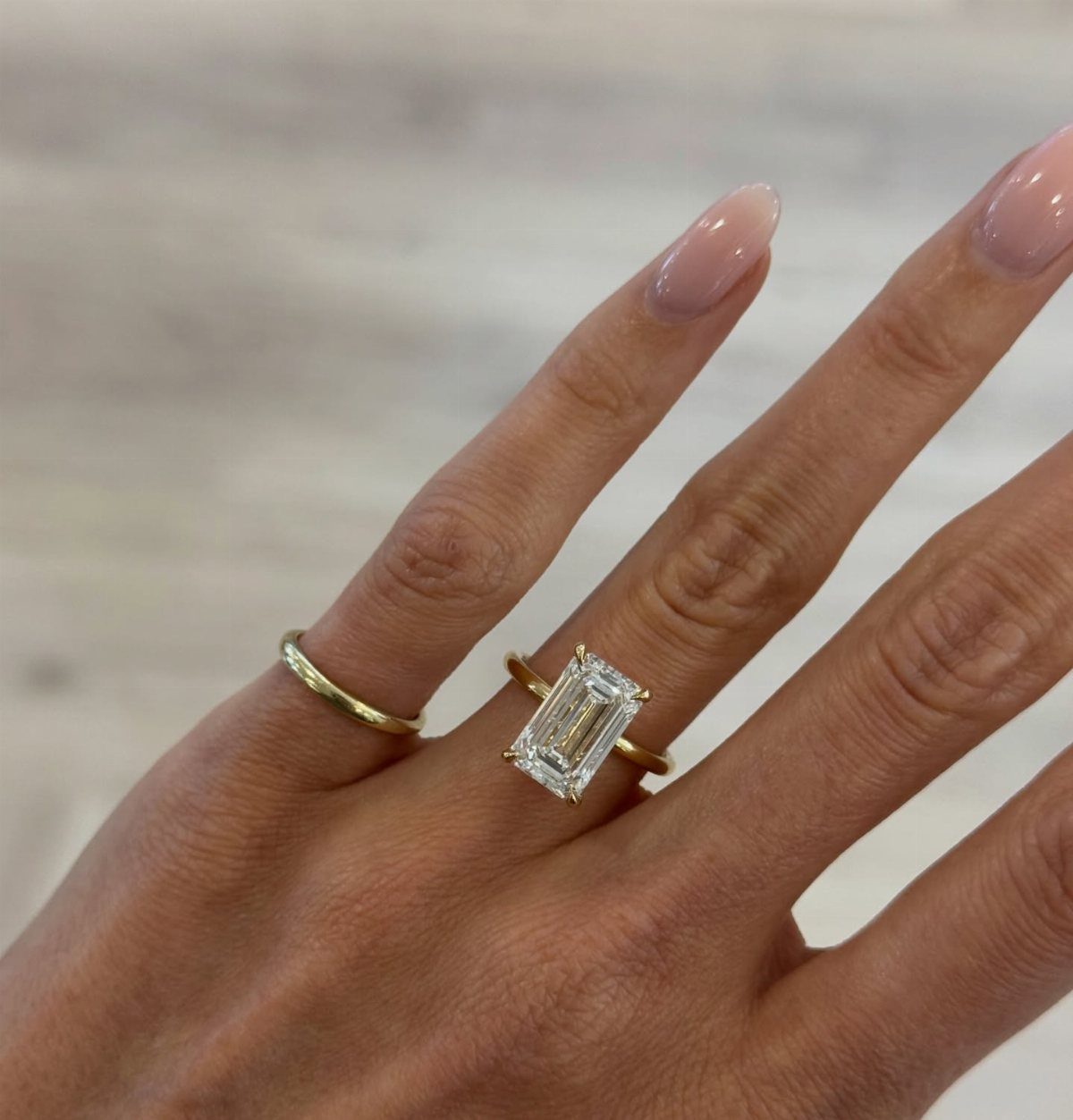
Long, clean lines set the emerald cut apart. Emerald facets are long, flat steps that run parallel down the stone, so it flashes in broad, glassy bands rather than scattered sparks.
Gold suits it well, and I like how a plain gold band echoes the stone’s straight edges. That quiet look is the whole appeal, so choose it if you prefer polish over glitter.
Because the facets are so open, a stone with visible flaws will show them. Look at it in person before you commit.
3. Radiant Cut
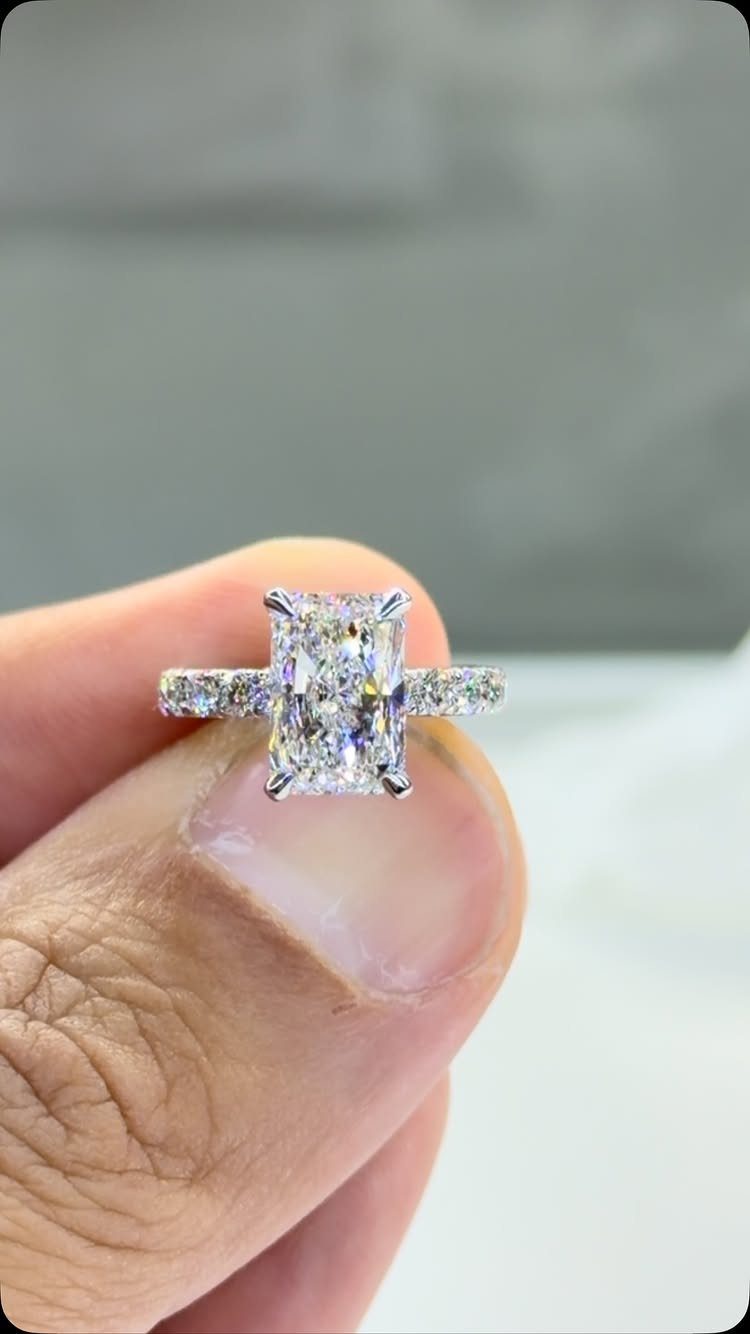
Radiant cut is the pick if you want a rectangle but still want the lively, faceted shine of a round. For anyone who loves the shape of an emerald cut but wants more fire, that’s the answer.
Pavé diamonds along the band add extra sparkle, and a radiant stone can handle that without looking busy. I’d choose it if you want a larger-looking rectangle that stays lively in any light.
Ask to compare it side by side with an emerald cut before you decide.
4. Princess Cut
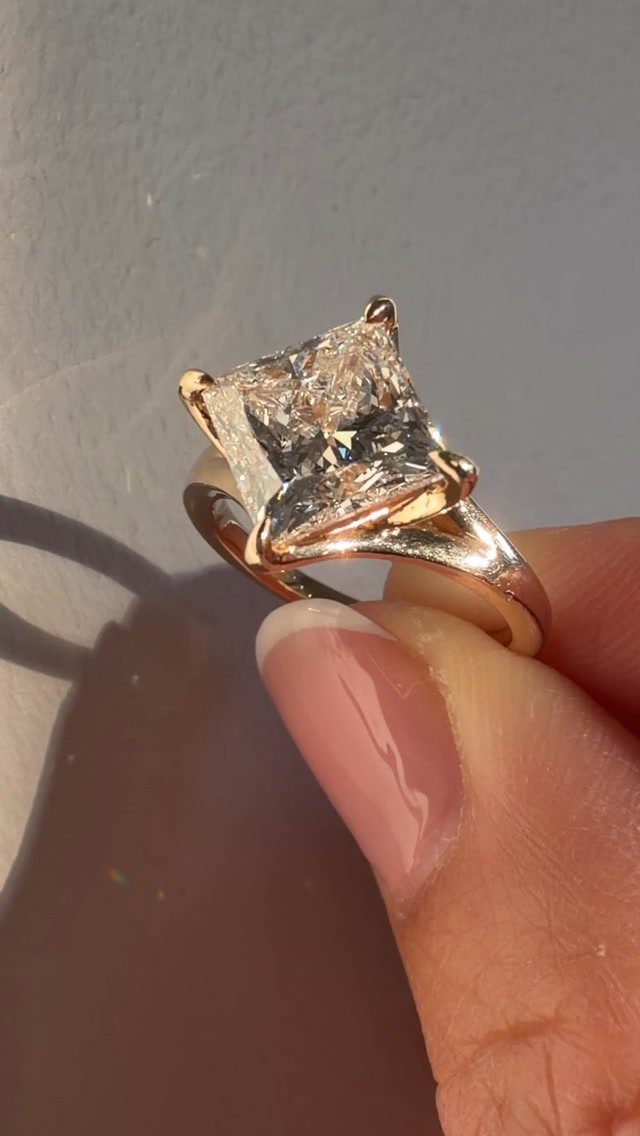
A princess cut is square with sharp corners, which gives it a crisp, modern look; those corners chip easily, so choose a setting with prongs that protect them.
Set in rose gold, as here, it looks warm and crisp at once.
I like it for couples who want something geometric but not as long as a rectangle. It reads boldly clean, which suits a minimalist style.
Those corners are the most exposed part of the stone, so a setting that protects them is worth asking your jeweler about.
5. Oval Cut
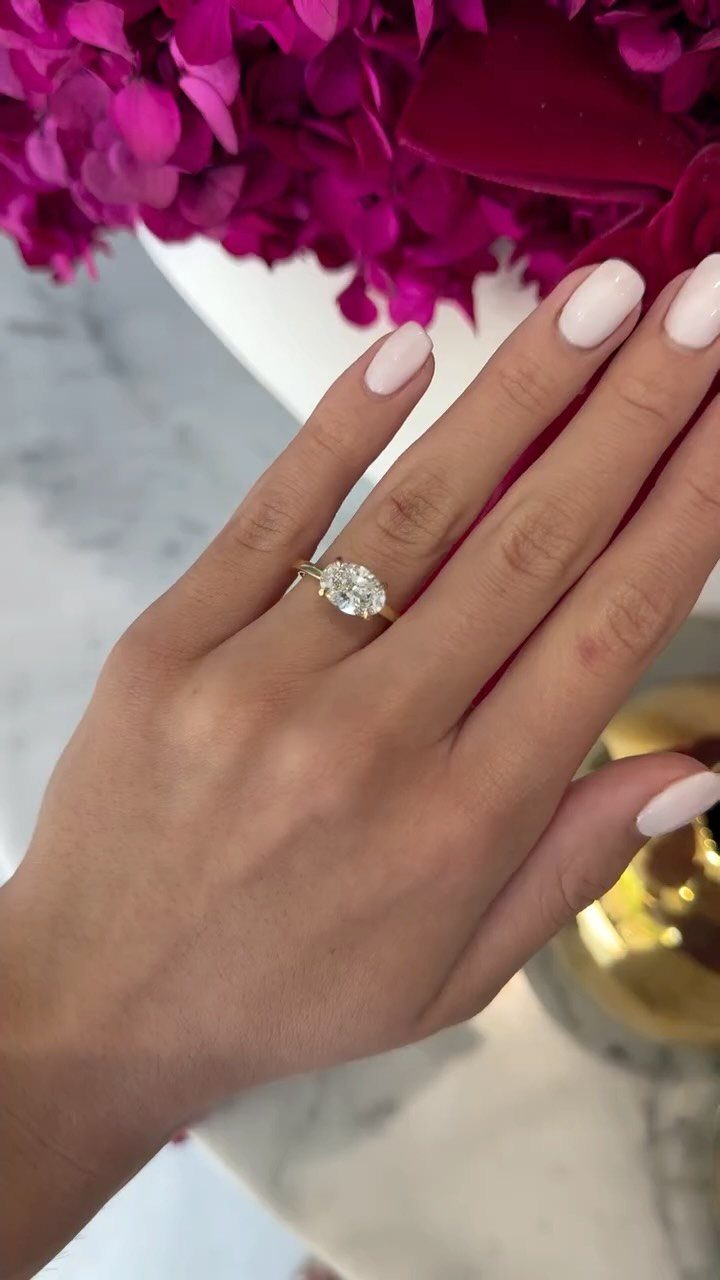
Oval is my pick for anyone who wants round-diamond brilliance in a longer shape. The elongated outline gives the stone a graceful, finger-lengthening line.
Oval looks good in a plain gold setting, where it stays distinctive without being flashy. For a ring that still feels classic, I’d choose oval over round.
If you’re torn between the two, try both on. The difference shows on the hand, not on the screen.
6. Cushion Cut
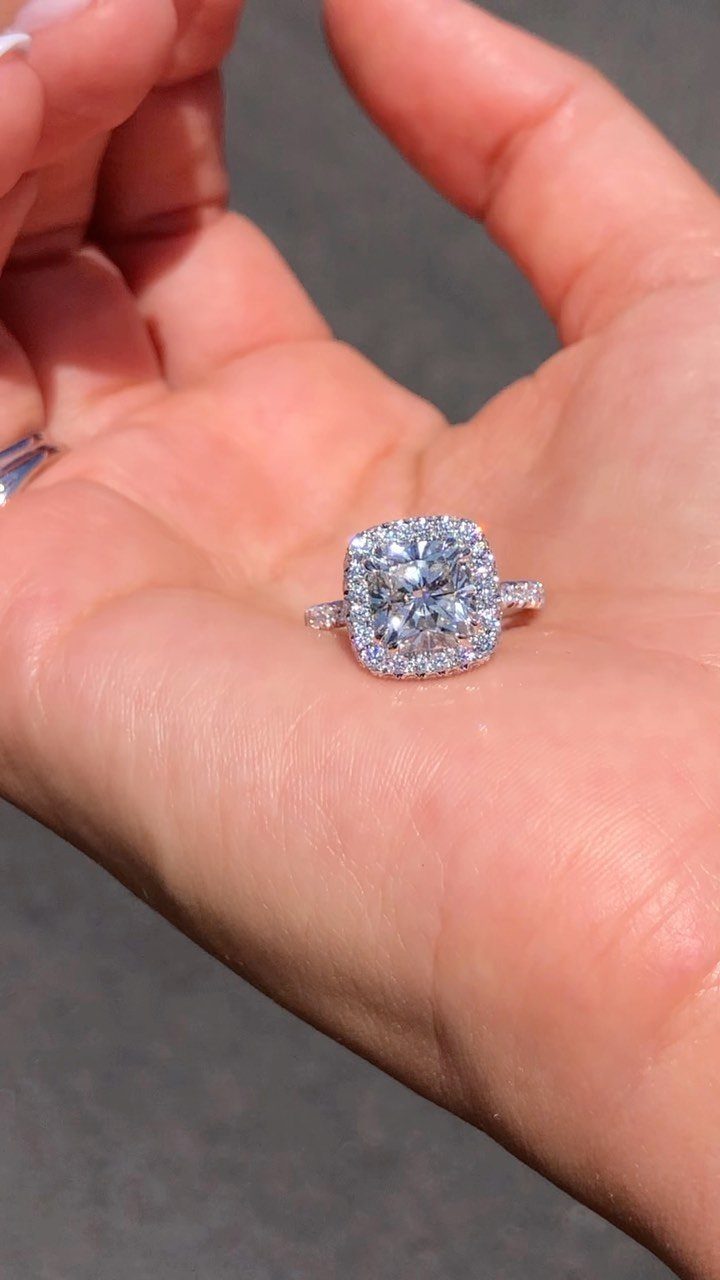
A cushion cut has rounded corners and larger facets, which give it the soft, romantic glow of an antique diamond. Its rounded corners and pillowy outline feel gentler than any sharp-edged shape.
A halo of small diamonds around a cushion stone makes the center look larger and adds extra glimmer. I’d pick this for a vintage-leaning style.
A cushion’s sparkle is softer than a round’s, so if you want maximum flash, round is the better choice.
7. Marquise Cut
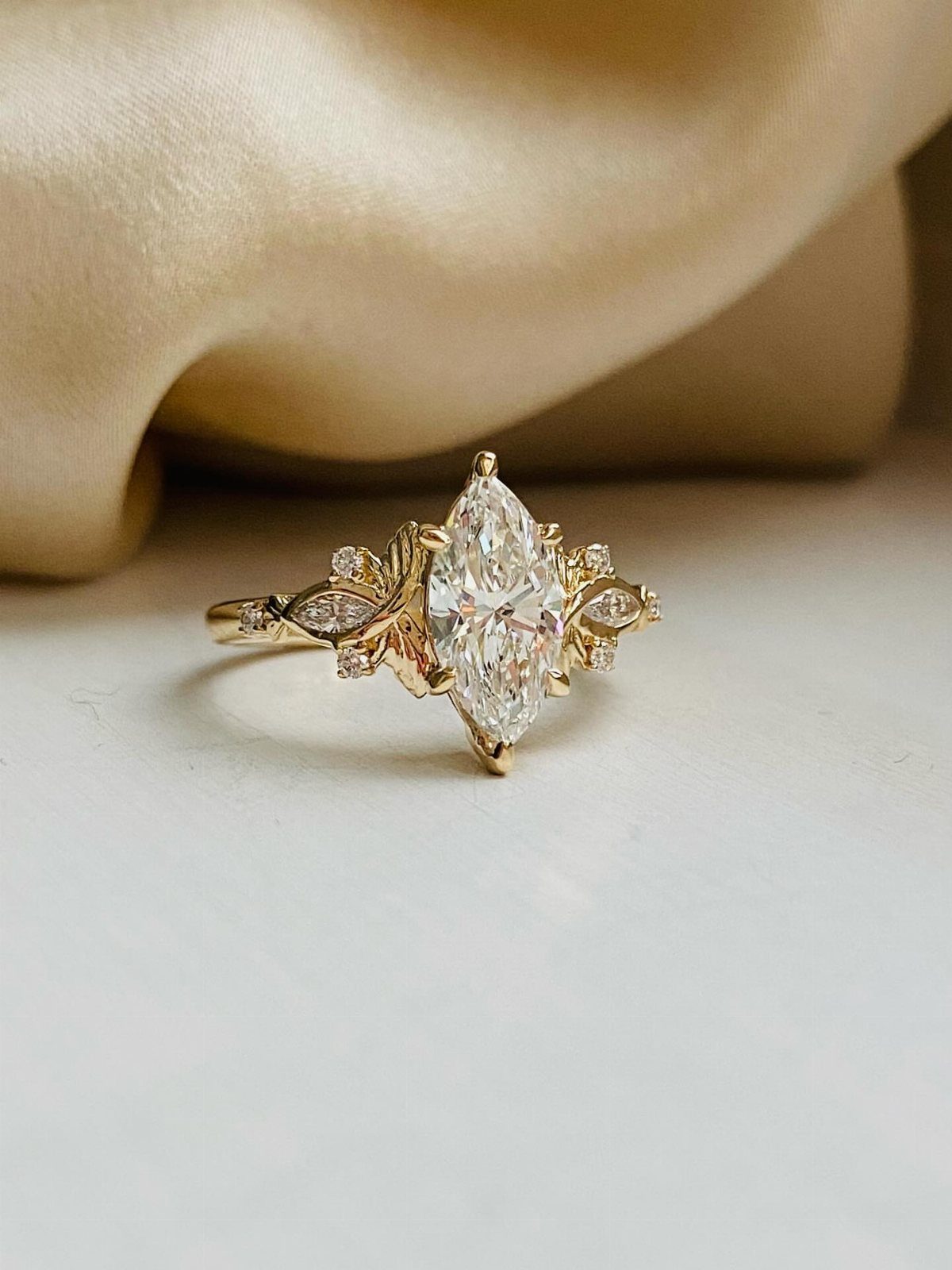
Marquise is the longest-looking shape per carat, which is why I’d point a budget-minded couple toward it. The pointed ends stretch the stone across the finger, so it reads larger than a round of the same weight.
Small side diamonds, as on this gold band, add sparkle without crowding the center.
The 2 points are the most exposed part of the stone. Ask your jeweler about prongs that cover them.
8. Pear-Shaped Cut
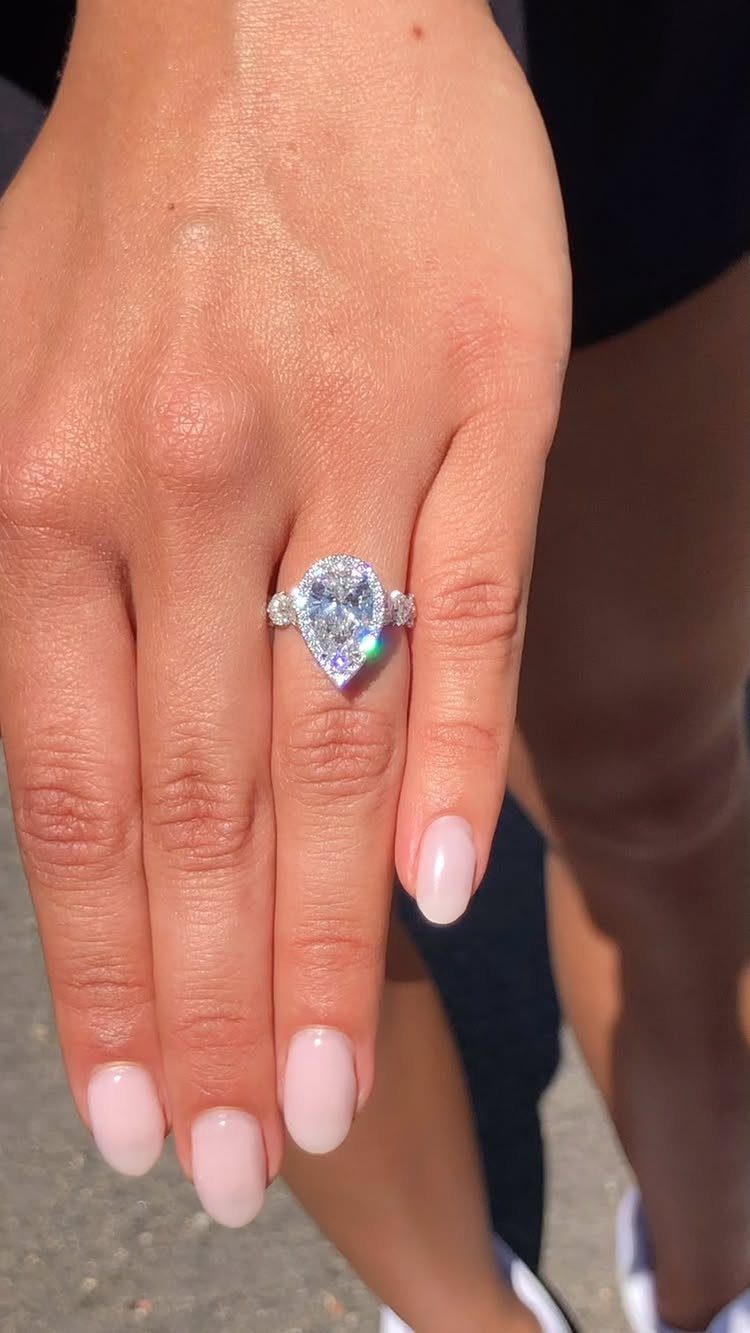
Pear shape is an oval that tapers to a point, a blend of oval and marquise. I like it for anyone who finds marquise too sharp but oval too soft.
A paved band, with tiny diamonds set along the shank, keeps a pear-shaped ring looking polished and adds sparkle without pulling focus from the center stone.
A halo with marquise accents in a micro-pavé setting would push it toward a more ornate design.
Wear it with the point facing your fingertip. Try several on before you decide, since the proportions vary stone to stone.
9. Rose Cut
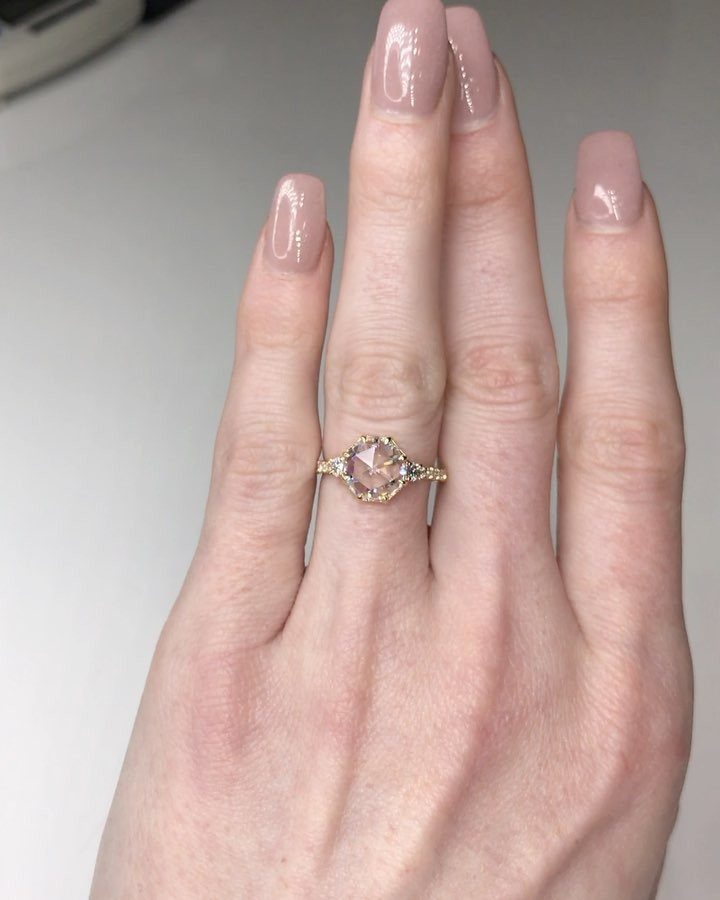
A rose cut has a flat base and a domed top, which gives it a soft, watery glow instead of sharp flashes of light.
If you want a ring that looks unlike anything in a standard jewelry case, I’d choose this one.
Gold suits the muted shine well, and small side diamonds add the brightness the center leaves out.
Expect quiet light, not fire. For the most sparkle, a round or radiant cut is the better pick.
10. Asscher Cut
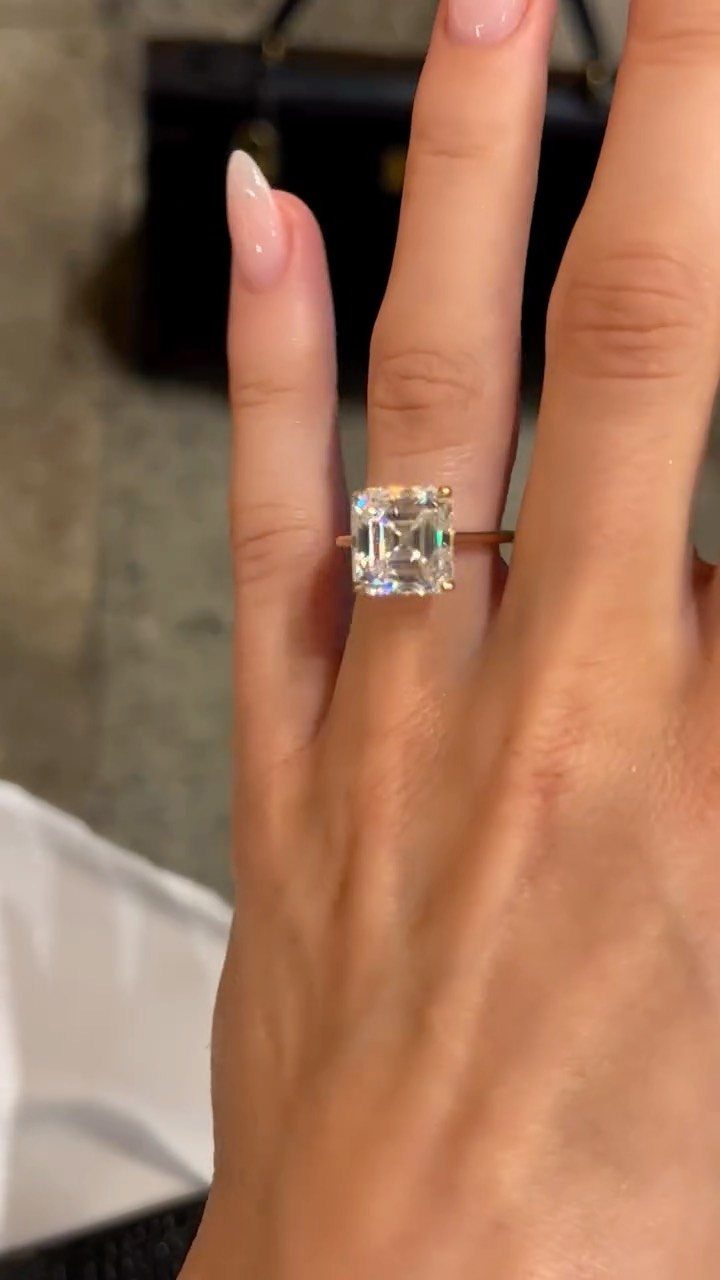
Asscher is a square cut with stepped facets and a retro, old-world feel. I’d pick it over a princess cut if you want a square that looks calm instead of sharp.
A plain gold band lets the stone’s clean geometry lead.
Ring size changes how an Asscher looks: on a small finger, around a size 4.5, a large square step cut can cover a lot of the knuckle, so try one on before you commit.
Like the emerald cut, its open facets show flaws, so inspect the stone in person.
11. Heart Cut
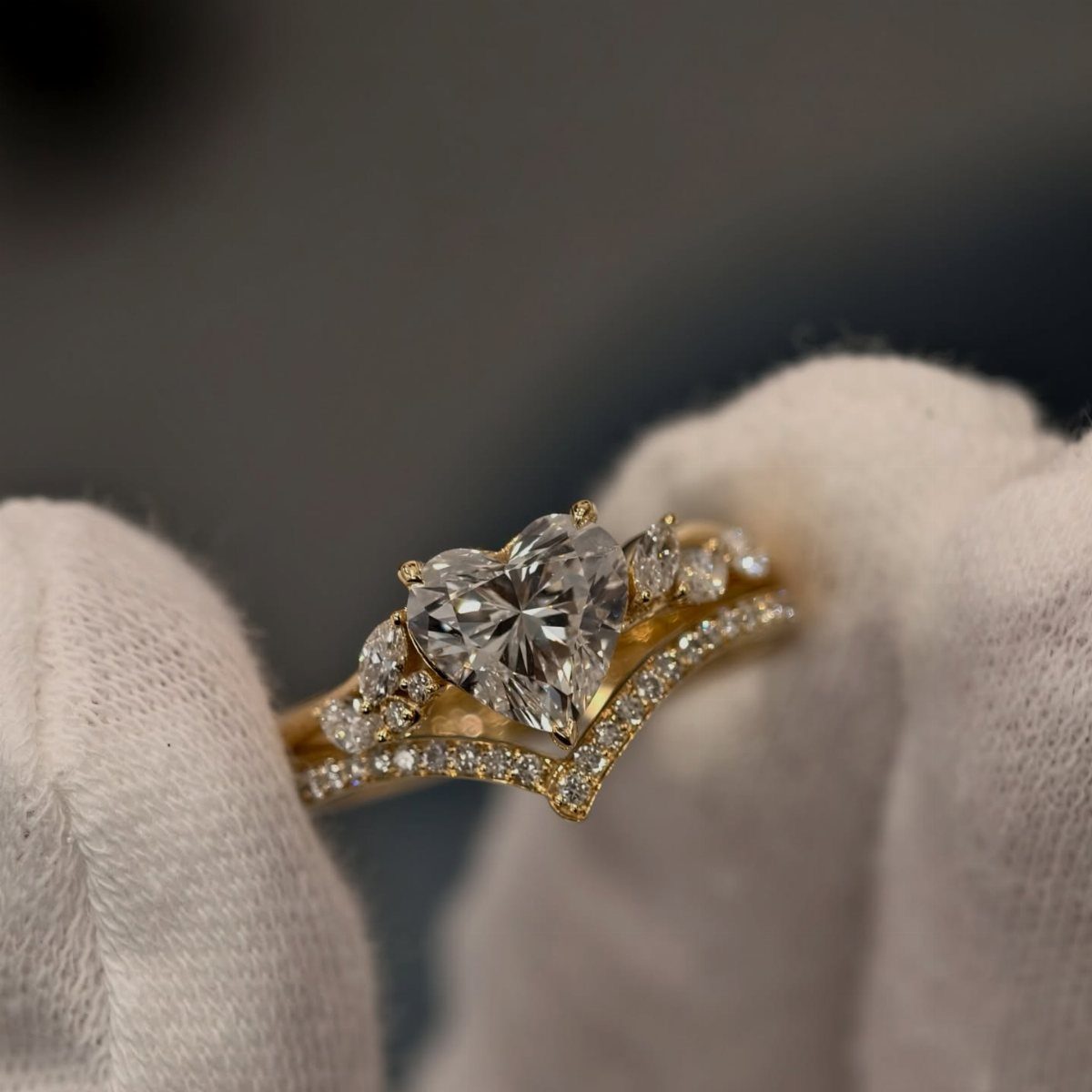
Heart cut puts the symbol of love right in the stone, and I think it’s the boldest sentimental choice on this list.
It suits someone who loves the idea and doesn’t mind a ring that announces itself. If you prefer subtle, it will feel like too much.
Look closely at the point and the 2 lobes. A well-cut heart is symmetrical, and a lopsided one is easy to spot in person.
12. Triangle/Trillion Cut
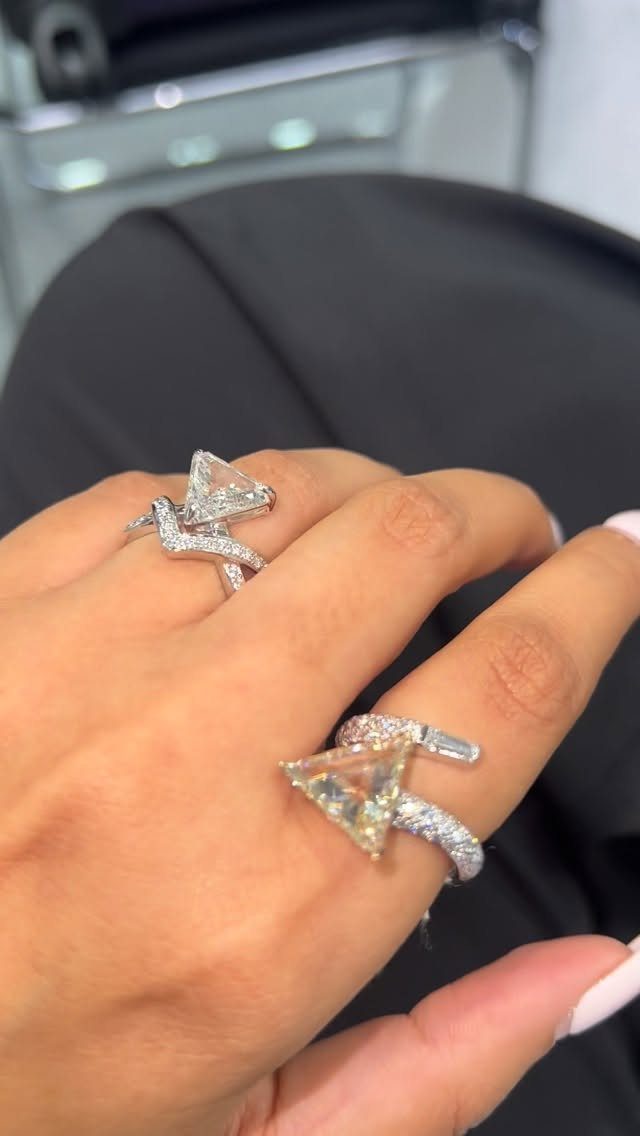
Triangle cut is rare, and that’s the draw: almost nobody else will have your ring. Set against a minimalist band, the three-sided outline looks graphic and modern.
I’d choose it for a couple who wants a conversation piece and has no use for convention. A trillion-cut ring also stacks well with a plain or contoured band, which gives you a more layered look.
Because it’s uncommon, expect fewer ready-made settings. Plan time for a custom order.
Cut Vs. Shape
Shape and cut get used as if they mean the same thing, and jewelers don’t always help.
Cut describes the angles and proportions of a stone’s facets, and those decide how well it returns light to your eye, which is a separate question from its outline.
A round is a shape.
Its cut grade, such as ideal or super ideal, tells you how well it sparkles. Two stones of the same shape can look very different on the hand because one is cut better.
Some jewelers also use "cut" for the facet pattern, as in cushion or emerald.
If a salesperson says "cut," ask which meaning they intend. A well-cut stone isn’t cut too deep or too shallow, and that is the grade worth comparing between stones.
Choosing the Right Cut
Start with the person who will wear the ring.
Look at the jewelry she or he already owns: modern or vintage, bold or quiet, symmetrical or organic. That closet tells you more than any trend list.
Then consider the hand. Elongated shapes make fingers look longer, square or rectangular cuts add structure, and round sits in balance on most hands.
Daily life matters too. For an active wearer, I’d choose a lower-profile setting, and a bezel or protective prongs add security.
Some shapes leave corners and points out in the open, and those spots chip more easily, so the outline you choose sets how much care the ring needs.
On a budget, remember that some shapes look bigger per carat because of surface area.
Lab-grown diamonds have the same optical and physical properties as mined stones, so they are worth pricing if you want more size for the money.
Here, discover 10 of the most common engagement ring cuts, what celebrities have worn them, and what each style says about the people who wear them.
— Vogue
Setting and Metal Choices
Setting and metal change how a stone looks as much as its outline does. The same diamond can feel crisp, warm or ornate depending on what holds it.
Ask the jeweler for the same diamond, or a similar one, in white metal and in yellow or rose gold, then compare them on your hand in daylight near a window.
Match the setting to your daily routine. A protective prong or bezel suits someone who works with their hands, and a low setting snags less.
If the final choice comes down to a coin flip, go with whichever you like best. The right center stone is the one you love.
Frequently Asked Questions
What is the best cut for an engagement ring?
Round is the safest pick, and the most popular, so settings and matching bands are easy to find at nearly every budget.
It also returns the most sparkle. If you want something people will ask about, an oval, emerald or radiant cut stands out more.
Is $4000 a lot for an engagement ring?
I can’t say whether that price counts as high or low, because nothing in my notes sets a standard for what a ring should cost. What I can say is that shape changes how far a budget goes.
What does a $20,000 engagement ring typically look like?
Typically it features a larger diamond, often in a classic or unique setting. A halo around a cushion cut makes the center look bigger, and pavé along the band adds sparkle.