The ideas range from formal attire and casual looks to traditional South Asian outfits, chic black trench coats, warm earth tones and a classic black and khaki pairing.
Location, season and comfort decide which idea fits you, so the backdrop you choose and how at ease you feel in the clothes should settle it before anything else.
Two outfits is typical for a session, so I’d pick one casual look and one dressier look, then check both with your photographer before you buy anything.
1. Formal Attire
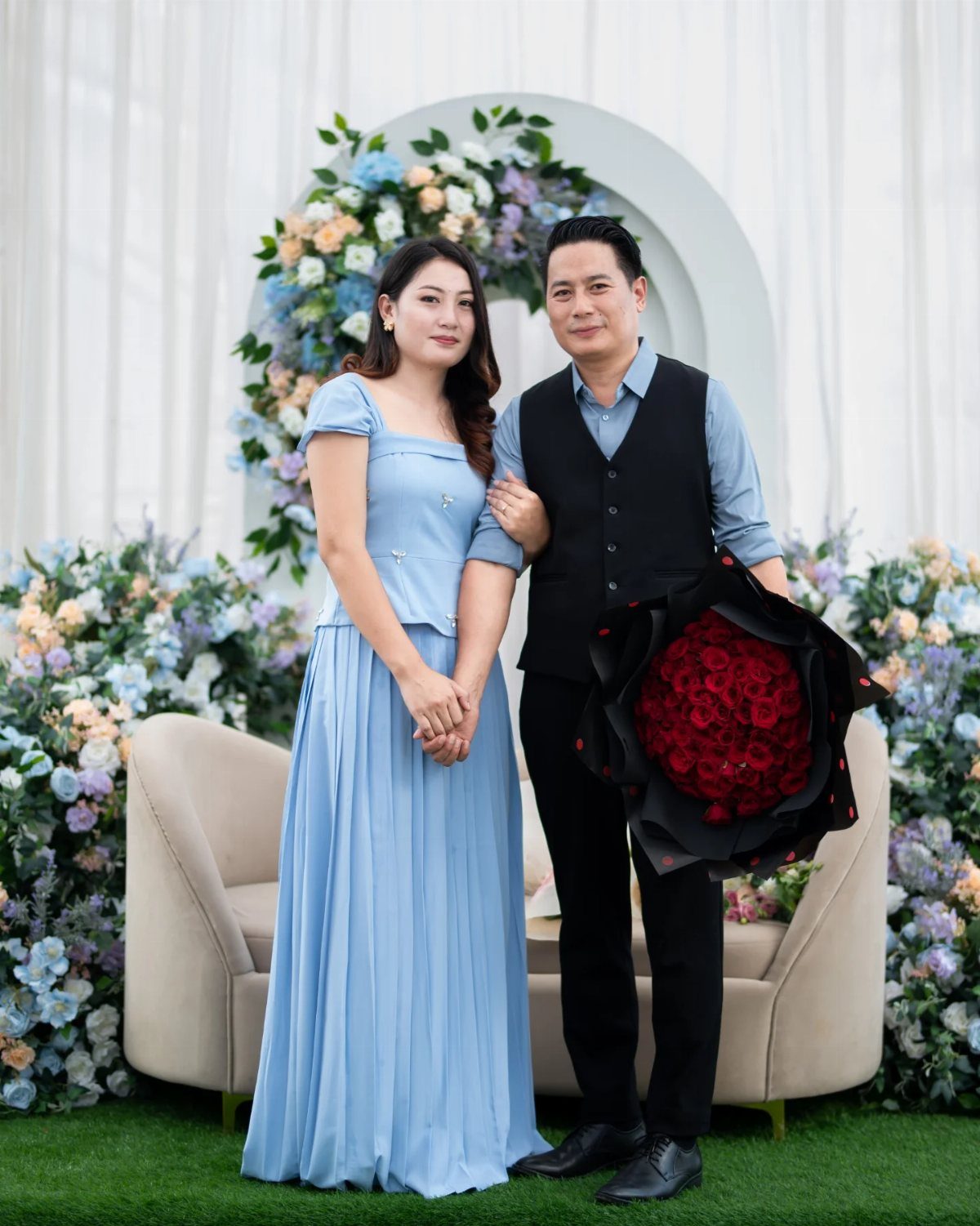
A gown or a suit changes how you stand, and that shows in every frame.
Dressing up suits a couple who want the photos to feel like an occasion, and I’d pick one anchor piece, like a floor-length gown, and let the partner’s outfit support it.
Keep the second outfit in the same level of formality. A tux next to a sundress looks like a mismatch, not a contrast.
The flutter sleeves, cascading ruffle, and stretch satin material makes it a comfortable yet chic option that can easily be styled with your favorite accessories for an engagement photo outfit that is completely your own.
2. Casual Attire
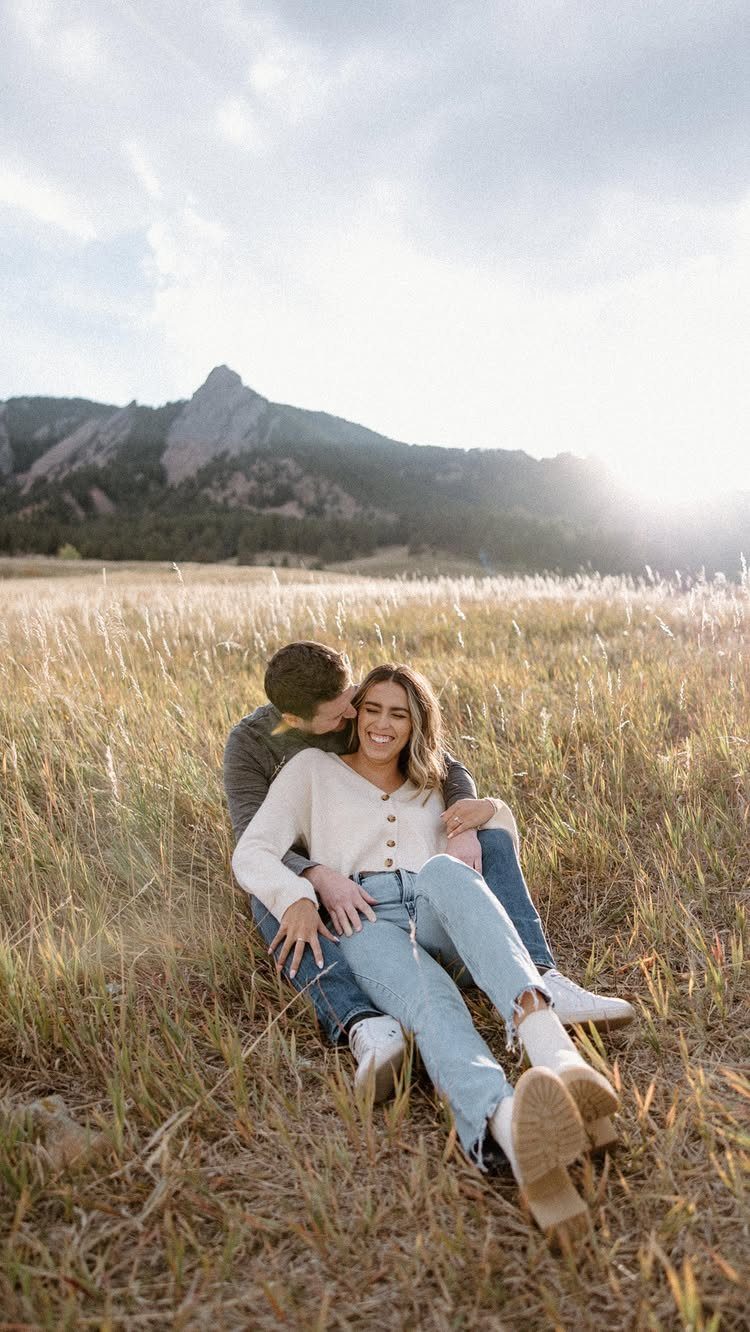
Jeans and a soft knit are what I’d pick if you freeze up in front of a camera. Relaxed clothes let you sit, laugh and lean on each other without tugging at a hem.
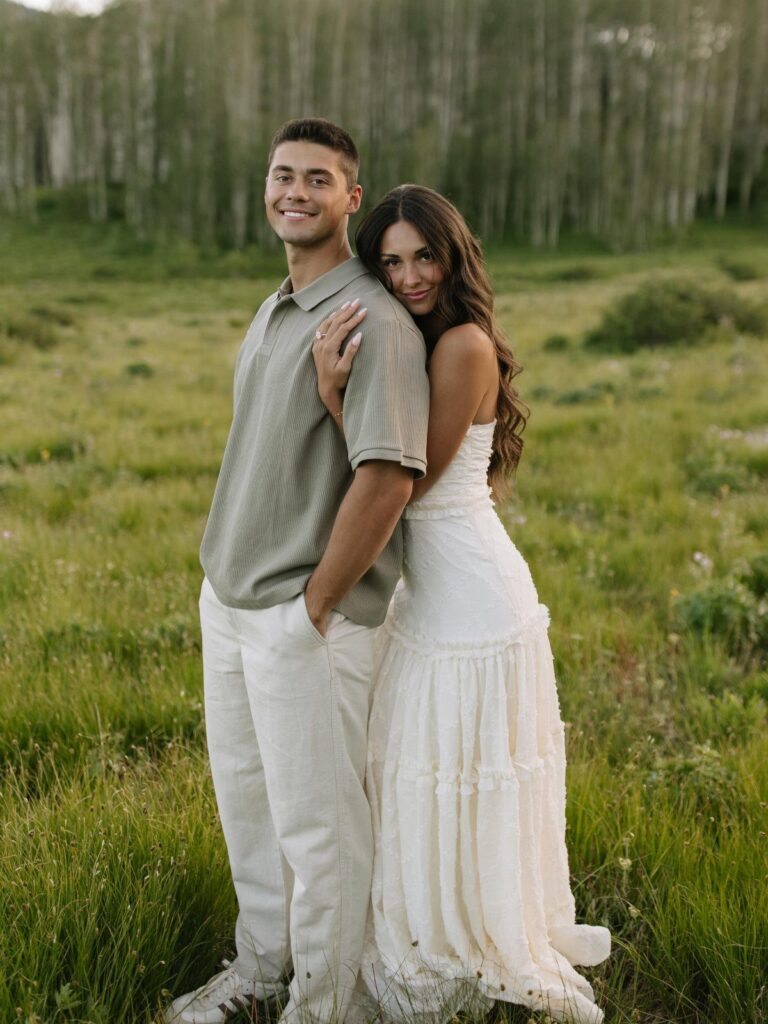
Neutral tones like cream and grey keep the focus on the two of you, and they sit quietly against a field or a mountain view.
Wear the outfit around the house first, so you know it feels as good as it looks.
3. Coordinate Colors
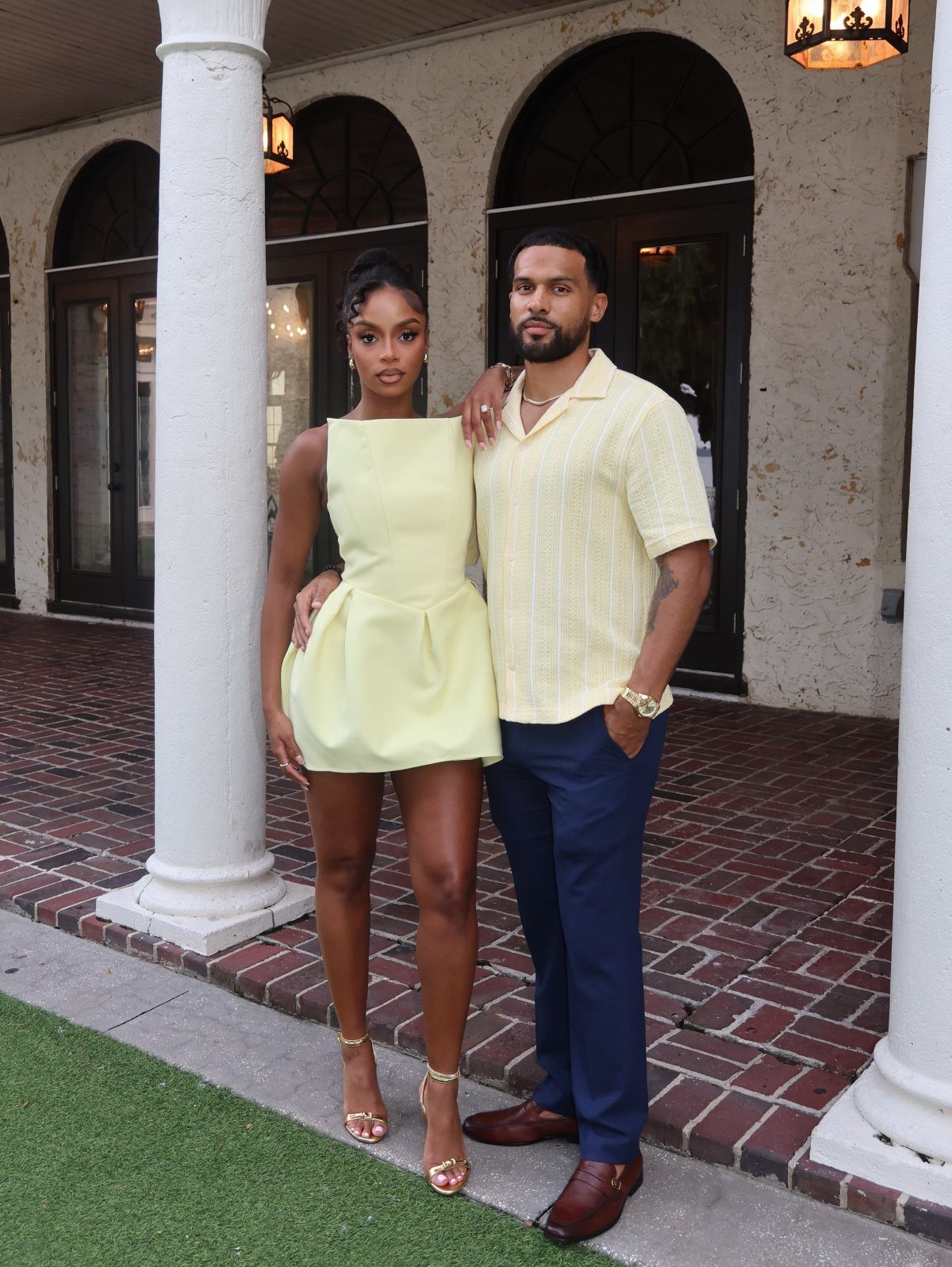
Matching does not mean identical. 2 shades of the same color family, like pale yellow on both of you, read as a pair without looking like a uniform.
I’d choose one shared color and vary the fabric or cut: a blouse on one, a knit or button-down on the other.
Check the colors side by side in daylight before the shoot, since screens and store lighting change yellows more than most hues.
4. Timeless Styles
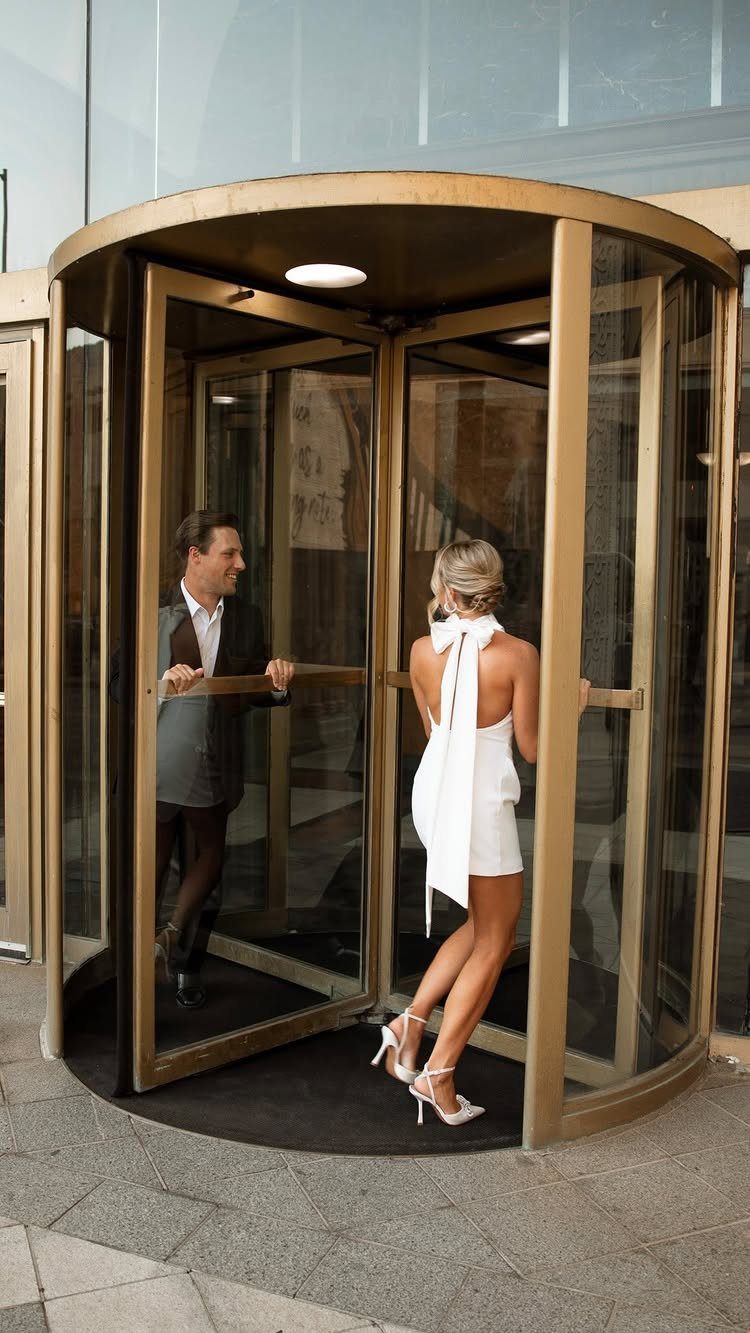
Trends date a photo fast; clean tailoring does not.
Spend the money on fit.
A well-hemmed dress and a suit tailored to your shoulders beat anything bought for its buzz. For a modern touch, keep it to one small accessory you can swap later.
5. Traditional South Asian Attire
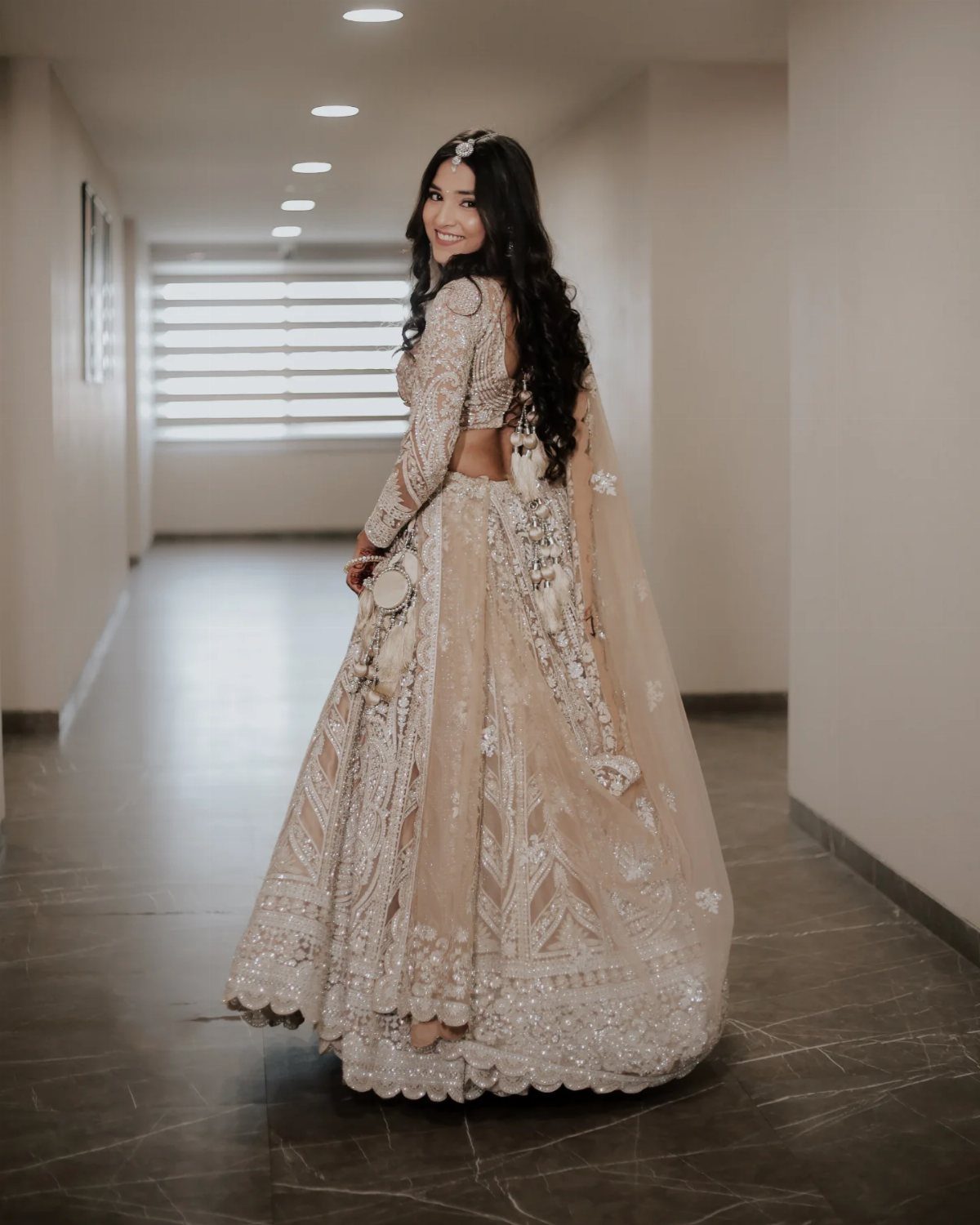
An embroidered lehenga with a matching dupatta already carries the detail, so I’d keep the setting simple and let the stitching do the work. Cream and beige tones against a clean, bright space make the embroidery easy to see.
Style the dupatta so it falls open, not bunched, because it frames the outfit in motion. Bring a helper to adjust the drape between shots.
6. Chic Black Trench Coats
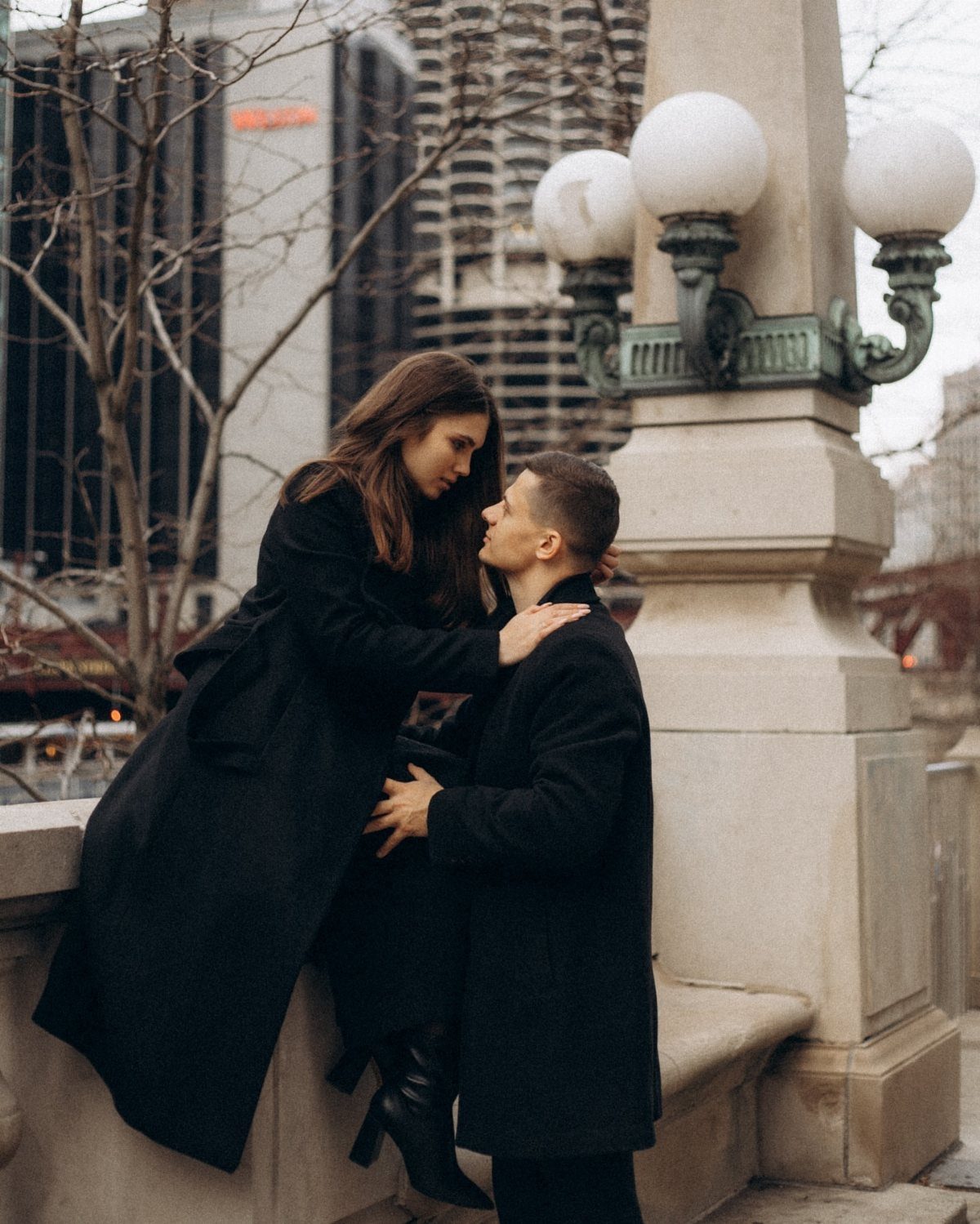
Long black coats on a city street give you instant polish with almost no styling effort. Tailored cuts look sharp together, especially against stone and brick.
I like matching coats best when the pieces underneath differ a little, say a lighter knit on one of you, so the two of you don’t blur into one dark shape.
Press or steam the coats beforehand; wrinkles show on black.
7. Warm Earth Tones
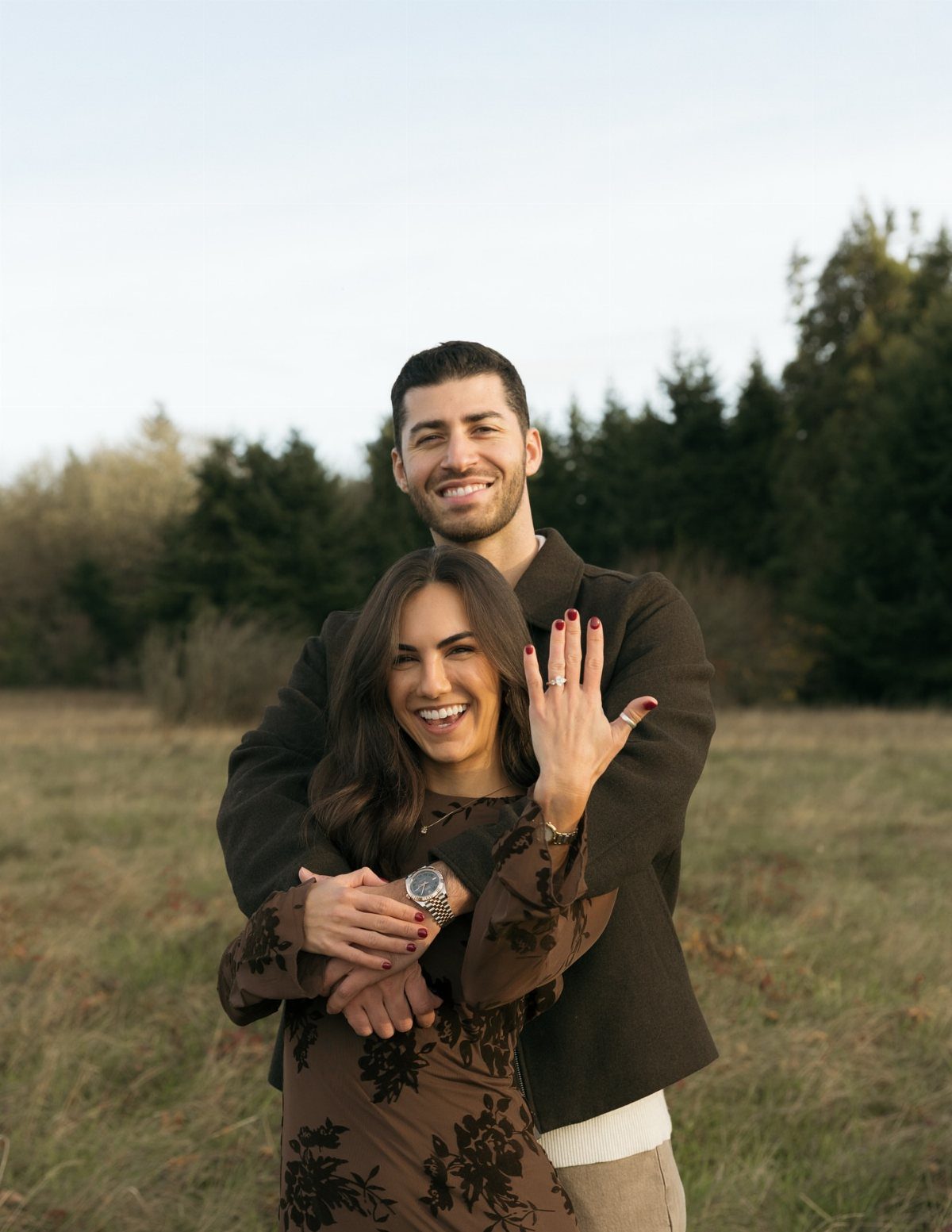
Brown reads warmer on camera than people expect, and a floral dress next to a plain brown blazer shows how to mix pattern with solid.
Let one of you carry the print and keep the other in a single shade, so the two outfits sit close without matching.
I’d pick shades a step apart, say a deeper blazer against a lighter dress. A field setting suits this palette, since the colors sit comfortably against grass.
8. Classic Black and Khaki Pairing
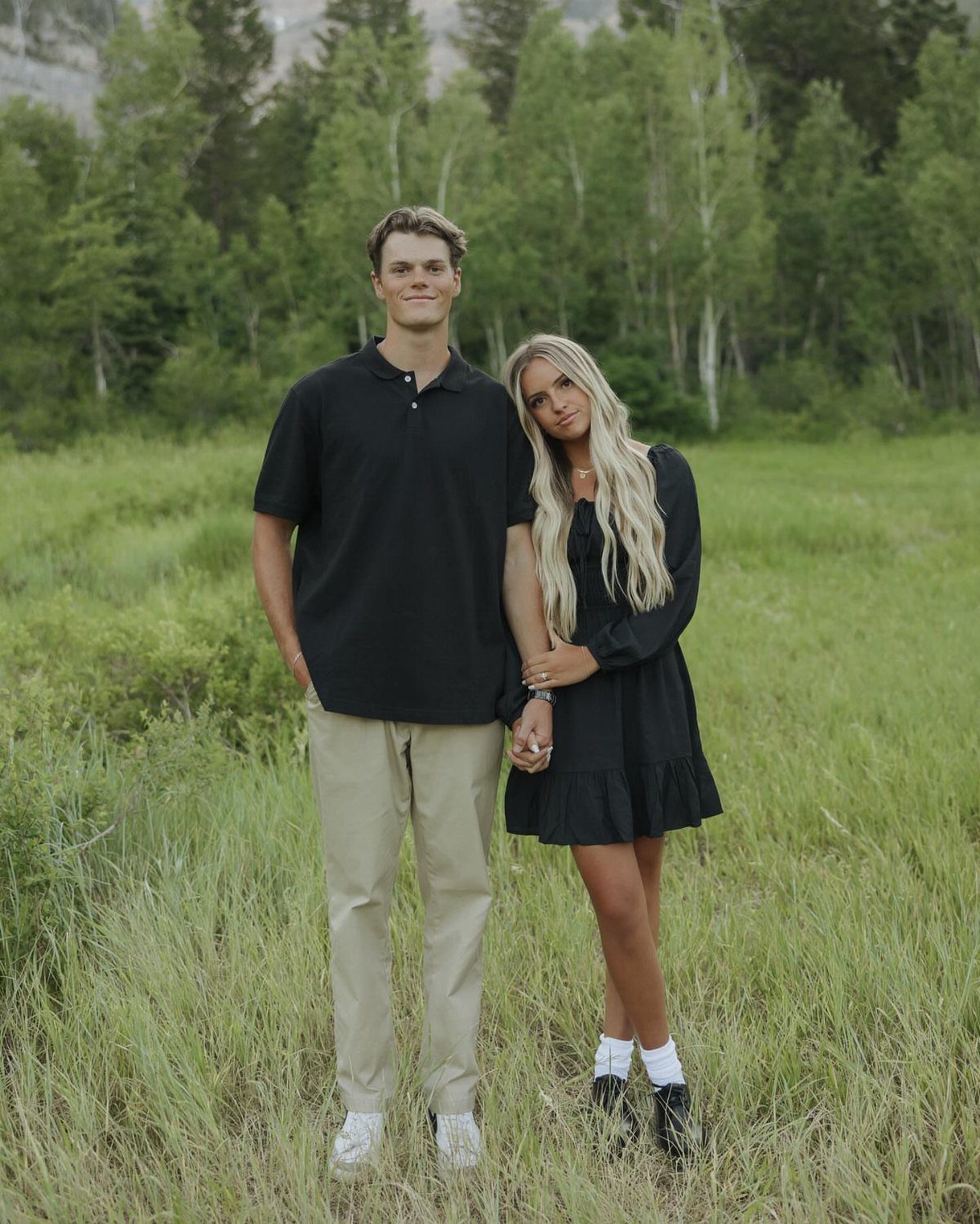
Black on top with khaki below is about the easiest pairing to pull off, because both colors are neutral and nearly everyone owns them.
A black polo with khaki pants, beside a short black dress, ties the couple together through one shared color.
Keep the black in the same tone for both of you; a faded polo next to a fresh dress looks off. A field or any open, green space keeps the look relaxed.
9. Dress for the Location
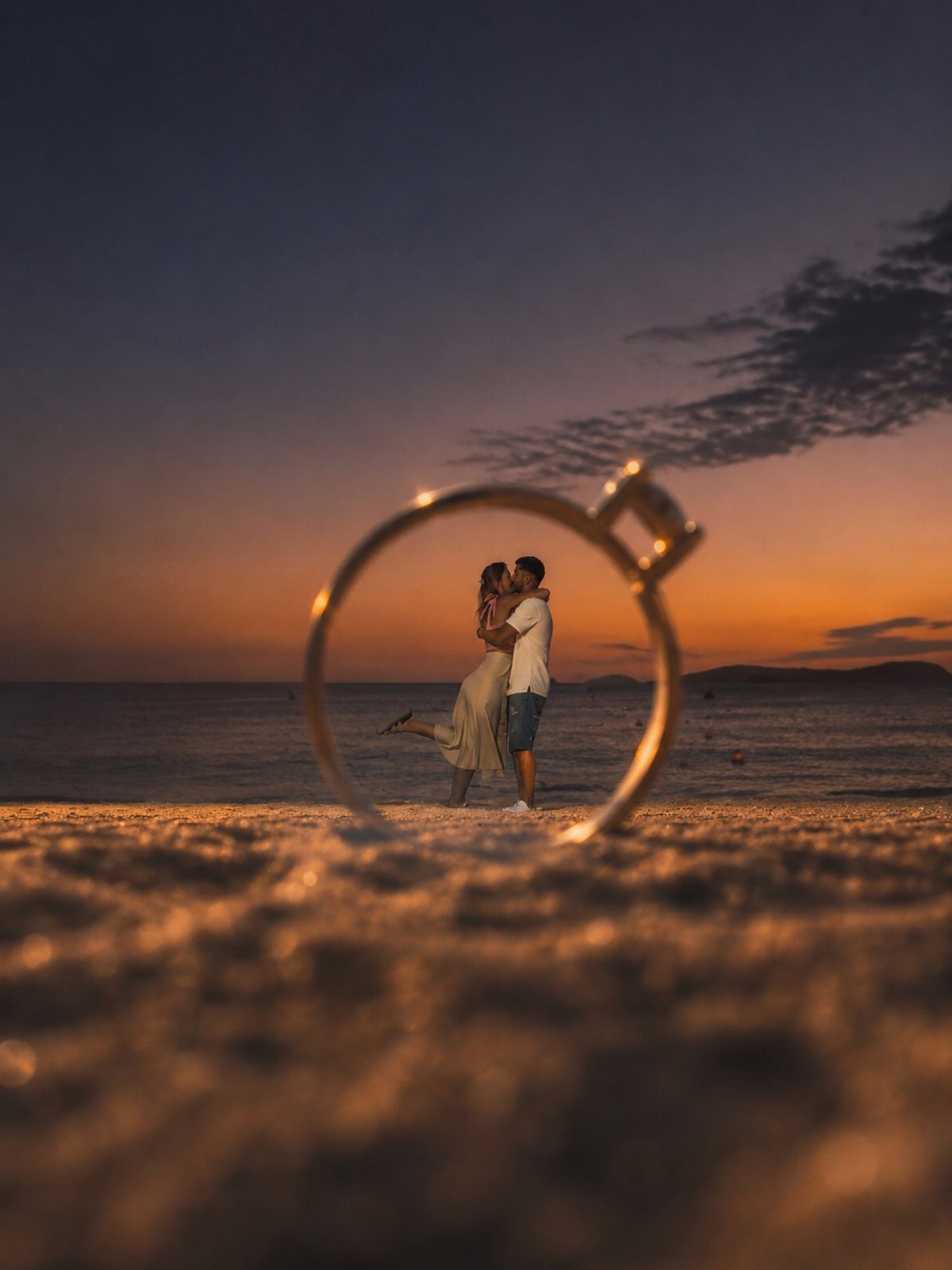
Pick the backdrop first, then dress to it. A long dress and a shirt with shorts suit a beach, where heavy fabric and stiff shoes would fight the setting.
Flowing hems move well in sea air, so I’d favor a long skirt there. Before booking, check how you’d actually get to the spot, since a hike or soft sand changes what shoes make sense.
10. Trial Hair and Makeup
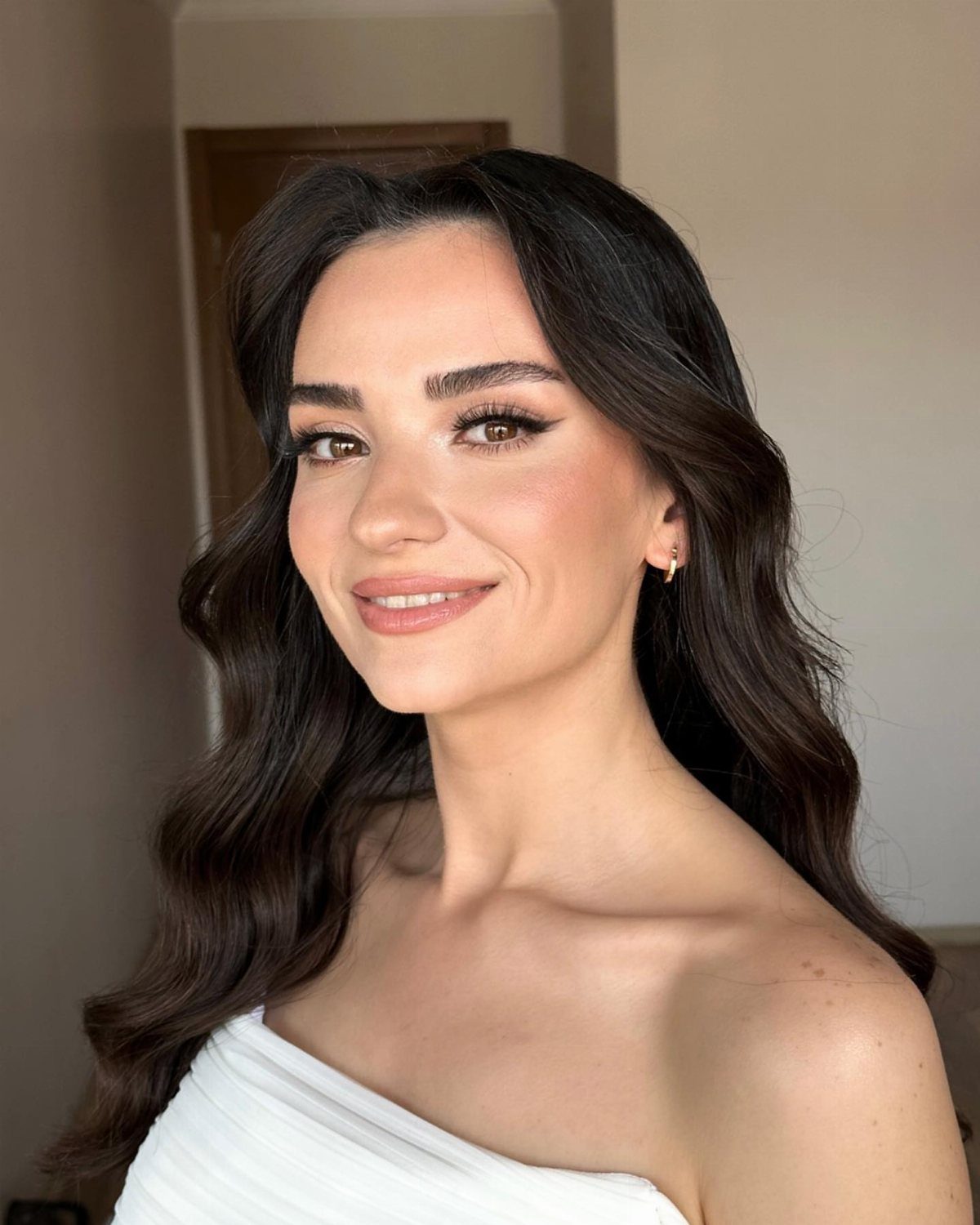
A trial run with a stylist shows you what the look will be before photo day.
Waves and a polished face of makeup can read differently on camera than in the mirror, and a trial gives you time to change what you don’t like.
Book it a few weeks ahead, and wear a top with a similar neckline to your outfit.
Take photos in daylight and review them. Professional styling costs money, so I’d spend there if you’re skipping another extra.
11. Consider the Season
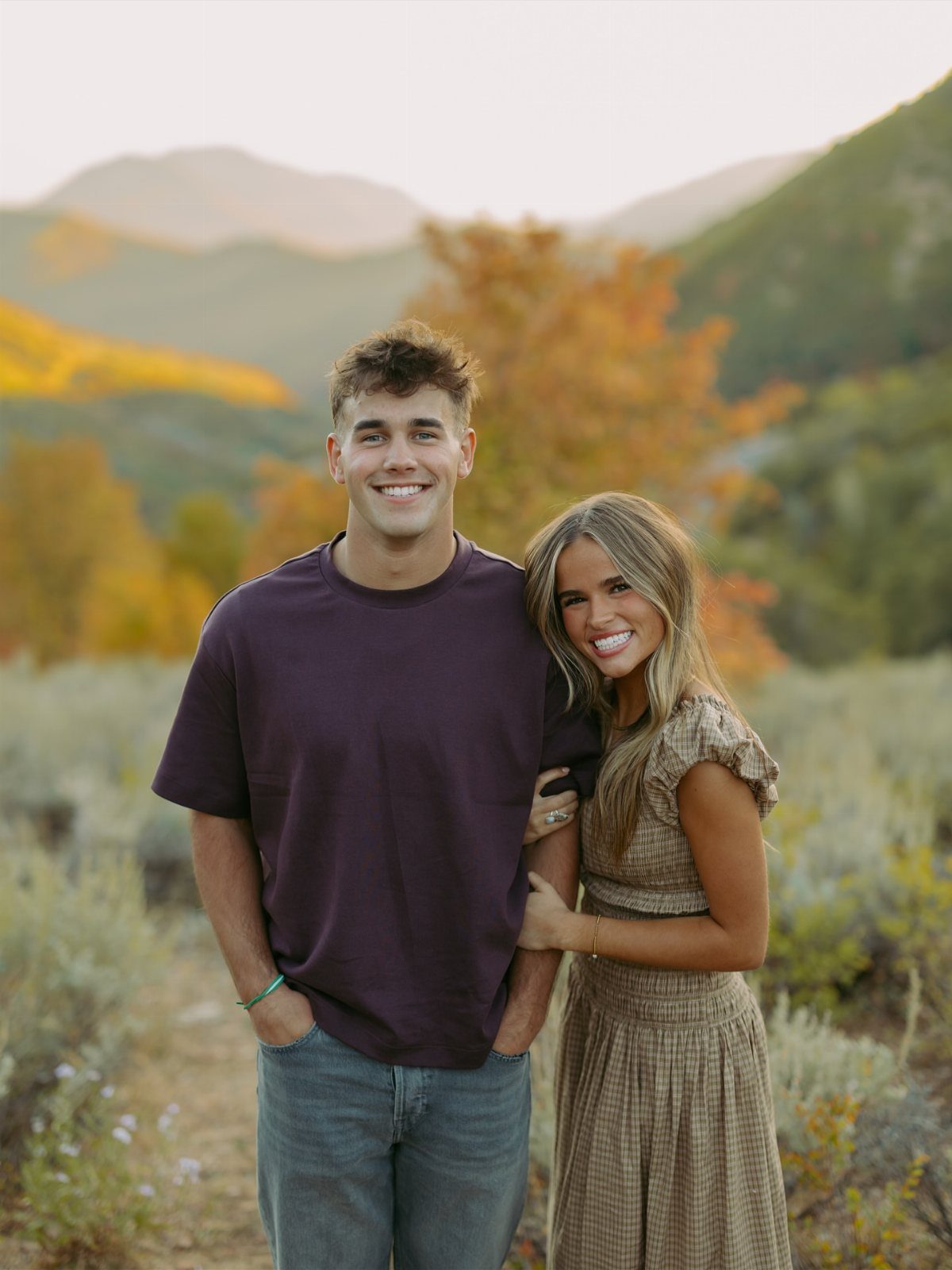
Autumn calls for color and layers: a brown dress and a purple tee both sit well against fall foliage, and the warm tones echo the trees.
Check the forecast the week of the shoot, because a cold afternoon will show in your faces and posture.
I’d bring a jacket or cardigan you can slip off for a few frames. In summer, go lighter; in winter, add a coat you love in the photos.
Importance of Comfort
Try the outfit on a few times before the shoot, and practice some poses in it: sit, twirl, hug, lift an arm.
If something rides up, gapes or pinches, you’ll find out at home instead of in front of the camera.
Clothes that run too small or too large pull attention away from the two of you, and so do pieces outside your usual style.
When two outfits tie, I’d take the one that makes you feel your best, because that feeling shows in the pictures.
Jeans and casual shirts are a perfectly good answer. A starched, tight getup that doesn’t look like you will read as stiff, while relaxed clothes let your happiness come through more sincerely.
Consulting with Your Photographer
Ask your photographer how many outfits the session has time for. 2 is typical, but the answer changes your packing list.
I’d plan one casual look and one dressier look, so the two sets of images feel a little different. Bring a few favorites for each slot, then let the photographer help you choose once the locations are settled.
Your outfits, props and location tell your love story, so send the photographer photos of what you’re considering. That conversation is also the moment to ask whether a location change fits the schedule.
Timing of the Shoot
Ask your photographer which hour of the day suits your location, then plan the outfits around it. Light changes how fabric looks, and I’d check a pale skirt in strong light to make sure it isn’t see-through.
Bring a spare outfit as insurance. If a dress hangs badly or a fabric surprises you, a second option saves the session.
Extra outfits also give you more variety when you pick final images. Plan the change around any move between locations so you don’t lose shooting time.
Frequently Asked Questions
What are some good dress ideas for an engagement photo?
A floor-length gown gives the photos a formal, special-occasion feel, and your partner’s outfit should back it up rather than compete.
For a relaxed shoot, a flowing long skirt or a dress with movement suits sea air, fields and city streets. Whatever you choose, test that you can sit, twirl and hug in it.
Is $500 a lot for engagement photos?
I can’t give you a price benchmark for engagement sessions, because nothing I have covers photographer pricing.
What I can say is that the outfits are where a smaller budget often goes furthest. Put money into tailoring and fit, and if you’re skipping another extra, a hair and makeup trial is worth paying for.
What do men wear during engagement photos?
A tailored suit, a crisp dress shirt or a polished casual outfit can all work, and the best choice follows how formal your outfit is.
How to pose for engagement pictures?
A quick rehearsal in your actual outfits helps: sit, twirl, hug and raise an arm to see what pulls or bunches. That shows you at home whether anything rides up, gapes or pinches.
Loose, comfortable clothes make posing easier, because you can lean in and laugh without fussing over a hem. Your photographer can guide you from there.