Stones in this list run from moissanite, a lab-created diamond alternative that costs far less than a diamond of the same size, to opals that flash shifting color and tanzanite with its rare blue-lilac tone.
Settle that first, then let color and meaning break the tie.
1. Sapphire
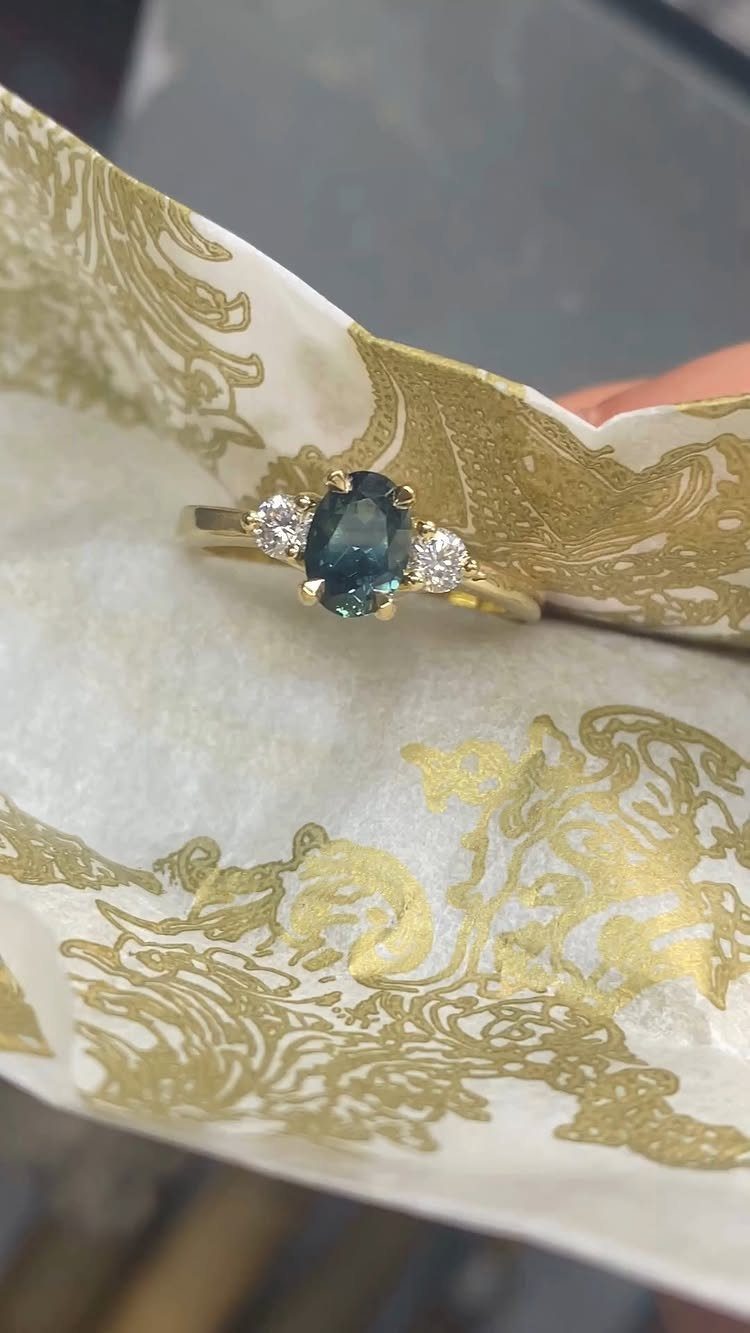
Sapphire is the stone I point budget-minded couples toward first, since it comes in many colors and stays tough enough for daily wear.
Ask to see the stone in daylight before you commit. Sapphire can look nearly black under dim jewelry-store lights.
2. Morganite
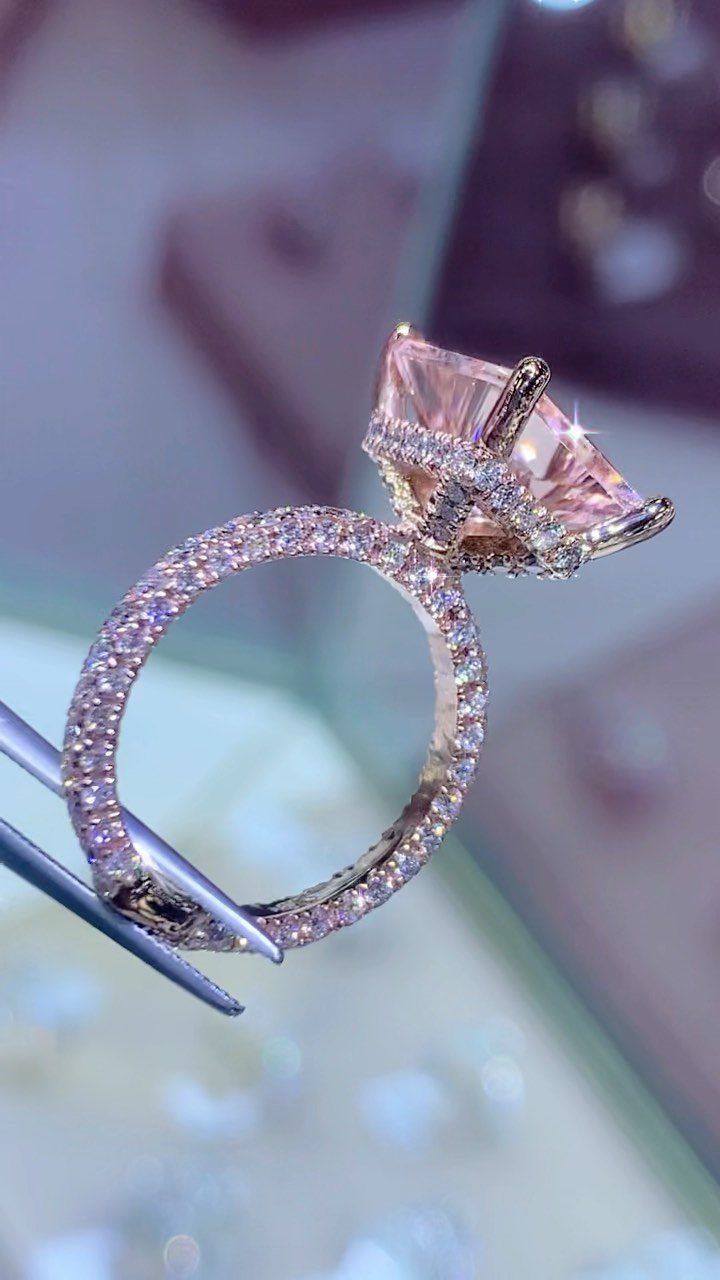
Peachy-pink morganite carries a meaning of compassion, and I like that it reads as soft and warm rather than flashy. Rose gold is the metal I would pair it with, because the 2 tones blend instead of competing.
A large pear shape gives you the most color to look at. If you want a pale stone to look intentional, choose one with visible blush, not one that fades toward clear.
3. Tanzanite
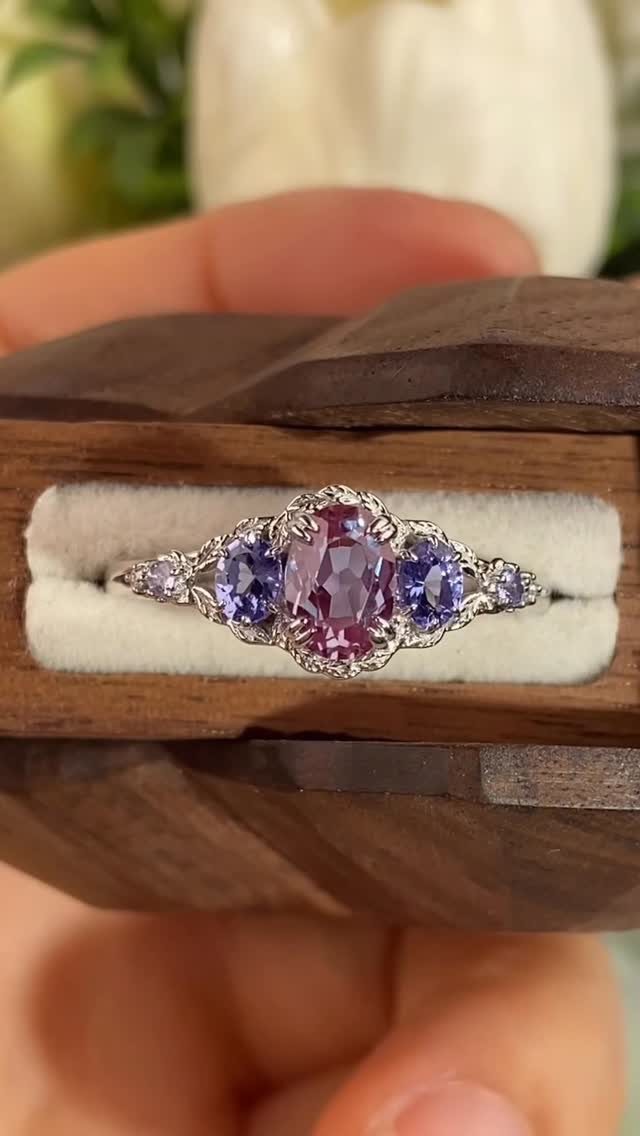
Tanzanite earns its place with a blue-lilac color that few other stones offer, and its rarity is part of the appeal. A purple-blue center in silver looks cool and a little unusual, which is exactly what some couples want.
I would choose it for a ring that is meant to stand out, and I would ask the jeweler how the stone should be cared for before buying.
4. Moissanite
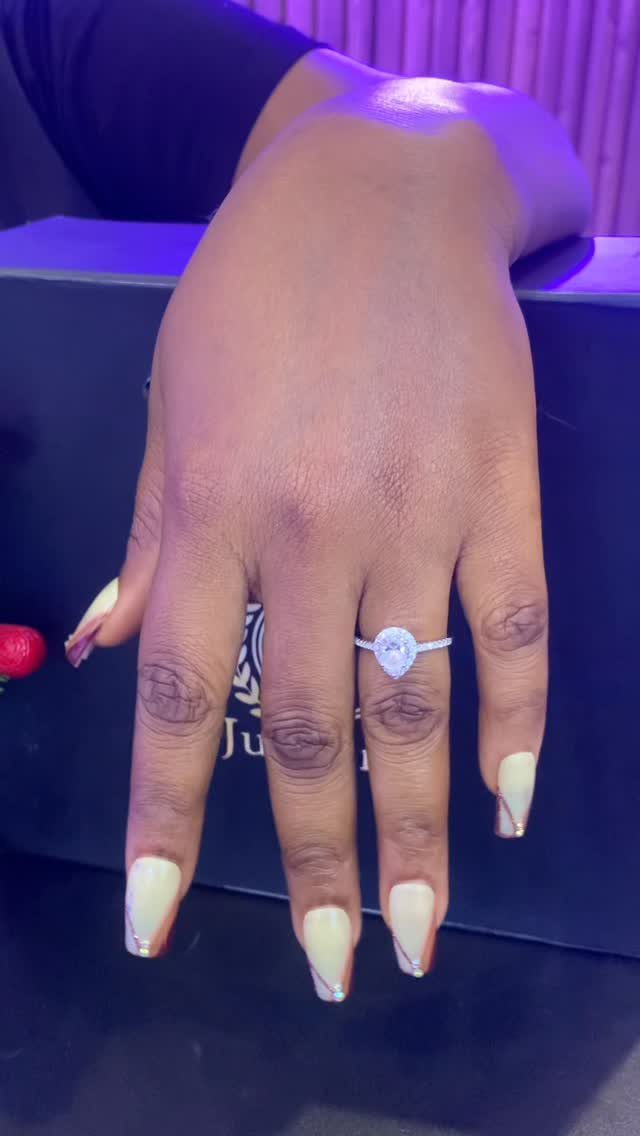
Moissanite is a lab-created diamond alternative with exceptional brilliance, and it costs far less than a diamond of the same size. That gap is why I think it suits couples working against a real number.
A pear cut in a simple silver setting, kept clear and colorless, gives the closest diamond look. Buy from a seller who offers a clear return window, so you can compare it in person.
Although white or colorless diamonds are the most popular and romanticized expensive engagement ring stones, they’re not rare. However, natural colored diamonds are incredibly rare, with only one occurring in 10,000 natural diamonds.
5. Ruby
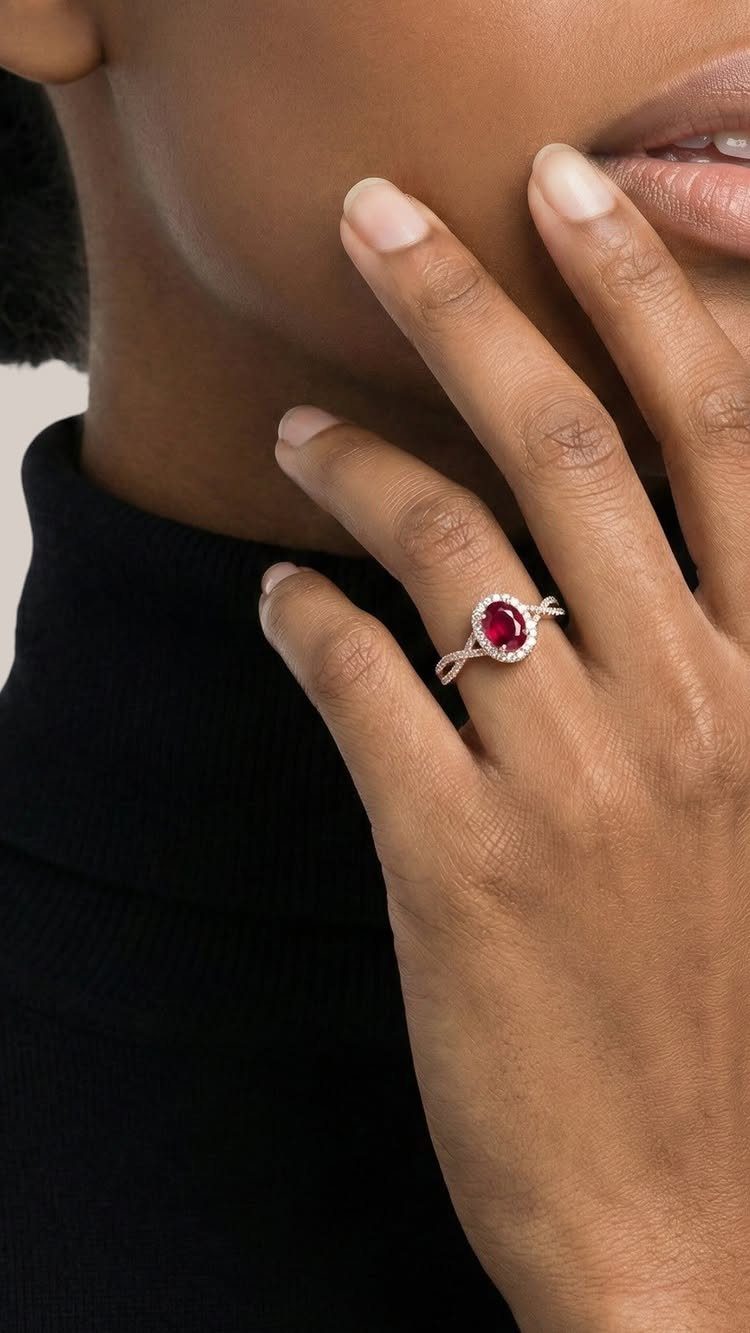
Ruby is red with a purpose: it stands for passion, and few stones say it so directly. A deep red center with small diamond accents keeps the look bold without feeling heavy.
I would pick ruby for someone who never wears neutral jewelry. Choose the setting metal to match the rest of your jewelry, since gold and silver both work with red.
6. Emerald
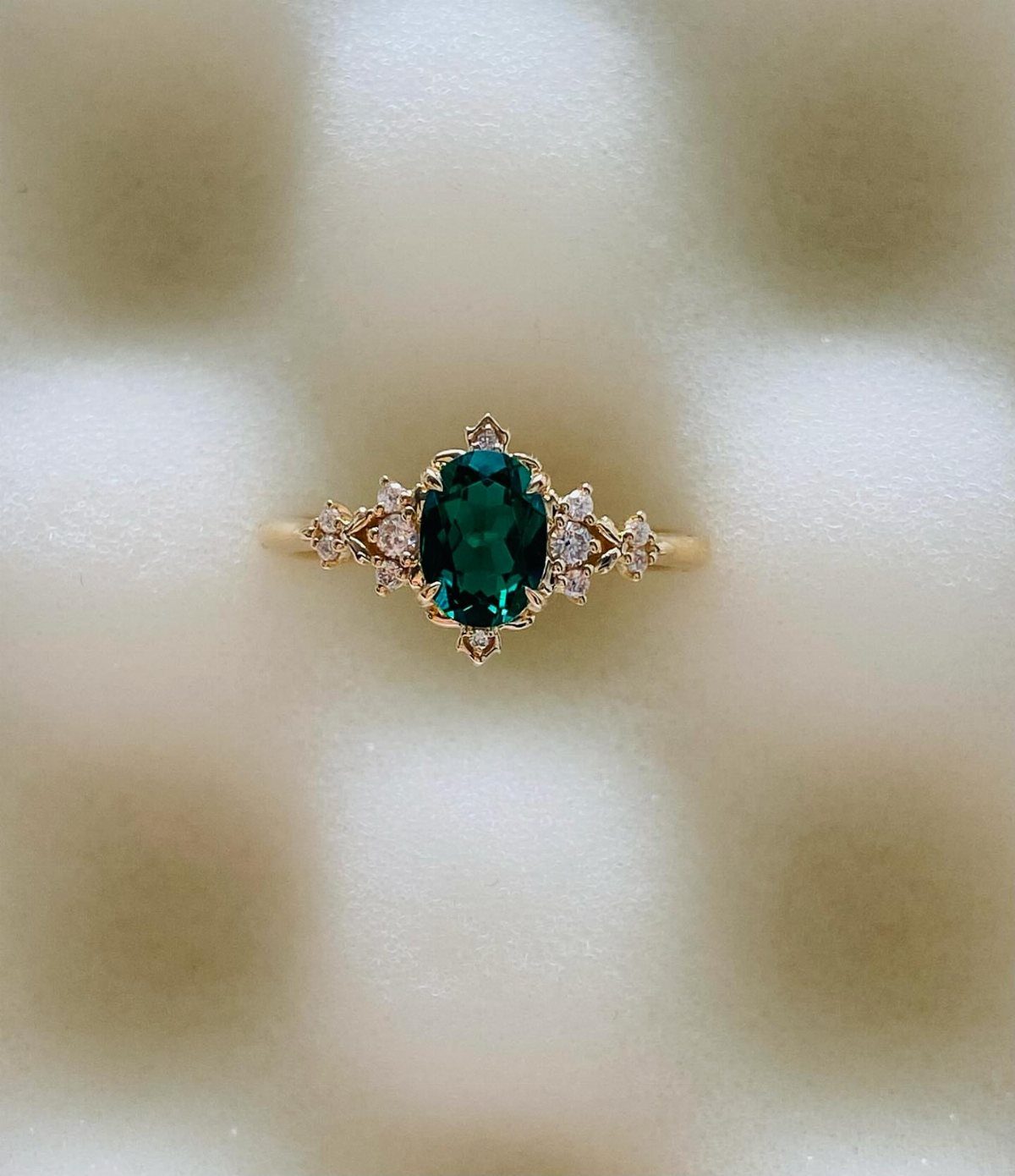
Green and rich, emerald is tied to love and renewal, and an oval cut with a ring of small diamonds frames it beautifully. Yellow gold warms the color, which is my favorite pairing.
Emeralds are often chosen for character rather than perfection. Have the jeweler explain how the stone should be cleaned and protected before you buy.
7. Tourmaline
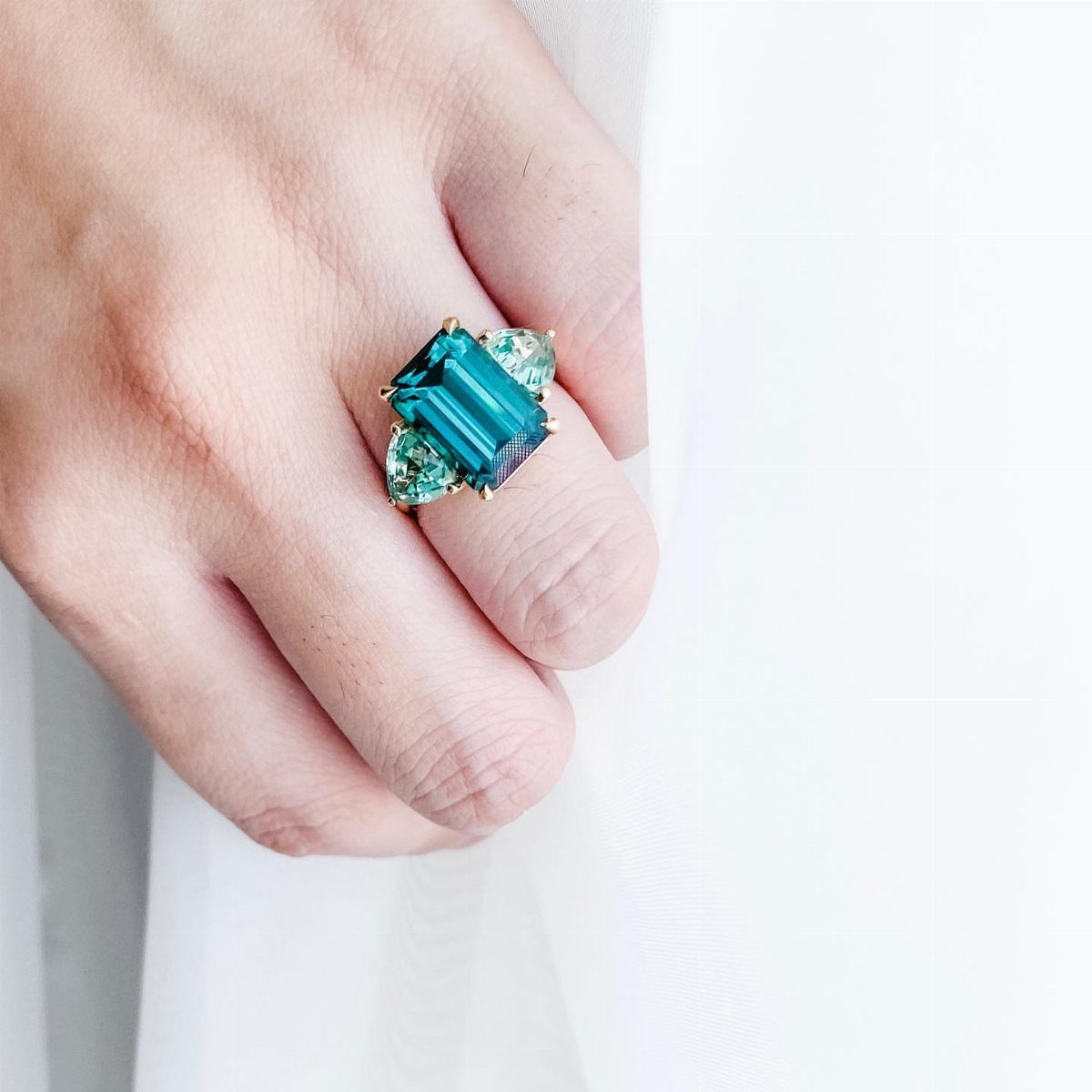
Tourmaline comes in more colors than almost any other ring stone, so you can choose the exact shade you want instead of settling for what a stone usually looks like.
Tourmaline in an emerald cut shows off its color best in a clean, open setting, and yellow gold warms a teal stone nicely, especially with a small side stone on each flank.
Compare several stones side by side in daylight, because teal can lean green or blue depending on the piece.
8. Aquamarine
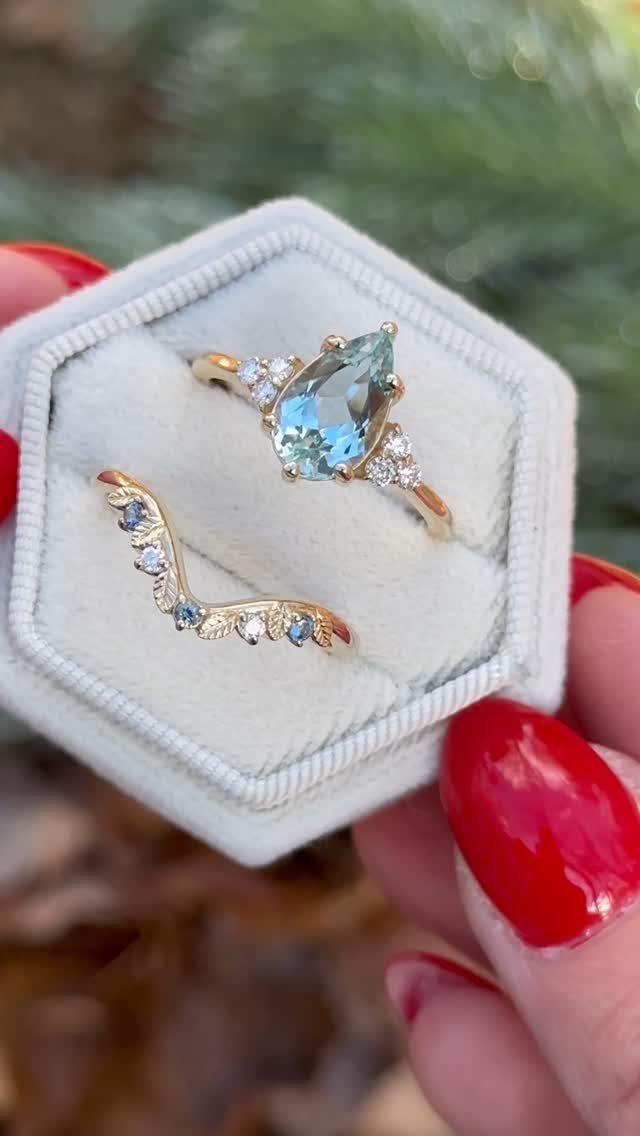
Soft blue is what aquamarine gives you, and its meaning is tranquility, which suits a wedding set meant to feel calm.
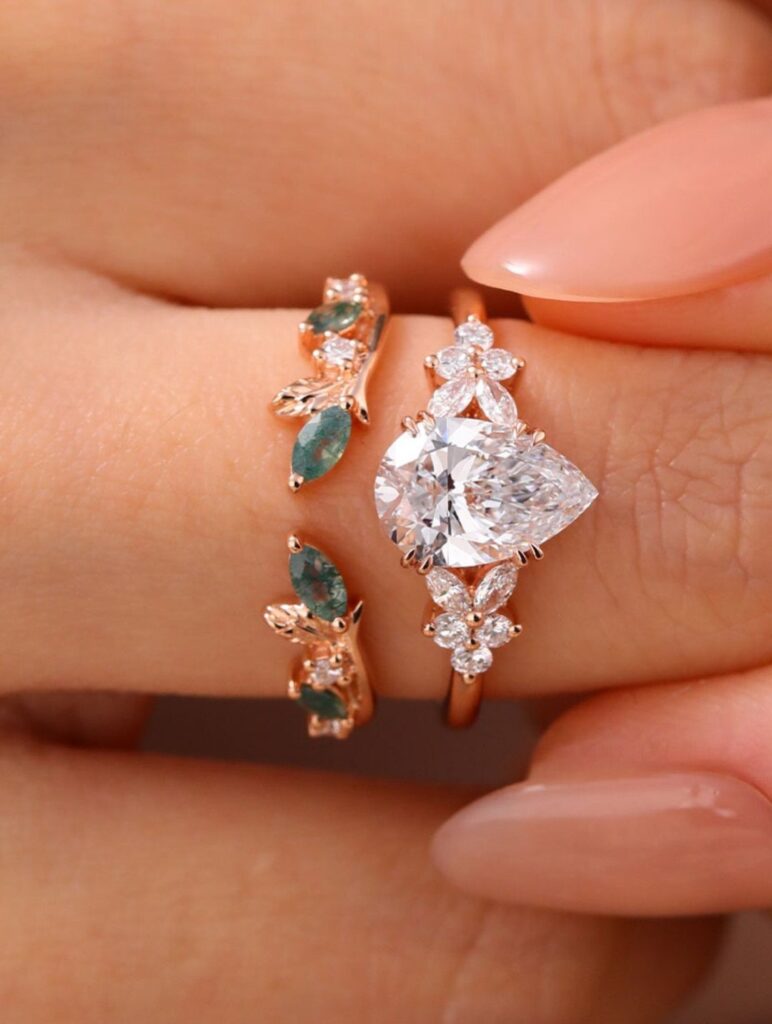
A pear cut paired with a curved band that sits flush against it makes the two rings read as one design.
Gold warms the pale blue nicely. Hold a few stones next to each other first, since a lighter aquamarine can look almost clear indoors.
9. Opal
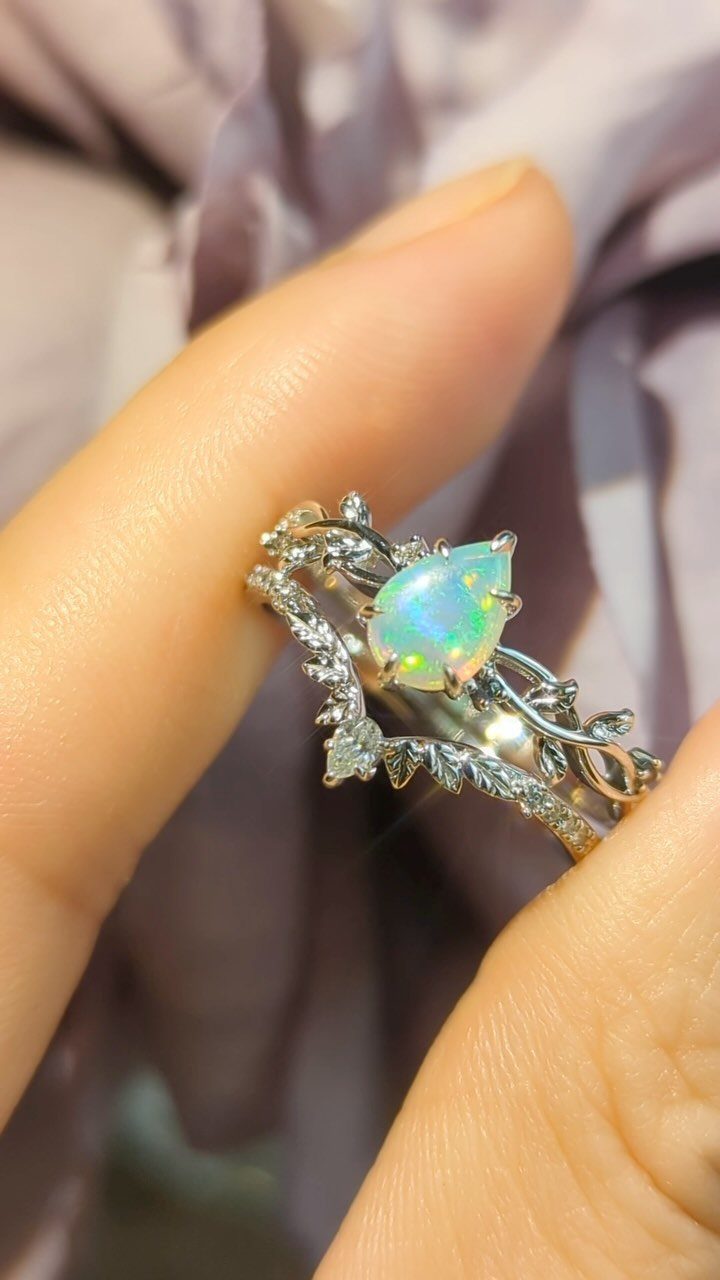
Opal flashes shifting color as it moves, and no 2 stones look alike.
Opal looks best in a setting that frames the glow without crowding it: a pear or oval shape with a few small diamonds nearby, and a band that stays quiet enough to let the stone lead.
Tilt the stone under a few kinds of light, because the color play can change a lot.
10. Spinel
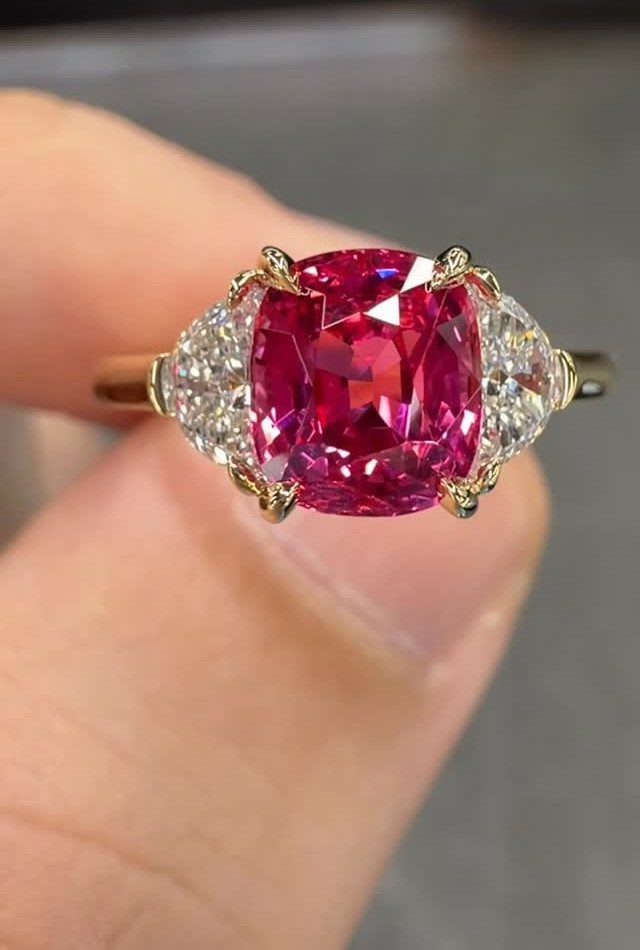
A pink spinel in a cushion cut shows a saturated magenta-red that rivals ruby at a friendlier price, and its durability makes it a smart daily stone.
Yellow gold with a diamond on each side lets the color carry the ring.
Look for a deep, even tone with no gray patches. If spinel is new to your jeweler, ask to see several before choosing.
11. Champagne Diamonds
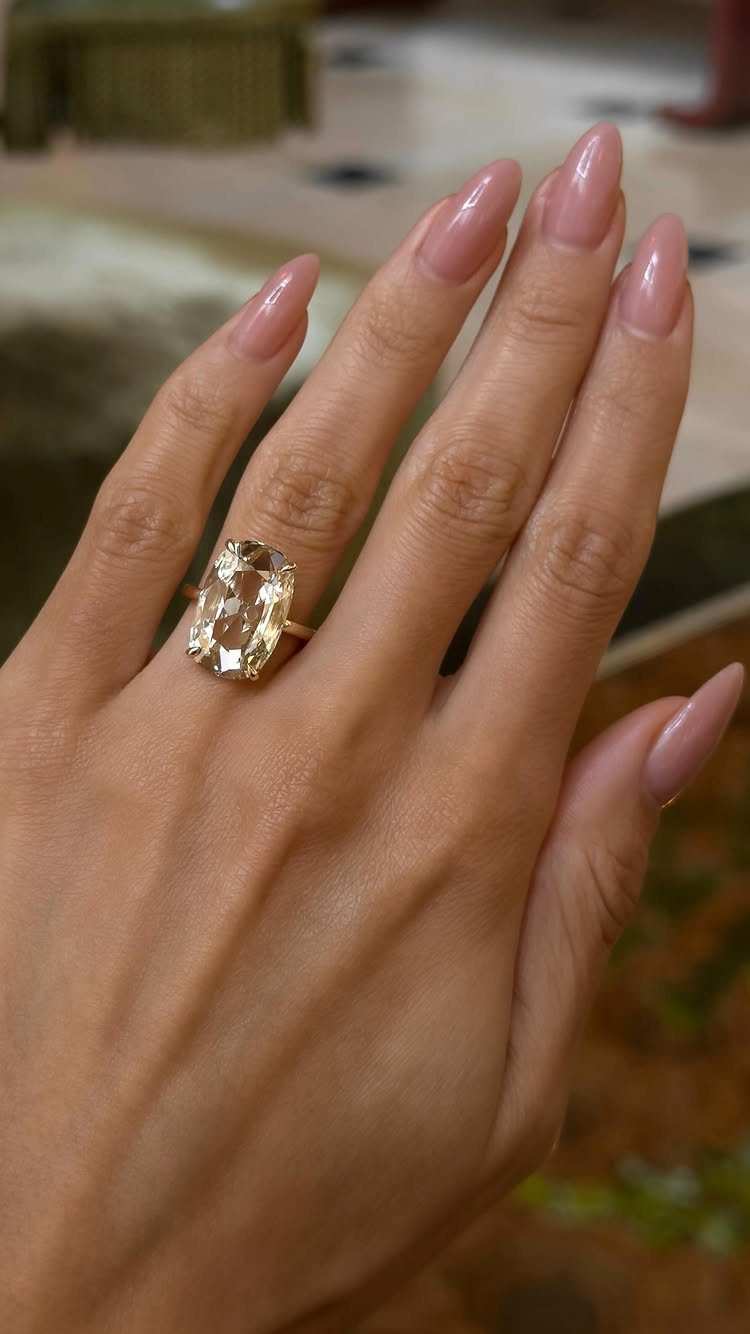
A champagne diamond gives you the real thing in a warm golden-brown tone, so you keep a diamond’s durability while skipping the icy-white look. Yellow gold echoes that warmth, which is how I would set it.
Large stones show the color best, so compare a few sizes in person. Since the shade is the whole appeal, pick the one whose warmth you love instead of chasing the palest.
12. Salt & Pepper Diamonds
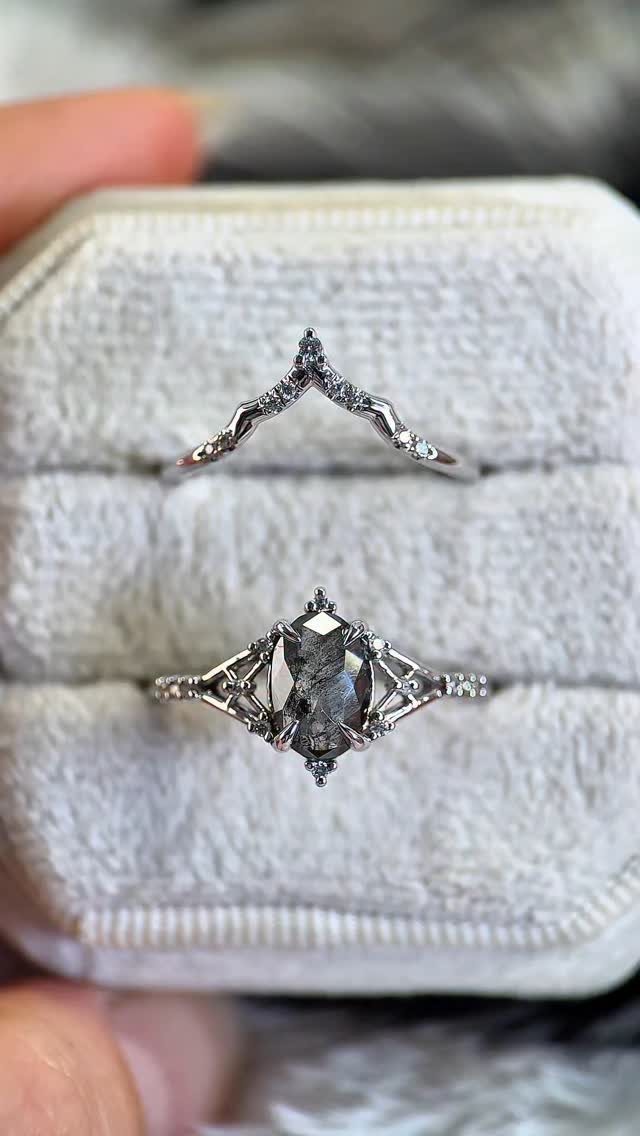
Salt and pepper diamonds are prized for the very inclusions that other buyers avoid: gray flecks and tiny crystals give each stone a speckled, one-of-a-kind look. Silver-toned metal keeps the pattern looking cool and smoky.
Every stone differs, so choose by looking at the actual diamond, not a catalog photo. A chevron band beside it adds a simple, graphic contrast.
Caring for Gemstone Rings
Store each ring in its own pouch or box compartment. Stones and metal scratch one another when they share space, and a hard gem can mark a softer one.
For home cleaning, a bowl of warm water, a drop of dish soap and a soft toothbrush do the job; I work around the prongs and under the stone, since that’s where lotion and grime pile up. Skip harsh scrubbing.
Hardness is only half the story. Most gems score 7 or higher on the Mohs scale, which means ordinary household dust (also a 7) won’t scratch them.
But even diamond can shatter from a hard knock, because hardness and toughness are different things. Nearly every popular ring stone is brittle, with jadeite as the unusually tough exception.
If your stone is delicate or you work with your hands, ask about a protective setting. A regular check of the setting also catches a loose prong before the stone can catch on a sweater and slip out.
Book a professional inspection and cleaning on a regular schedule, so a jeweler can check both the setting and the stone.
Choosing the Right Gemstone
4 things decide most stone choices: durability, brilliance, cost, and where the stone came from. Settle them before you fall for a color, because a pretty stone that fails one of them is the one you regret.
Durability comes first for a ring you will wear every day. Check the stone’s hardness and how well it resists knocks, and ask how the stone holds up to daily wear.
Brilliance depends on the cut as much as the material, so compare cuts of the same stone side by side.
Set a firm price ceiling before you shop, and include the setting in it.
Sourcing deserves real questions.
Ask the seller where the stone was mined or made and what paperwork backs that up. A good jeweler answers plainly, and a vague answer tells you something too.
Symbolism of Gemstones
Meaning is a fine reason to pick a stone, and it costs nothing extra. Sapphire is tied to loyalty and ruby to passion, and a birthstone can anchor a ring to a specific person or moment.
Decide what you want the ring to say before you look at stones. A color that feels personal will outlast a trend.
Ruby also happens to be durable, so the symbolism comes with a practical benefit for daily wear.
If you want the meaning to last, tell your partner or family why you chose the stone. A ring that carries a story is far more likely to be treasured and handed down as an heirloom.
Frequently Asked Questions
What is the cheapest gemstone for a ring?
Moissanite is the budget pick I would start with. Citrine is also often named as an affordable choice.
What are the types of stones used in wedding rings?
Popular choices include sapphire, morganite, tanzanite, moissanite, ruby, emerald, tourmaline, aquamarine, opal, spinel, champagne diamonds, and salt and pepper diamonds.
Each brings a different color and meaning, from sapphire’s loyalty to ruby’s passion. Settle durability, brilliance, cost, and sourcing first, then choose the color you love.
Is $1000 too cheap for an engagement ring?
Not necessarily. Set a firm price ceiling that includes the setting, then compare stones in person before you buy.