The styles here run from a Classic Solitaire to a Toi Et Moi ring, and the right one depends on how you wear jewelry and what you want the budget to buy: stone size, metalwork or color.
A fixed budget favors shape and detail over carats, since Art Deco geometry and Celtic knotwork carry a design even on a modest center stone.
A few details are easy to miss in a photo, like how a Pear Center Stone needs a protected point, or how an Eternity Band sits on your hand compared with a Bezel Setting.
1. Vintage-Inspired Rings
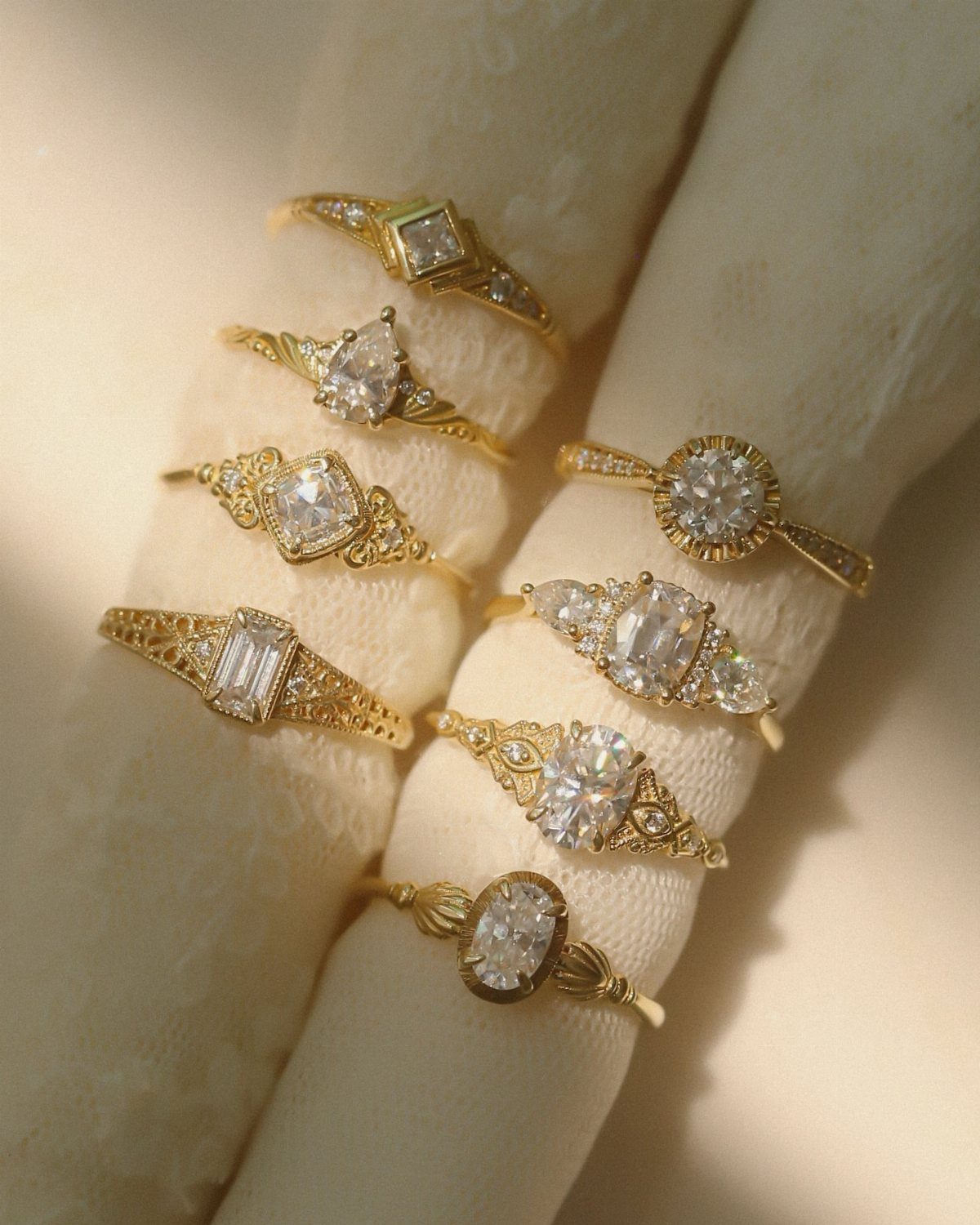
Filigree, the fine openwork metal lacing around the stone, is the detail that makes a ring read as vintage, and it varies a lot from ring to ring. Some are airy and some are dense.
Hold the gold bands against each other before you choose.
Several diamond shapes here share the same antique feel, so the shape matters less than the metalwork. I would pick the ring where the detailing is still visible from the side, not only from above.
2. Art Deco Style Rings
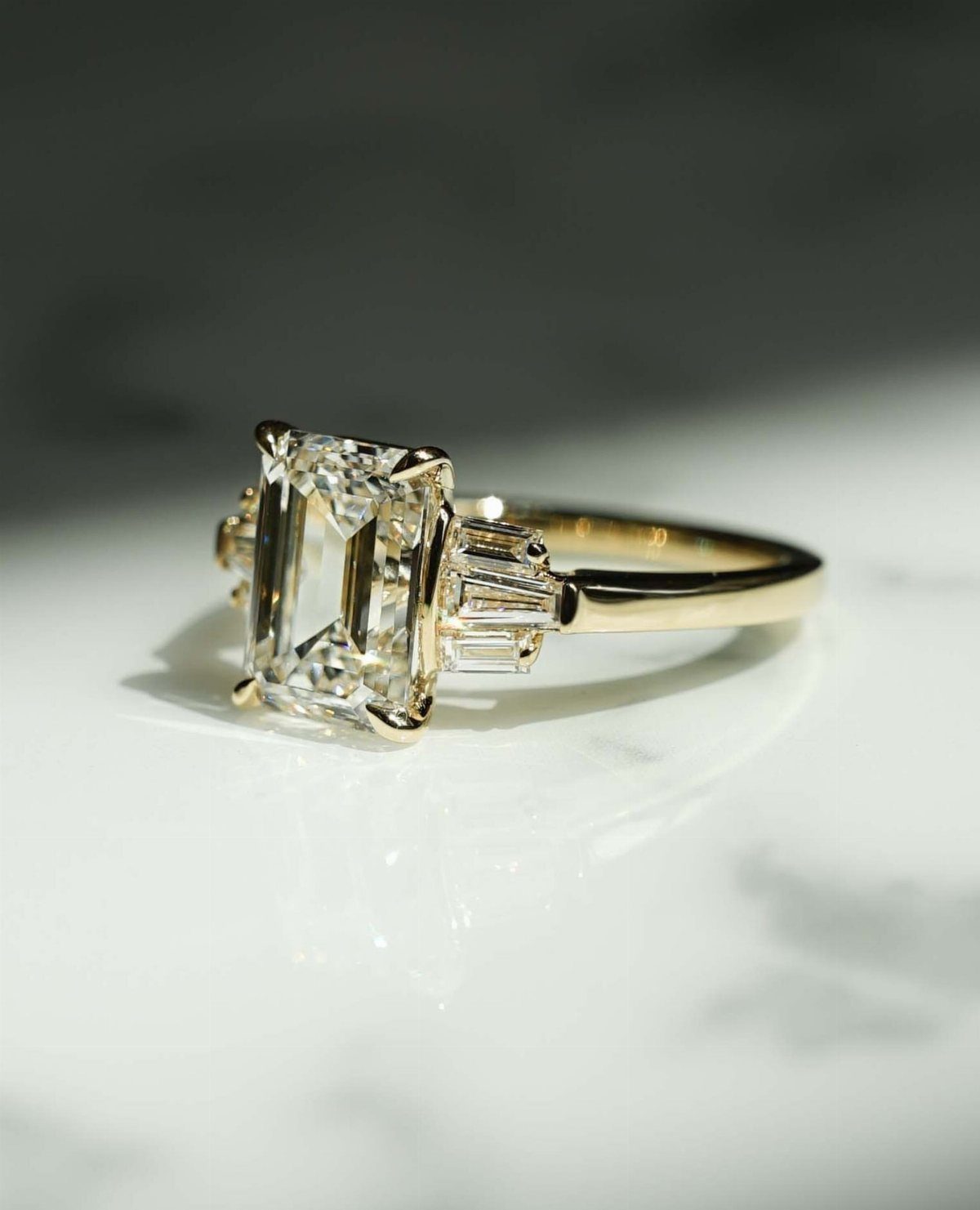
Straight lines do the work in an Art Deco ring. An emerald-cut center stone with baguette side stones gives you long, stepped facets and a clean, architectural outline instead of sparkle for its own sake.
For a budget-minded couple, that look is a good reason to favor shape over size: the geometry carries the design even on a modest center stone.
Gold suits it well. I would skip extra pavé or fussy additions, since they fight the crisp symmetry.
3. Classic Solitaire
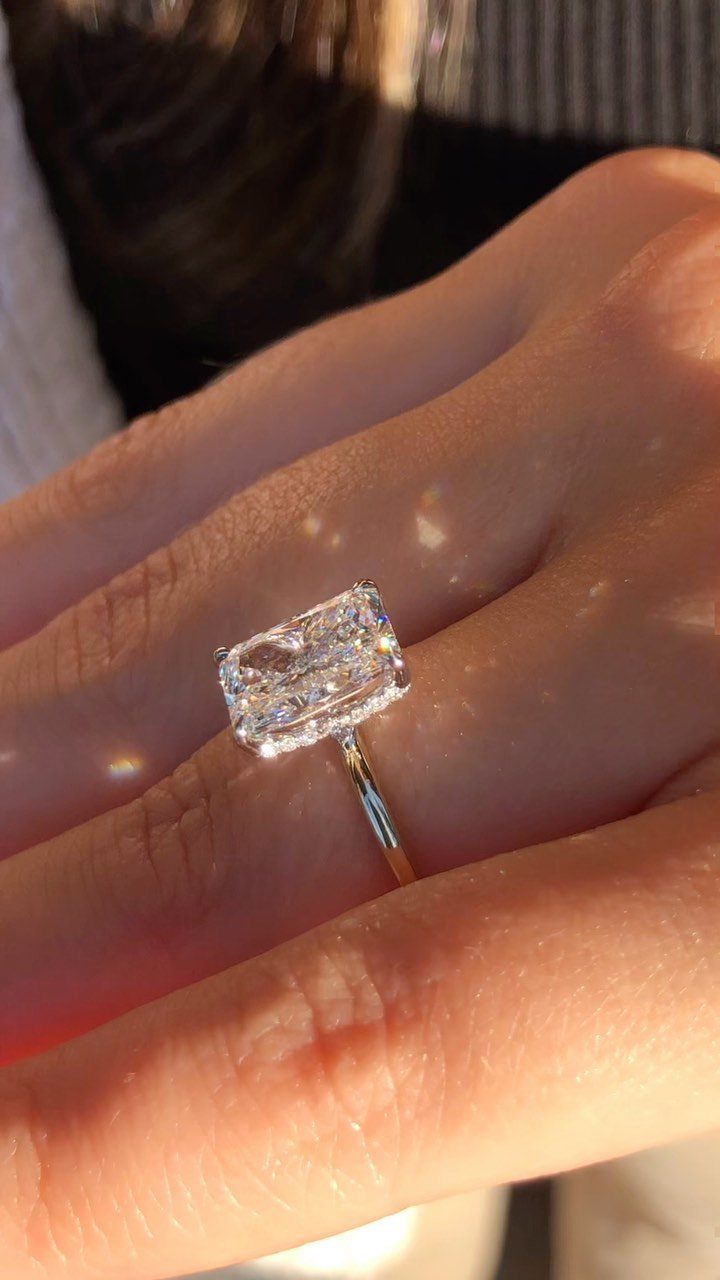
One stone, one band, nothing to argue with. A solitaire puts the entire budget into the center diamond, so the cut and shape deserve your attention first.
An emerald cut like this one has a rectangular, step-faceted look that reads as quiet and a little glassy, not fiery.
Gold keeps it warm. I like that a solitaire leaves room to add a wedding band or stacking rings later without any clash.
4. Nature-Inspired Designs
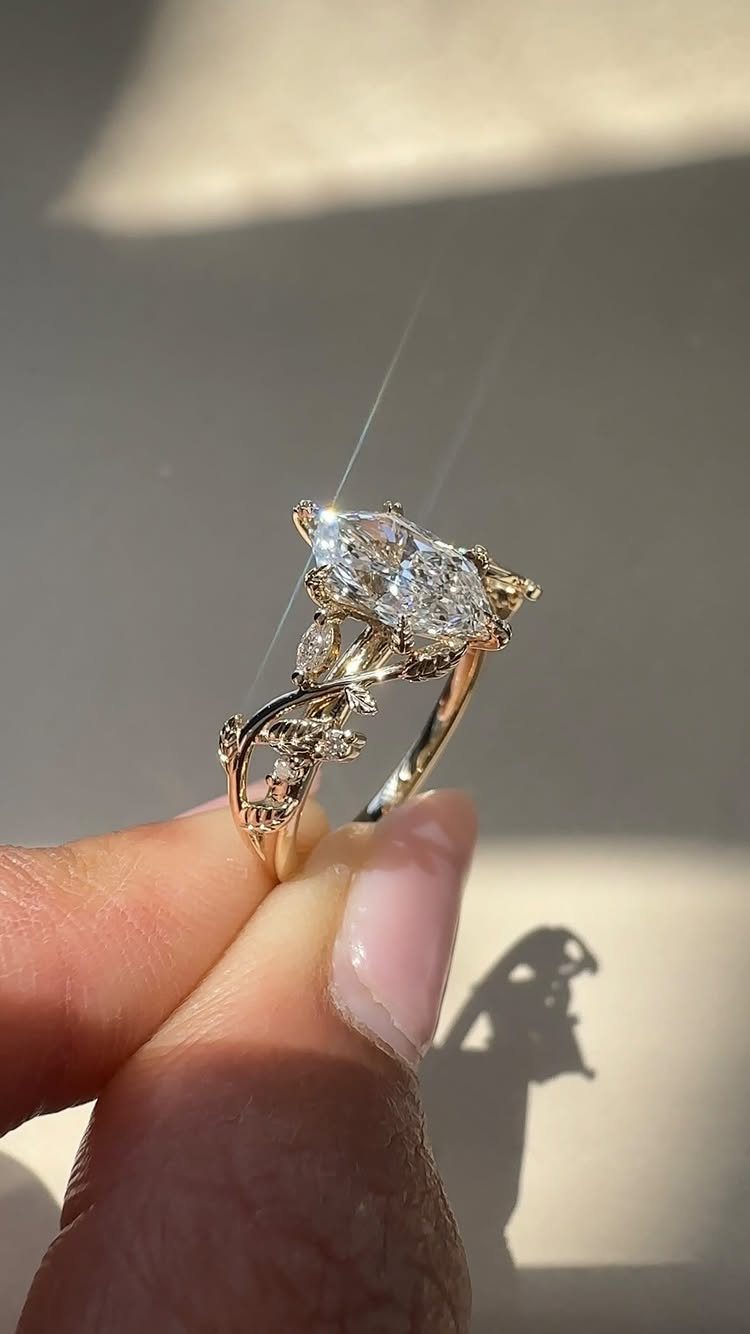
Leaves, vines and petals turn a band into something that looks grown, not cast. Here the gold curls like a vine around the stone, and the leaf accents echo the point of a pear or marquise center.
Pointed shapes pair naturally with leaf motifs, so match the two on purpose.
Ask a jeweler how the leaves sit against the finger, since raised details can catch on sleeves. A branch-style band is my favorite version.
5. Three-Stone Setting
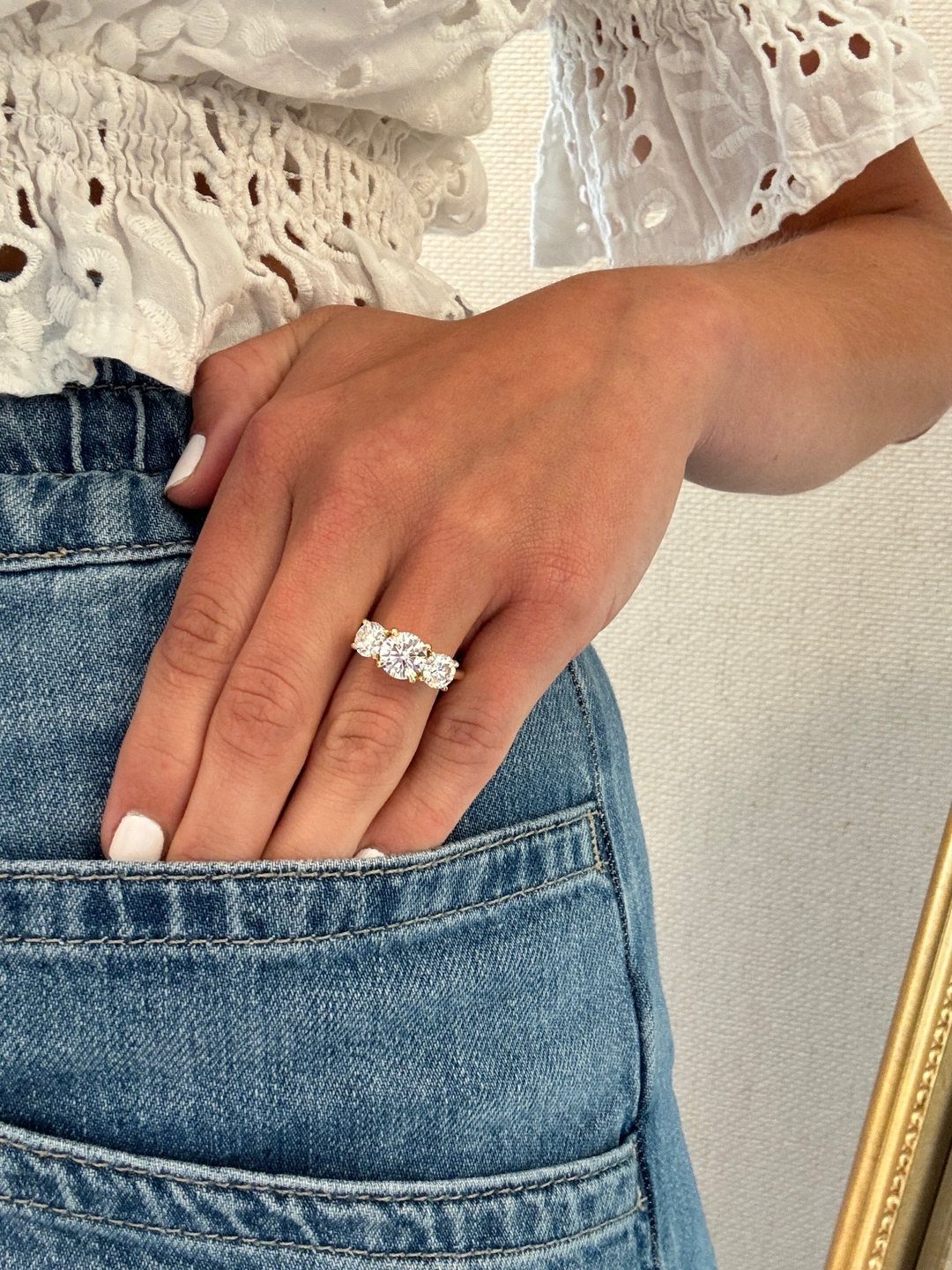
Three stones put a center diamond between two smaller ones, and the result looks fuller from the front than a single stone of the same size would.
That makes it a smart pick if you want presence without paying for one large center.
Keep the side stones noticeably smaller than the middle one so the center still leads.
Yellow gold gives a three-stone ring a soft glow. Match the stone shapes for the cleanest look.
6. Colored Gemstones Ring
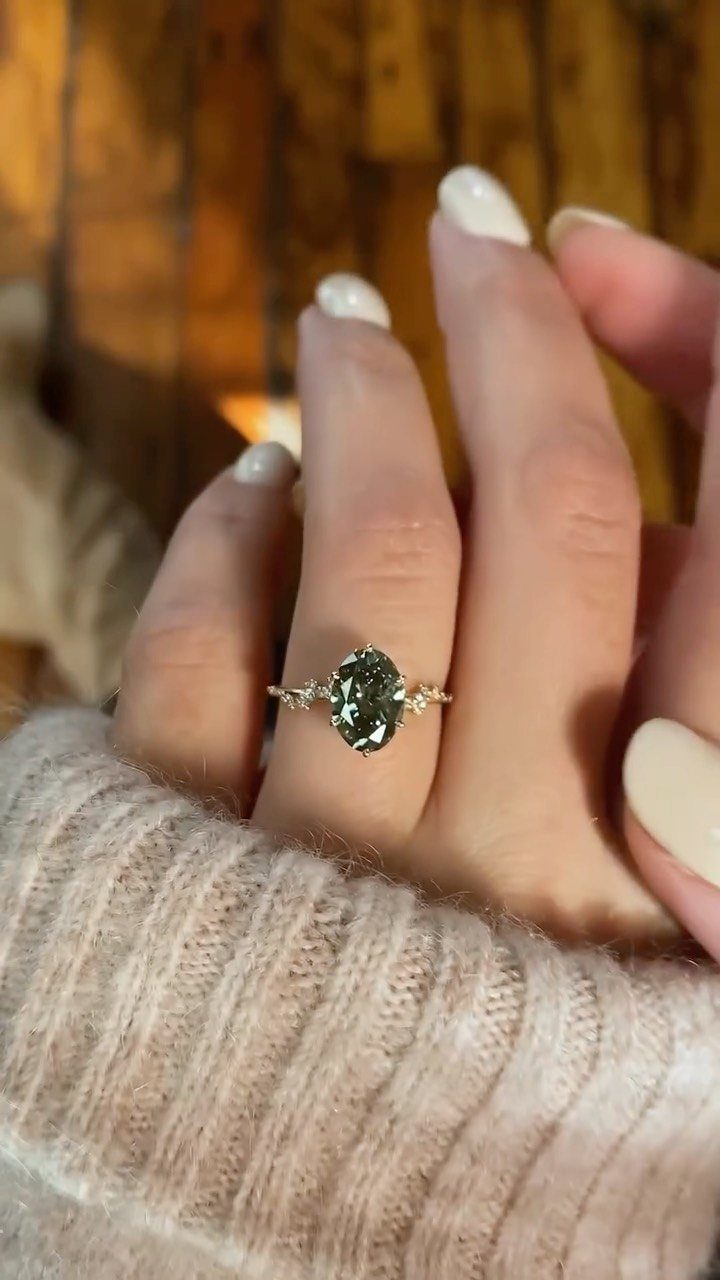
A grey-green oval sapphire-style stone, set in gold with small diamond side stones, looks nothing like the usual white diamond ring. That contrast is the appeal: the color becomes the personality of the ring.
Choose a stone you will still love years from now, and see it in daylight before buying, because muted greens shift under different light.
Colored stones also give you a way to spend less than a comparable diamond, though prices vary widely by stone. Ask the jeweler about hardness for daily wear.
7. Bezel Setting
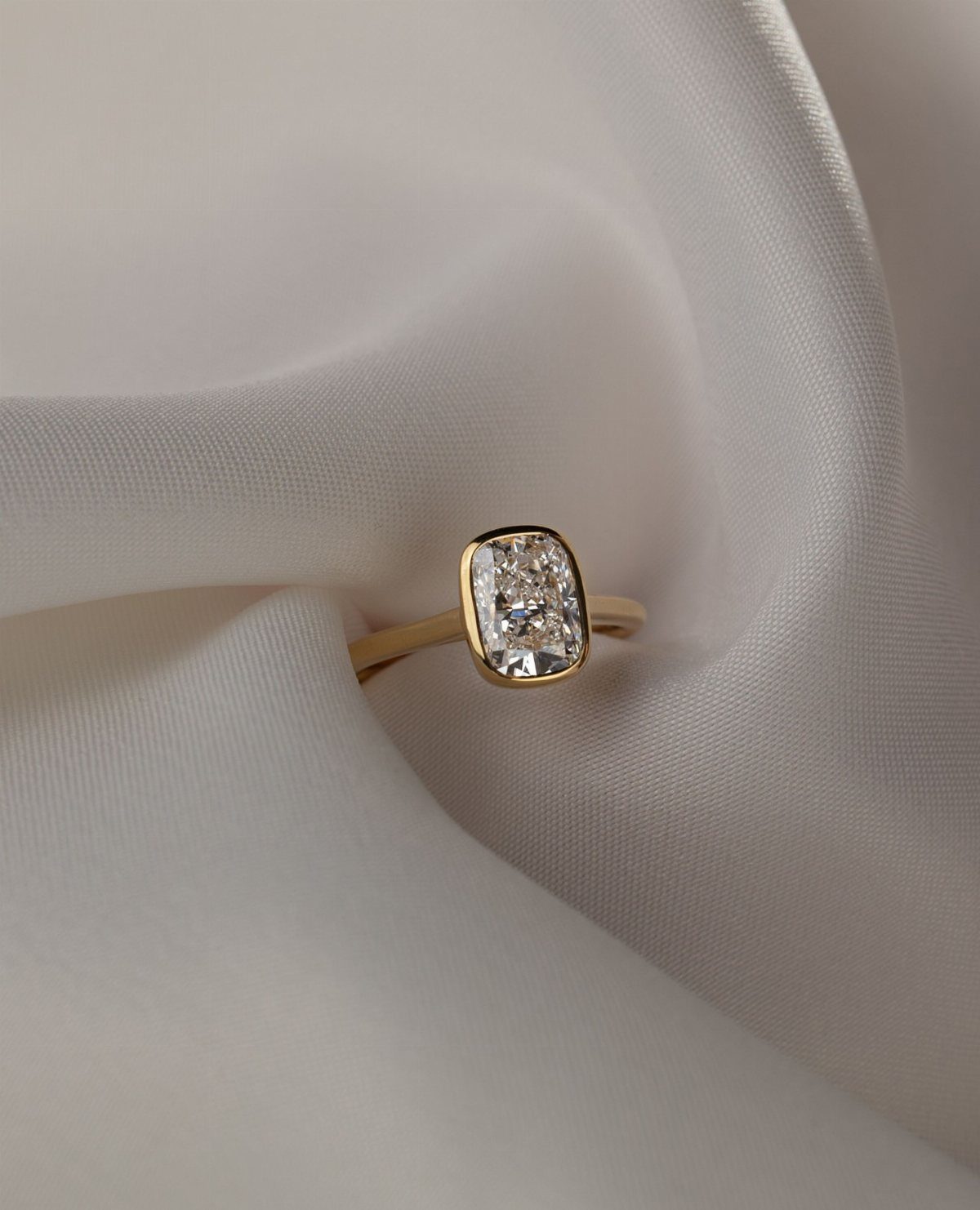
A bezel wraps the diamond in a thin gold rim, so the stone sits held rather than propped up on prongs.
On a cushion cut like this one, the rim follows the soft corners and gives the ring a smooth, finished outline.
I would choose a bezel if you like a low, clean profile.
Ask the jeweler to show you the rim from the side, since a thick edge can hide part of the stone and a thin one keeps more of it in view.
8. Mixed Metals Ring
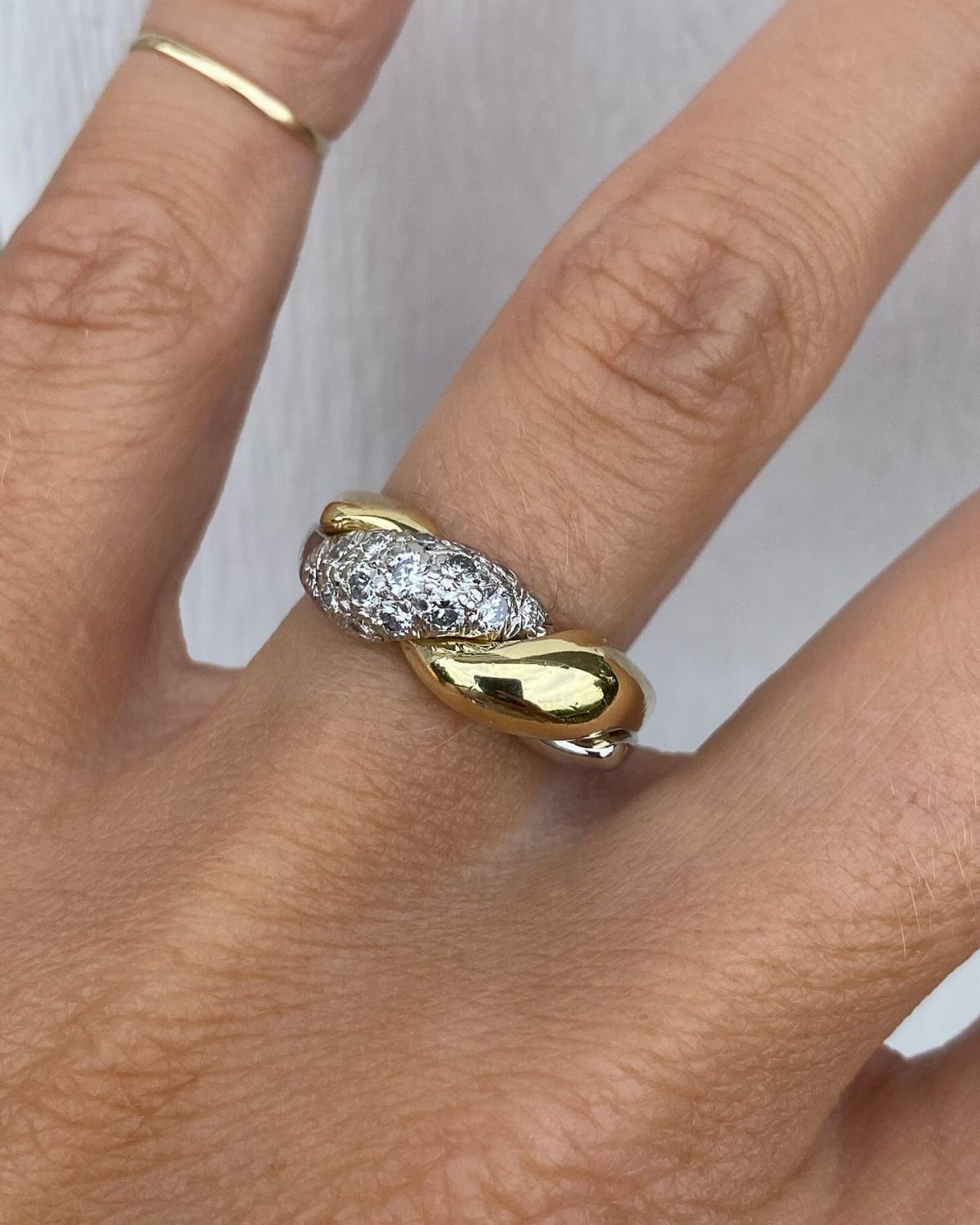
Mixing metals works when one tone leads: a white gold or platinum setting around a pavé center, say, with a thin yellow gold band worn on the next finger, so the two read as a deliberate pairing and not a mismatch.
Mixing metals means you are not locked into one color.
That suits anyone whose jewelry already runs warm and cool. I would pick one metal to lead and let the other play a smaller part, which keeps the ring from looking accidental.
Try the pieces on together before buying, because a wedding band in a third metal can change the whole look.
9. Pear Center Stone
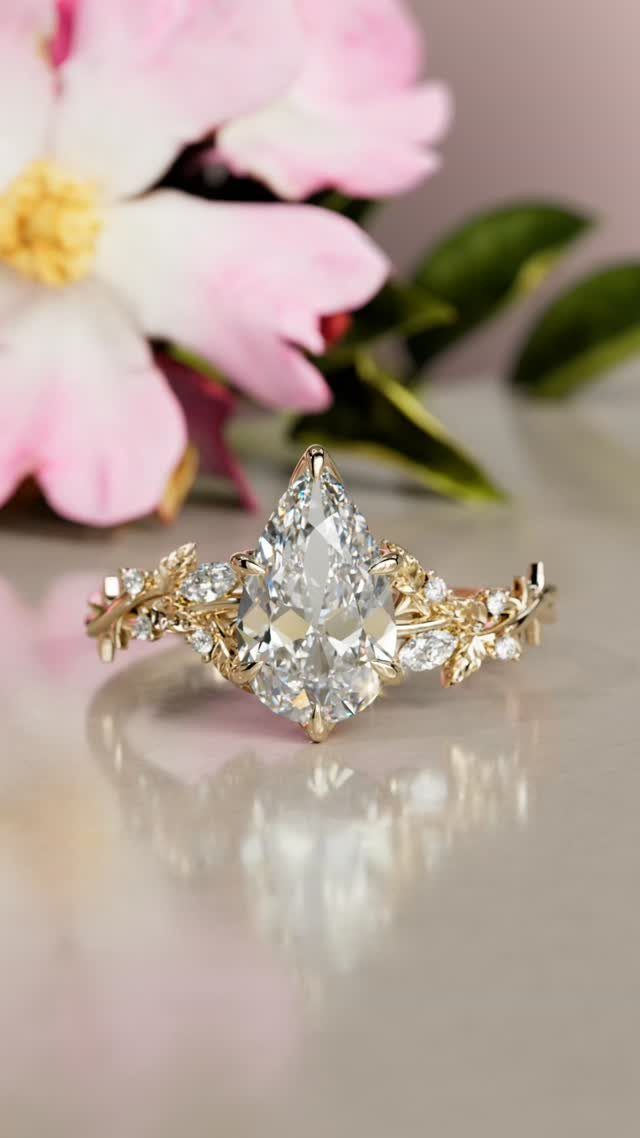
A pear-cut diamond has a rounded end and a single point, which makes it a shape that stands apart from the usual round or princess. Point it toward the fingertip, and the stone makes the finger look longer.
The leaf-detailed gold band here is a good partner, since the pointed tip echoes the leaf shape.
Make sure a prong or V-tip protects the point, since that narrow end is the most exposed part of a pear and the first place a stone chips.
Pear shapes are also the one I would suggest to anyone who wants something different without going colored.
10. Eternity Bands
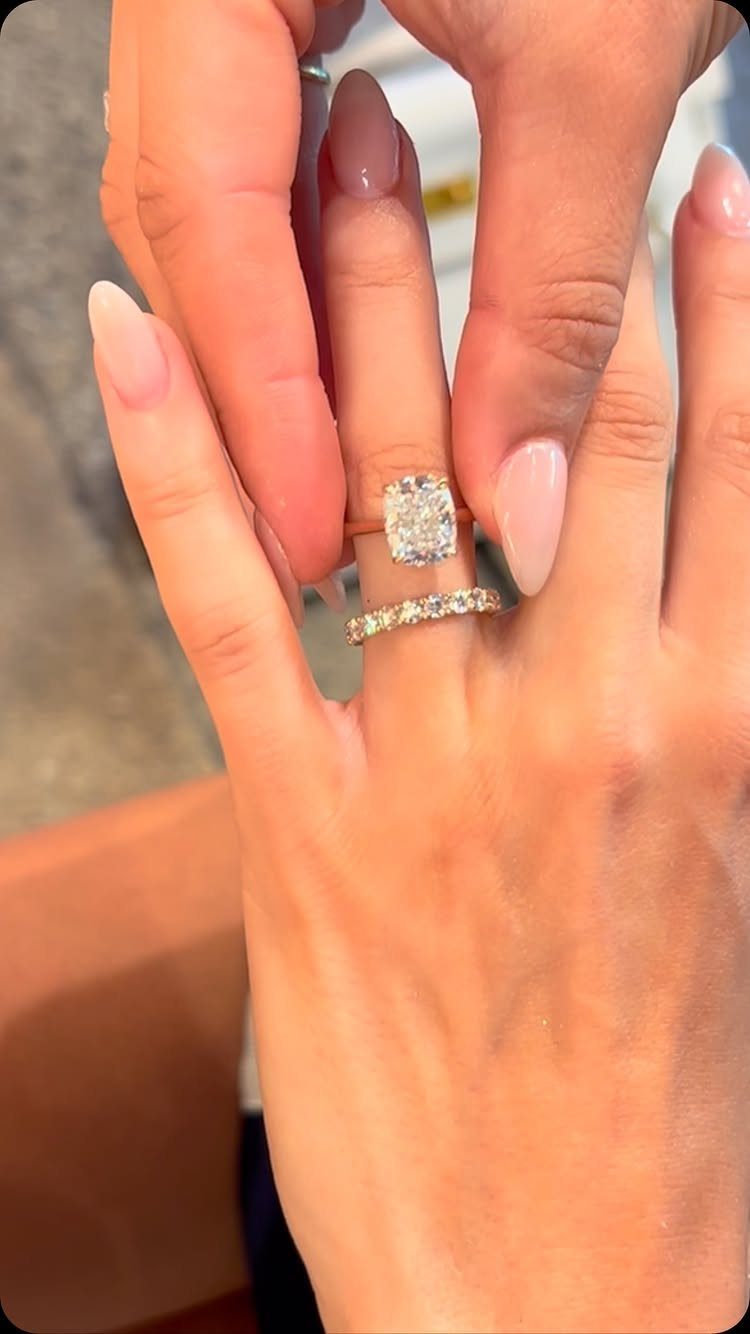
A continuous line of stones around the band means the sparkle never stops, whichever way the ring turns. Next to a large radiant-cut diamond, a matching eternity band makes the pair look like one deliberate set.
On a small hand, say a size 4.5, a full circle of stones reads delicate and stacks neatly, so an eternity band suits a petite finger better than a wide, chunky one.
Check the size before ordering, because a ring set all the way around is hard to resize.
11. Modern Minimalist Rings
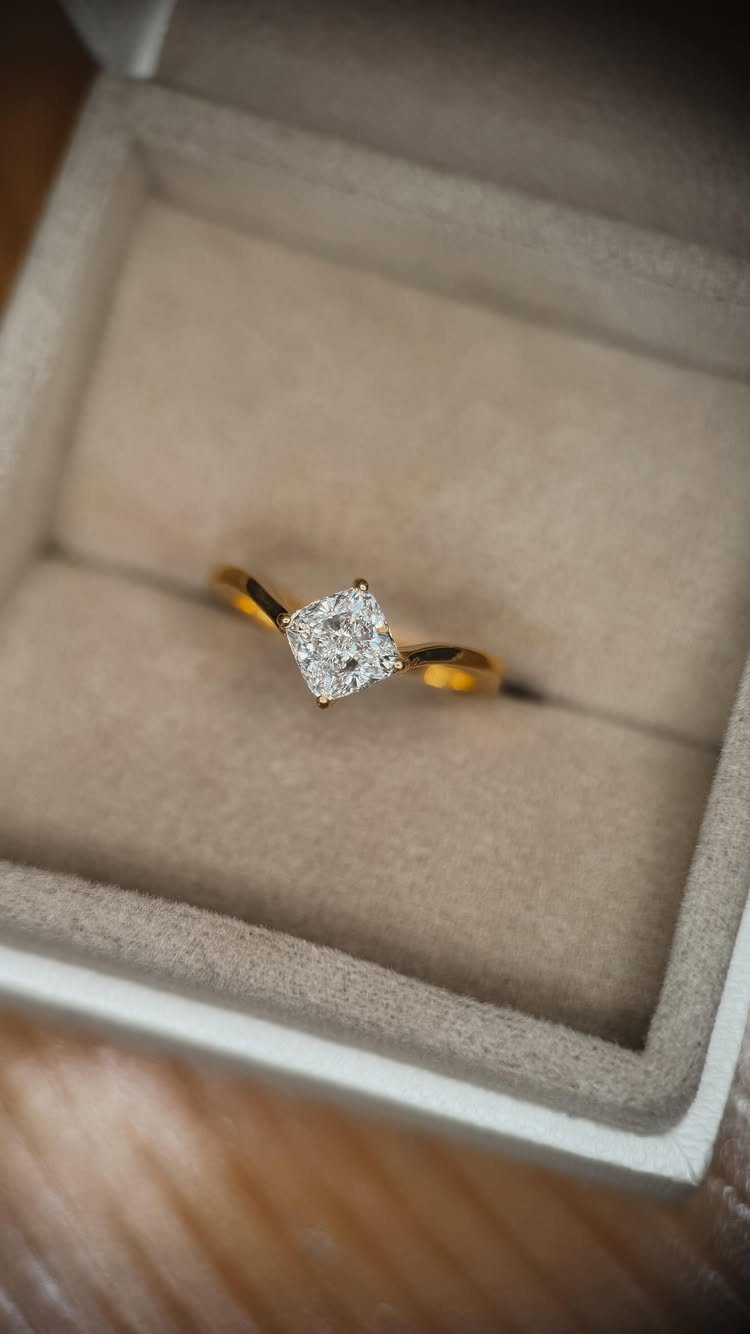
A single square-cut diamond on a plain gold band is about as stripped back as an engagement ring gets. With nothing else competing, the stone’s crisp corners become the whole design.
That makes proportions matter more than ornament.
I would look closely at band thickness and how high the stone sits, because small changes show on a ring this simple. It also leaves room for a plain wedding band later.
12. Toi Et Moi Ring
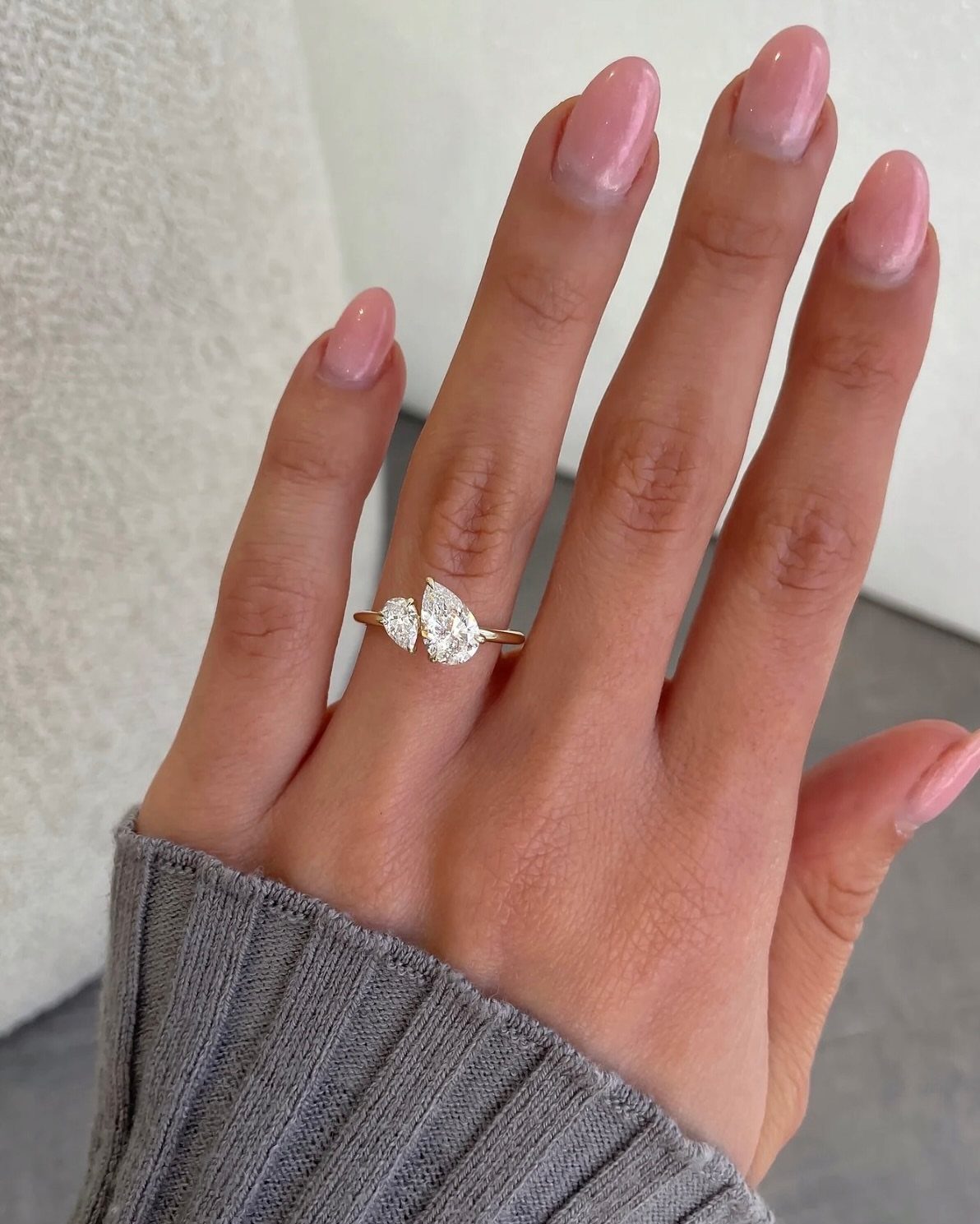
Two pear-cut diamonds set on one gold band, points aimed toward each other or away, is the idea behind a toi et moi ring. It stands for two people, and it looks like nothing else on the hand.
Keep the 2 stones matched in size and shape, since any mismatch is obvious when they sit side by side.
I would ask the jeweler how far apart the points sit, so they do not touch or snag. If the stones differ slightly, ask to see them together first.
13. Celtic Knot Ring
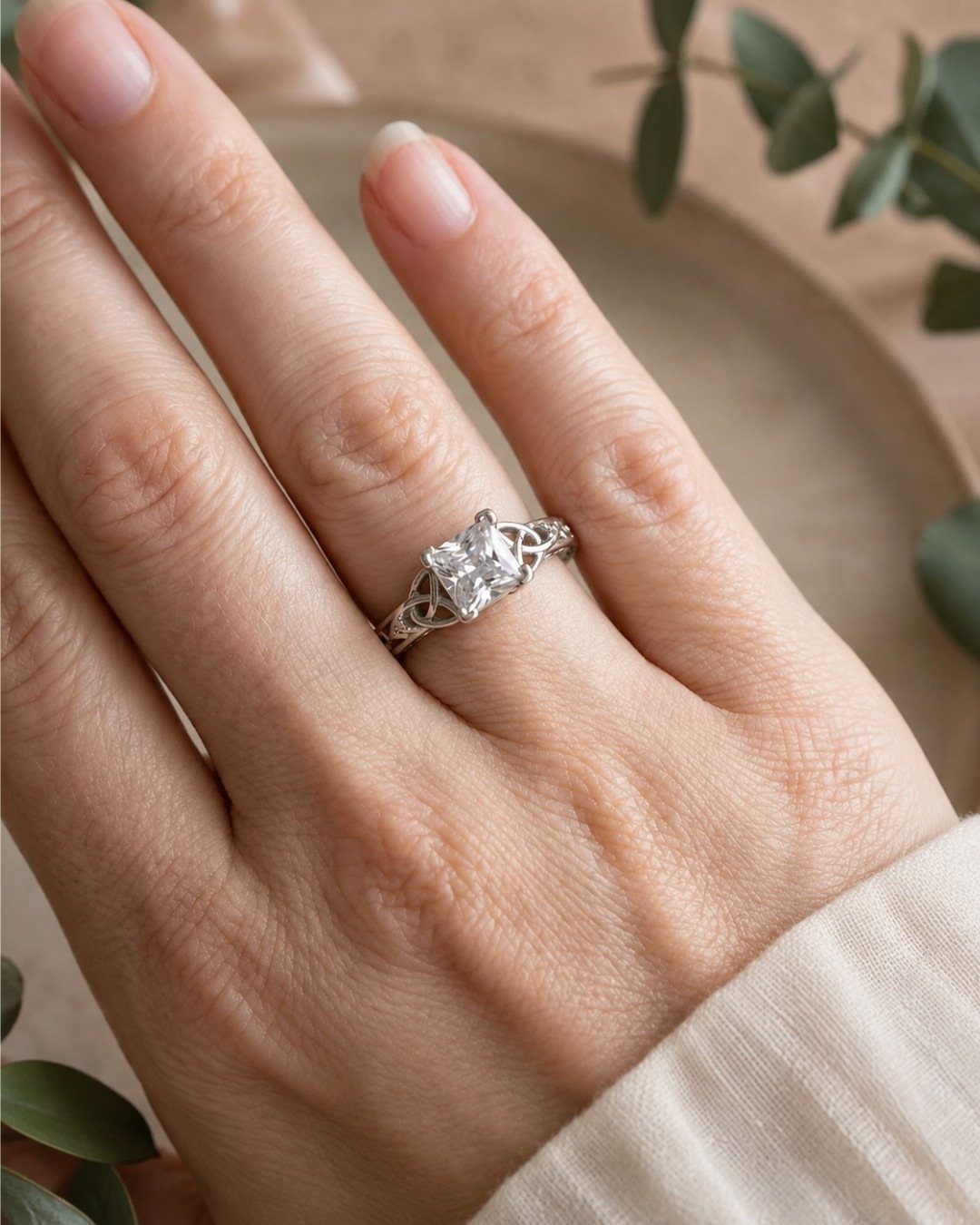
Interlaced bands of metal that loop over and under each other give a Celtic knot ring its look: no beginning, no end, just one continuous pattern.
On this silver-toned band, the knotwork flanks a square center stone, so the stone stays the focus and the pattern frames it.
Knot detail is a good way to get a ring with personal meaning and a distinct look without paying for a bigger diamond.
Ask the jeweler to show you the band up close, because tight crossings need crisp edges to read clearly. I would keep the center stone plain and let the metalwork carry the design.
Choosing the Right Engagement Ring
Shape, setting, metal and your own taste: those four choices add up to the ring, and each one changes the look and the price. Settle the shape first, since it limits which settings will work.
If you want to see stones before committing to a mount, shop loose diamonds first and choose the setting around the one you love. That order keeps the stone from being an afterthought.
Halo rings are the one common style the other entries skip: a larger center diamond ringed by smaller stones, which adds sparkle.
A three-stone ring carries a meaning many couples like, with the stones standing for your past, present and future.
If a white diamond on a yellow gold band feels too predictable, look at alternative stones and unusual jewelry styles before you settle.
If you learn anything from this retelling of engagement ring jewelry lore, let it be this: there is no one “best” or “perfect” engagement ring.
— Vogue
Lab Diamonds Popularity
A lab diamond has the same sparkle and hardness as a mined one, and a lot of couples choose it because the same budget buys a bigger or cleaner stone.
On a fixed budget, that usually means a bigger or better-cut stone for the same money.
Color is where lab or natural stones can also stretch you. Fancy colored diamonds run through many shades, and yellow, champagne and brown are the ones you will see most often, usually at friendlier prices.
Blue, pink, green and purple stones are rare enough that the prices climb fast. If you love color, I would start with yellow or champagne and treat the rarer shades as a splurge.
Budget Considerations
A well-cut, well-made ring beats an expensive one, so judge the stone and the craftsmanship before you look at the tag.
If your first pick is over budget, look for a lower-priced alternative that still does the job well, instead of stretching into debt before the wedding.
Spend your time on the person who will wear it. Think about who will wear it and what they care about, then pick a ring that echoes those traits.
Picture it on their finger, not in the display case. A ring that tells your story and looks right on the hand beats a bigger number every time.
Set a ceiling before you visit a store, and say it out loud to the jeweler.
Frequently Asked Questions
What are the 5 C’s of engagement rings?
The usual list is cut, color, clarity and carat weight, and a grading report from a lab like GIA is often counted as a fifth.
Cut is the one I would look at first, since it drives how a stone handles light, and a solitaire puts the whole budget into that one diamond. Certification matters because it backs up the grade of the other four.
What is the 3 month rule for rings?
The rule says to spend 3 months of salary on an engagement ring. The 3 months’ salary idea is a common suggestion, but it is only a suggestion.
I would set a ceiling that fits your own budget before visiting a store, and tell the jeweler the number out loud, rather than stretch into debt before the wedding.
What are some unique ideas for engagement rings?
A pear-cut center, a colored gemstone, or a vintage-inspired band with filigree all stand apart from the usual round diamond.
A toi et moi ring, with two pear-cut diamonds on one band, is another option, as is a nature-inspired band with leaves or vines.
If you want a shape that stands out without adding color, a pear is where I would look first.
How much should I spend on an engagement ring if I make $100,000 a year?
The three-month rule would put you around $25,000, but that is a tradition and not a requirement.
Ring quality matters more than price, so set a ceiling that fits your wedding budget and hold to it. Choosing a lab-grown diamond can buy you a larger or better-cut stone at the same price.