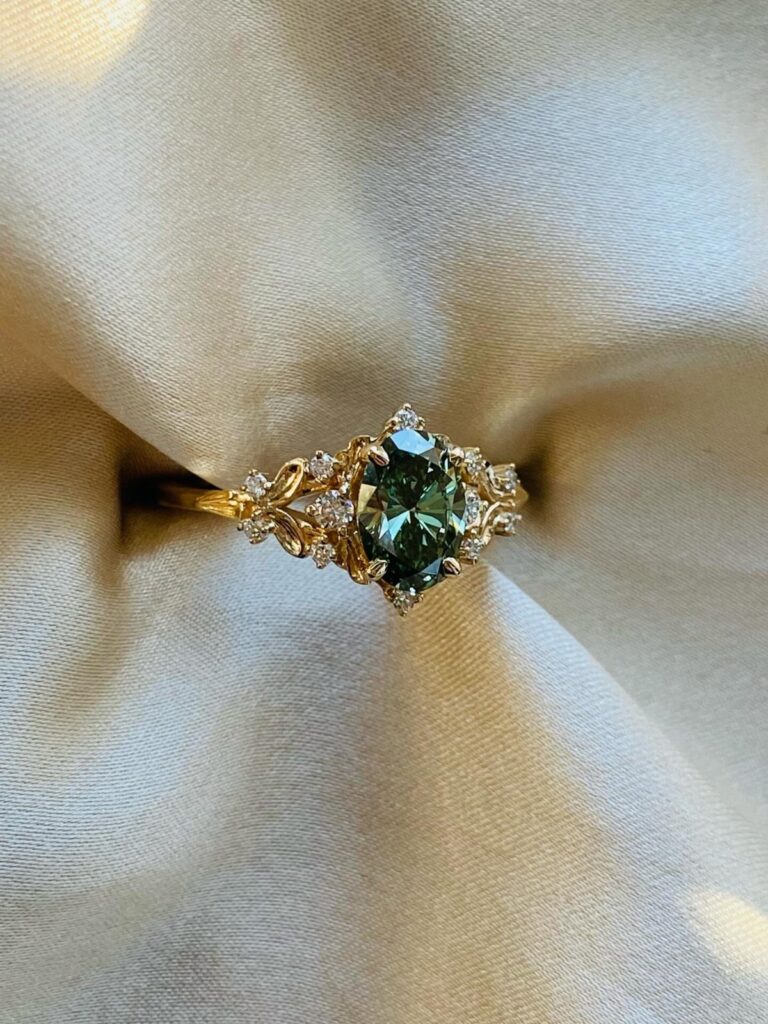
Your daily routine picks the ring before your taste does: a moonstone sunk into a protective bezel will outlast a tall stone gripped by a few thin prongs if your hands spend the day in clay, soil or a hot kitchen.
The ideas here run from alternative gemstones and celestial motifs to organic curves, leaves and vines, handcrafted pieces, intricate filigree, twisted bands, a marquise diamond, moss agate and an asymmetric diamond cluster.
Every one carries a boho look, but the stone’s hardness decides how much care it needs, so match the gem to your habits before you fall for the pattern.
1. Alternative Gemstones
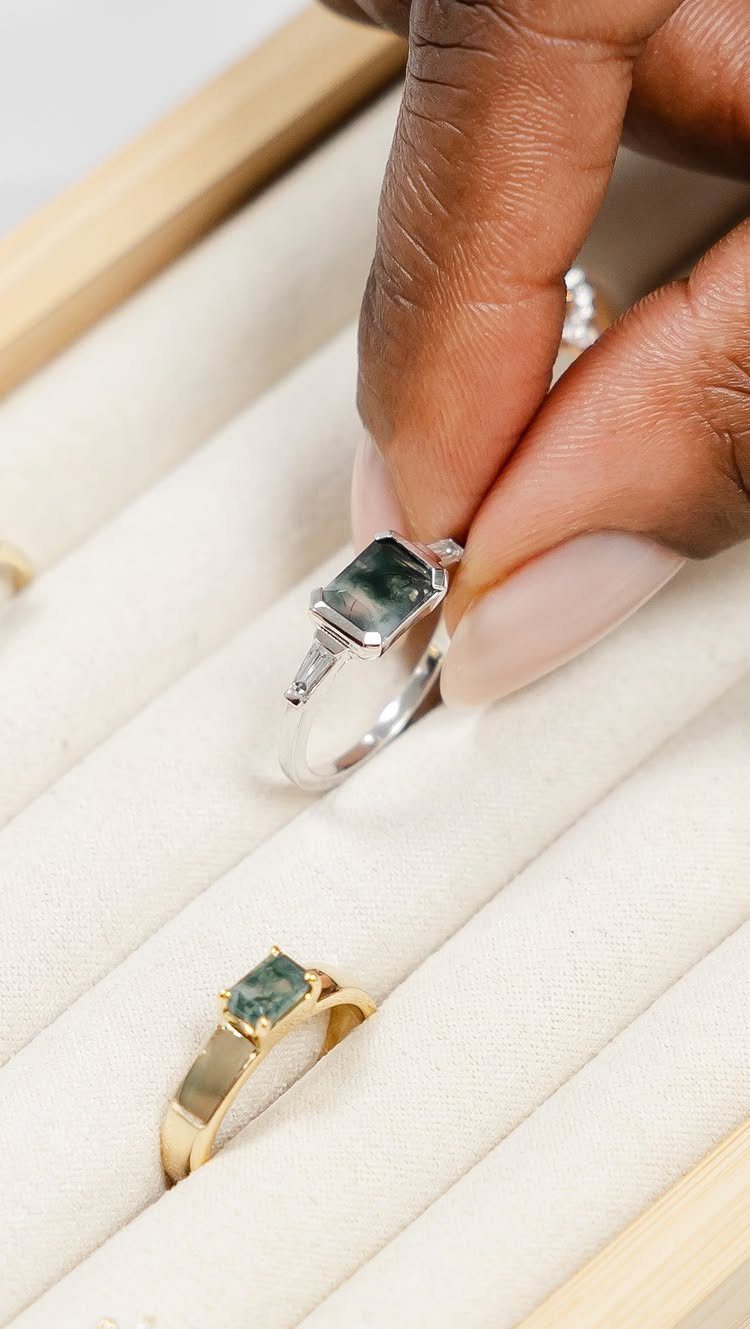
Green stones like the ones in this box ask a fair question: does a ring need a diamond to read as an engagement ring?
I say no. A colored stone gives you a ring nobody else at the party is wearing, and for a couple working against a real number, it often frees up budget for a better setting.
Check durability with the jeweler before you fall for a stone, since softer gems chip and scratch more easily than diamond under daily wear.
Also compare gold and silver in person; the same green looks warmer in one and cooler in the other.
2. Celestial Motifs Boho Engagement Ring
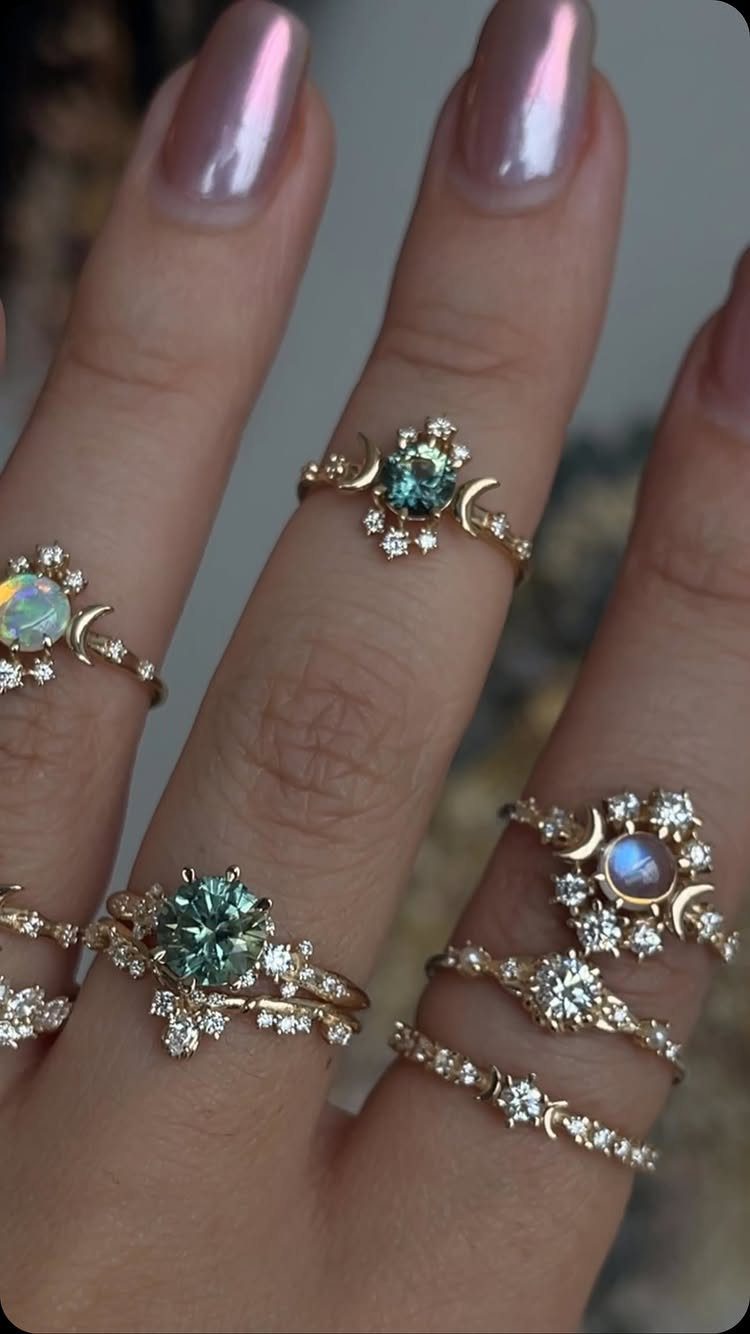
Moons and stars turn a ring into something that feels personal, almost like a small story you wear. Stack several thin gold bands, each with its own motif, and you get a look that grows with you.
I would start with one celestial ring as the engagement piece and add the others on anniversaries or birthdays.
That spreads the cost across years and keeps the first ring from looking crowded. Pick a motif that means something to the two of you, such as a first-date night or a shared sign.
3. Organic Curves Boho Engagement Ring
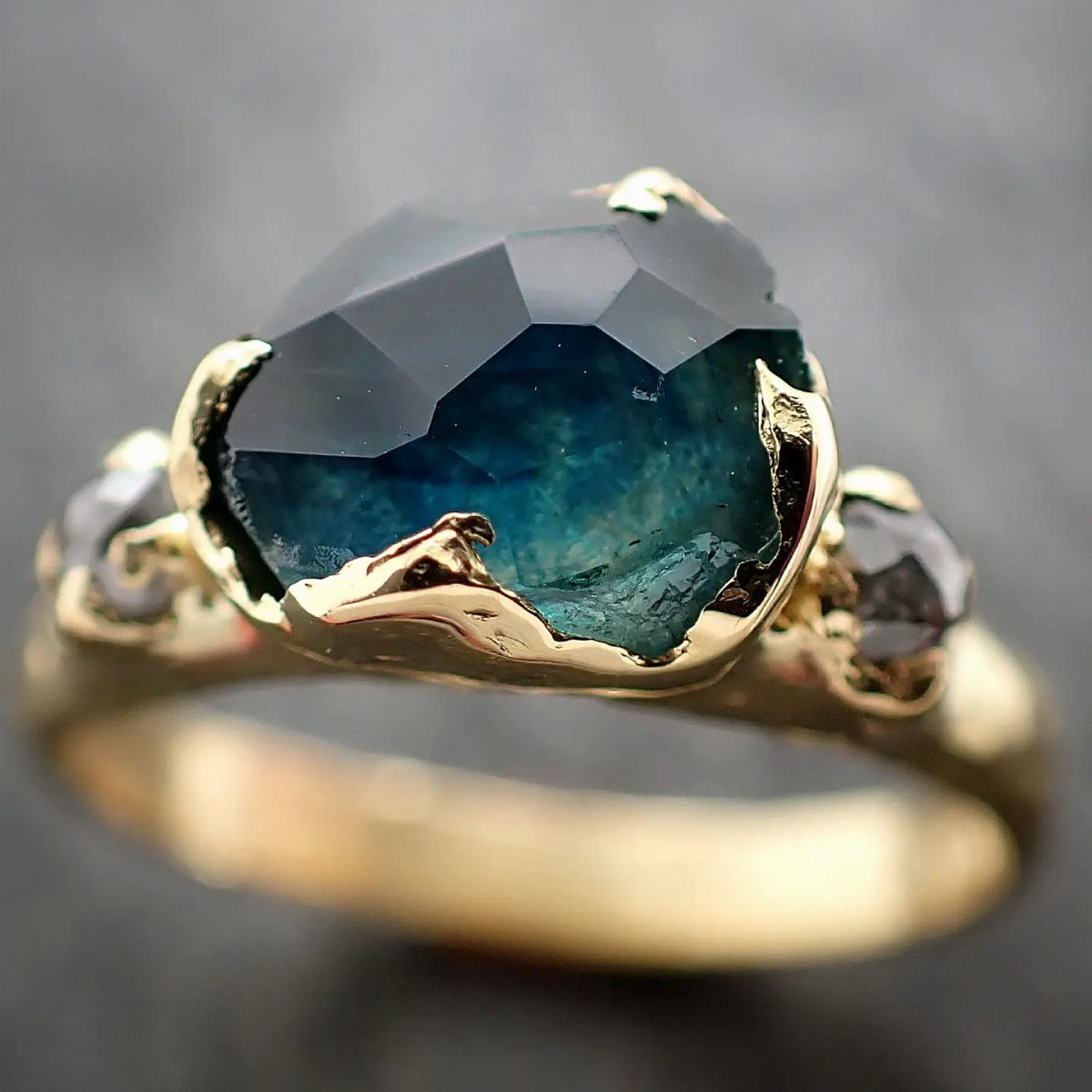
A raw-looking teal stone sitting in a setting that curves around it, instead of locking it into rigid prongs, is the whole appeal here.
Nothing about the shape looks mass-produced, and that suits anyone who wants a ring that feels grown rather than manufactured.
Gold lets the curves read as soft and warm against a deep color like this. Ask to see the ring from the side before you commit, because the flow of the setting matters as much as the stone.
4. Leaves and Vines Boho Engagement Ring
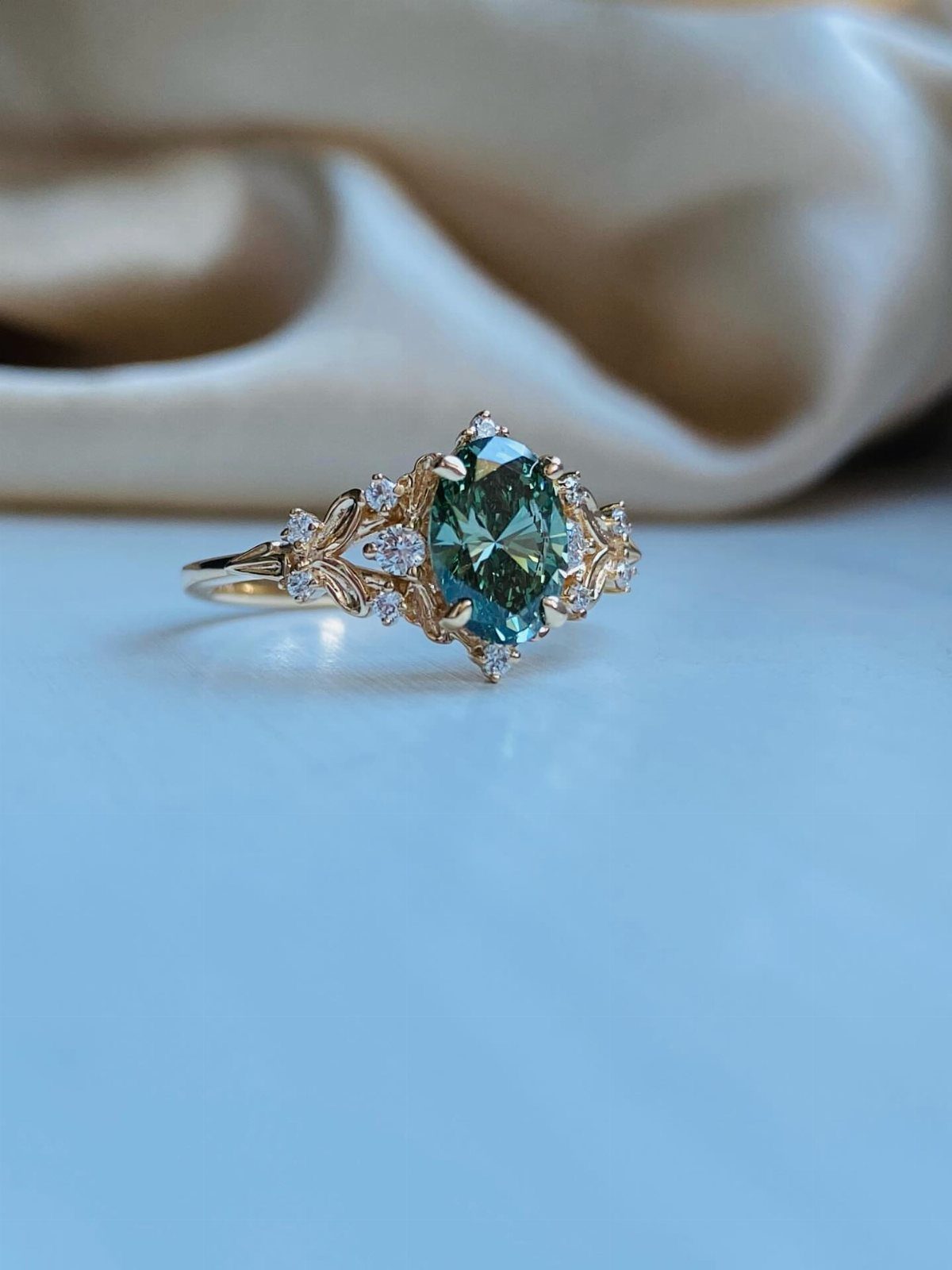
Leaf-shaped accents and vine engraving give a gold ring the feeling of something pulled from a garden, and a teal oval keeps it from turning twee.
I like that the detail lives on the shoulders of the ring, so the stone stays the star.
If you wear the ring daily, ask the maker how deep the engraving runs and how easy it is to clean. Fine detail can collect grime, and a soft brush solves most of it.
5. Handcrafted Rings
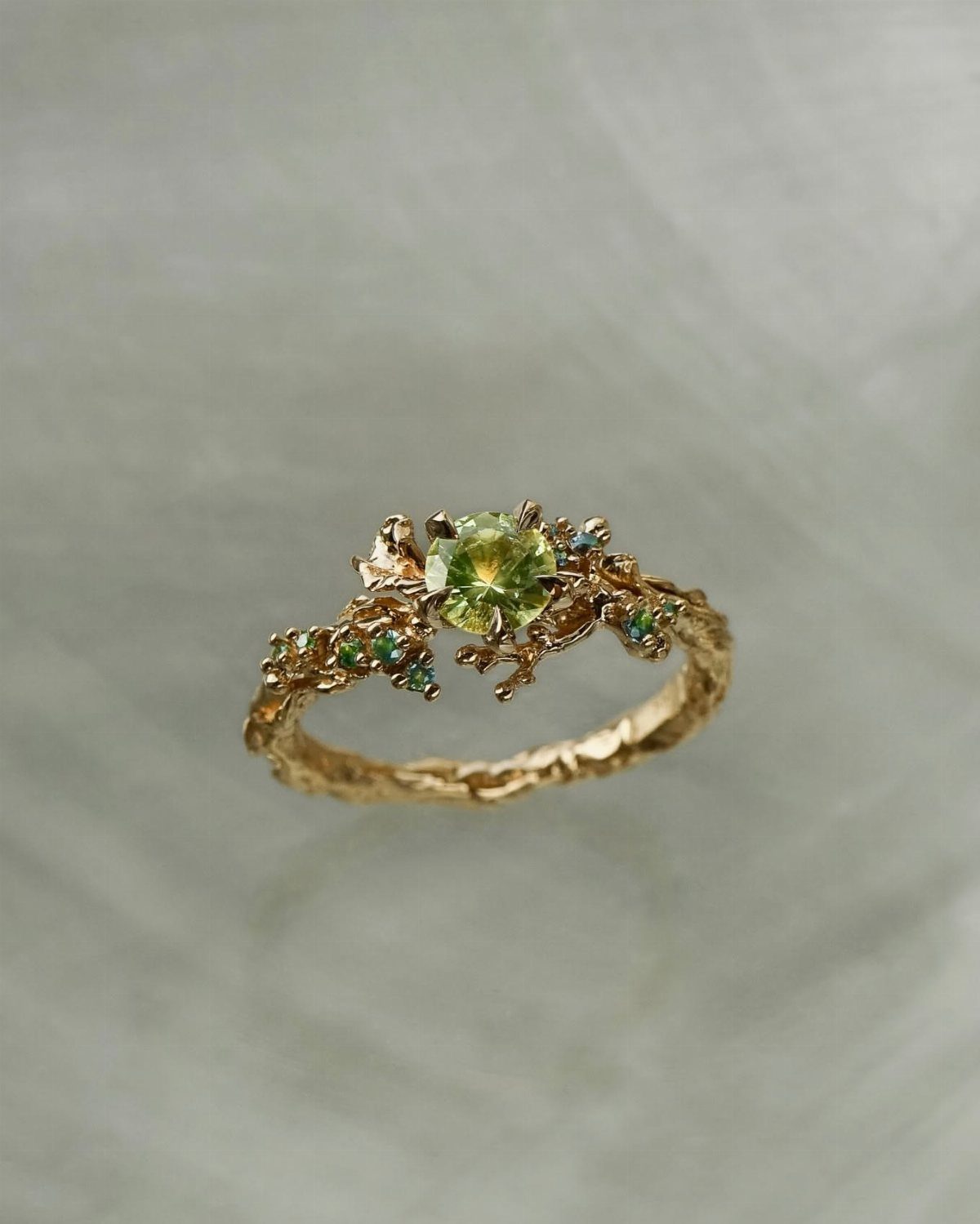
Hand-finished work shows in the band: the textured surface, the leaf-like touches, and small colored stones gathered around a green center. No two come out identical, which is exactly what a boho buyer wants.
Buying from an independent maker also means you can ask for changes, such as swapping the side stones for a color you love.
Expect to wait longer than you would at a chain store, so order well ahead of a proposal date. A maker who answers questions plainly is worth more than a flashy portfolio.
Boho jewelry is about self-expression rather than rules. It leans into color, texture, and unexpected combinations, mixing metals, lengths, and gemstones into a look that feels personal.
6. Intricate Filigree Engagement Ring
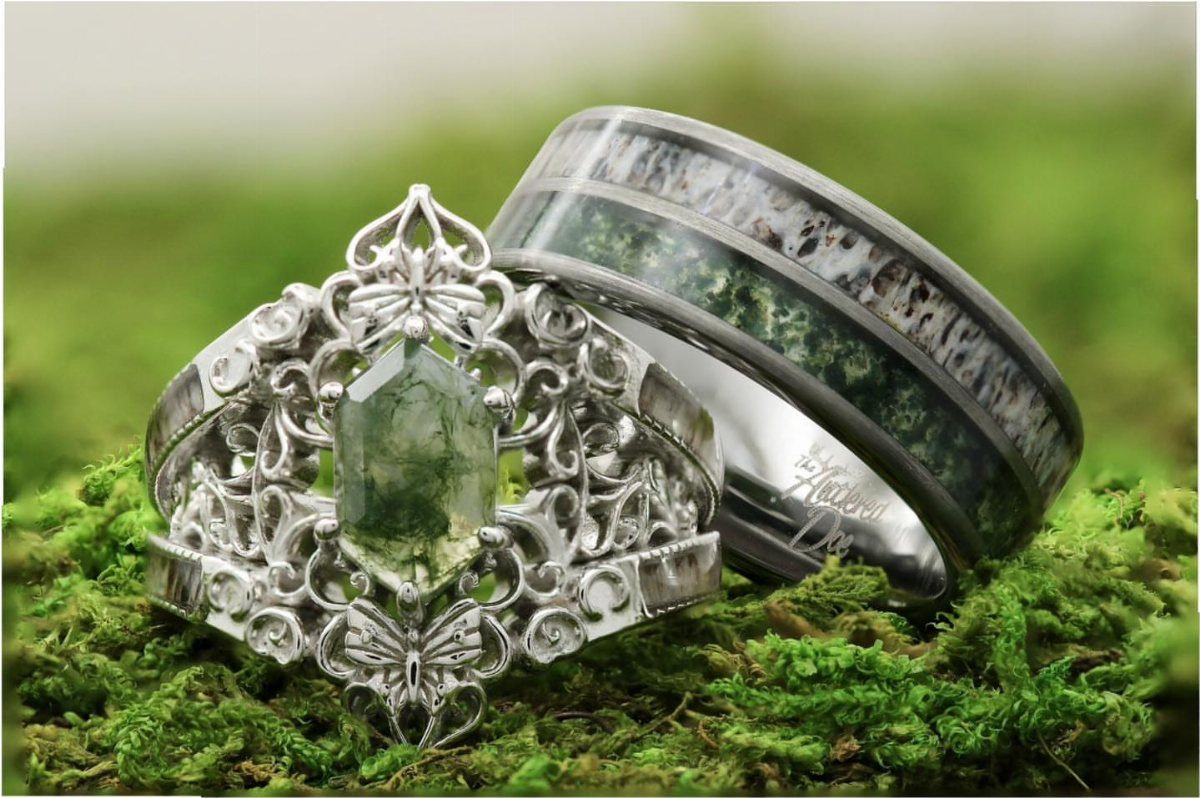
Silver filigree wrapped around a hexagonal green stone has an antique feel that plain settings cannot copy. The tiny scrollwork is the draw, and it makes a modest stone look far more important.
Wood and stone inlays in a matching band, as in the second ring, are a lovely option when the wedding band should echo the engagement ring.
I would pair them. The two together look like a set made by one hand, and that cohesion is hard to buy off the shelf.
7. Twisted Band Engagement Ring
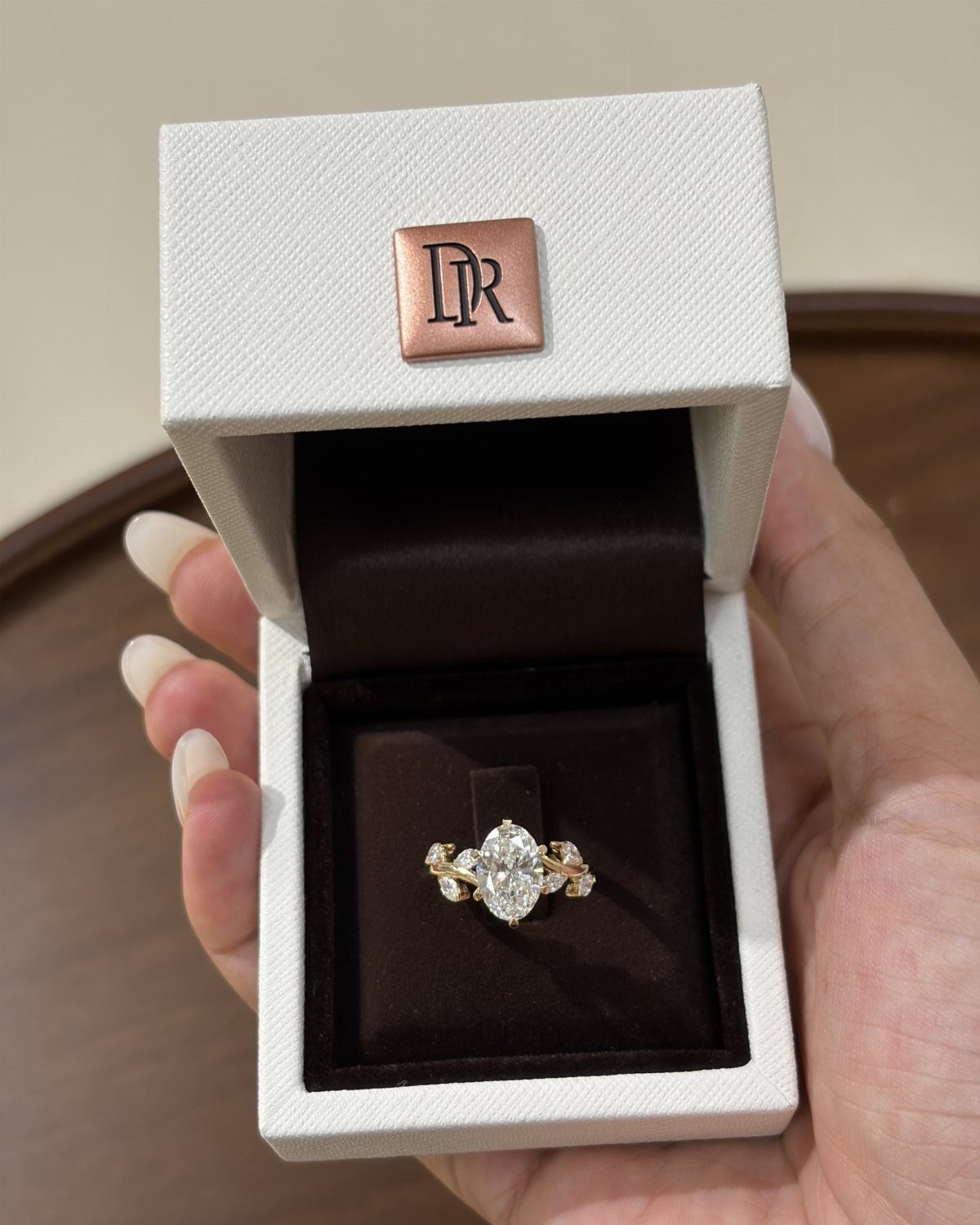
An oval diamond riding on a braided gold band gives a classic solitaire a boho twist without touching the stone. The intertwined strands add texture, and the small accent stones catch light along the way.
Try the ring on before you decide, since a twisted band sits thicker than a plain one and can feel different beside a wedding band.
A straight, thin wedding band usually sits flush against it and keeps the twist as the focus.
8. Marquise Diamond Engagement Ring
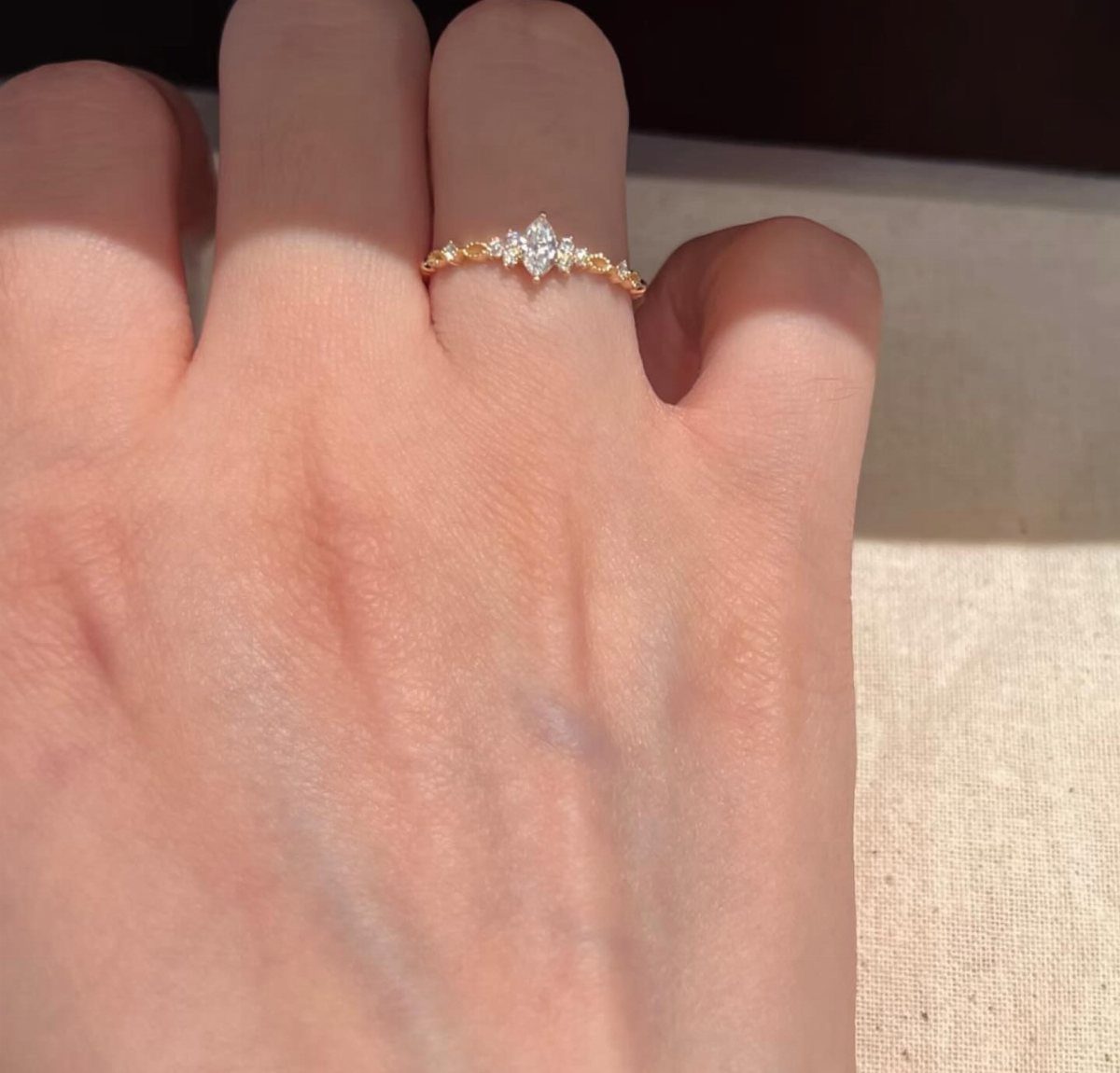
Pointed ends are what make a marquise stand out: the long, narrow cut stretches along the finger and makes a modest diamond look larger. On a delicate gold band with tiny accent stones, it stays light and a little unexpected.
Those tips are the exposed spots, so a jeweler should be able to set protective prongs at both points; V-tip prongs are the usual fix.
I would choose that over a thinner setting every time, because a snagged point is hard to forgive on a ring you wear daily.
9. Moss Agate Engagement Ring
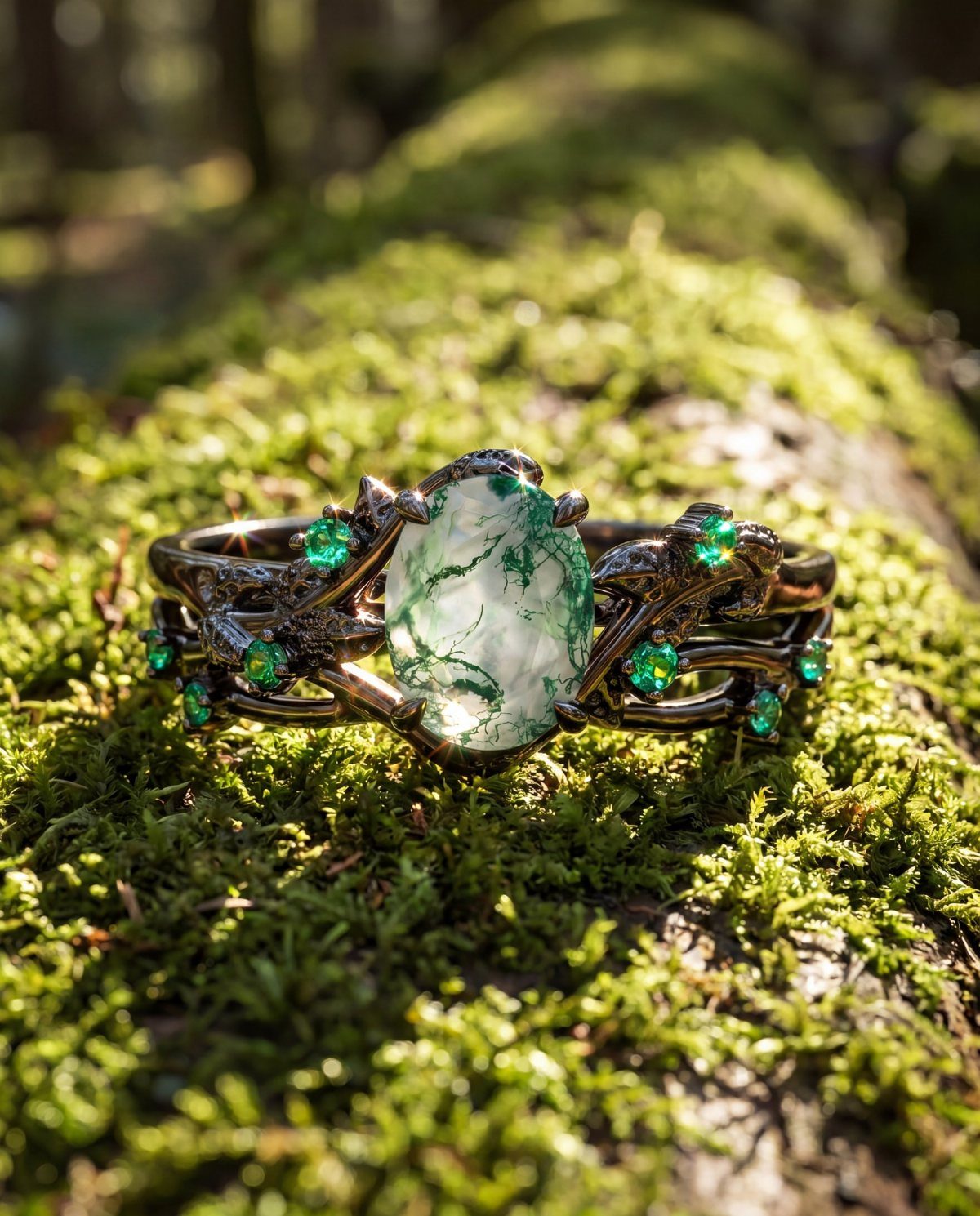
Moss agate looks like a small forest caught in stone, with green threads running through white.
Because every piece is patterned differently, your ring will have no twin, which suits anyone who wants an engagement ring with a story built in.
Pair it with an ornate metal setting and small green gems, as in this ring, and the stone feels even more woodland.
Insist on seeing the exact stone in person, not a sample photo, since the pattern is the whole reason to buy it.
10. Asymmetric Diamond Cluster Ring
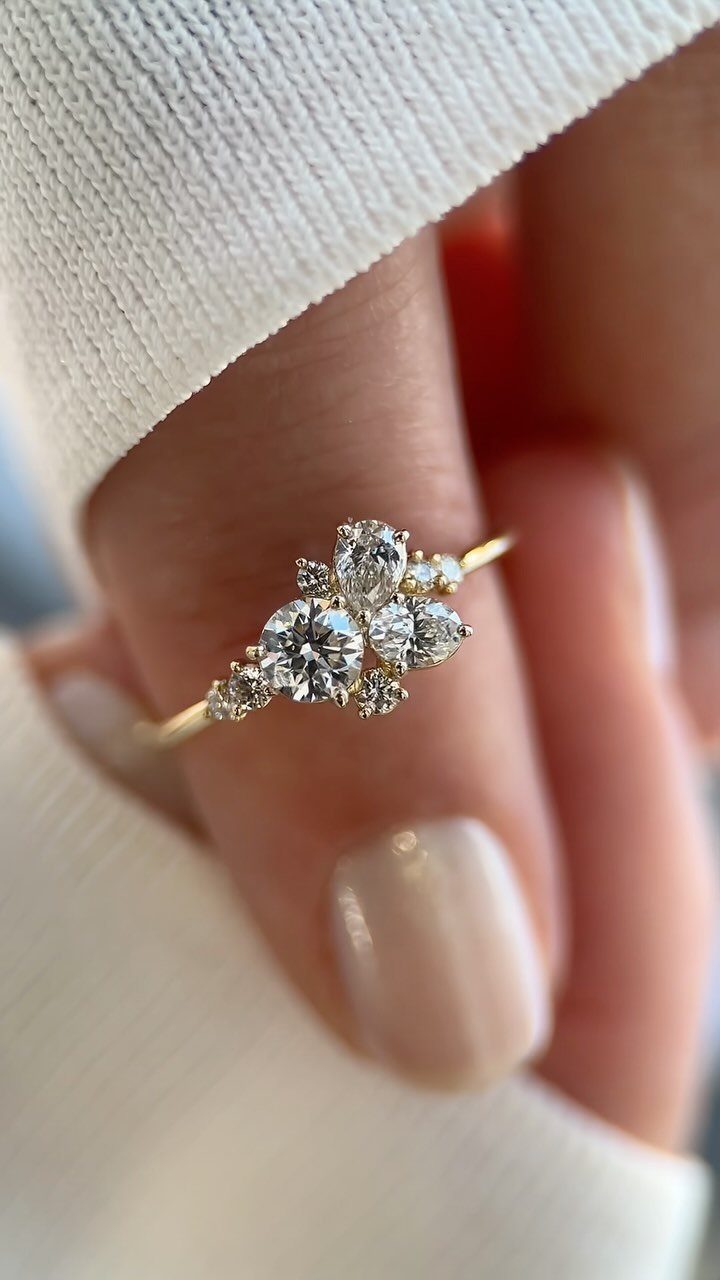
Round and pear-shaped diamonds grouped without any symmetry make a ring that looks gathered rather than designed. Gold keeps the whole cluster warm and relaxed.
For a budget-minded couple, I like this approach because several smaller stones can create presence without one large center diamond.
Check how the stones sit against each other, and ask how easily the cluster can be cleaned, since gaps between stones collect grime. A soft brush helps.
Tips for Selecting a Ring
Before you fall for a ring, hold it and notice how it makes you feel.
Pay attention to how the ring makes you feel when you slip it on, whether settled, energized or at ease, since it will sit on your finger daily for decades.
Match the setting to your hands, not just your taste.
If your hands spend the day in clay, soil or a hot kitchen, a moonstone sunk into a protective bezel will outlast a tall stone gripped by a few thin prongs.
Organic, leafy designs can be sturdy, but some suit a desk job far better than a job that keeps your hands busy.
Ask where the stone came from, who mined it, who cut it, and who made the setting. If a seller can’t answer, that tells you something, and plenty of couples find a ring means more when the answers are clear.
Last, picture it in 30 years. Because trends move on, I’d pick craftsmanship that gets better with age: metals that build a patina and gems that deepen as you wear them.
Caring for Gemstones
An opal needs far more care than a sapphire, which is much harder, so match the gem to your daily habits before the purchase is final.
Take an opal off for cleaning, gym sessions and gardening.
Clean any soft stone with mild soap, lukewarm water and a soft brush, then dry it with a soft cloth. Harsh chemicals and ultrasonic cleaners are a bad bet unless your jeweler okays them for that specific stone.
Give each ring its own pouch or slot in the box, because a harder stone will scratch a softer one if they share space.
A sapphire is far more forgiving, but it still deserves a check of the prongs once a year.
Request care instructions for your specific gemstone from the person who sells it, and in writing if possible.
Mixing Metals
Yellow gold, white gold, rose gold and sterling silver can sit together in a single stack without clashing.
I would anchor the stack with the metal of the engagement ring, then add one or two bands in different tones.
Three or more metals can still work, but repeat each tone at least once so the mix looks chosen rather than random.
Keep your wedding band’s metal in mind, since it sits right beside the engagement ring every day. A band in a contrasting metal makes the main gem stand out, while a matching band softens the whole look.
Buy the bands in person and stack them together before you commit, because tones shift next to each other.
Frequently Asked Questions
What defines boho engagement rings?
A boho ring puts meaning ahead of convention, and it usually looks grown rather than manufactured.
Look for organic shapes: curving bands, leaf and vine motifs, and open settings that leave the stone more exposed than a standard four-prong mount would. Colored or unusual stones show up often, and no 2 pieces look quite alike.
Can I use a colored gemstone as an engagement center stone?
Yes, a diamond isn’t required for a ring to read as an engagement ring.
Choosing a sapphire, moonstone or similar gem sets your ring apart from the usual diamond solitaire, and the savings on the center stone can go toward a more detailed band.
Before you commit, ask your jeweler how the stone rates on the Mohs scale; opal and moonstone scratch and chip far sooner than a diamond, which is a 10, so everyday wear takes a toll.