Every idea here is the same 4 players, 2 violins, 1 viola and 1 cello, so the real range is in what they wear and where they stand: black on a lawn, ivory or gold in a chapel, blush tulle ballgowns in a garden.
1. String Quartet
A standard quartet pairs two violins with a viola and a cello, which gives you melody, inner harmony and a bass line from one small group.
Hard floors and tall walls make sound bounce, so ask the group to play a short test in your space before you book. For a ceremony, I would pick a quartet over a solo violinist for the fuller sound.
2. Traditional String Quartet Wedding
I like that choice for couples who want the music to look planned, not tacked on.
Ask the group what they wear before you sign.
Matching dresses are a styling decision, and many quartets will wear what you request if you ask early. Pick a color that agrees with your florals, and you get a cohesive photo backdrop at no extra cost.
3. Outdoor Lawn Ceremony Performance
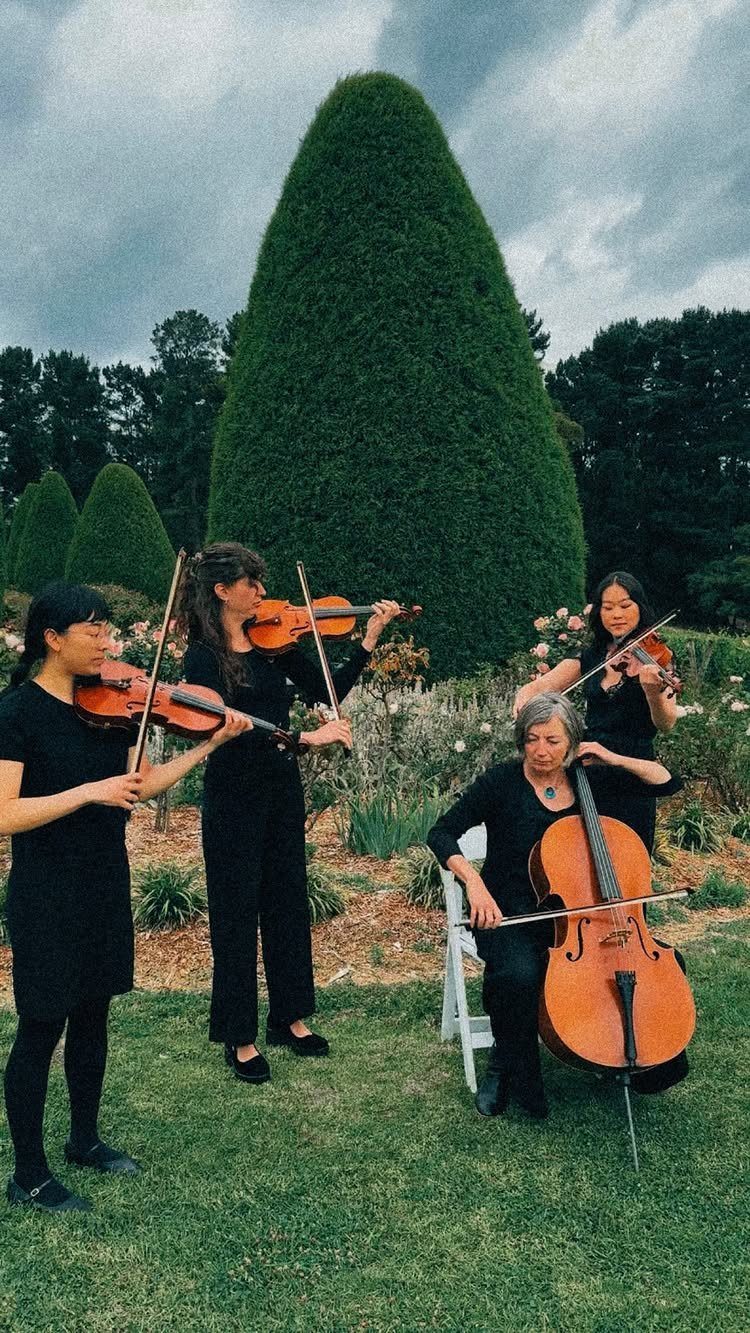
Black attire on a green lawn is the safest quartet look I know. It reads as formal, stays out of the way of your color palette, and photographs cleanly against grass and trees.
Outdoors, I would set the players on a flat, firm spot and ask whether they bring their own stands and clips for the music.
Wind and soft ground are the usual problems. Confirm a shaded or covered backup space, since instruments and sun do not mix.
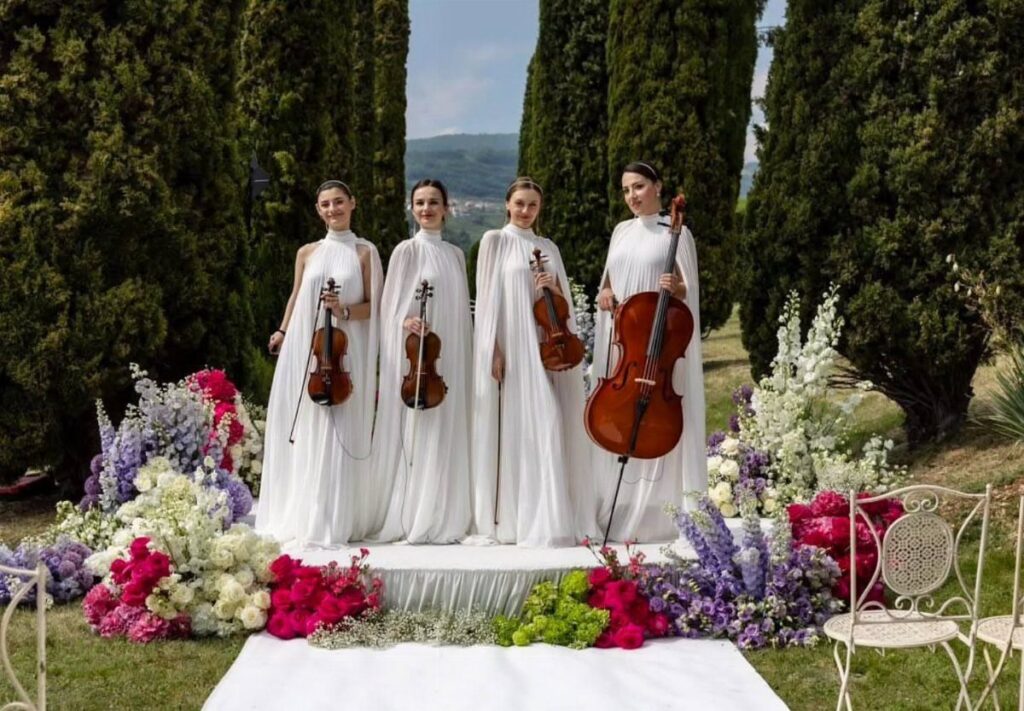
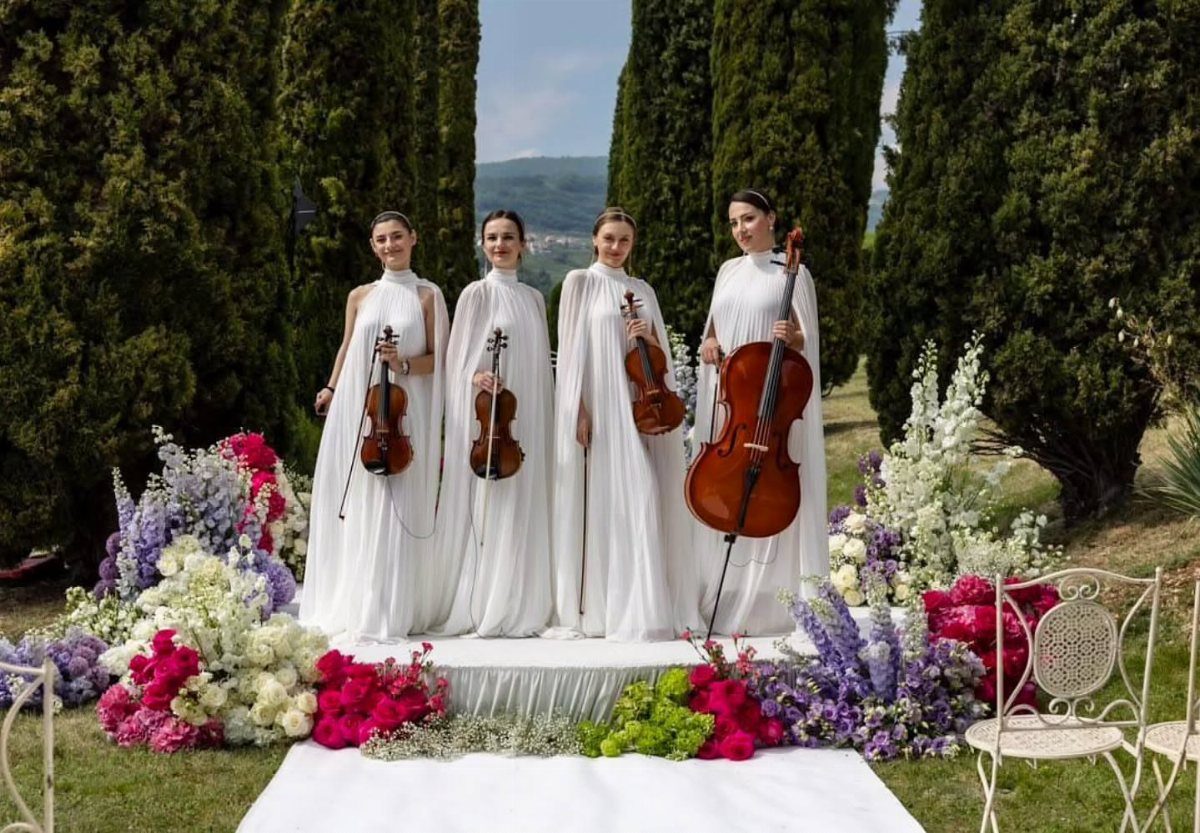
4. All-White Attire Quartet
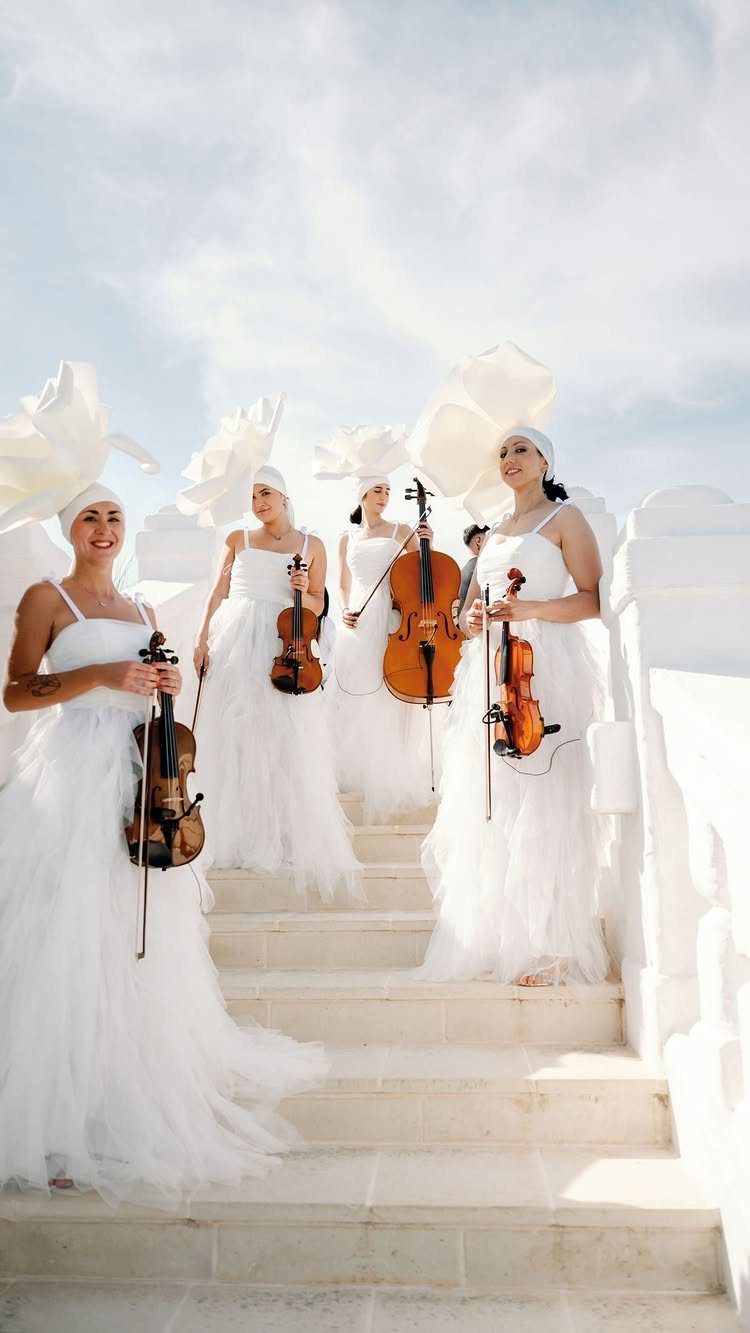
Floor-length white gowns with matching headpieces make the group read as one visual unit. Against pale stone stairs, the effect is soft and bridal, so I would hold it for a couple whose own look is quieter.
One caution: a group dressed all in white can compete with the bride in photos. Tell the quartet your dress color and style beforehand, and consider ivory or a patterned bodice on them if yours is bright white.
5. Dramatic Ballgown Musicians
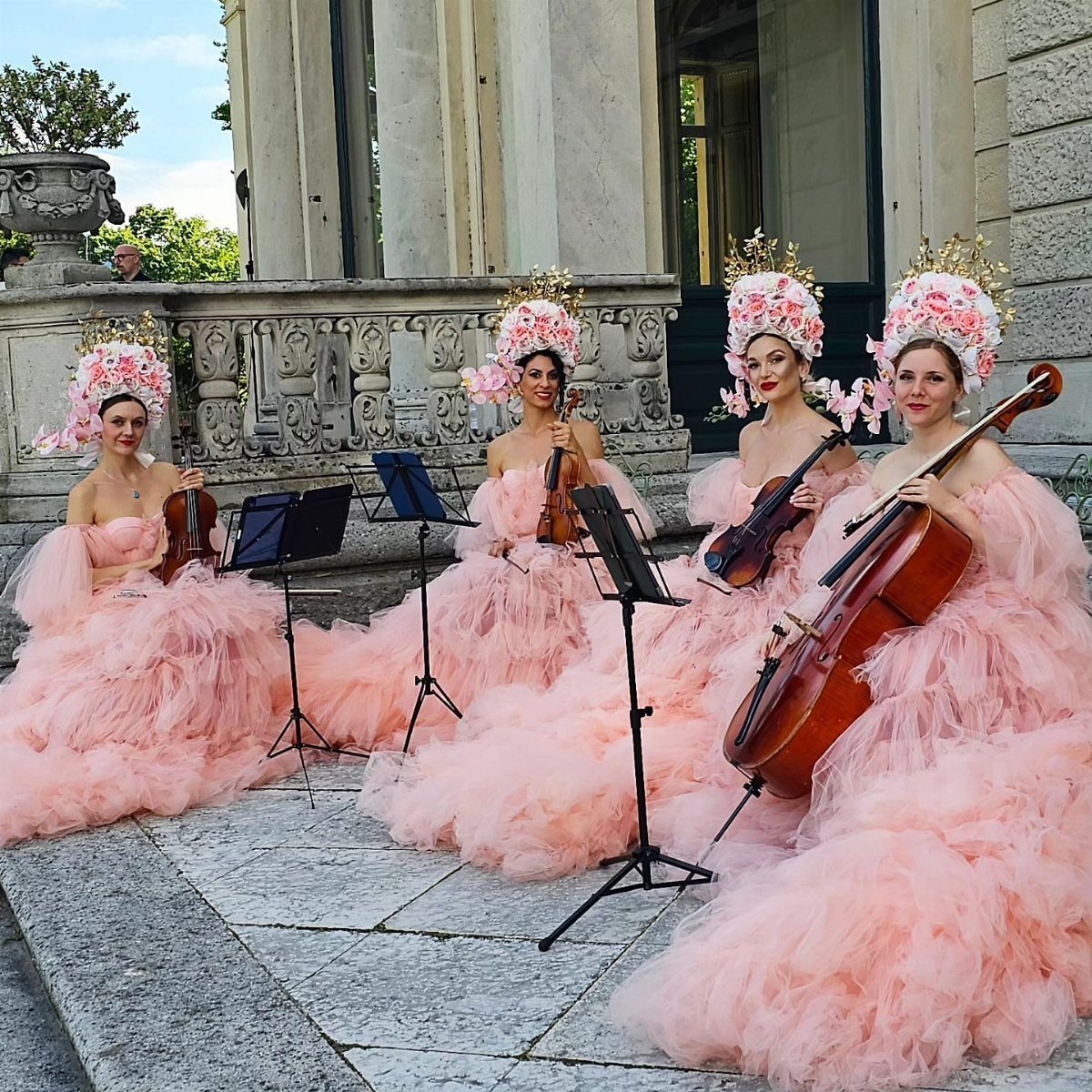
Blush tulle ballgowns with floral headpieces are the most theatrical version of a quartet, and I love them for a garden or estate ceremony.
The fullness of the skirts means players need room, so ask for chairs with space on each side.
Cellists sit with the instrument between their knees, and volume in a skirt can get in the way.
Have the group test their seating in the dresses before the day. If budget is tight, matching florals alone give much of the effect.
6. Reception Stage Setup
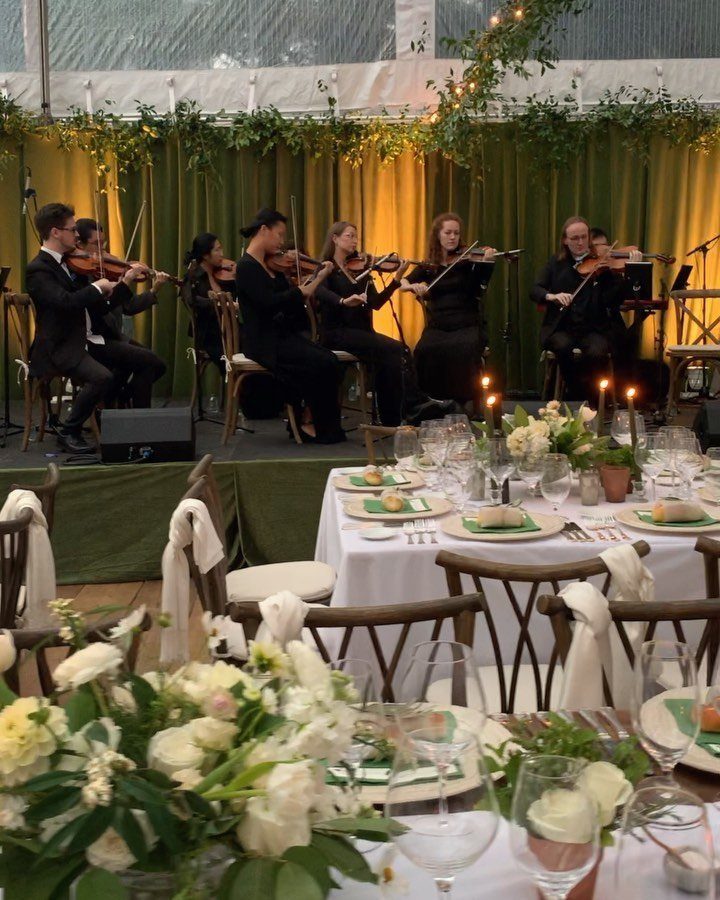
A raised stage behind the dinner tables lets the music carry over the whole tent while guests eat. Ask any group exactly how many musicians your quote covers, since some ensembles add players to the base price.
Put the stage where guests can see it but not so close that conversation at the front tables gets drowned out. Ask the quartet for a set list that moves from quiet dinner pieces to something livelier as plates clear.
7. Coordinated Light Blue Gowns
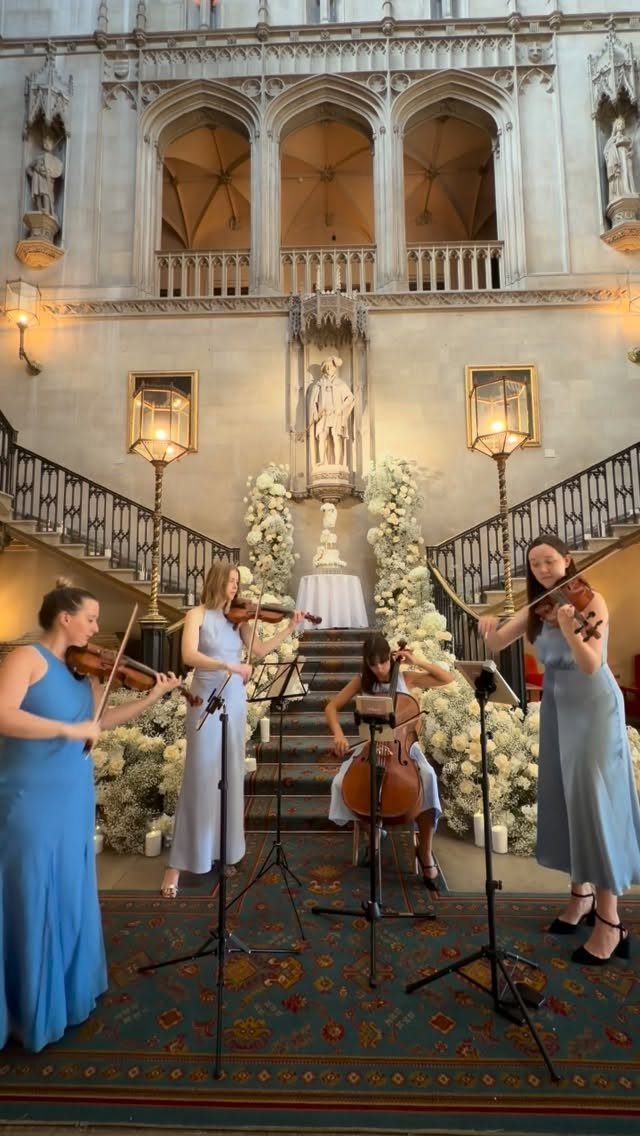
Light blue gowns read as calm and a little romantic, and they sit well beside white flowers and pale stone. Pick a blue that agrees with your bouquet and linens so the group looks planned.
Ask the quartet for a photo of the exact shade first, since screens flatter blues and a gown that looks powder blue online can read gray in a church.
If you hire a group that already owns matching gowns, you save the cost of a styling request.
8. Shimmering Gold Chapel Quartet
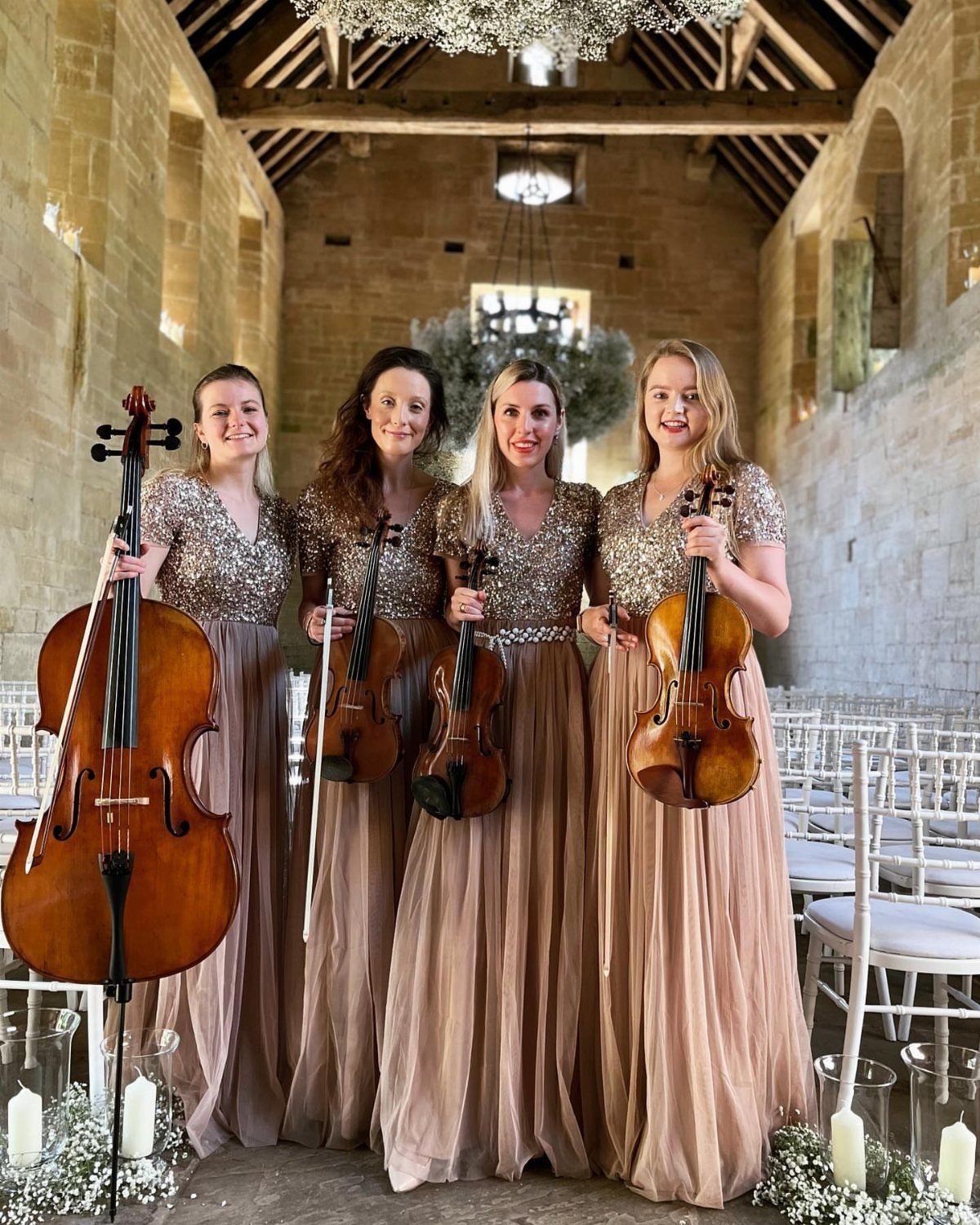
Gold sequins catch light, so a chapel with stone walls gives them a lot to work with. I like this for an evening ceremony or a couple who wants the music to feel like part of the glamour.
Sparkle photographs differently from matte fabric, so ask the group for a few sample photos in their gowns. Mixing gold with beige keeps it from overpowering your florals and your own dress.
9. Garden Lace Gowns
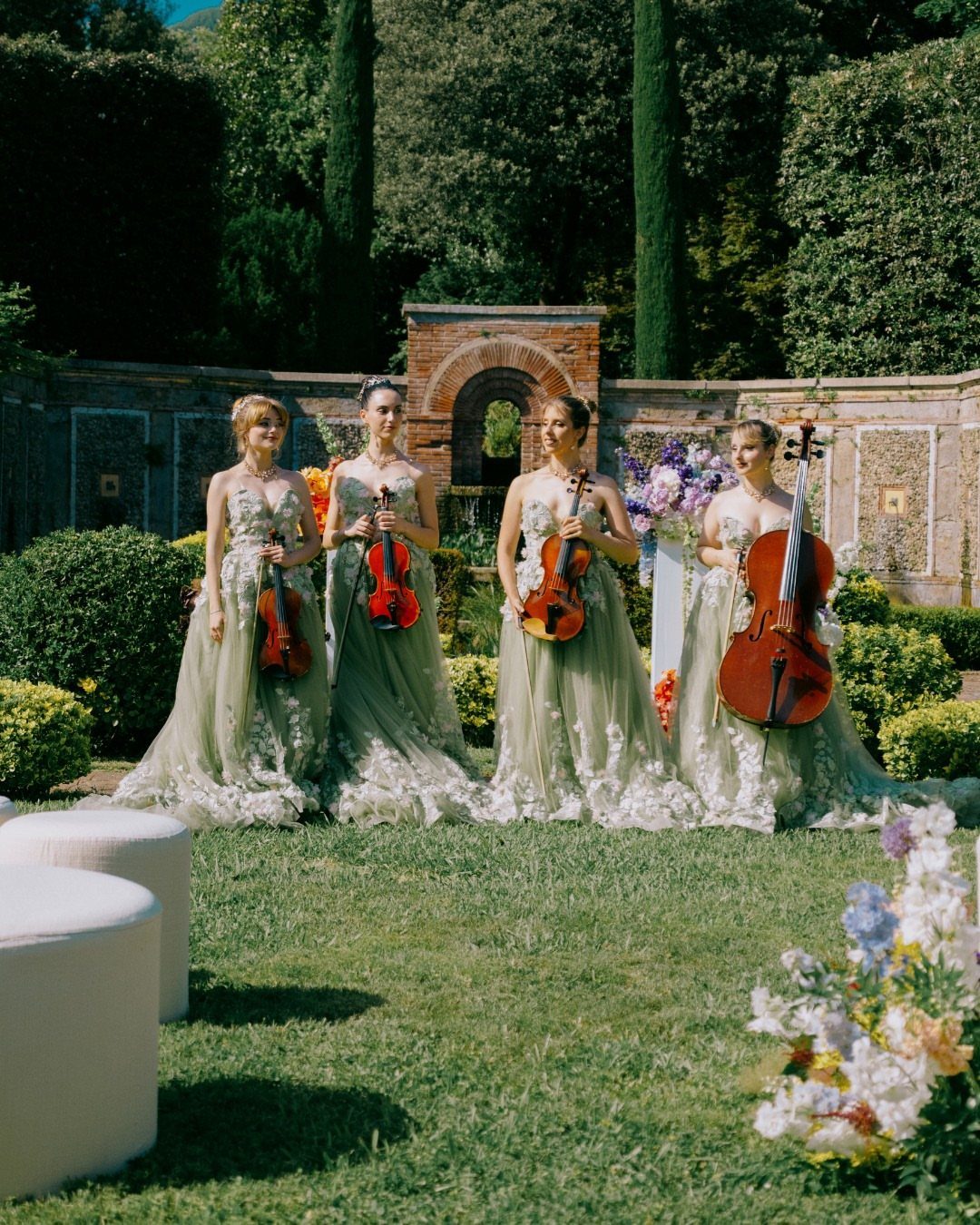
Sage green lace suits a garden better than almost any other quartet color, because it blends with the greenery and still looks dressed up. A brick archway behind the players adds structure without extra décor.
If your palette runs warm, ask whether the group can match their green to your ribbons or bridesmaid dresses. Outdoors, check that lace sleeves and long hems have room around the cello and the chairs.
10. Grand Hall Indoor Performance
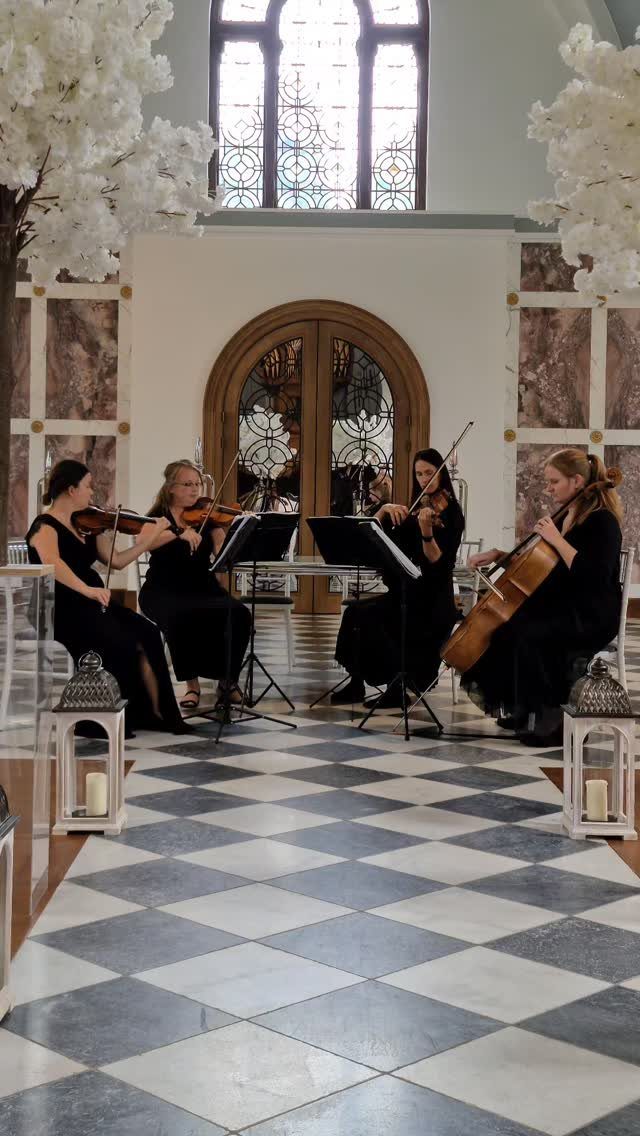
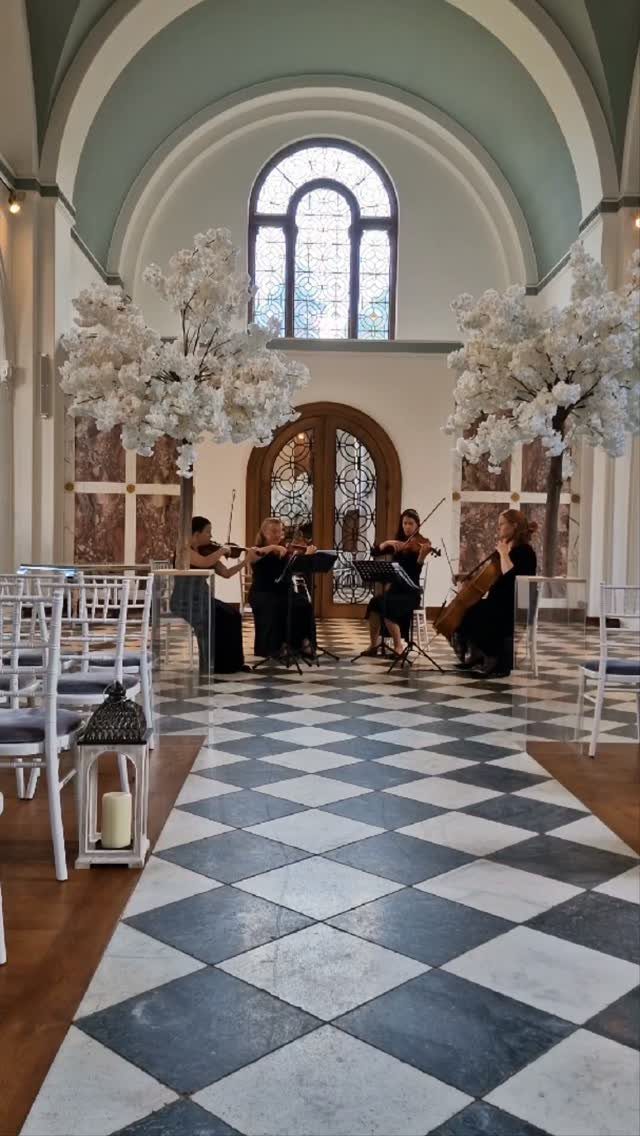
Black dresses are the formal choice, and a checkered floor with arched wooden doors and white floral trees gives them a clean, bright frame.
Nothing here competes with the bride, which is why I would book it for a ceremony in a hall with plenty of natural light.
Ask where the players will stand so they are out of the aisle and the doors. Hard floors carry sound, so the earlier test play from the first entry matters here too.
Planning Music for Weddings
Tell the musicians what you want before the details harden. A quartet can only write or adapt arrangements for you if it hears your song ideas, your ceremony order and your mood early.
Involve whoever shares the planning with you.
One wedding I know of had a bride and her mother choosing the music together, and their unusual picks led the ensemble to write new arrangements. You can ask for that too, and it takes lead time.
Book early, as well. Good performers book up months ahead, and DJs do too, so pick a music plan and a hiring date first, then build the reception timeline around them.
Choosing a String Quartet
A standard quartet is 4 players: 2 violins, 1 viola and 1 cello, and that mix is what gives the sound its warm, full range. Each player covers a different register, which is why the sound stays balanced across slow processionals and livelier pieces.
Classical knowledge isn’t required to pick well; a few sample recordings and a short list of songs you love will do most of the work.
Ask each group for video clips of them playing, and listen for songs you recognize, since pop covers and classical pieces can sound very different from one group to the next.
Read reviews for comments on punctuality and how the group handled requests.
Then send your own request, such as a specific song, and see how they answer. A quick, specific reply tells me more than a polished website does.
Live Music Vs. Recorded Music
Live players can watch the room.
If the bride is delayed, they stretch the processional; if guests linger, they add a piece. A recording can’t adjust, and you would need someone at a speaker to cut or loop it.
Recorded music wins on cost and on exact recordings: if you want a particular artist’s version of a song, a playlist is the only way to get it. It also works as a backup if a performer cancels.
I would spend live money where emotion peaks, the ceremony, and use a playlist for the rest of the day if the budget is tight.
Frequently Asked Questions
How much does a string quartet cost at a wedding?
Expect prices to start around $800 and climb from there. One New Orleans group lists $1,100 for the first hour and $400 for each added hour.
What is the best entrance song for a wedding reception?
For a traditional ceremony entrance, Wagner’s Bridal Chorus, better known as "Here Comes the Bride," is the safest pick, since guests of every age recognize it.
What classical songs are good for a first wedding dance?
I would not name a single classical piece for a first dance from what I can verify, but the best route is to send the quartet the song you love and ask for an arrangement.
Groups can adapt music to your request, and it takes lead time, so ask early.
Save Mendelssohn’s Wedding March for the recessional, when you walk back up the aisle as a married couple; it was never written for a slow dance.