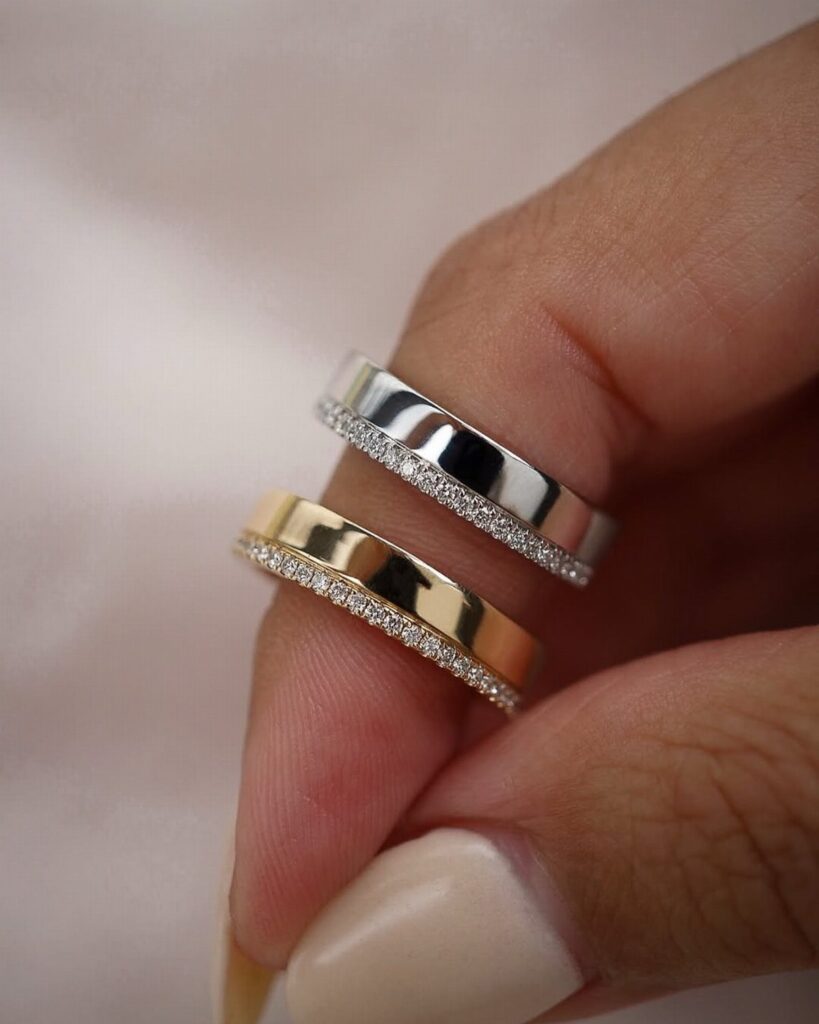
Wedding ring styles run from a plain hammered or beveled gold band, where the texture does the work, to pavé and diamond bands that charge for every stone.
Matching wedding and engagement rings is where the choice gets decided: a halo or a high setting on the ring you already own limits which bands will sit flush beside it, and a curved or contoured band is often the fix.
A marquise, pear or heart needs a notched band, a tall solitaire suits a curve, and widths run from 2mm to 8mm+, so bring the ring along and test each band against it.
1. Vintage-Inspired Wedding Rings
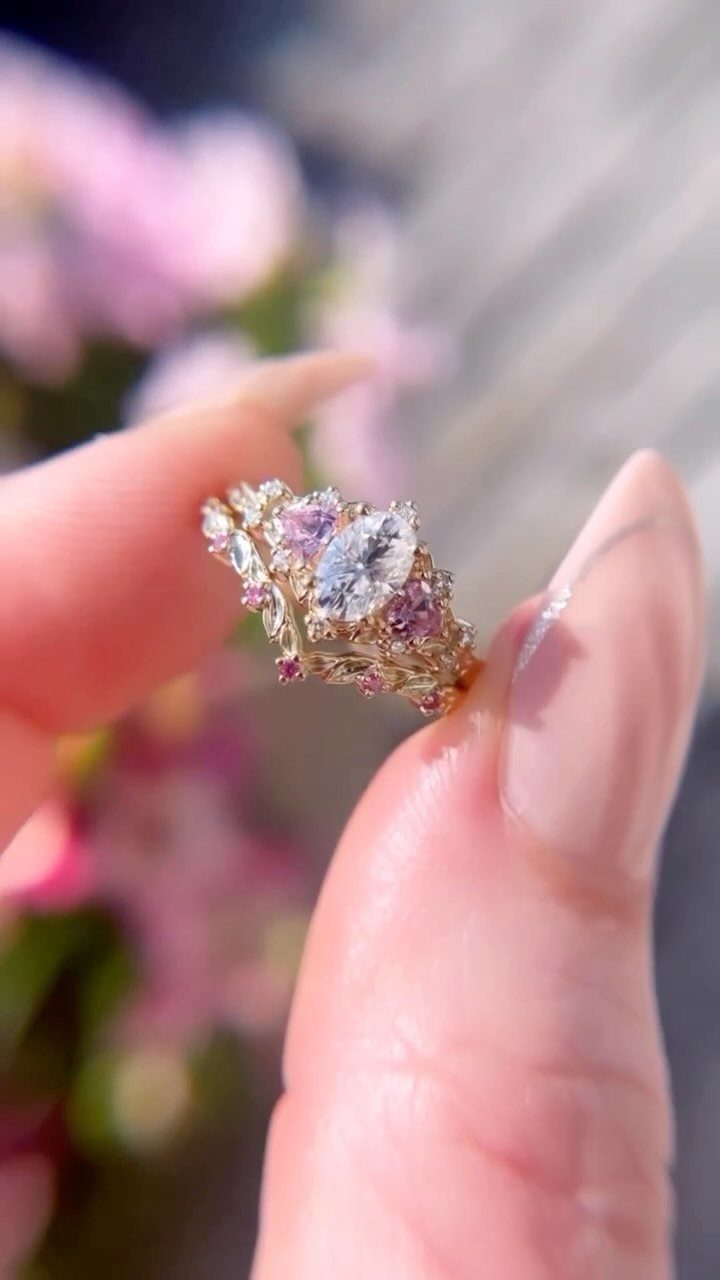
A vintage-inspired ring borrows the look of an earlier era and builds it new, so you get the character without a decades-old band that may need repair.
This one pairs a marquise-shaped diamond with pink gemstones in yellow gold, a warmer palette than the usual white-diamond solitaire.
Colored stones are the easiest way to make a ring feel period without costing a diamond’s premium. Ask a jeweler to price the same design with the pink stones swapped for others, so you can see where your budget lands.
2. Pavé Wedding Bands
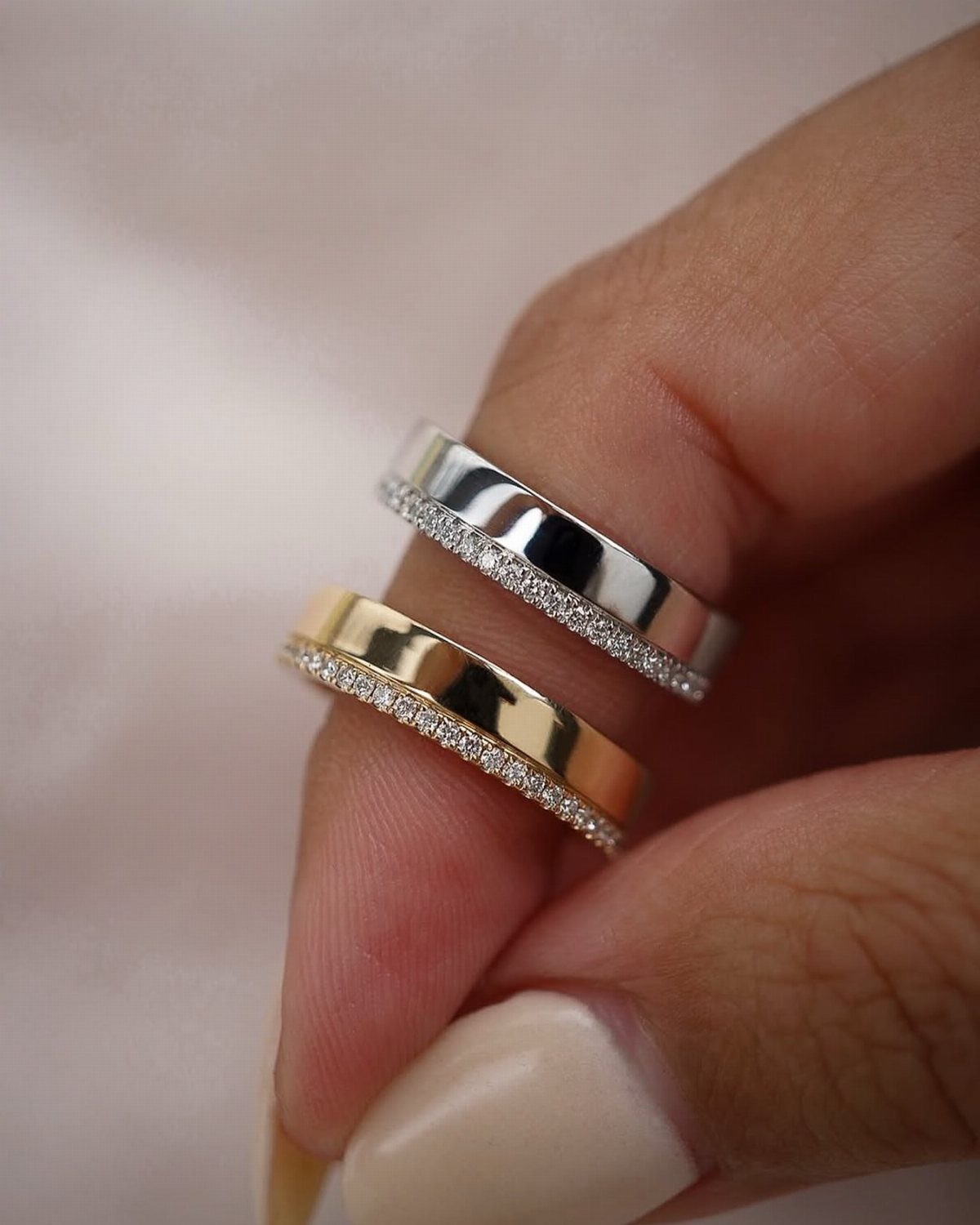
Pavé means the diamonds sit so close together that the metal nearly disappears, and on a band that gives sparkle all the way around.
A single row of small stones works in either silver-toned metal or gold, so pavé bands pair easily with whatever metal your engagement ring uses.
For a modest budget, I’d pick a band with stones across only part of the top. A full circle costs more, and you pay for sparkle on the underside nobody sees.
Choose the metal to match your engagement ring, since a mismatch is obvious when the two sit side by side.
3. Halo Engagement Rings
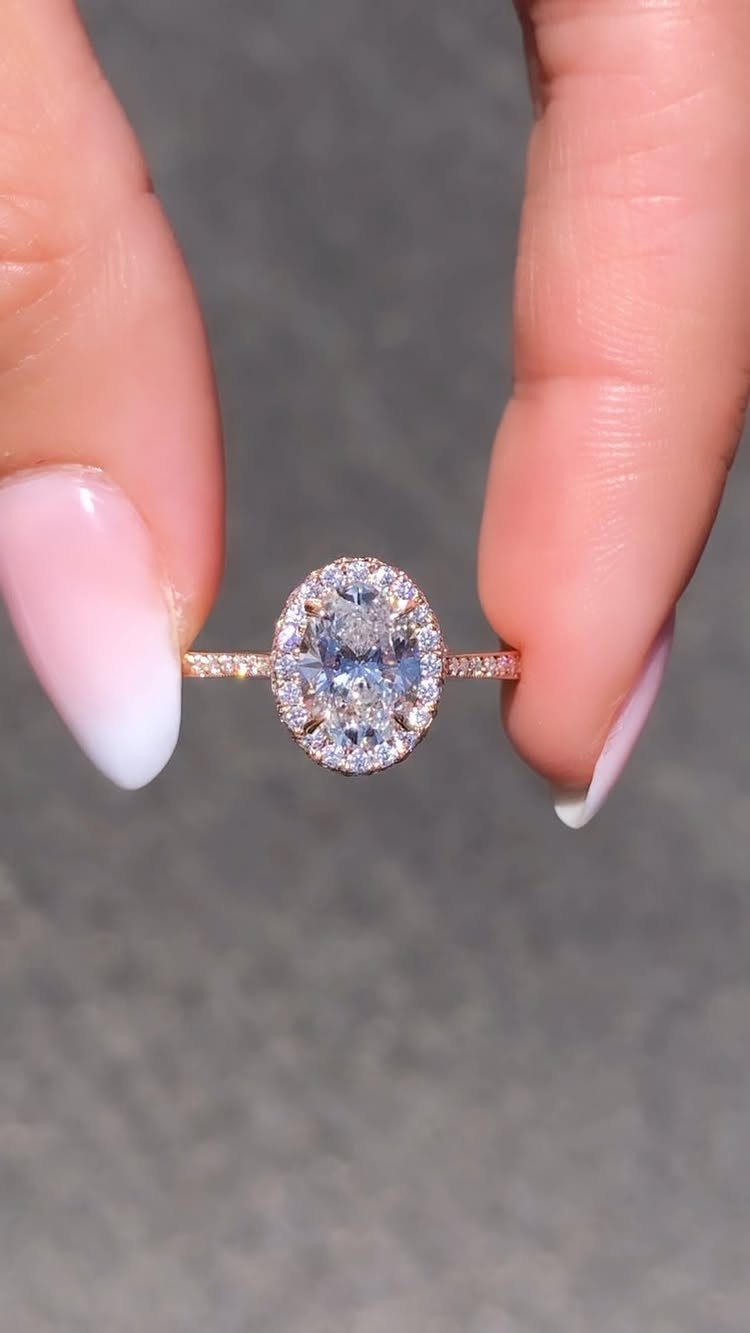
Rose gold flatters an oval center stone, and the diamond halo around it makes the whole ring look larger than the stone alone.
The maker of this one describes it as 18k rose gold, which is the warm, blush tone you see.
A halo is my pick when you want maximum presence from a modest center diamond. The small stones add cost, though, so compare quotes with and without the halo before you commit.
Pairing it later with a plain band keeps the look clean.
4. Unique Wedding Rings
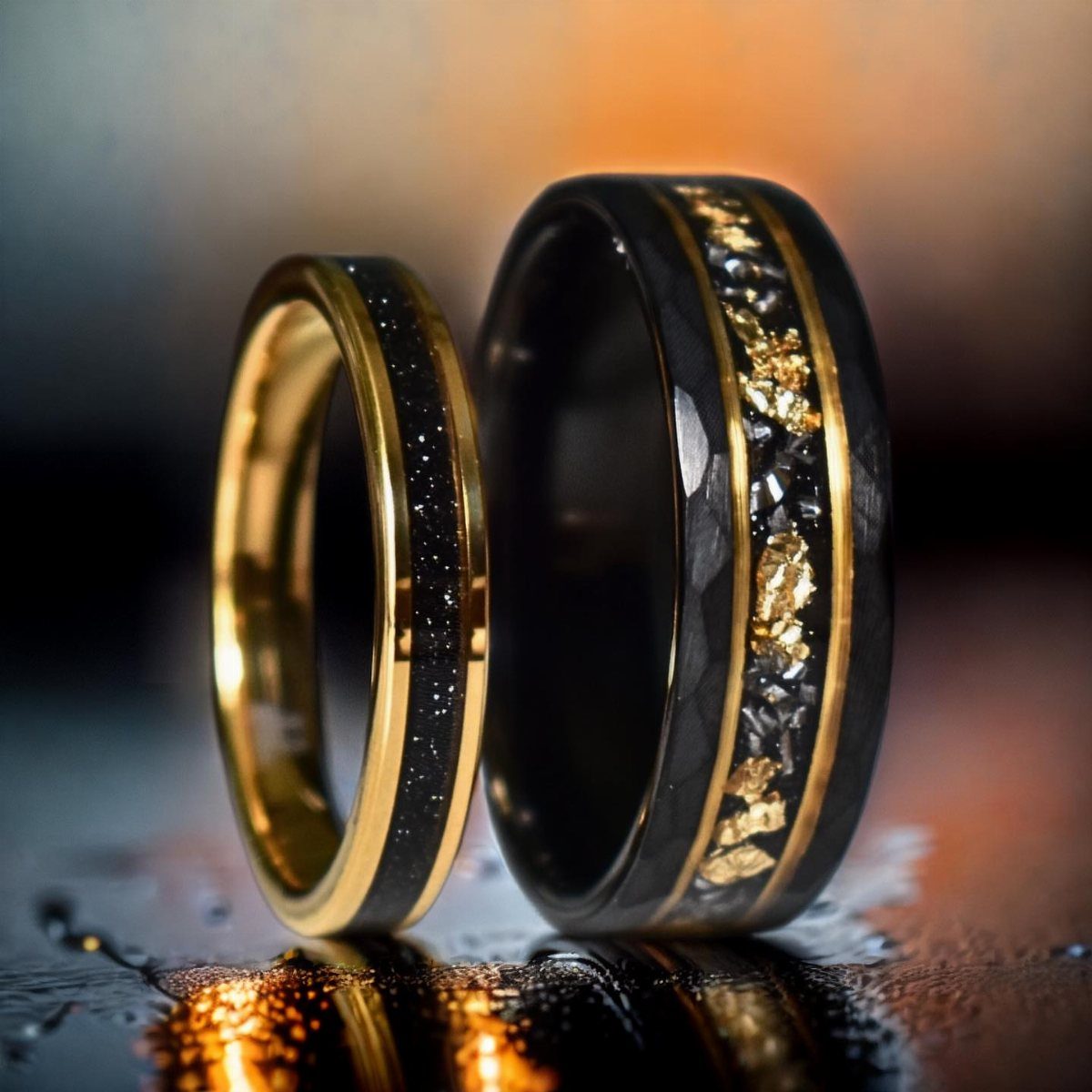
Inlays turn a plain band into something nobody else at the wedding is wearing. Black bands with starry or gold-toned mineral details come in thinner and thicker widths, so each partner can pick the width that suits their hand.
I’d choose this route if traditional gold and diamonds feel like someone else’s taste. Ask how the inlay is set and whether the ring can be resized, because decorated bands are often harder to adjust than a simple circle.
5. Mixed Metal Wedding Bands
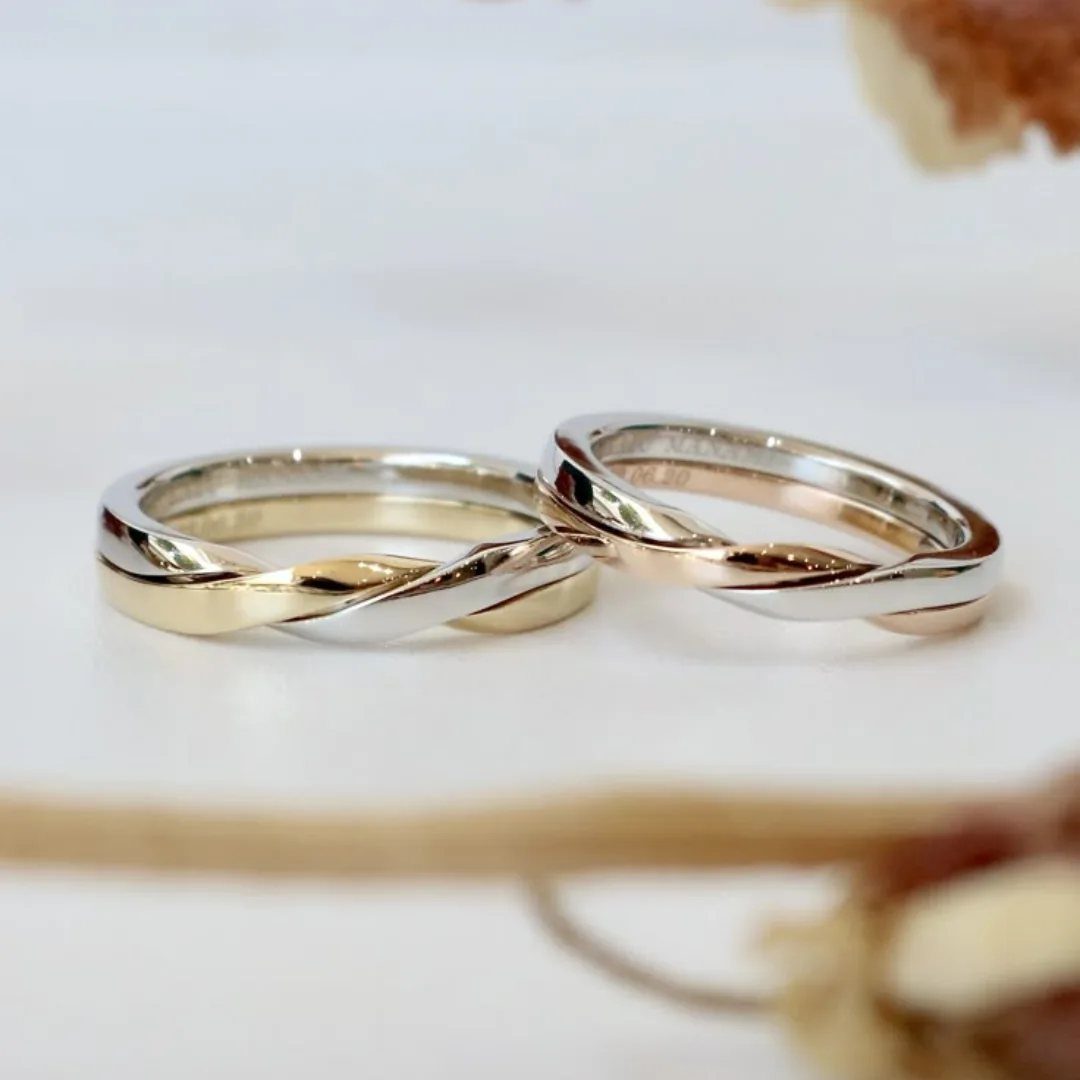
Two metals in one band, twisted together here, give you contrast without picking a side. One ring pairs gold with silver-toned metal, the other rose gold with silver-toned metal.
This solves a real couple’s problem: she wears yellow gold, he prefers white.
A twisted pair means neither gives up their color. I like it paired with a plain engagement ring, so the band supplies the interest.
Bring your engagement ring to the appointment and check the metals side by side in daylight.
6. Women’s Wedding Ring Styles
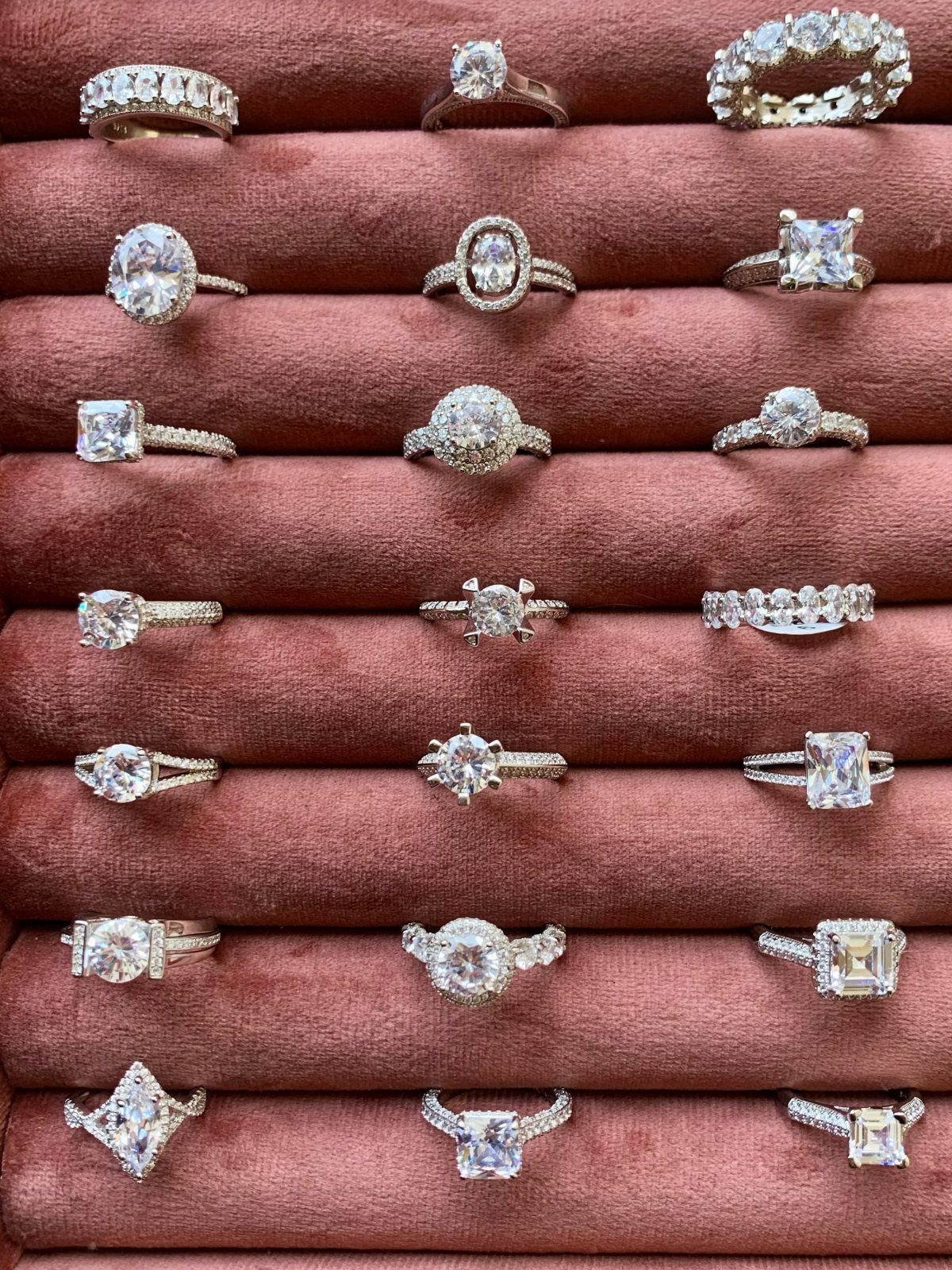
Eighteen rings in one tray makes the point: women’s styles run from a thin, quiet band to a stone-heavy statement, with shapes mixed throughout. Trying several in person sorts your taste faster than scrolling.
Narrow the choice by how you live. If you type, lift weights or work with your hands all day, a lower setting is the practical call, even if the taller ones photograph better.
Try on at least five shapes before deciding, including one you expect to dislike.
7. Modern Wedding Rings
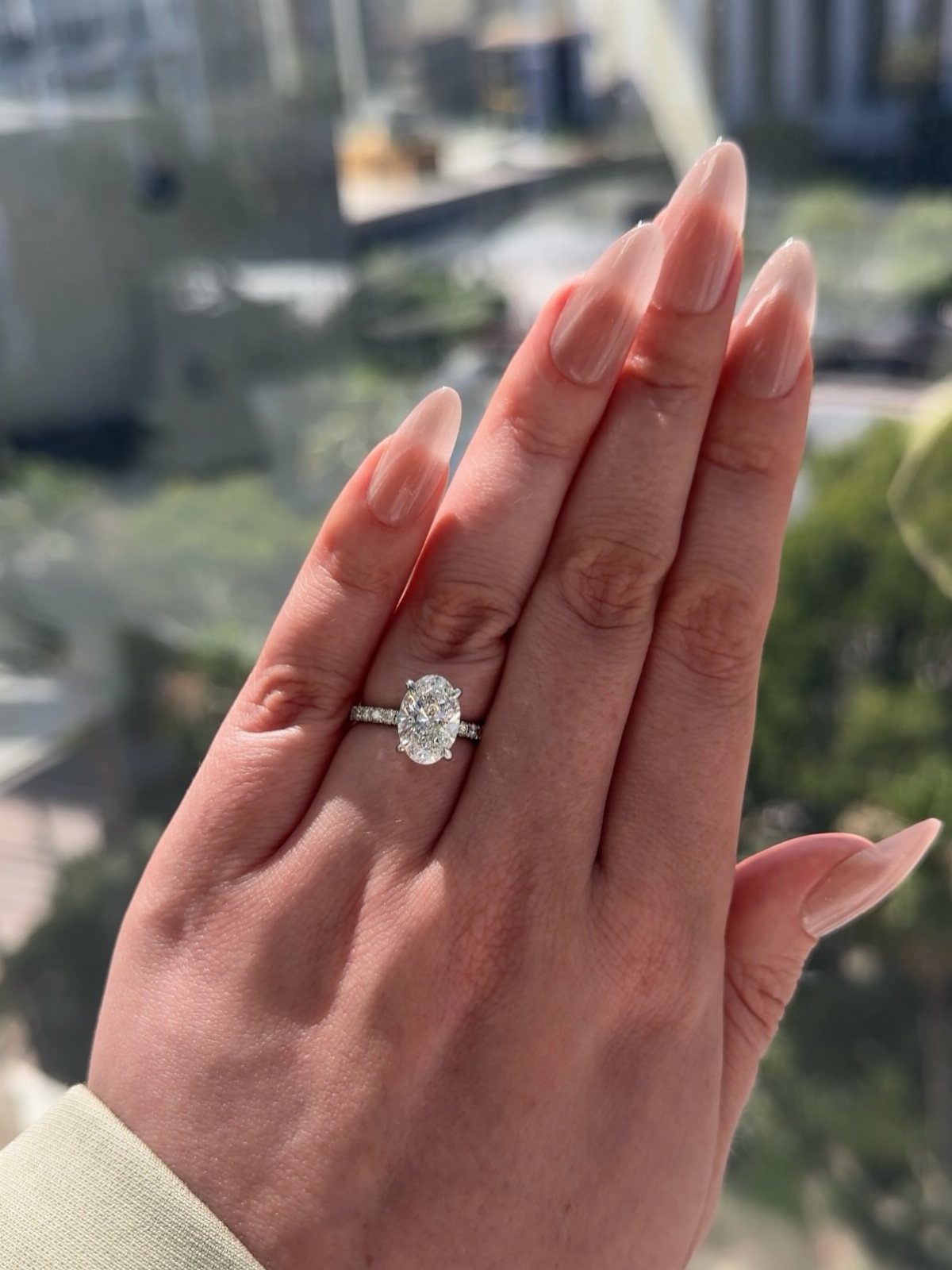
Clean lines are what make a ring modern: an oval diamond on a slim pavé band, with nothing ornate competing for attention. The oval stretches along the finger, so it reads larger than a round stone of similar weight.
I’d pick this over a heavily detailed design if you want a ring that looks current without much fuss. Keep the setting low and simple, and let the band carry the sparkle.
Ask a jeweler to show you the band with pavé on only part of it, since that costs less.
8. Curved or Contoured Bands
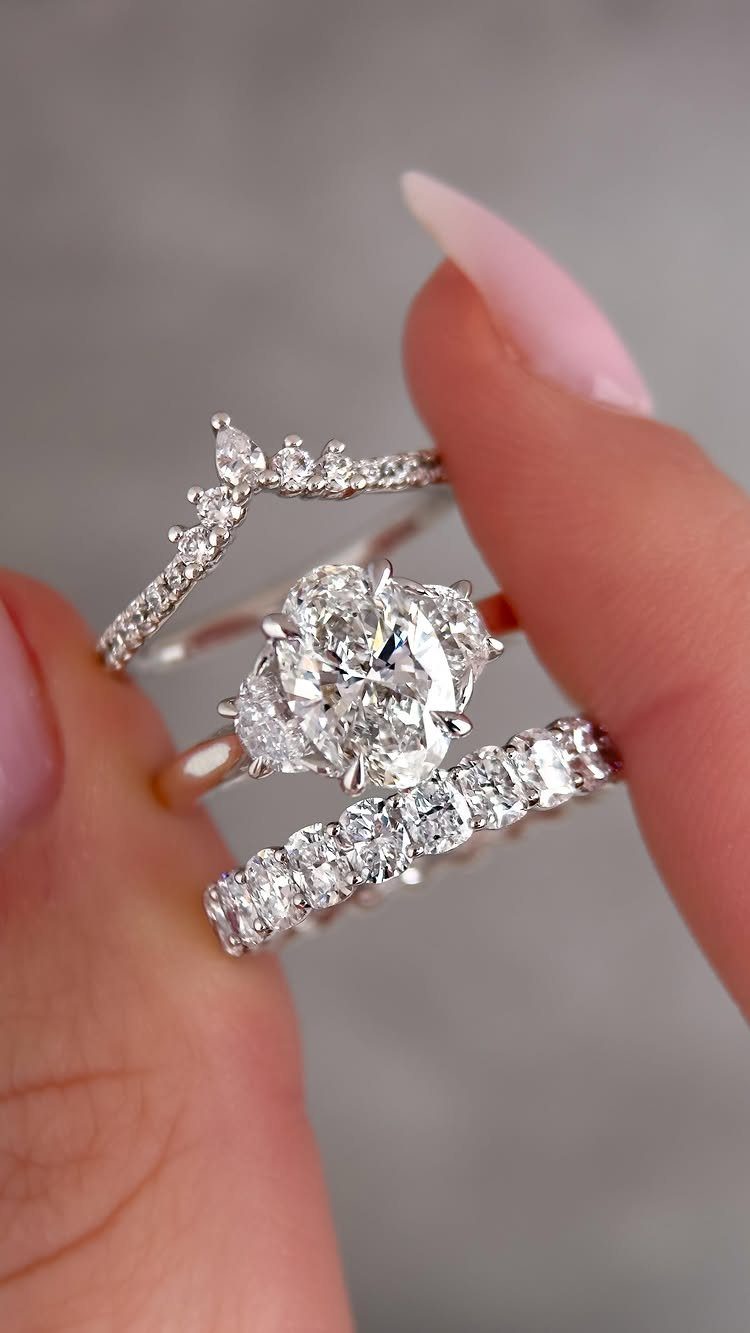
A curved band is cut to wrap around the engagement ring’s center stone, so the two sit flush with no gap. A straight band can tilt the solitaire and leave a hollow between them; the curve closes that space.
Diamond-set contoured bands add sparkle that echoes the center stone, and a small pavé or shared-prong line along the curve is enough to do it. I like this for any solitaire with a tall setting.
A curve only works if it fits that exact ring, so try the two together before you buy.
9. Diamond Wedding Rings
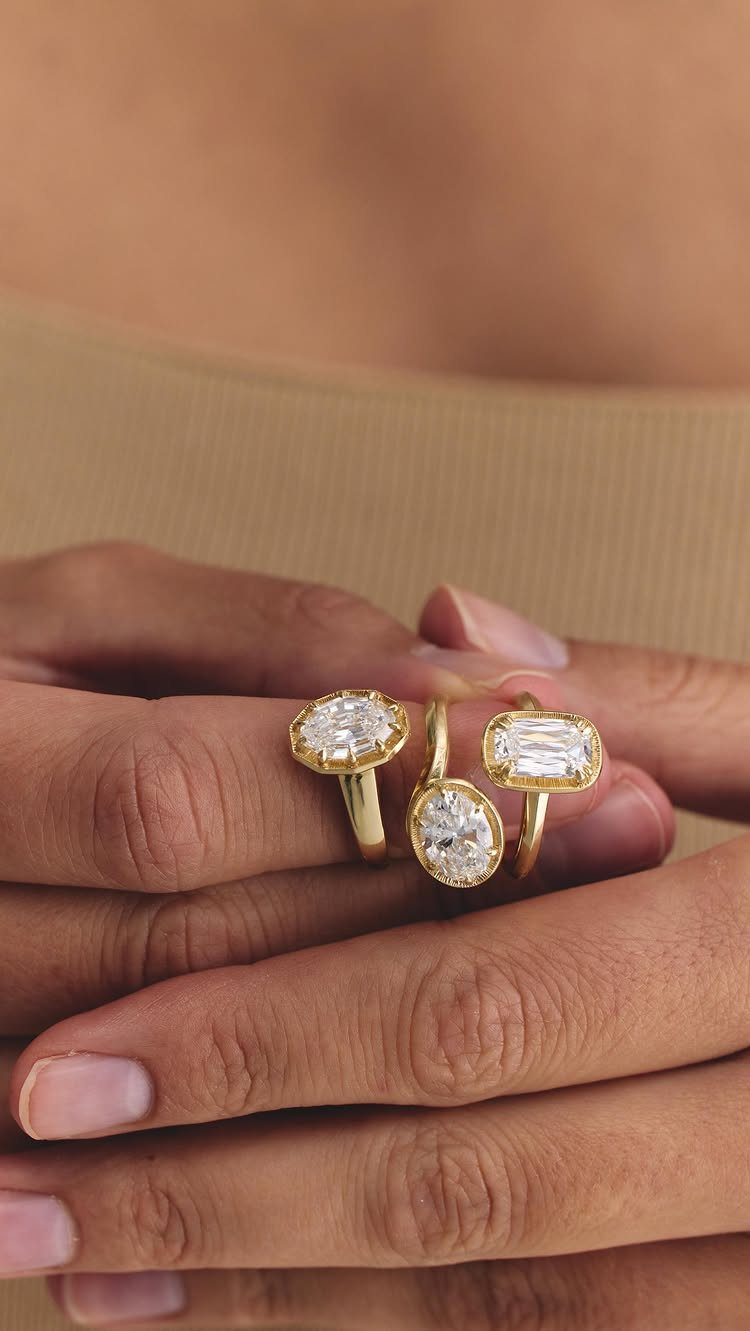
Diamonds in different shapes, oval and emerald cuts here, let one ring stack carry more than a single stone could. Gold keeps the mix looking warm and cohesive instead of busy.
Stones add cost fast, so my advice is to spend on one larger diamond and keep the others small. An emerald cut shows flat, clear facets rather than heavy glitter, which suits a quieter taste.
Compare the rings in daylight, since indoor lighting flatters everything.
10. Chunky Wedding Rings
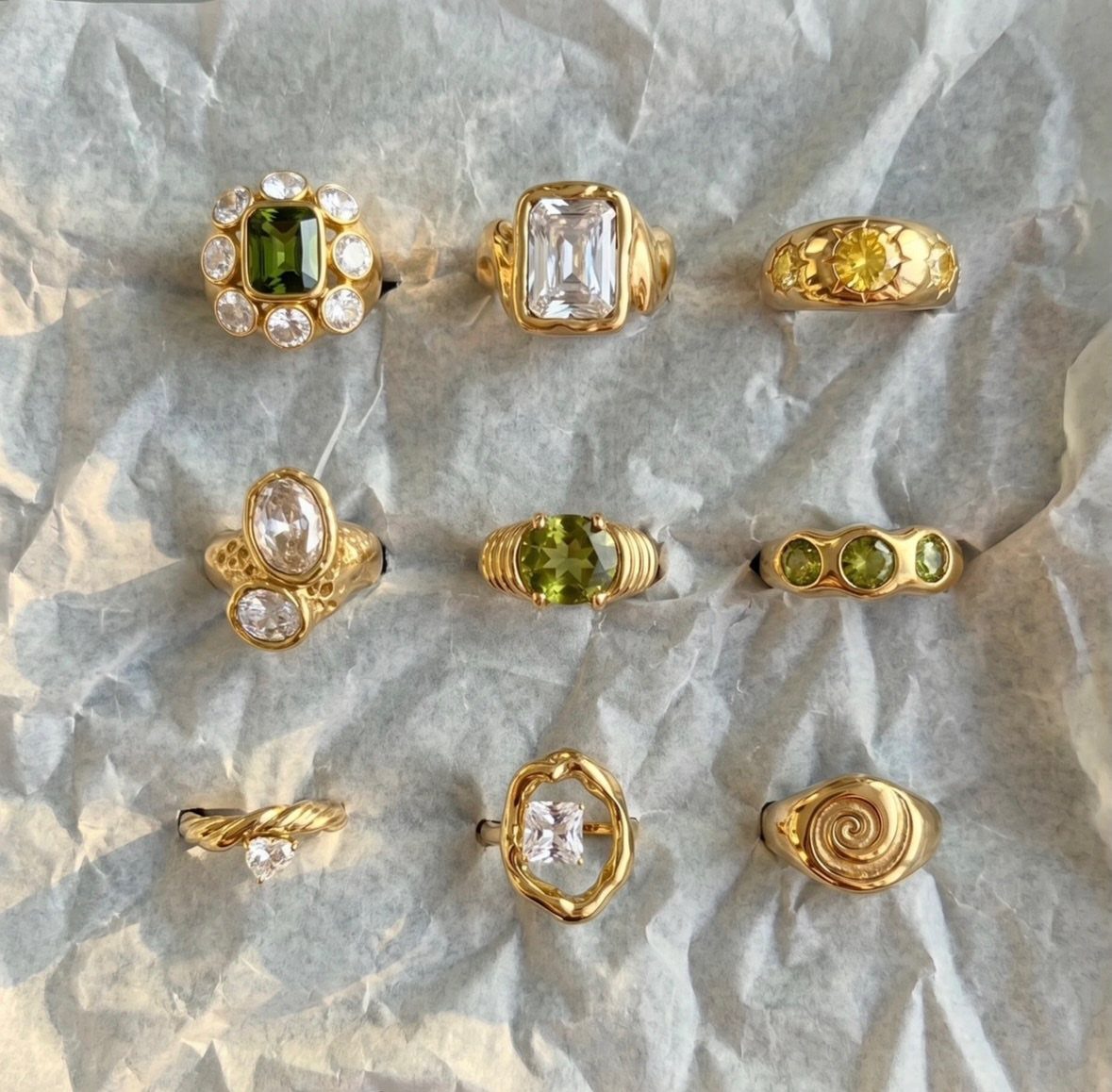
A chunky ring is judged by its width and weight, and the style runs from smooth gold bands to stone-set statement pieces, so try a few widths on before you settle.
Thicker gold means more metal, so expect the price to climb with the width.
I’d pick chunky if you want the ring to be the focus of your hand.
Wear a sample for an hour or two first. A wide band feels very different from a thin one, especially when you type or grip things.
11. Beveled Wedding Bands
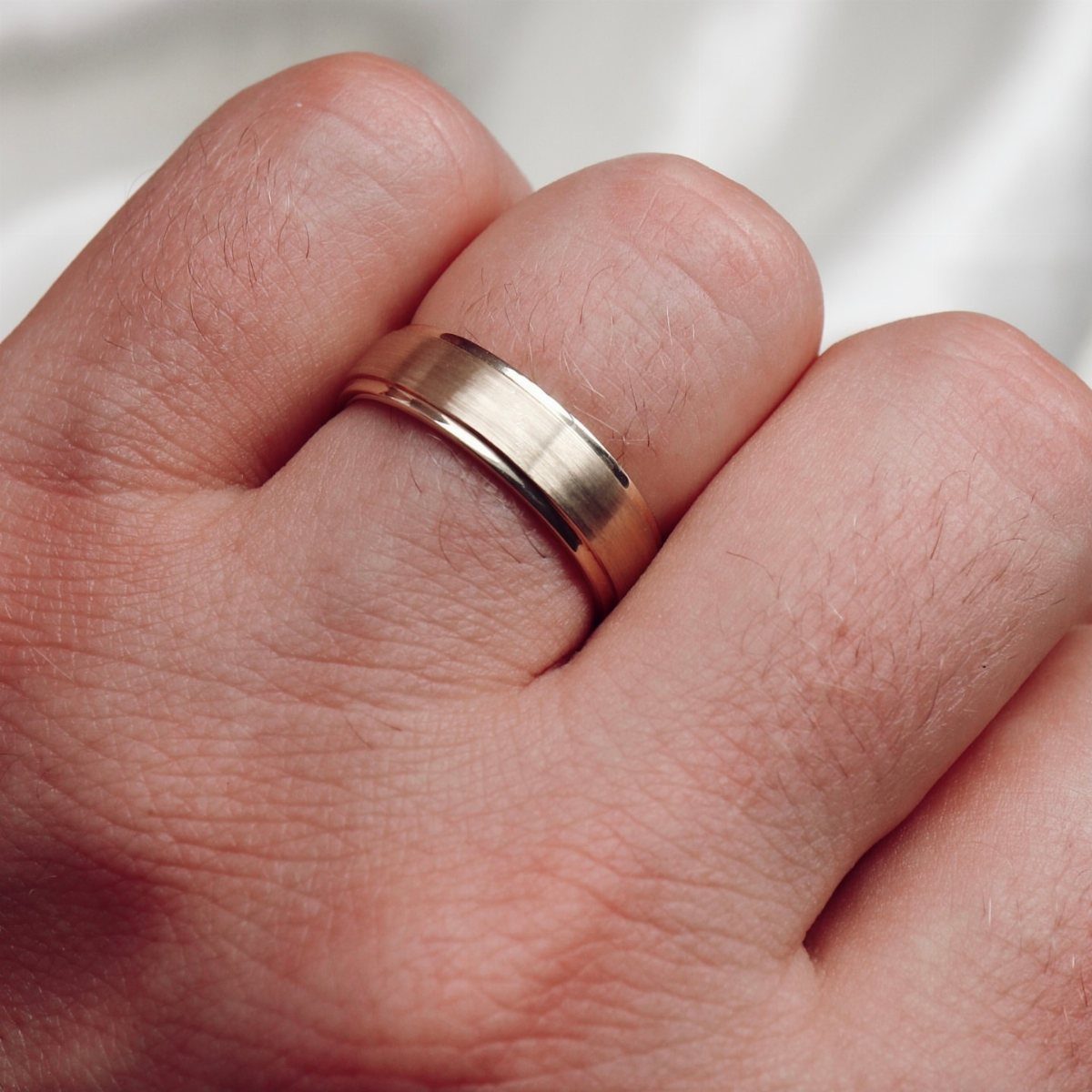
Beveled edges slope down from the top of the band, so light catches the angles and a plain gold ring gains depth without a single stone. That makes it a budget-friendly way to get dimension.
I like it for anyone who wants something simple but not flat. Look at it in person, because the angle of the slope changes how bright the band looks.
Gold shows the bevel well, and a polished finish makes the edges stand out most.
12. Diamond Wedding Bands for Men
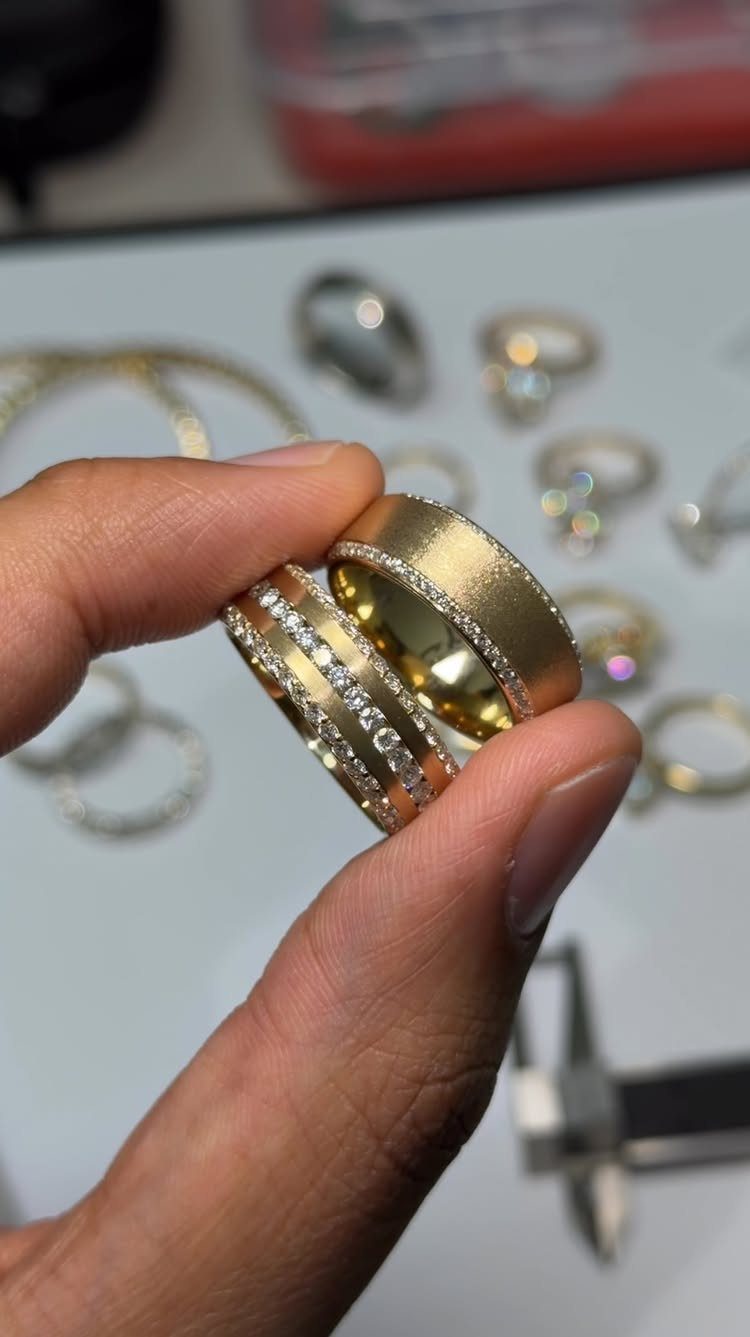
Small diamond accents set into a gold band give a man’s ring a quiet glint instead of a loud one.
Diamonds change a man’s band more than most people expect: a plain band reads quiet and classic, while a row of small stones adds shine without much bulk.
I’d choose one or two small stones over a full row if he rarely wears jewelry. Fewer stones cost less and catch on things less often.
Have him try the ring on before you buy, and check that he’s comfortable with the sparkle.
13. Hammered Wedding Bands
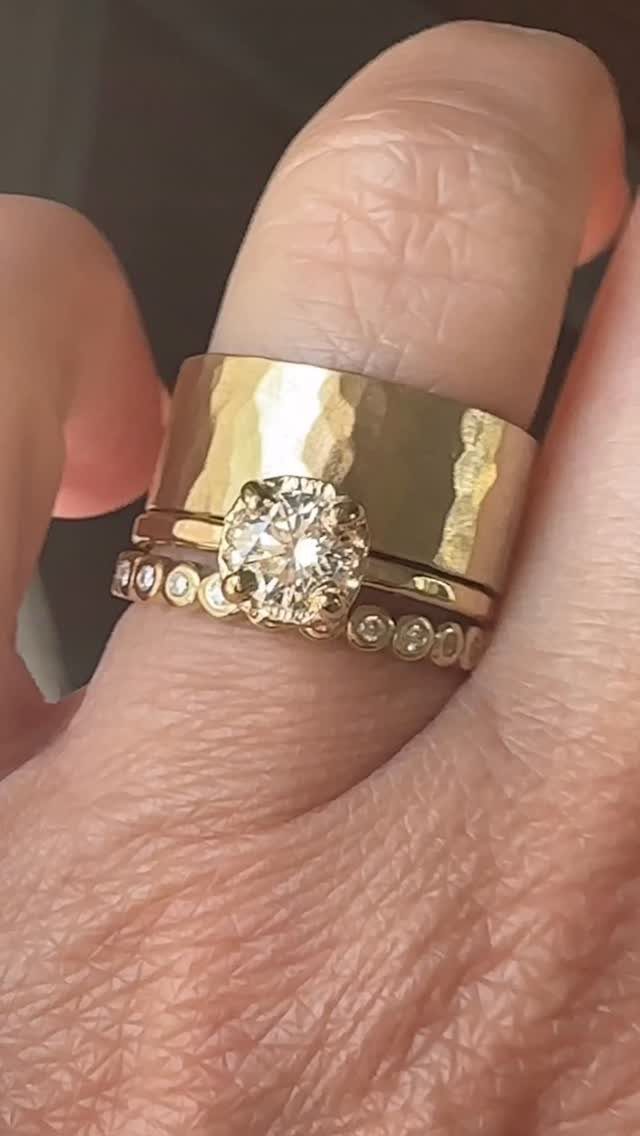
A hammered band is dented all over by hand-style indentations, which gives gold a rugged, softly broken-up shine instead of a mirror polish. Wide like this one, the texture has room to show.
I’d pick it if your engagement ring is a polished diamond style, because the contrast makes both look more deliberate. Plain gold with texture also costs less than a band packed with stones.
Try it beside your engagement ring before buying, so you can judge how the 2 finishes sit together.
14. Nature-Inspired Wedding Rings
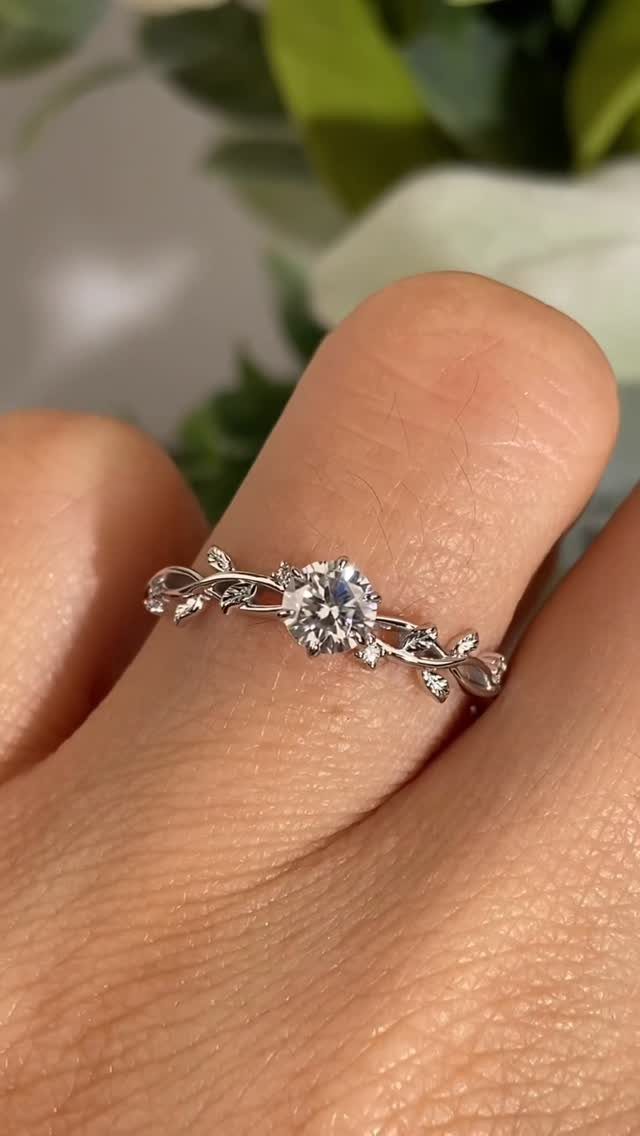
Leaf engravings carved along the band turn a diamond ring into something that feels grown rather than manufactured. Here the leaves wrap a silver-toned band that holds a single center diamond.
I like this for couples who want a motif without adding stones, since engraving keeps the diamond count low. Ask the jeweler how deep the leaves are cut, because shallow detail can look flat on a narrow band.
Flowers or vines work the same way if leaves aren’t your taste.
Choosing the Right Width
Width is the one choice that changes both how a ring looks and how it feels all day.
Bands run from delicate at 2mm to bold at 8mm+, and the narrow end suits smaller hands or anyone who likes subtle jewelry.
Wider bands read as a statement and feel more substantial on the finger. I’d steer a first-time ring wearer toward the middle of that range, then go up or down after a week of wear.
Profile matters as much as width.
A plain band keeps the same width all the way around, and you can get it flat, D-shaped or knife-edge. Try each profile at the same width, because a rounded inside and a flat one feel quite different.
Personalization Options
Personal details are cheap compared with a bigger stone, so start there. Engraving inside the band can hold initials, a date or a short phrase, and no one sees it but you.
A birthstone or another meaningful gemstone adds color and a story at a modest cost. Combining white and yellow gold gives contrast, and a custom design with a jeweler gets you something no one else has.
I’d pick one or two of these, not all four.
A band with an engraving, one stone and a custom shape starts to feel crowded, and the simplest personal touch is usually the one you’ll still love long after the wedding.
Matching Wedding and Engagement Rings
Matching metal and stones is only half the job. Shape decides whether 2 rings sit together or fight each other.
If your center stone is a marquise, pear or heart, a band with a V-shaped notch hugs those points so the ring sits flush, and the tip gets a layer of protection from knocks.
Proportion counts too.
If they pinch, tilt or crowd each other, move on to a different band shape.
Frequently Asked Questions
What are the main types of wedding rings?
The main categories are classic, modern, luxe, nature-inspired, unique and vintage-inspired. Classic bands are plain, polished gold or platinum; modern ones go for slim, minimal lines.
Luxe bands carry pavé, channel or eternity diamonds. Nature-inspired rings use leaf or vine motifs, unique ones use mixed metals or inlays, and vintage-inspired ones borrow older details such as milgrain and filigree.
What is a wedding band?
A wedding band is the ring you trade at the ceremony, then wear every day as the sign of your marriage.
It tends to be simpler than an engagement ring, which usually has a center gemstone. Bands run from plain metal to styles with diamonds, gemstones or engraving.
How do I choose a wedding band?
Start with how you live, your budget, the metal and the width.