Where you’ll be standing decides the dress, since a midi, a flowing maxi, an embellished gown or a sparkling evening gown each handle grass, wind and light differently.
The list runs from a midi dress you can wear again at a shower to a flowing white maxi, an embellished traditional South Asian gown and a sparkling champagne evening gown.
Start with the ground and the forecast, then build your partner’s outfit from the backdrop: navy reads well against a green park, while earth tones suit a golden field.
1. Midi Dress
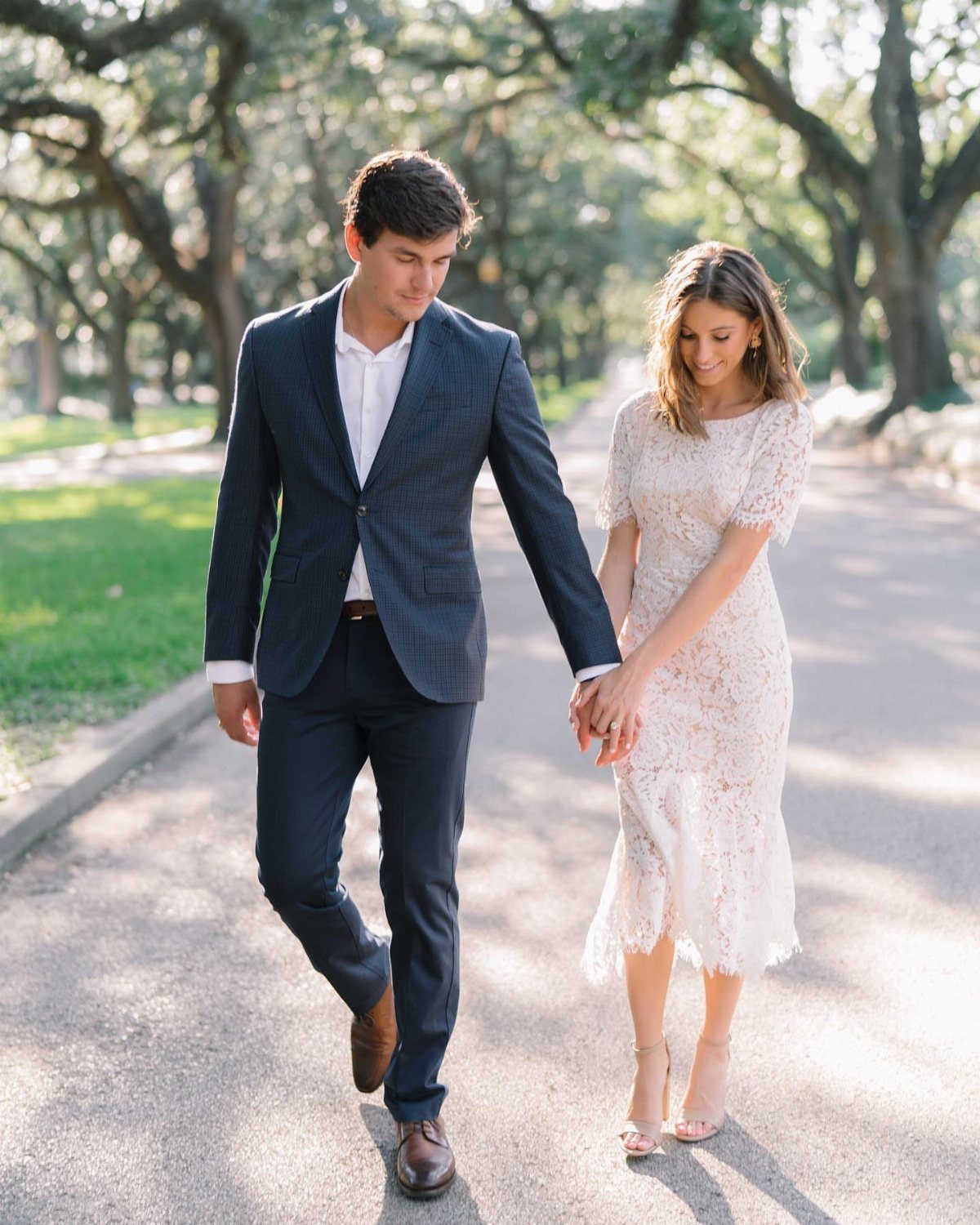
Hem length sets the mood of an engagement session before anything else does. A midi, landing between knee and ankle, reads dressy without dragging through leaves or gravel on a path like this one.
For a budget, I’d pick midi over a floor-length gown: less fabric, easier to walk in, and you can wear it again to a rehearsal dinner or a shower.
Long suits formal settings, short suits playful ones. Midi works for nearly everything in between.
Take one pair of flats along for the walking stretches.
2. Flowing White Maxi Dress
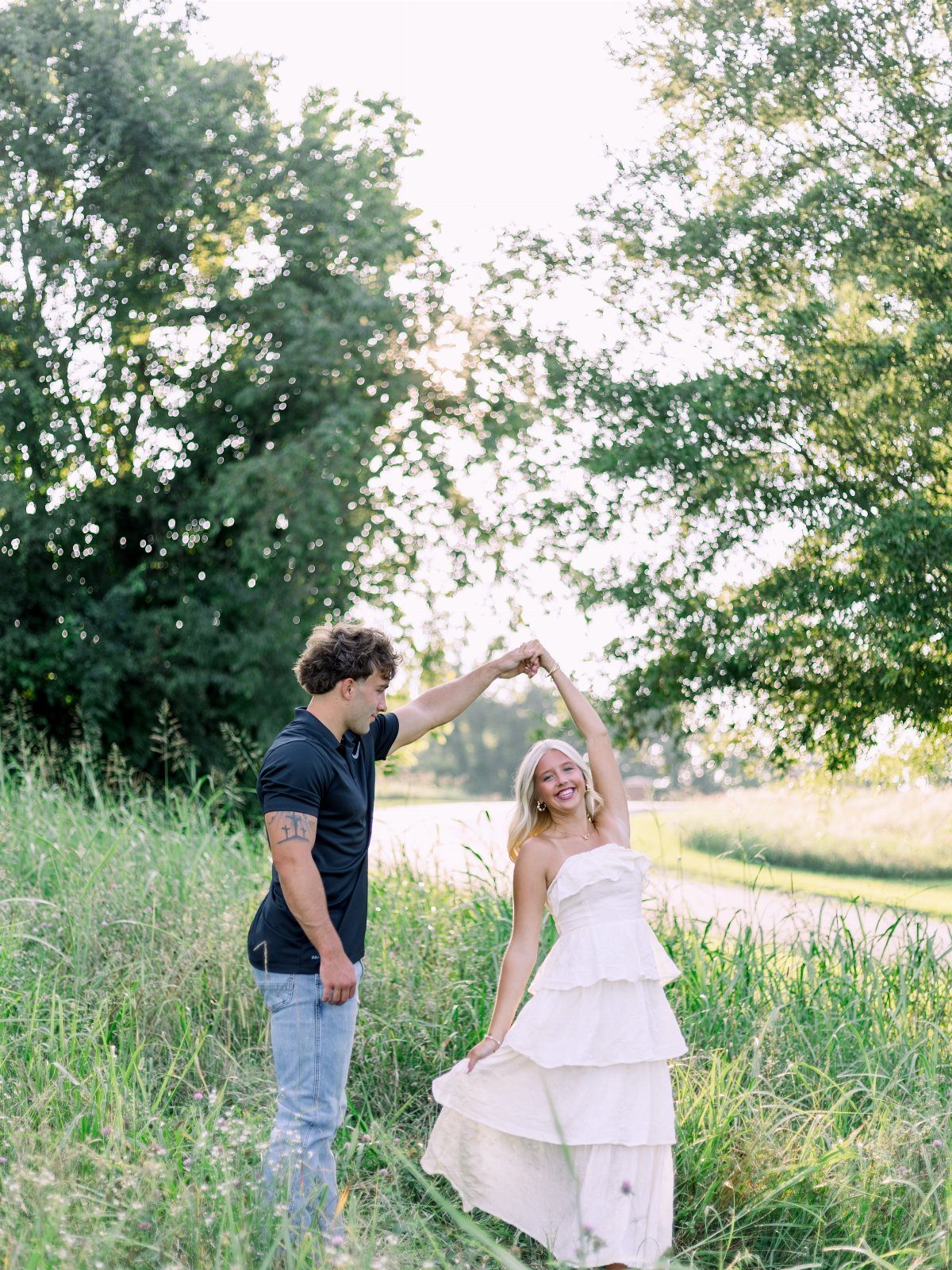
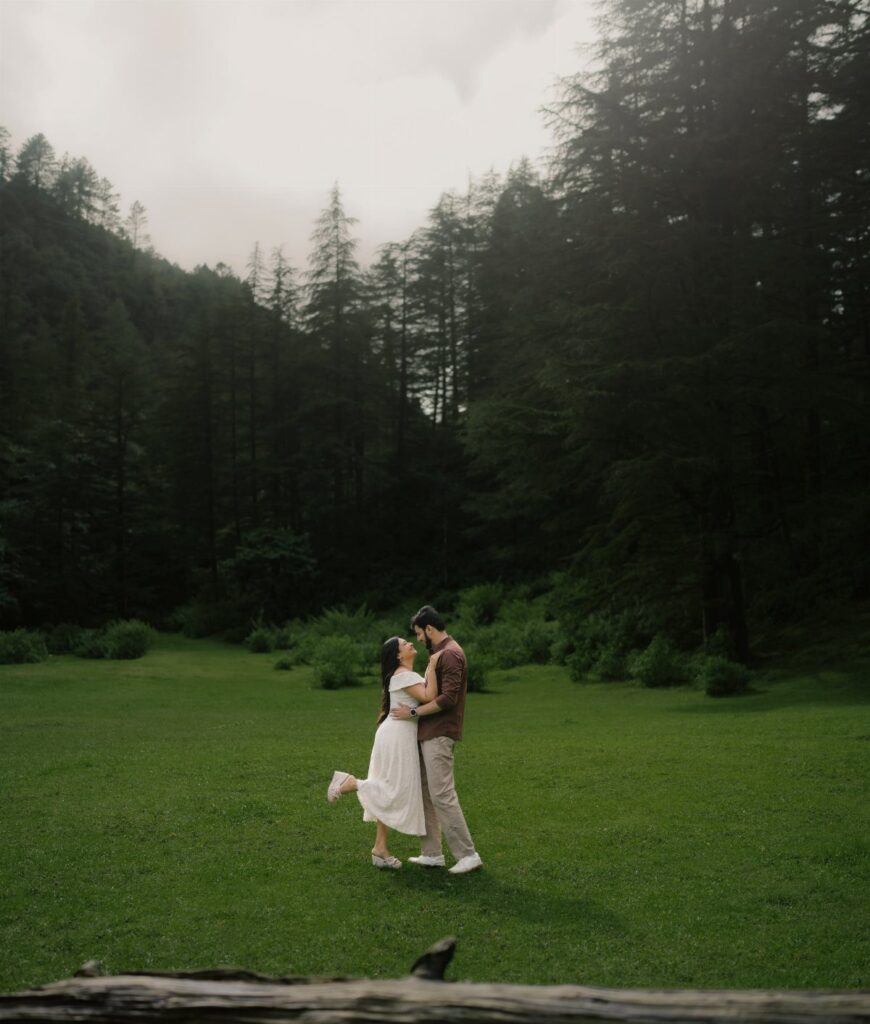
Movement is what a tiered white maxi gives you that a fitted dress can’t. When the skirt catches air during a spin or a dance step, the photographer gets motion without any posing.
A strapless cut keeps the focus on the skirt, though I’d test it by raising your arms and twirling before the shoot day.
Tiers add fabric, so check the hem against your shoes and watch for grass stains in a field.
For a skirt that flies, pick a lightweight fabric like chiffon or georgette.
3. Embellished Traditional South Asian Gown
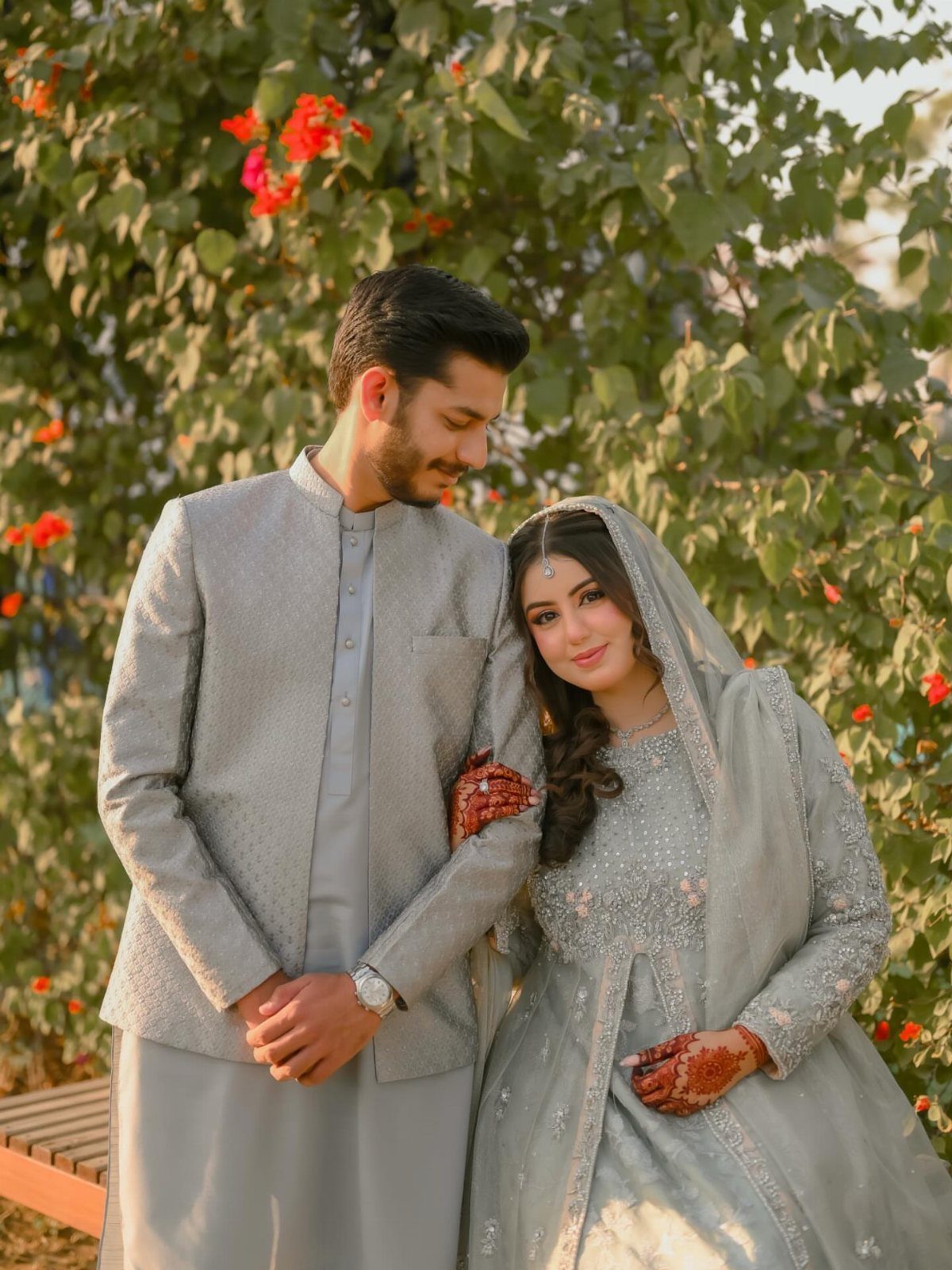
Heavy embroidery and ornate embellishment do the styling work for you, so a gown like this needs little else. Grey, as worn here, sits calmly against bright green leaves and red flowers instead of fighting them.
If you own a gown or can borrow one from family, use it; that beats buying new on a tight budget.
Ask your partner to match the tone of the embroidery, not the exact color. Keep jewelry modest so the detail on the fabric stays the focus.
4. Sparkling Champagne Evening Gown
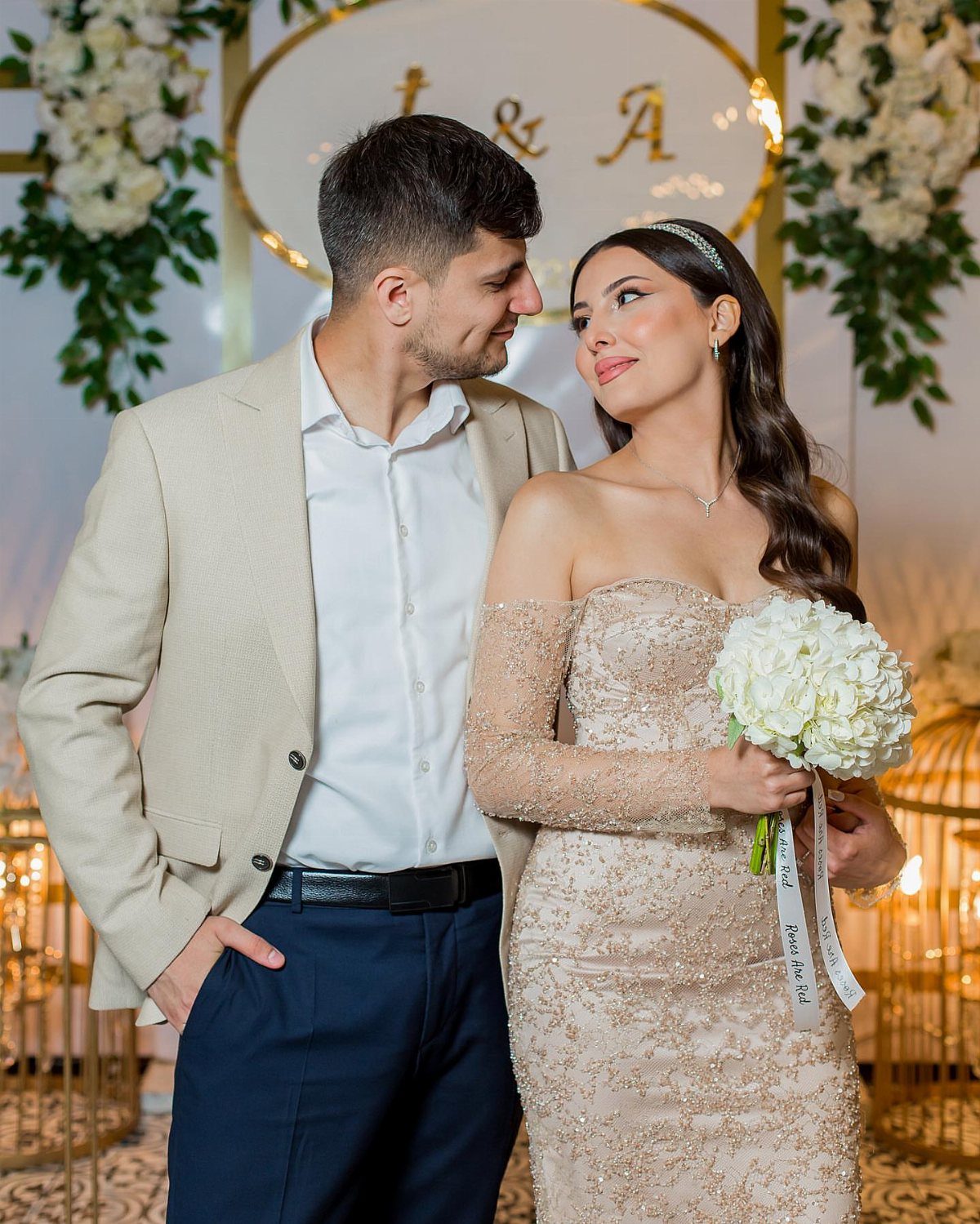
Sequins catch light in a way no matte fabric will, and champagne is gentler on skin tones than silver or stark white.
An off-the-shoulder neckline frames the collarbone and shows off a ring when you hold a bouquet at waist height.
I’d rent before buying. A gown this formal gets one or two wears, and rental costs far less than retail.
Pair it with a suit in a deeper shade, such as charcoal or navy, so the sparkle has contrast.
5. Color Palette
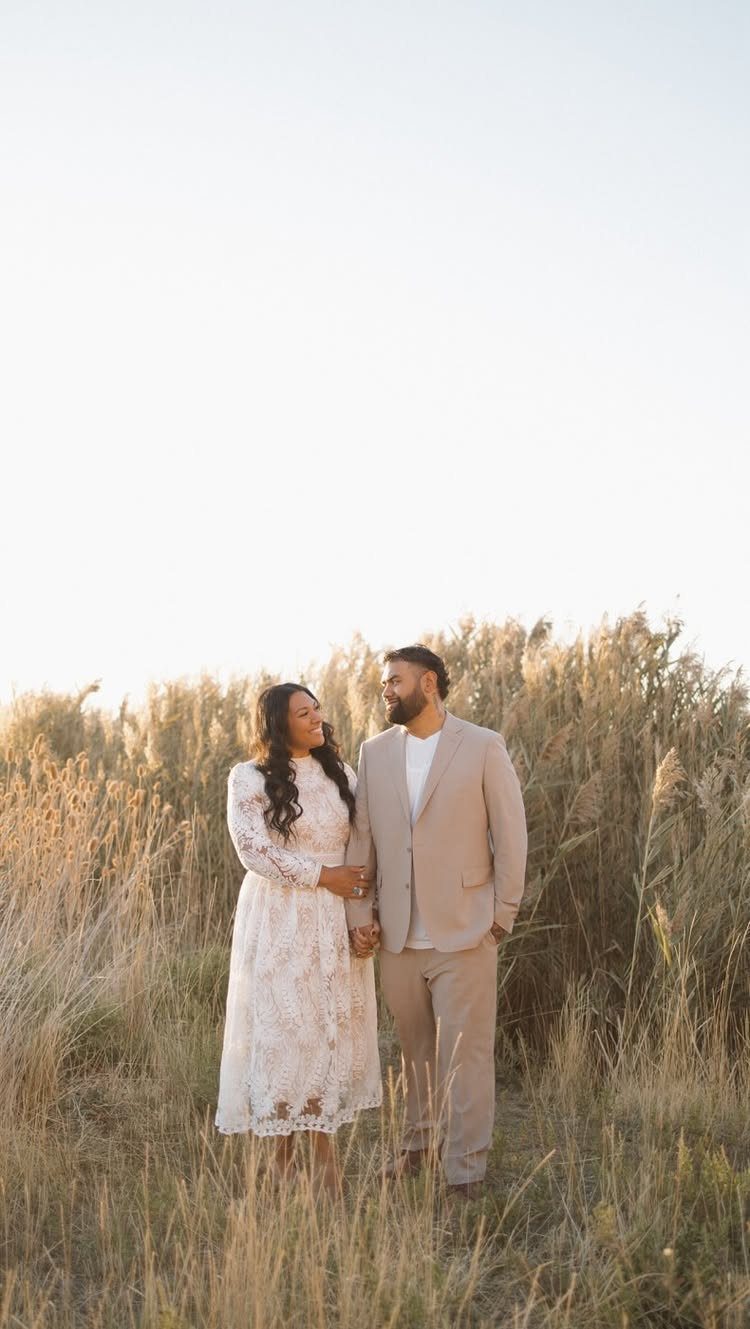
Complementary beats identical. A white lace dress next to a tan suit works because both sit in the same warm family while staying different tones and textures.
Start with her dress, then pull his outfit from the setting: a golden field calls for earth tones, while a green park might want navy.
Lay both outfits on a bed and squint at them. If one jumps out or they blur together, swap a single piece, like a tie or a jacket.
Skip matching patterns; one patterned piece is plenty.
6. Seasonal Dress Choices
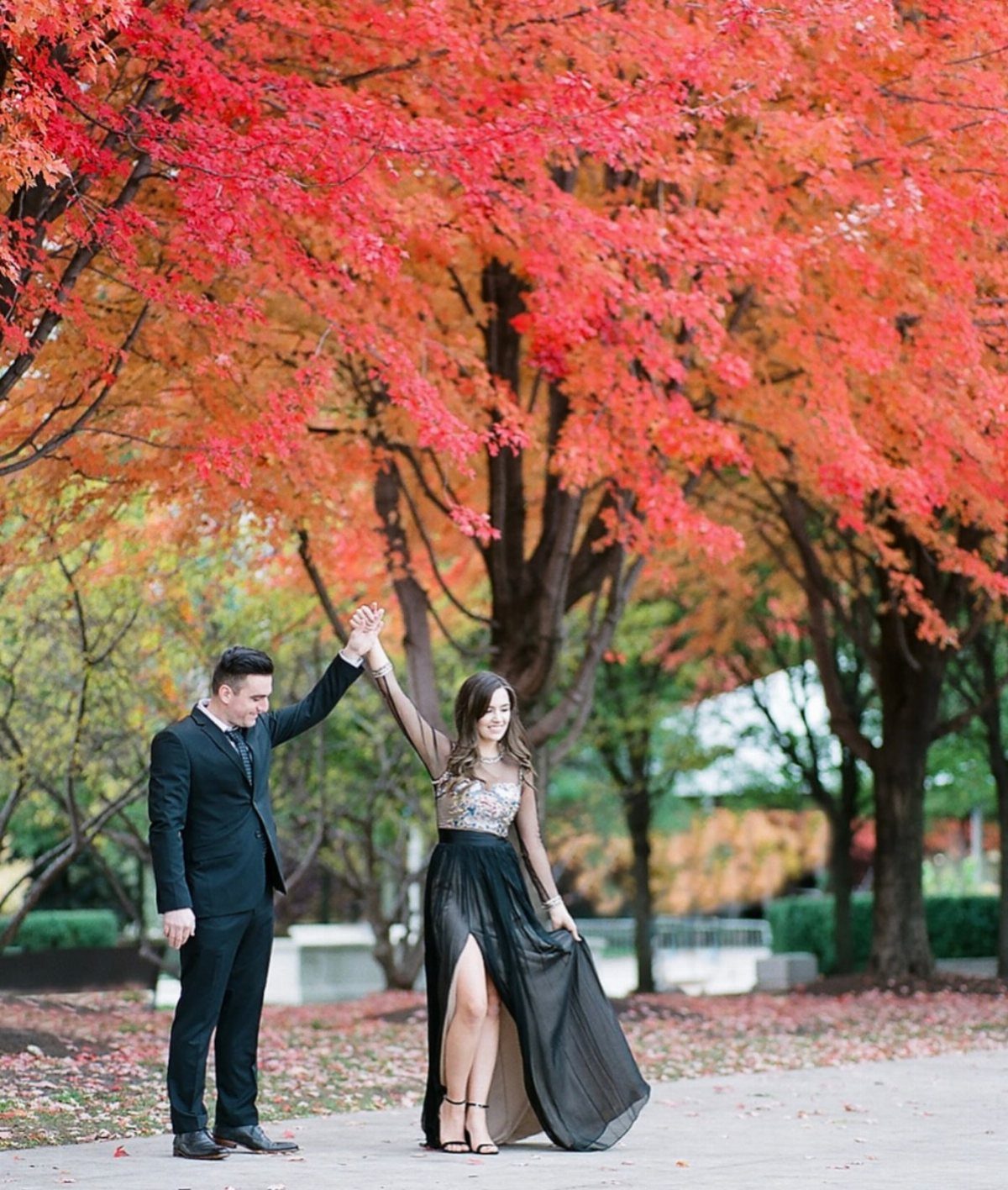
Season should pick the dress before the Pinterest board does. A long black gown under red autumn leaves works because the dark fabric lets the foliage supply all the color.
For fall, choose heavier fabric and long sleeves or bring a wrap.
For summer, go lighter and shorter. Spring suits pastels and florals, and winter can hold deep jewel tones if you can stand the cold between shots.
Check the forecast the week before and keep a backup outfit in the car.
7. Layering Options
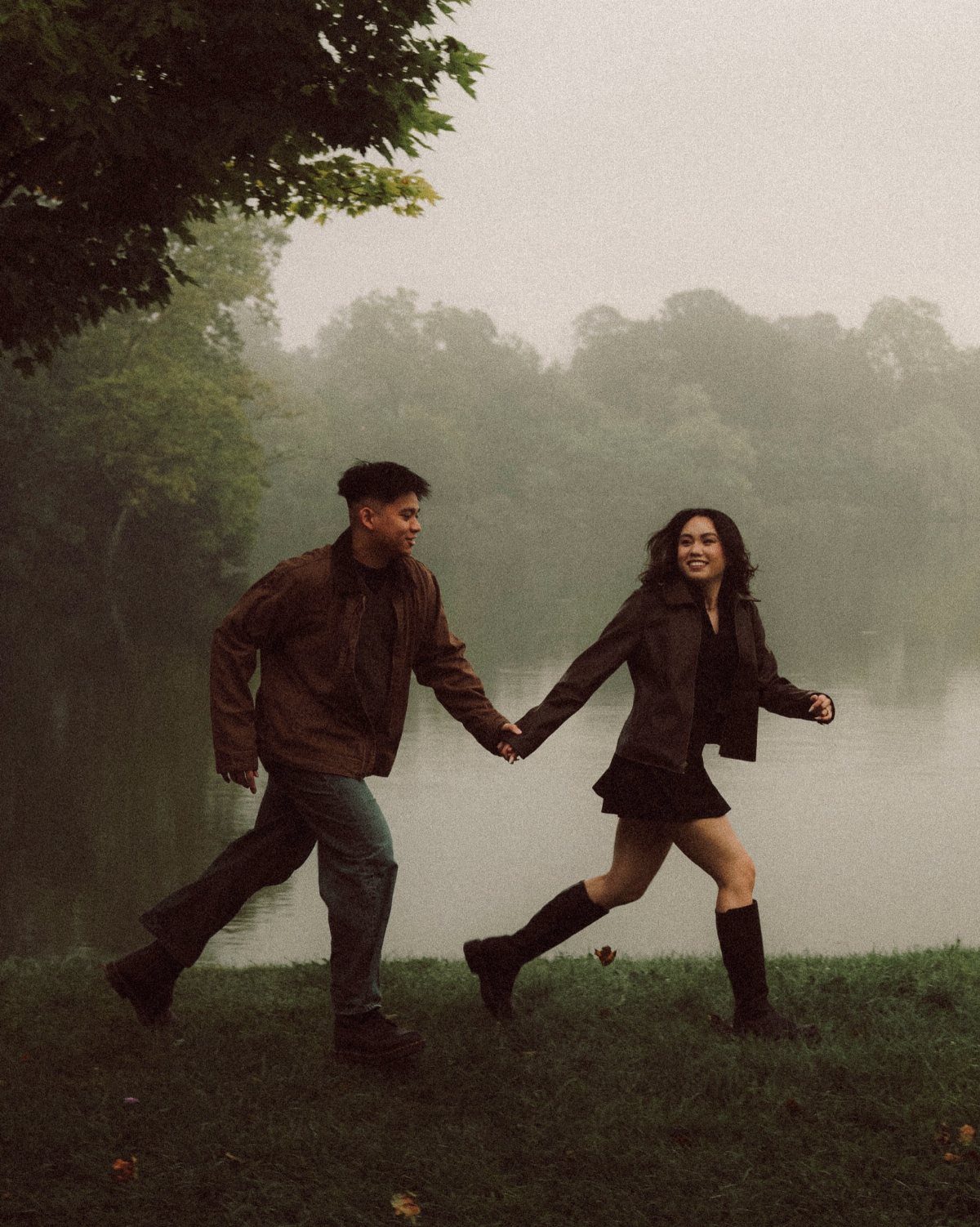
A jacket over a dress adds a second texture and keeps you warm on a foggy morning by a lake.
A brown jacket over a black dress works because the earthy tone sits quietly against the dark fabric and the gray water.
Pick the layer before the shoot and try it on over the dress, since sleeves that bunch or a hem that hangs below the jacket will show in photos. Borrowing a jacket from your partner or a friend costs nothing.
Ask the photographer for a few frames with the layer on and a few with it off.
8. Jewelry, Shoes, and Wraps
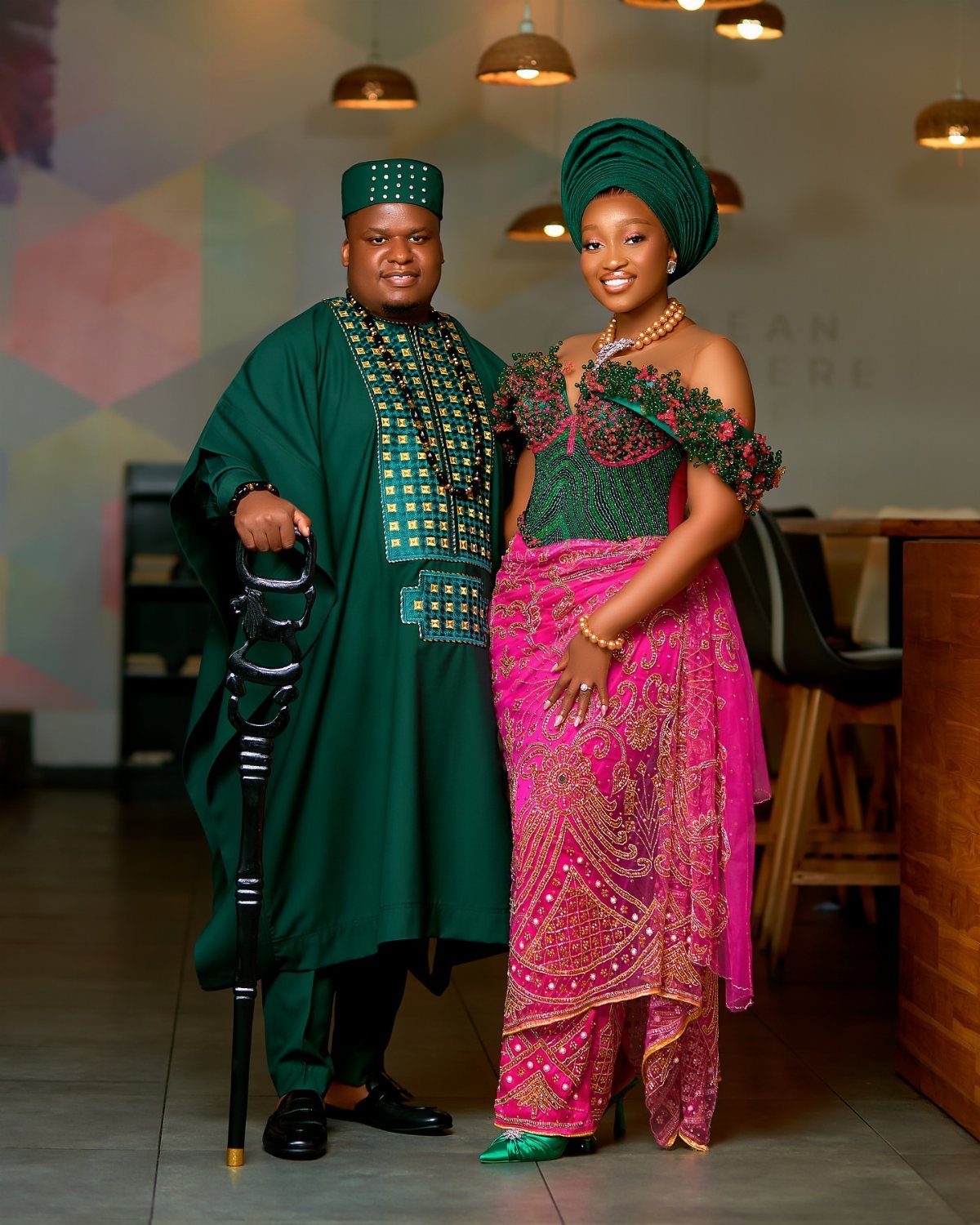
Accessories carry a traditional outfit further than any added piece of clothing. A headwrap, jewelry and heels finish the look from top to bottom, and they cost far less than a second outfit.
Choose one statement piece, like the headwrap, and keep the rest quieter so nothing competes with the fabric and embroidery. Heels look sharp indoors on a smooth floor; for grass or gravel, I’d carry flats and change between sets.
A wrap or shawl in a matching tone is an easy extra if the room runs cool.
Choosing the Right Fabric
Fabric decides how a dress reads on camera as much as color does. Chiffon and silk pick up light and swing with every step, but stiff synthetics hang flat in photos and lose their shape.
Natural fabrics also sit well in photos: cotton, linen and wool all photograph beautifully. If your outfit has a pattern, keep it subtle, like a fine check or a textured knit.
Wide stripes and big logos fight with the frame for attention, so viewers look at the print instead of your faces.
For a budget pick, a linen or cotton piece you already own will usually beat a pricey synthetic bought for the day.
Photogenic Colors
You do not have to wear white.
Beyond ivory, blush, sage and champagne flatter across skin tones and settings.
Blush brings warmth, sage looks calm and earthy in natural light, and champagne glows once the sun gets low. Dusty blue, burgundy and emerald also work.
Avoid a dress close to the shade of your backdrop. Green in a lush park or beige on a sandy beach makes you blend into the scenery.
Go easy on neon, and on all-black in a romantic setting. Softer, muted tones keep attention on your faces.
Posing Tips
Dress first, then pose. Practice in the actual dress and shoes at home, since that is where you will find a tight hip or a hem that trips you.
Test the moves you want on the day: walking, spinning, being lifted, running. Tight pencil skirts and bodycon cuts limit how freely you can move, and the stiffness shows in candid frames.
An A-line or empire cut leaves room at the hips and legs, and the long vertical line leads the eye up to your face.
A shorter hem frees your stride for walking shots and unplanned moments, and I’d weigh that more than most people do.
Settle your own outfit before you choose your partner’s. It is much easier to dress them once you know what you’re wearing.
Frequently Asked Questions
What do you wear to an engagement photo shoot?
Pick a dress that suits the setting and lets you move. A midi works for nearly everything, a flowing maxi gives you motion in a field, and a heavier fabric with sleeves or a wrap suits fall.
Check the forecast and the setting first: a beach in July and a field in November call for different dresses, and no inspiration board changes that.
A delicate necklace or small studs are plenty, because anything bolder pulls the eye away from the ring.
How to not look awkward in engagement photos?
A home run-through in the real dress and shoes tells you a lot, so walk, spin, get lifted and jog a few steps before the shoot day.
Pencil skirts and bodycon cuts make you stiff, and candid frames show it, so an A-line or empire waist that lets you move is the better pick.
Avoid logos, bold patterns and bright colors, and wear comfortable shoes suited to the location.