The ideas here run from a small add-on like floral details or flutter sleeves to a lace mermaid cut that needs extra alterations budget.
How you plan to move picks the silhouette: for a lawn walk, long hugs and hours of dancing, a flowing A-line or a tea-length skirt wins, and the fitted lace mermaid is for the day when drama matters more than comfort.
Detachable lace sleeves are the detail I’d watch, since they give one gown a covered ceremony look and a bare-armed reception.
1. Floral Details
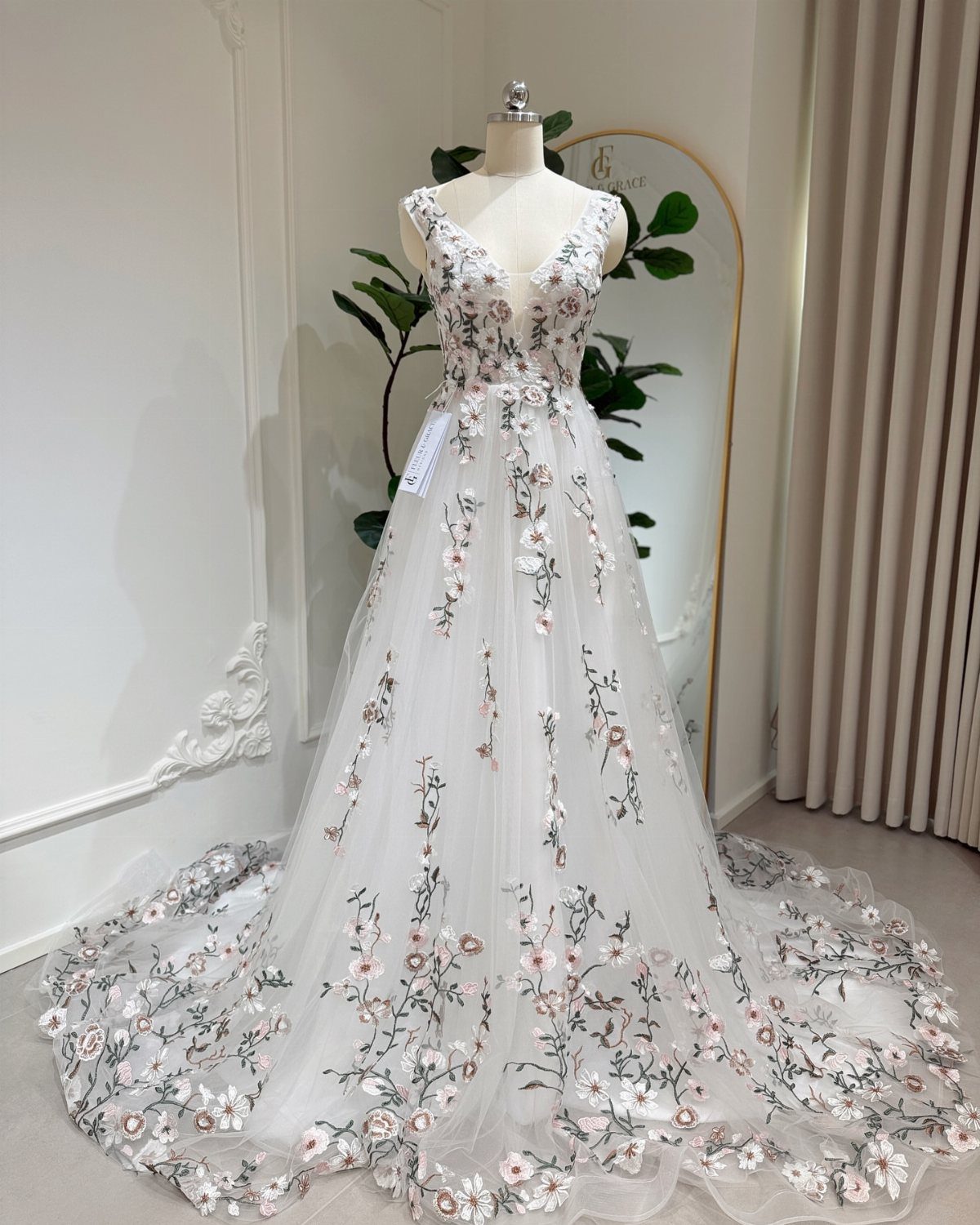
Embroidered flowers do the seasonal work without asking you to carry a bouquet’s worth of petals down the aisle.
Pink and green thread on white reads as spring right away, and stitching stays put in a way that fabric appliqués in a breeze may not.
Keep the florals tied to your actual bouquet colors. If the dress carries pink and green, those same shades in your flowers and bridesmaid accents make the whole look feel planned, not coincidental.
Ask to see the embroidery in daylight before you commit.
2. A-Line Dresses
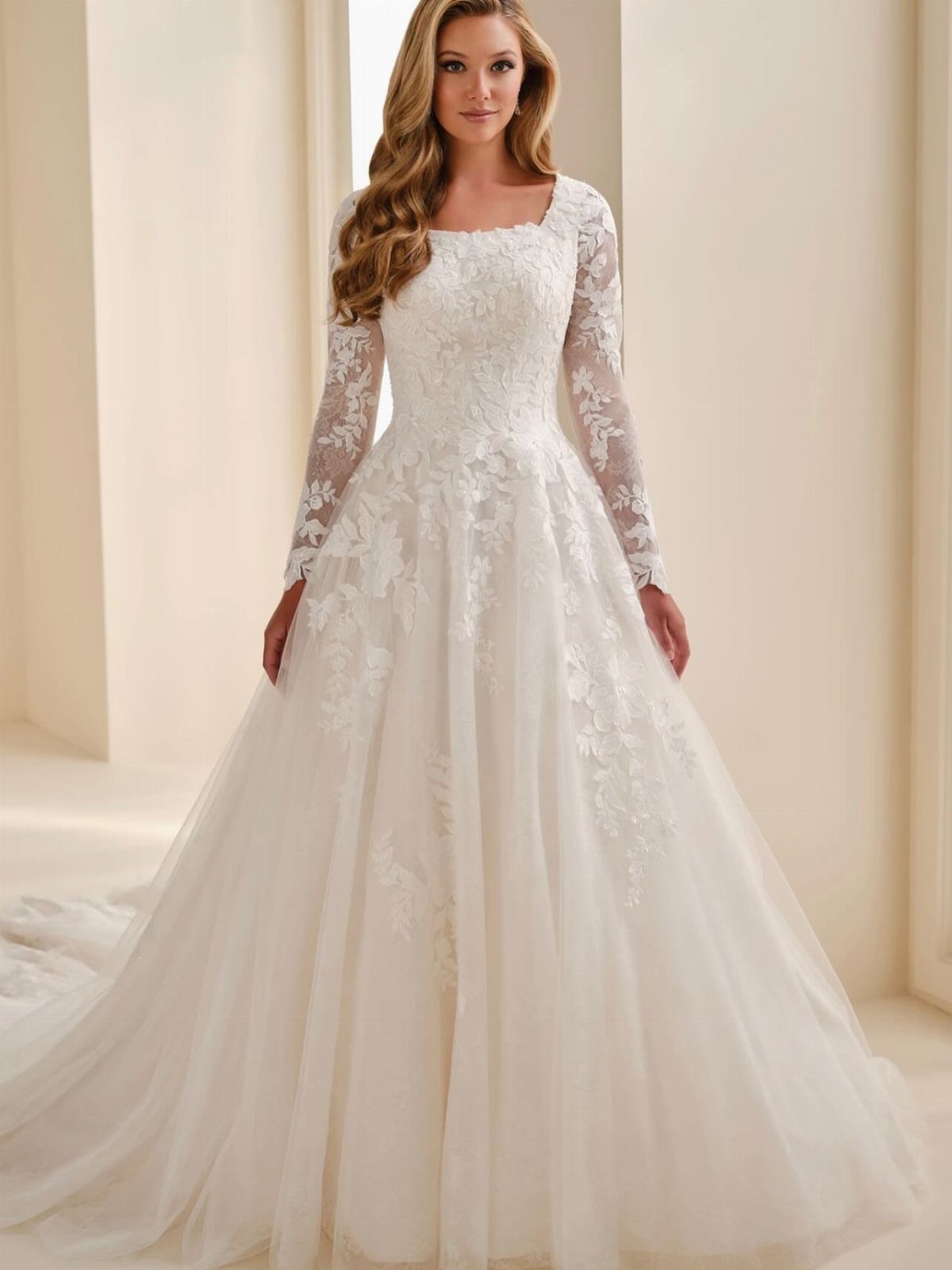
Few silhouettes forgive as much as an A-line: fitted through the bodice, then flaring gently from the waist in a shape that reads as a capital A. That’s why I’d point most budget-minded brides toward it first.
Long lace sleeves add a little coverage for cooler spring mornings, and an A-line skirt stays easy to walk and dance in.
Since the shape suits so many bodies, spend your fitting time on the bodice and the sleeve length. Those 2 details decide whether it feels like yours.
3. Lightweight Fabrics Wedding Dress
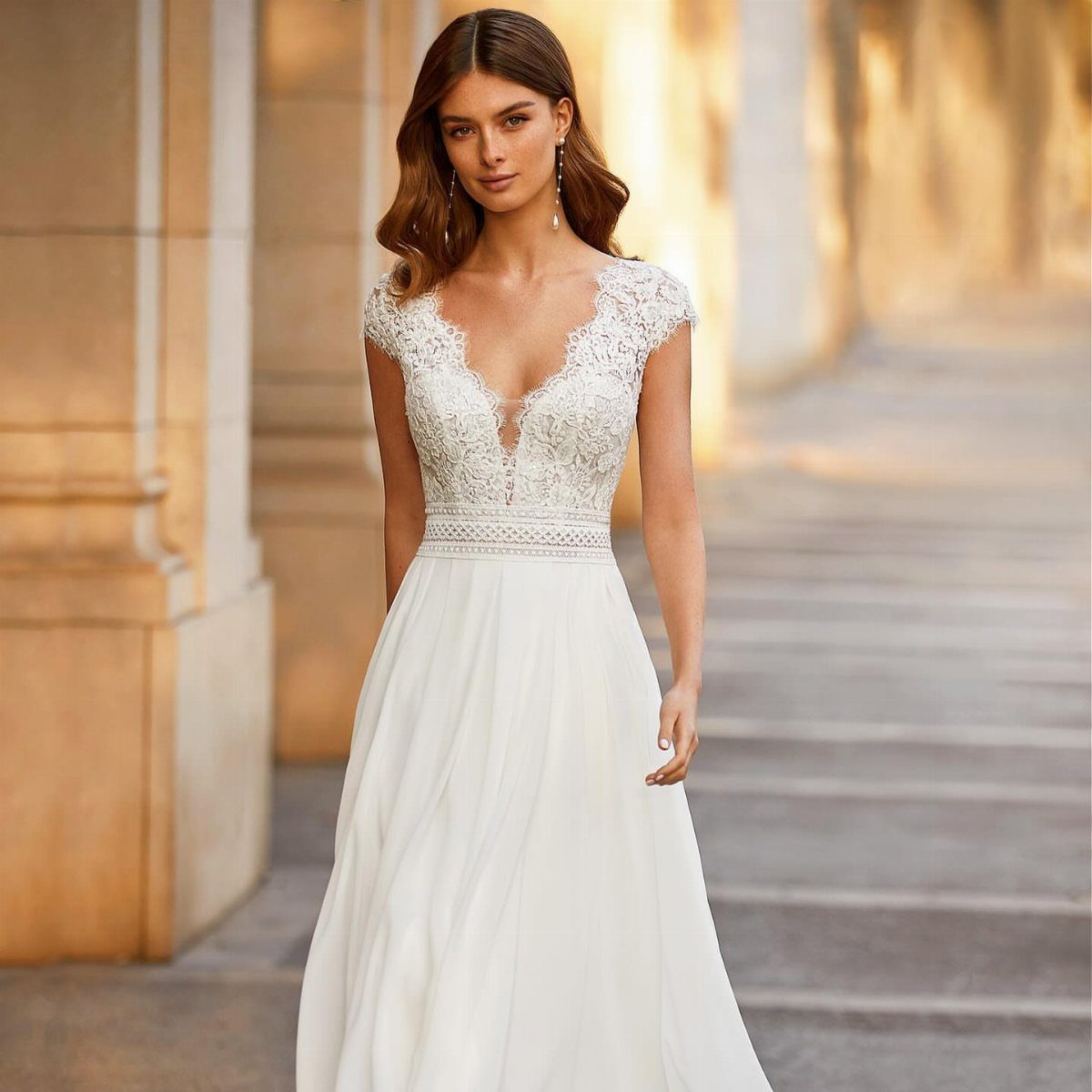
Lace on top and chiffon below is the pairing I’d pick for a warm-weather ceremony. The lace gives the bodice structure, while the chiffon skirt moves with every step and weighs very little.
Outdoor spring weddings, like a stone-columned terrace, suit this kind of fabric because it drifts in a breeze instead of fighting it.
When you try dresses on, walk around and turn in them. A skirt that feels airy in the first minute should still feel that way after a few hours of standing and hugging guests.
4. Pastel and Neutral Tones Wedding Dress
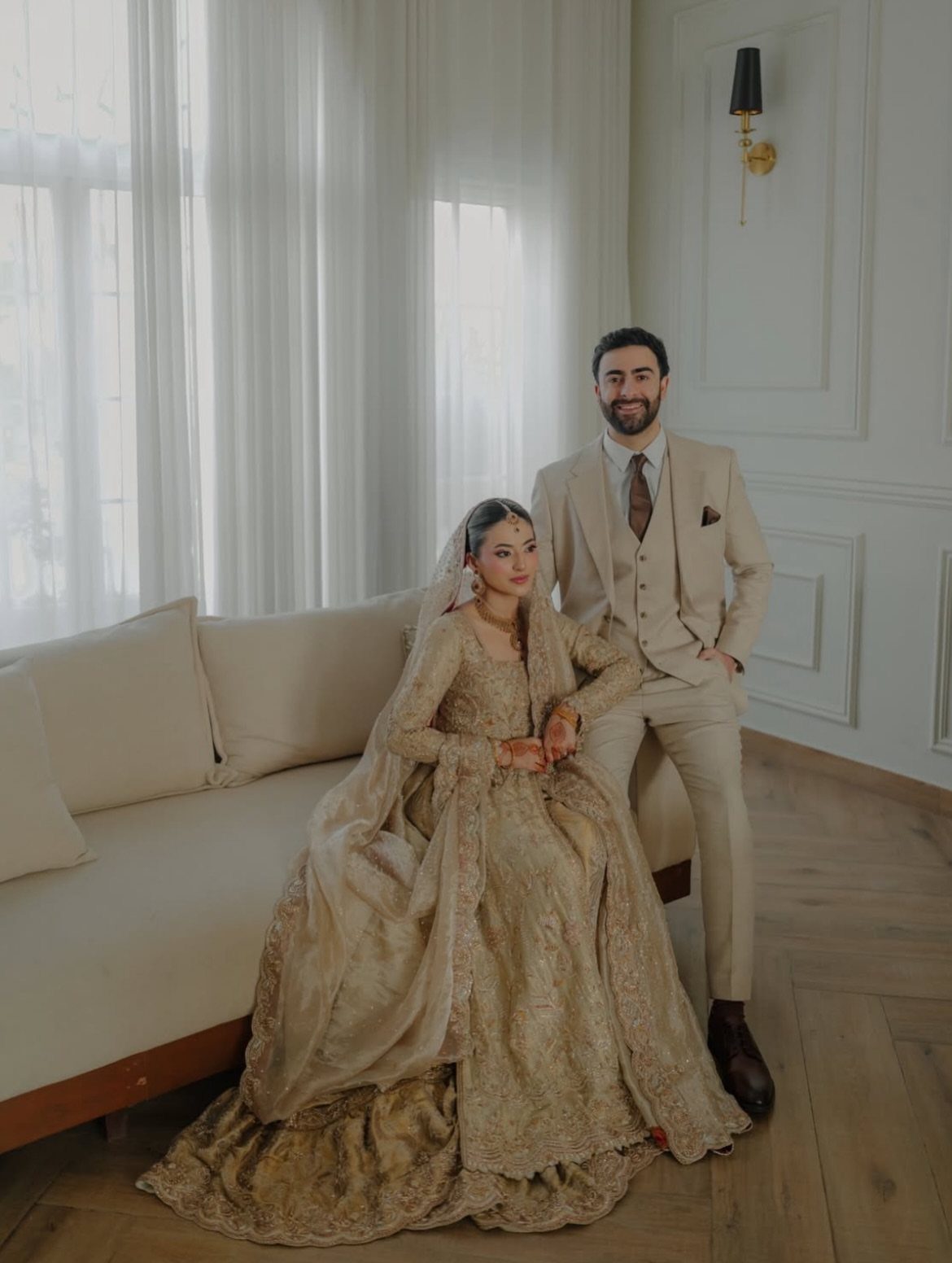
Champagne and gold sit between white and color, which makes them an easy way to look soft without going full pastel.
Pick one tone as your anchor, then let everything else sit a shade lighter or deeper. Blush, ivory and pale sage all work in that same quiet range.
Bright rooms flatter these colors best. Check any swatch by a window, since neutrals can shift from creamy to dull under artificial light.
5. Detachable Sleeves
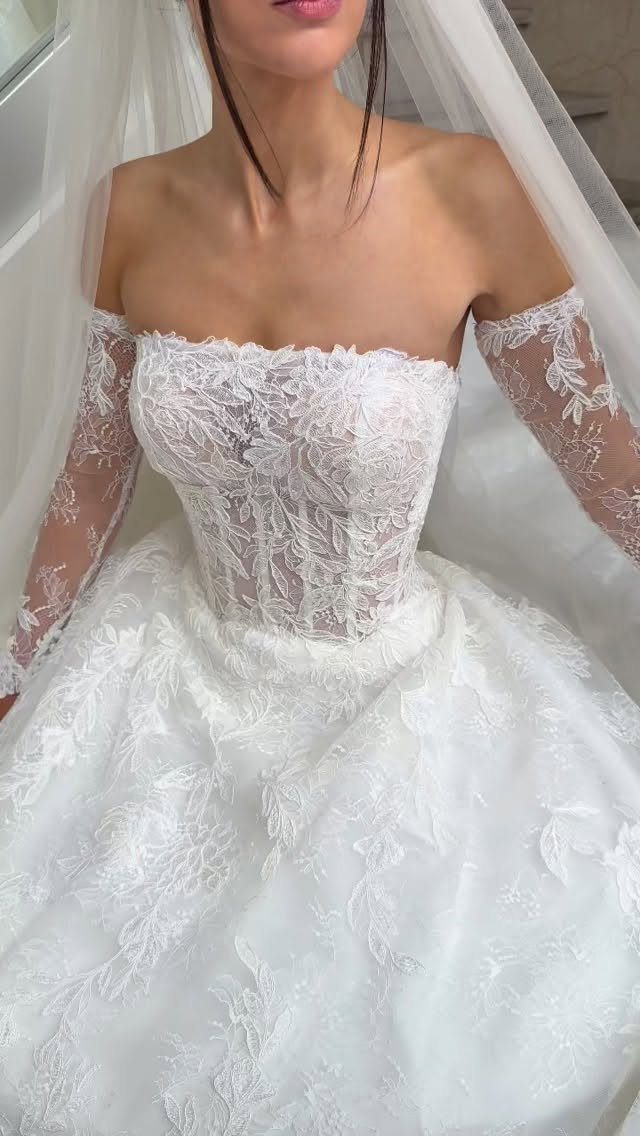
Sleeves that come off turn one dress into two looks. Here, a strapless lace bodice gets matching off-the-shoulder lace sleeves, so the ceremony can feel covered and traditional while the reception goes bare-armed.
For a budget-minded bride, I like this far more than buying a second dress. It’s one purchase with a built-in outfit change.
Ask the salon whether the sleeves are sold with the gown or separately, and confirm they match the lace exactly. Mismatched lace is the one flaw people notice at once.
6. Tea-Length Wedding Dress
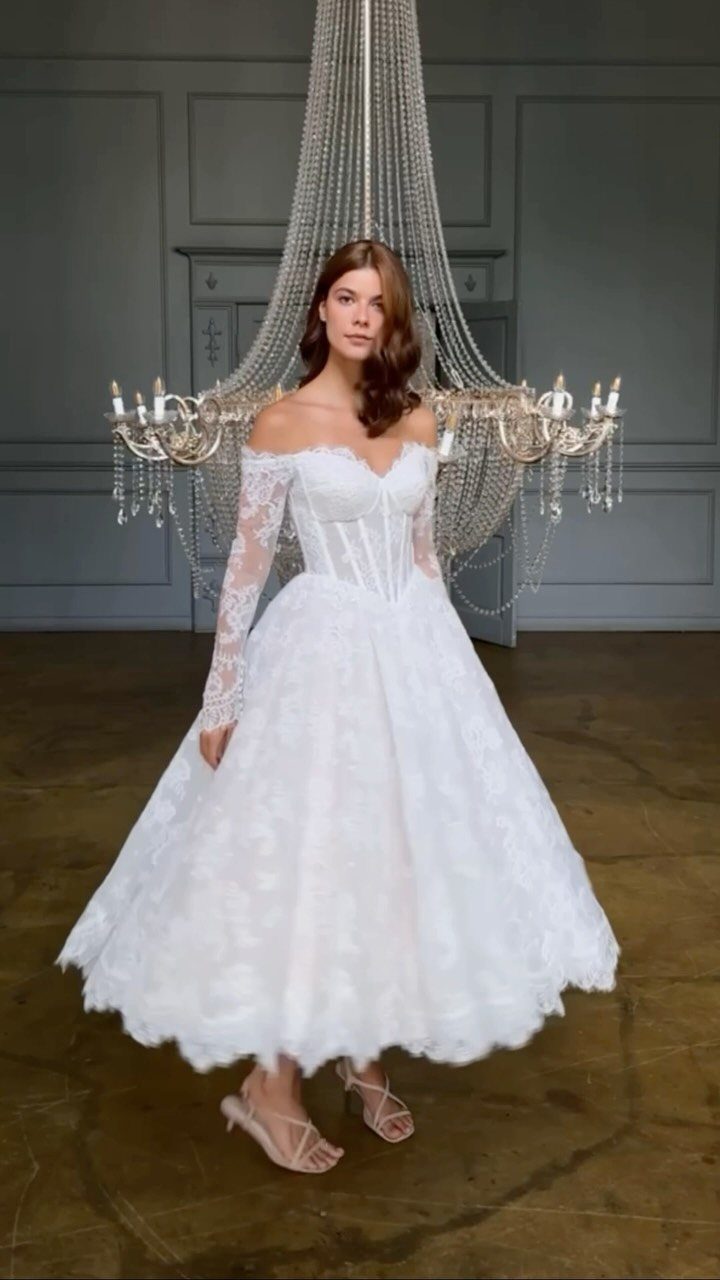
Hemlines that stop at the calf give you a dress you can actually dance in, which is the main reason I love tea-length for spring. Long lace sleeves, as in this one, keep it formal despite the shorter skirt.
Shoes become part of the look, so plan on choosing them early and wearing them to your fitting. A hem that lands at the right spot with flats may look different in heels.
Shorter skirts also use less fabric, which can trim the price when money is limited.
7. Flutter Sleeve Wedding Dress
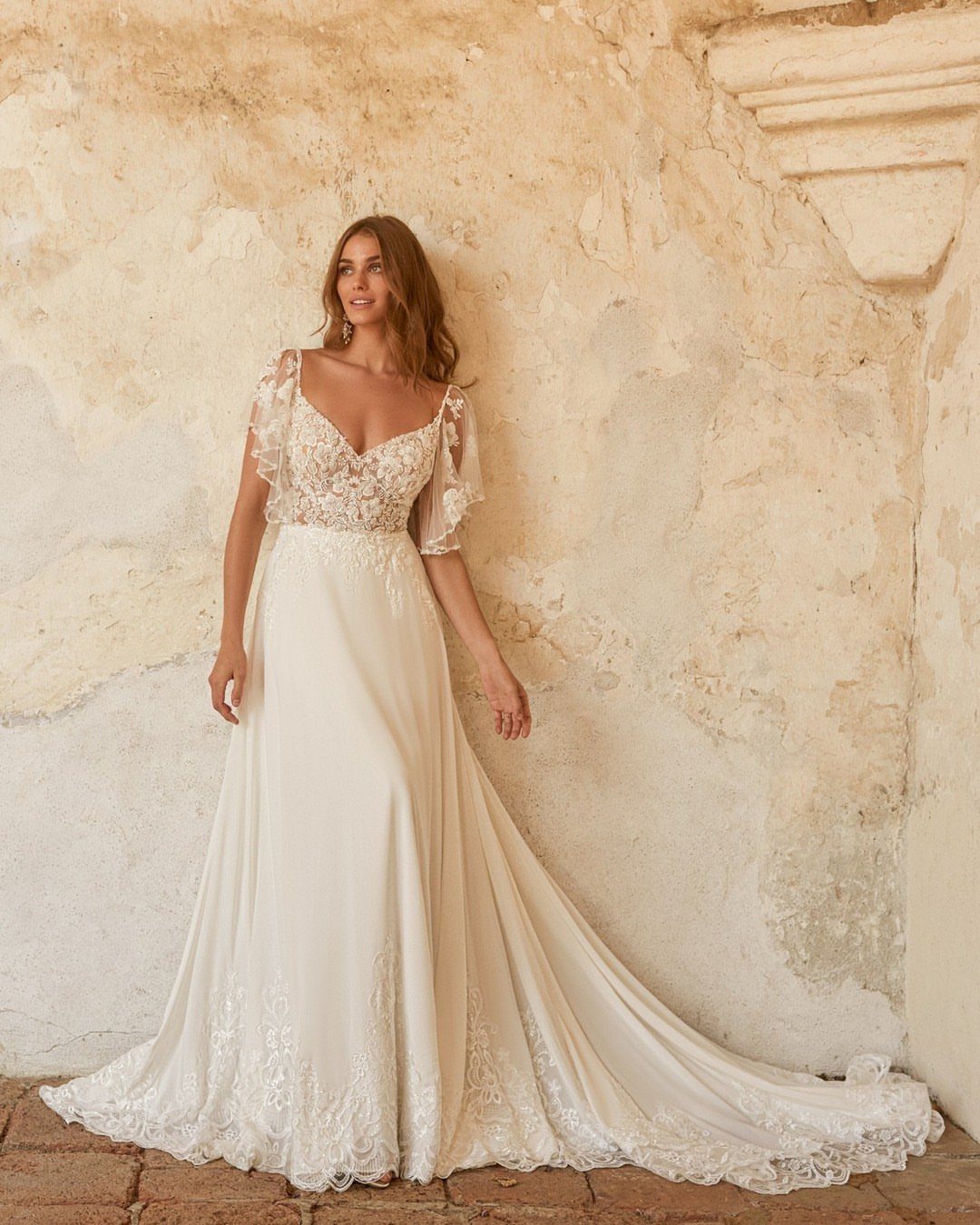
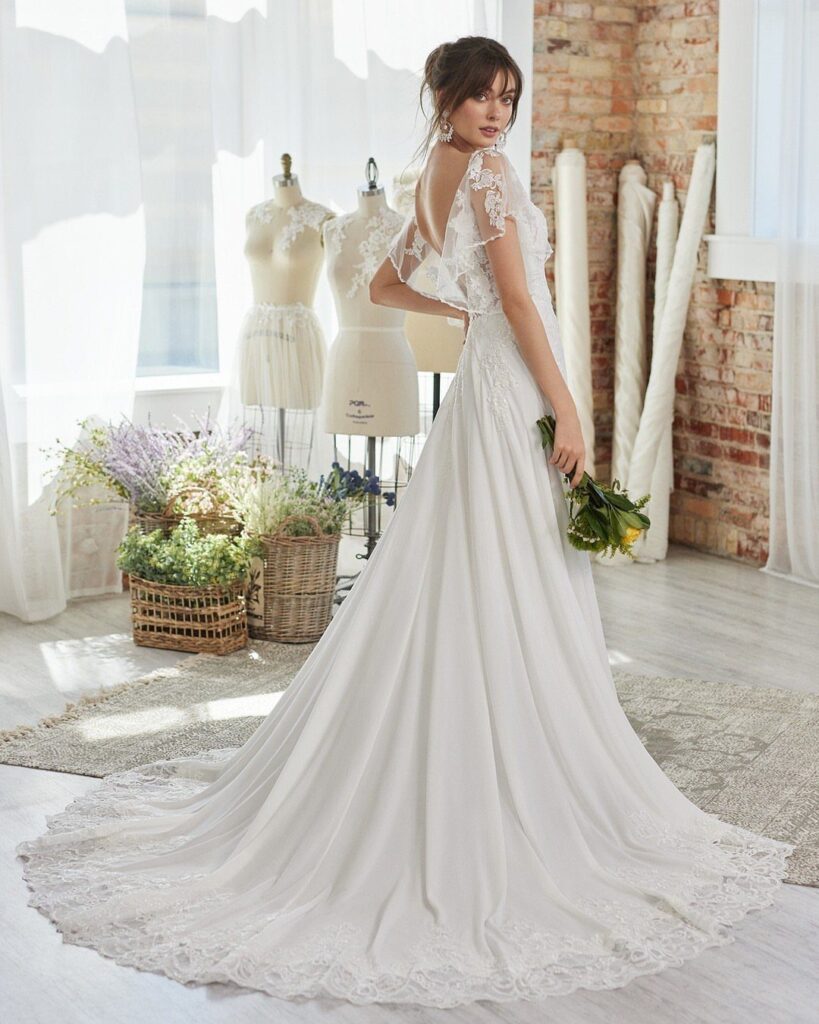
Flutter sleeves are small, soft ruffles that sit over the upper arm, and they give a lace and chiffon dress some movement without adding any weight.
Sheer sleeves like these cover the shoulders a little and still feel open, which suits a spring day better than a full sleeve.
A flutter sleeve beats a heavier one on a small budget, since the detail comes with the dress and needs no add-ons.
Raise your arms during the fitting and hug someone. Ruffles that bunch or pinch at the shoulder are easier to fix before the dress is hemmed.
8. Lace Mermaid Wedding Dress
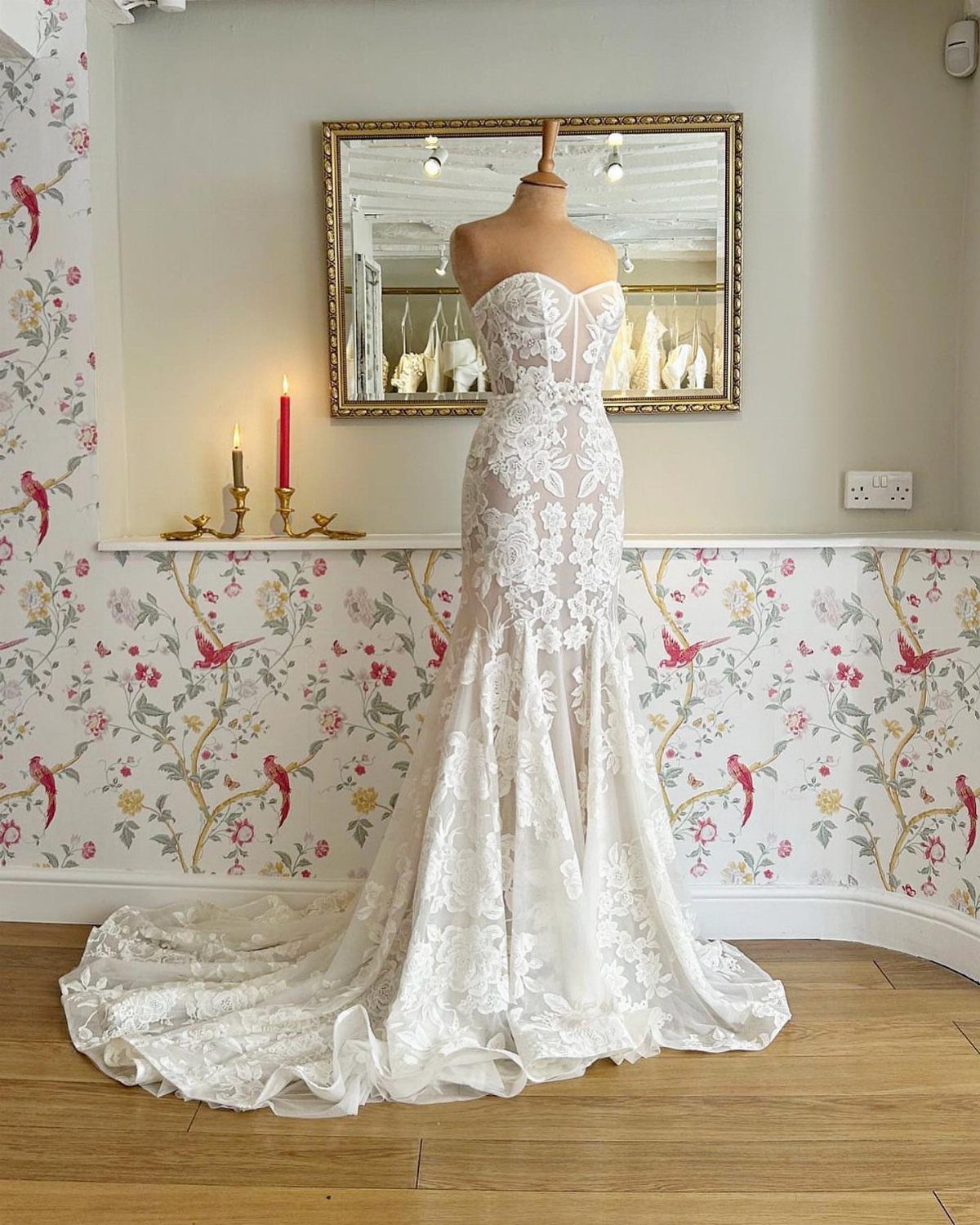
A mermaid cut hugs the body through the hip, then flares into a dramatic train, and lace makes that line look even more polished.
Of all the silhouettes here, this is the most formal, and it earns its place only when drama is the goal.
Fitting matters more here than with a skirt that flows from the waist, so budget for alterations. Bring your shoes to every fitting, because the hem and train depend on the heel height.
Practice sitting and walking in it before the wedding. A fitted skirt limits how you walk, sit and dance, so an A-line is the easier route if that sounds like a risk.
Spring Wedding Trends
Spring dress design right now leans on clean lines and unusual silhouettes, with romance kept in check by a minimal cut.
Lace and beading on floral dresses are still popular, so you can pick a pared-back shape and add just one decorated element.
Because the season is about light and breeze, I’d judge any dress by how easily it moves. Flowing fabric and floral accents fit that brief better than anything stiff or heavy.
Start your search with those labels for current styles, then compare prices before booking any appointments.
Accessorizing for Spring Weddings
Floral crowns, pastel sashes and delicate veils are the 3 spring accessories that tie a dress to the season.
Choose only one or two. A crown, a sash and a veil all at once will compete with the dress.
A pastel sash is the cheapest way to bring in a color, and you can match it to your bridesmaids.
A delicate veil is one of the softer ways to finish a spring look, and it pairs easily with floral crowns or a pastel sash.
Guests face the same weather problem you do, since spring mornings run cool and afternoons warm. A light wrap you can shed after the ceremony works for them, and it works for you too.
Footwear for Outdoor Weddings
Outdoor spring ceremonies often mean grass or gravel, and a thin stiletto heel sinks into both. Wedges, flats and block heels spread your weight out, so you walk the aisle without wobbling.
Walk across a lawn in your shoes before the wedding, even if it’s only your own backyard. Pay attention to how they feel after an hour, not a minute.
If you love a pointed heel, pack a pair of flats for the reception. Two pairs cost more than one, but sore feet end dancing early.
Frequently Asked Questions
What are the best fabrics for spring wedding dresses?
Chiffon, lace, organza and tulle are the ones I’d look at first, since they’re light and breathable. My favorite pairing is a lace bodice with a chiffon skirt: the lace gives structure and the chiffon weighs almost nothing.
Cool mornings and warm afternoons are why chiffon, organza and cotton lace beat heavy satin: they breathe when the sun comes out and don’t trap heat.
How can I make a spring wedding dress look seasonal without a big budget?
Embroidered flowers, a flutter sleeve or a pastel sash do the job cheaply. A pastel sash costs the least of any seasonal touch, and matching it to your bridesmaids’ dresses ties the whole group together.
Should I wear sleeves with a spring wedding dress?
Yes, for cool mornings, and my pick is detachable sleeves: they cover your arms for the ceremony and come off before the reception.
They turn one dress into two looks: covered for the ceremony, bare-armed for the reception. That costs less than buying a second dress, but confirm the sleeves match the lace exactly.
What shoes should I wear to an outdoor spring wedding?
I’d choose wedges, flats or block heels outdoors, since a thin stiletto will sink into soft grass or gravel. A wider heel or sole spreads your weight over more ground, so you can walk steadily.