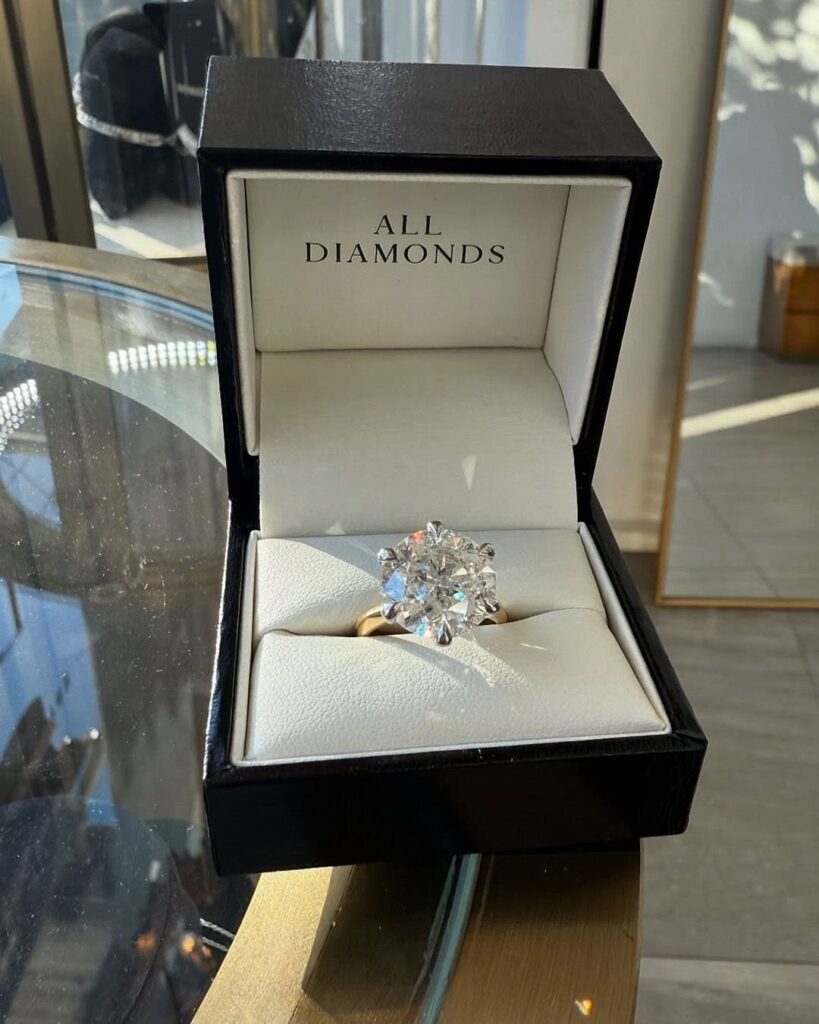
A solitaire’s single round diamond on a plain gold band sits at one end of this list, and a stacked oval with a matching pavé band, a halo, or a custom piece with a baguette halo sits at the other.
Halos, pavé and side stones make a center diamond read larger or sparkle more without adding carats, while a classic solitaire puts every dollar into the stone itself, and that split is what decides which ring fits your budget.
Set that ceiling first, then use the pictures below to find the metal color, stone shape and band width you keep returning to.
1. Classic Solitaire Engagement Ring
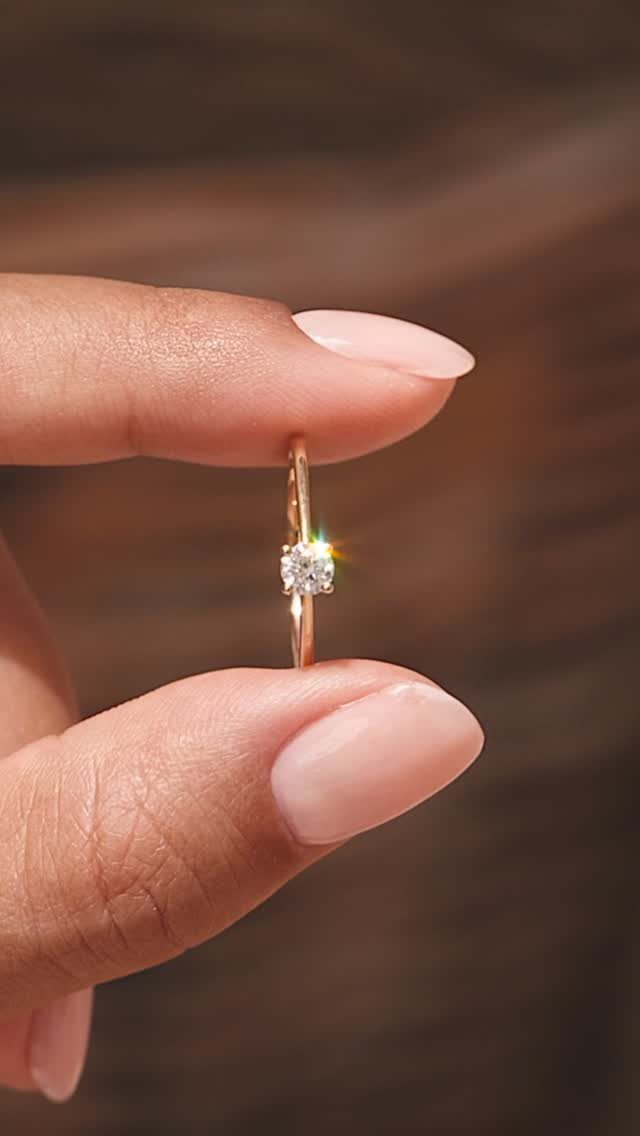
A single round diamond on a plain gold band leaves nothing to hide behind, so the stone’s cut and the quality of the metalwork do all the talking.
That is why I’d spend the budget on the diamond itself and keep the setting simple.
Solitaires also photograph beautifully against a dark, blurred backdrop like this one, because the light has only one place to land.
2. Pavé Diamond Engagement Ring
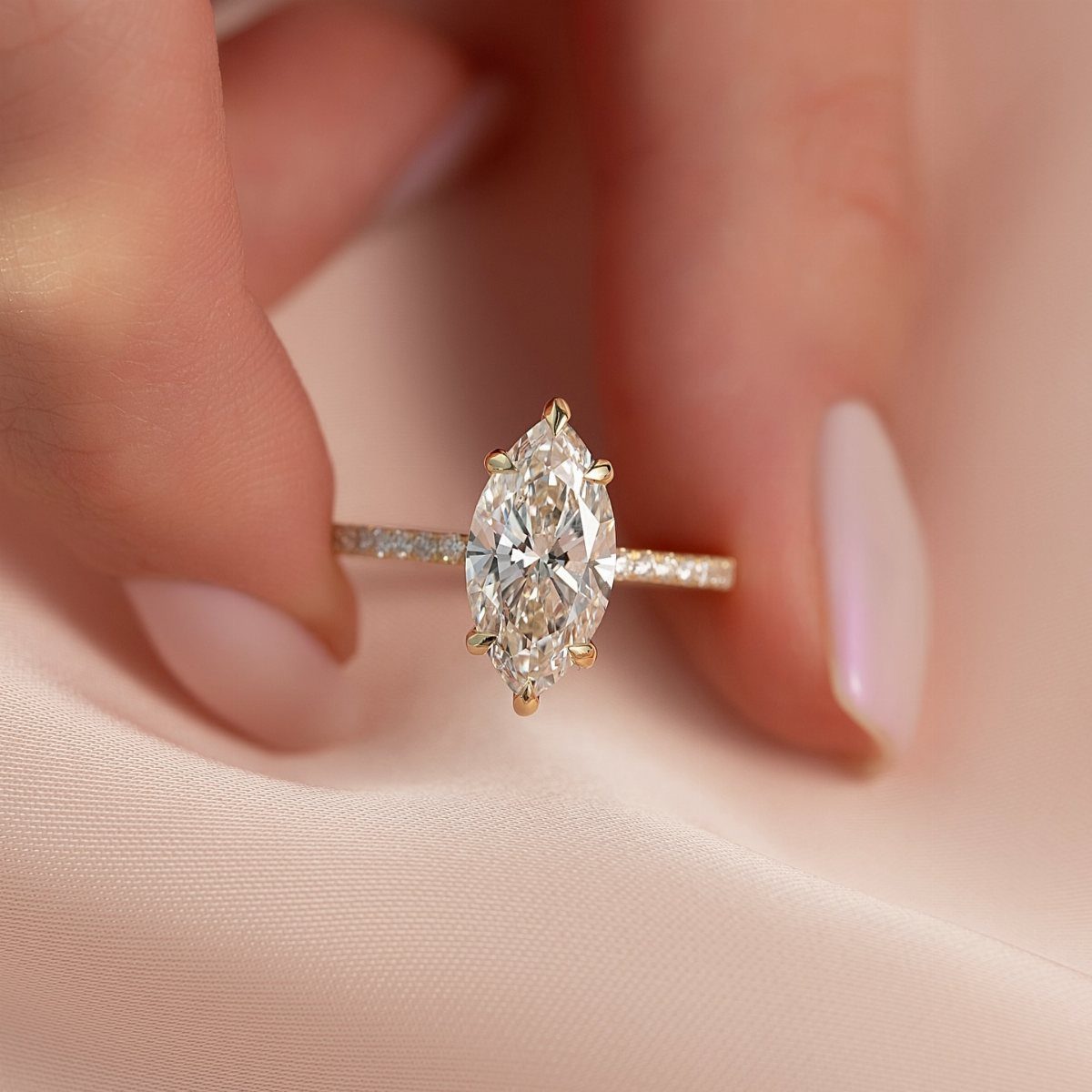
Small diamonds running along the band turn a ring into something that catches light from every angle, not just from above. Paired with a marquise center, the pavé line echoes the stone’s pointed ends and makes the finger look longer.
I’d choose this if a plain band feels too quiet. The extra stones add cost, so ask a jeweler to price the band separately from the center diamond.
3. Halo Engagement Ring
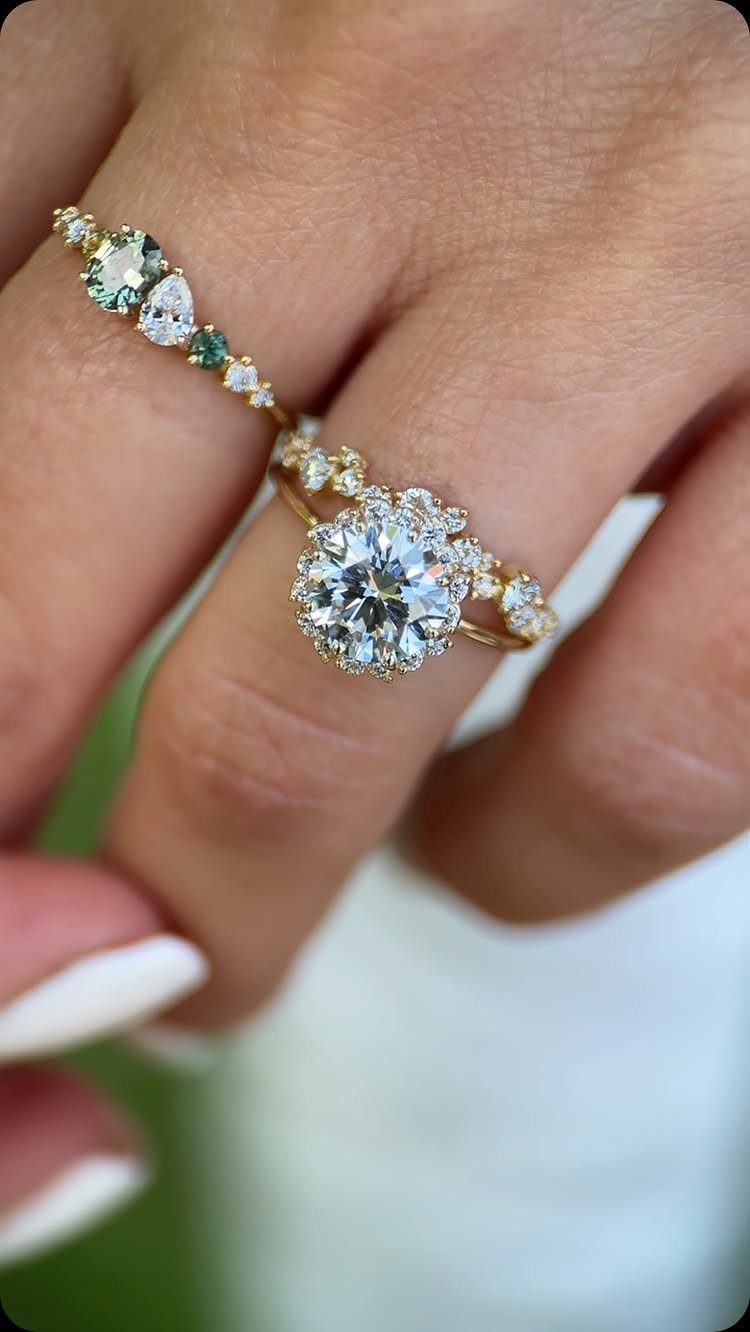
A ring of smaller diamonds around the center stone makes it read larger, which is the halo’s real appeal when the center diamond has to stay within budget.
Matching the wedding band to the halo, as this hand does with a gemstone band, keeps the two rings sitting as one set. I’d try both on together before buying either.
4. Vintage Engagement Ring with Colored Stones
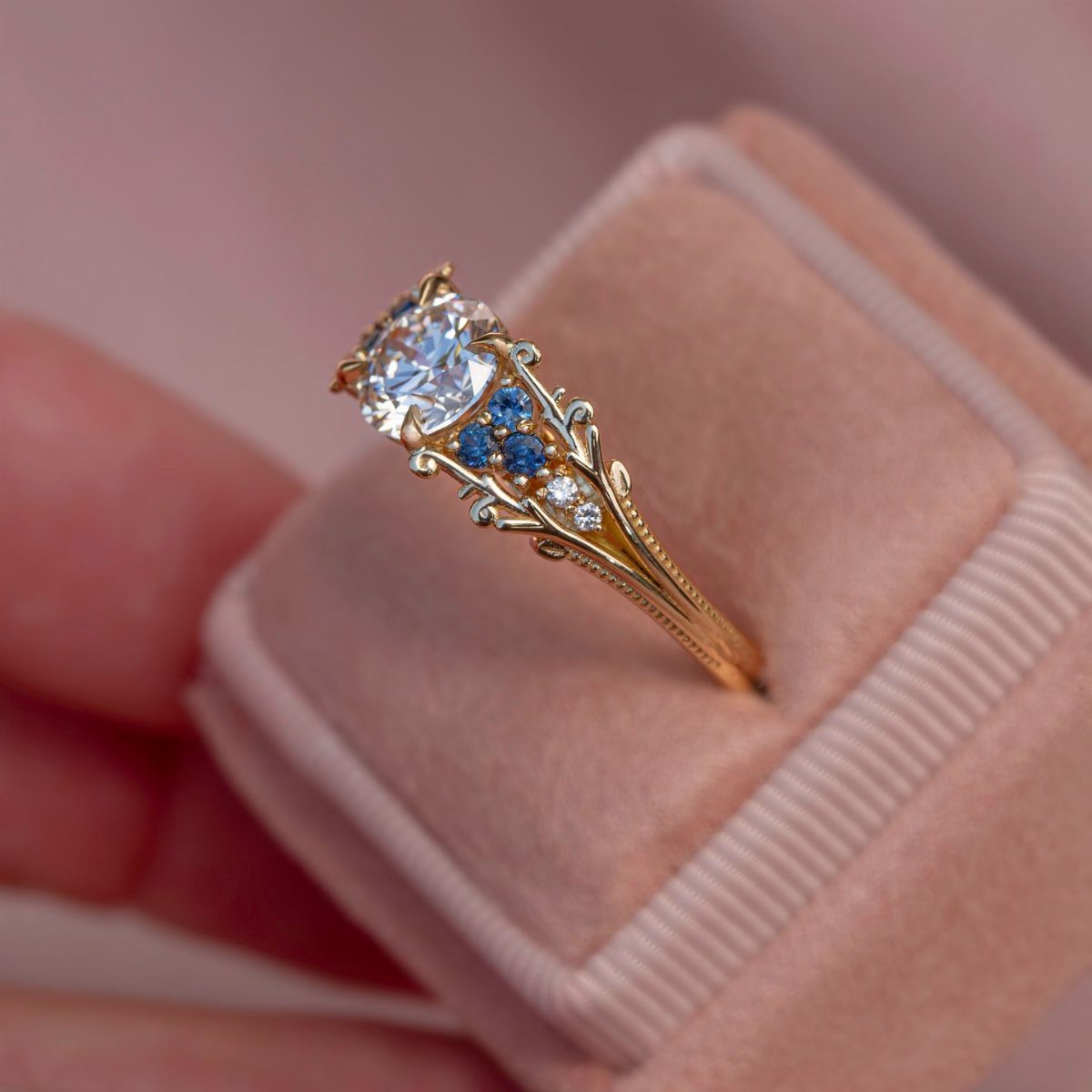
Blue stones set around a clear diamond give a gold ring a period feel that white diamonds alone can’t.
A colored stone carries the whole ring, so I’d pick a blue you still like in daylight and not just under shop lighting.
Choose the box to flatter the gold.
5. Engagement Ring Photography with Props
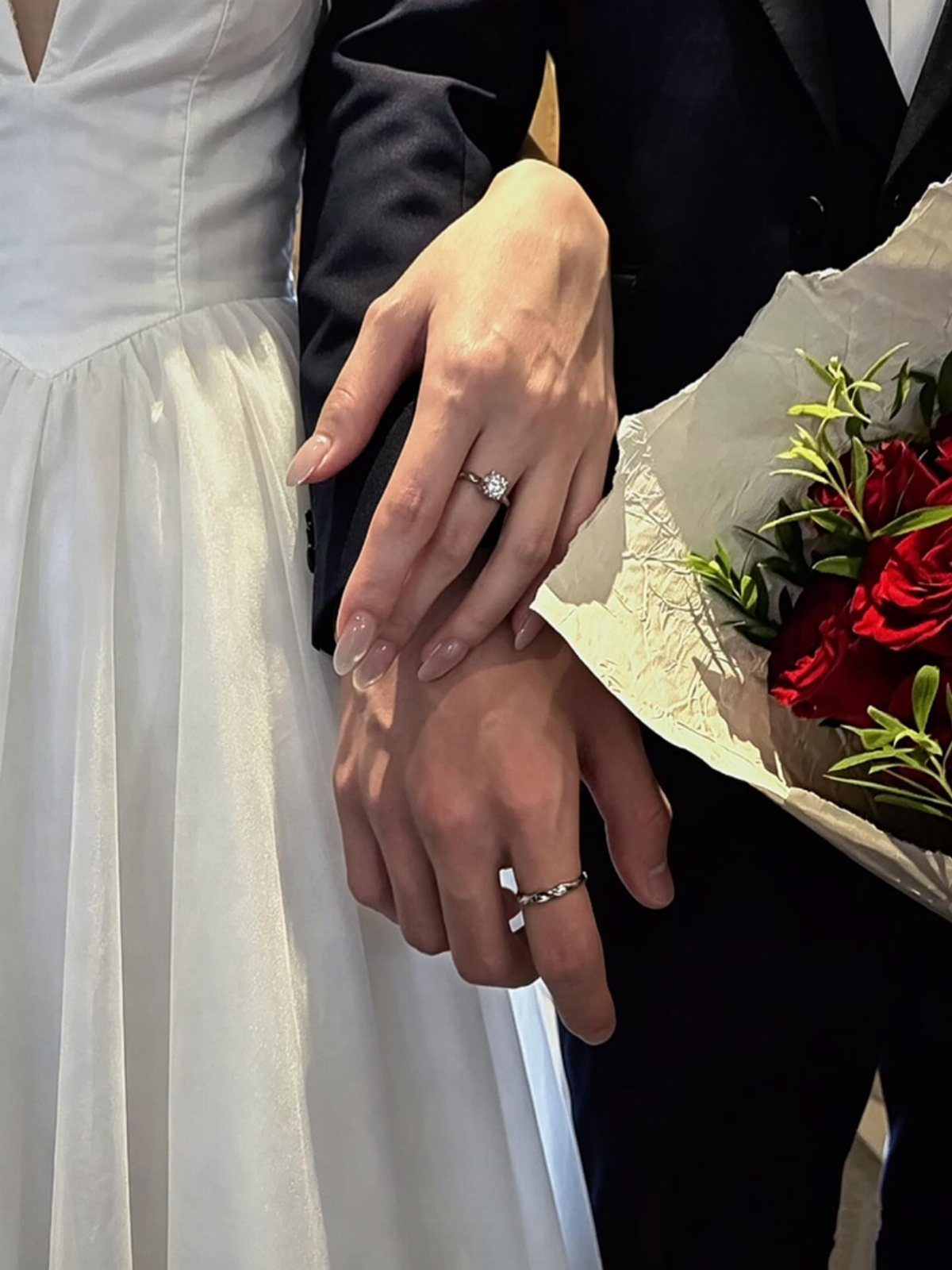
Red roses against a white dress and dark suit give the rings a bold color to sit beside, and the contrast keeps the eye on the hands.
Hold the bouquet low and let both hands rest near it so the rings stay in focus.
Props should frame the ring, never compete with it.
6. Stacked Engagement Rings
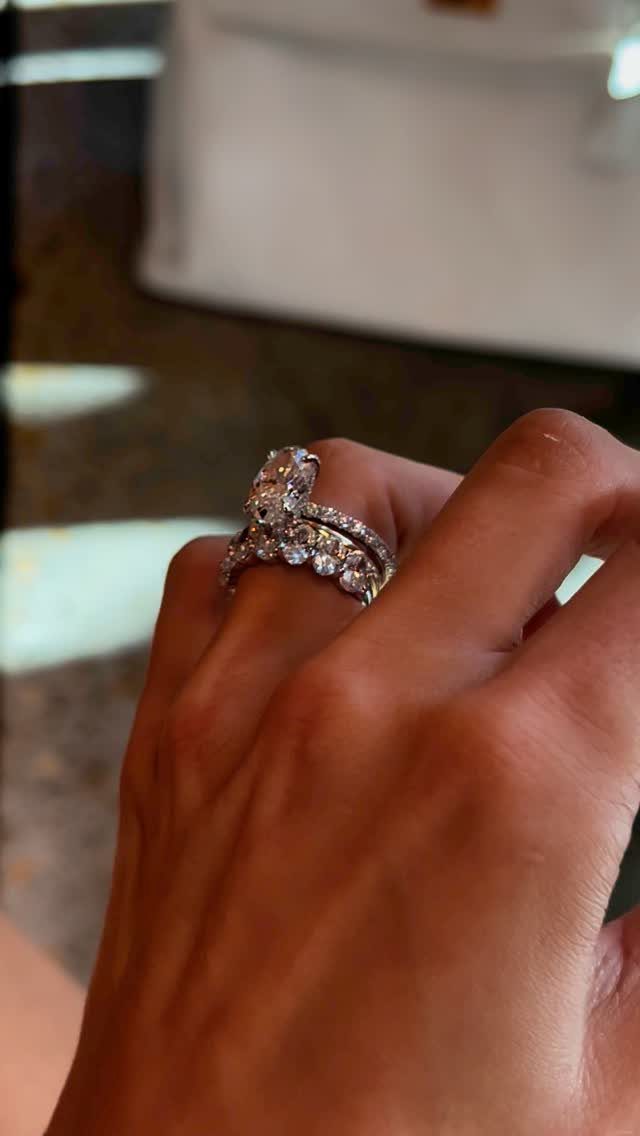
An oval engagement ring with a matching pavé band beside it looks like one piece, and that is what makes a stack work: stones and metal that agree.
Buy the band alongside the engagement ring if you can, so the two sit flush with no gap. I’d also check that the pair slides on and off comfortably, since 2 rings add bulk to a single finger.
7. Engagement Ring with Side Stones
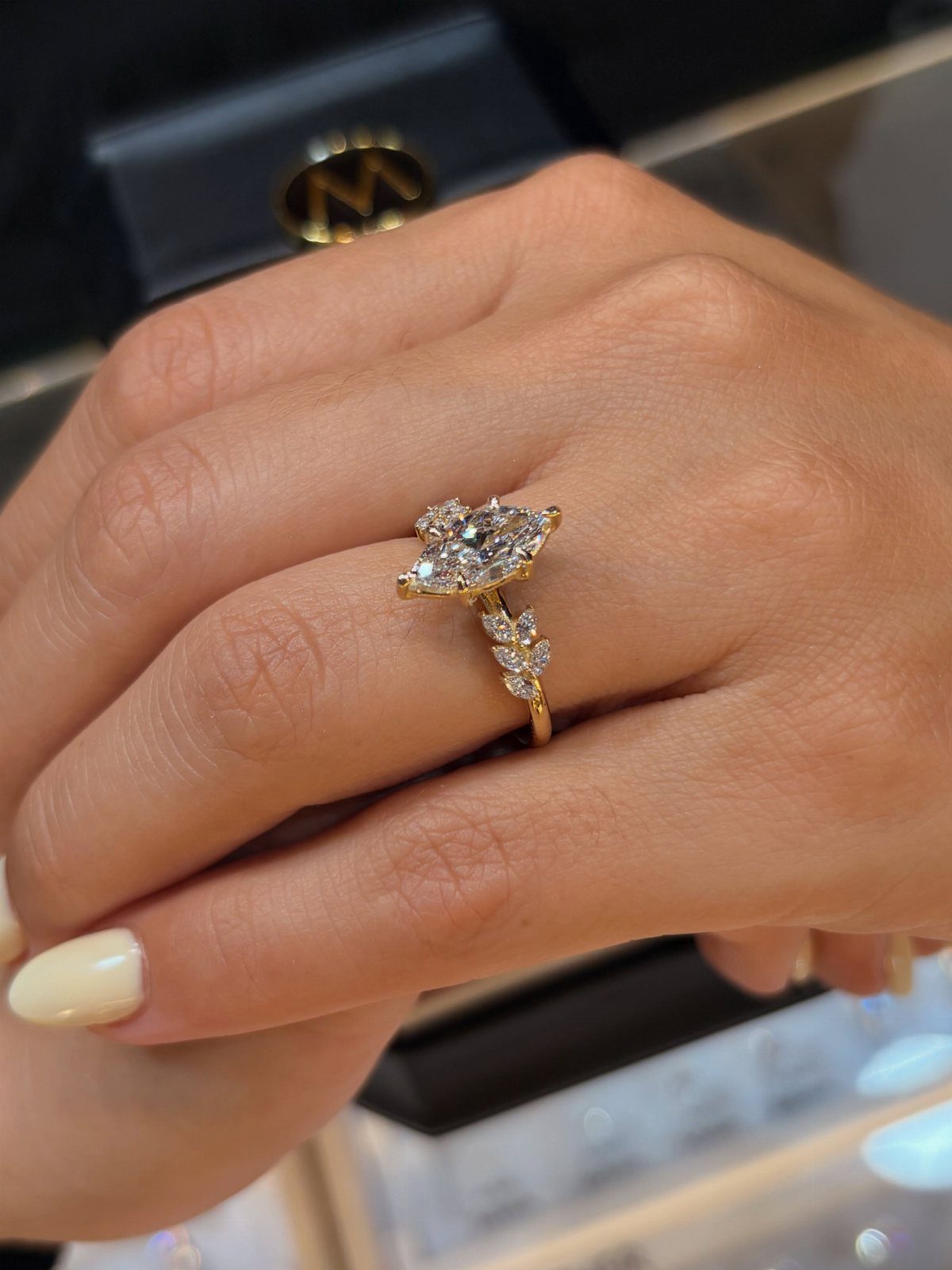
Small stones flanking a marquise center stretch the ring’s outline along the finger, and the gold setting here keeps them looking like part of one design.
Side stones also add sparkle without enlarging the center diamond, which matters when that stone has a price ceiling.
Ask the jeweler to match the side stones’ color to the center so they don’t look yellower or whiter beside it. I’d pick this over a plain band if you want more shine but not a full halo.
8. Engagement Ring Styles
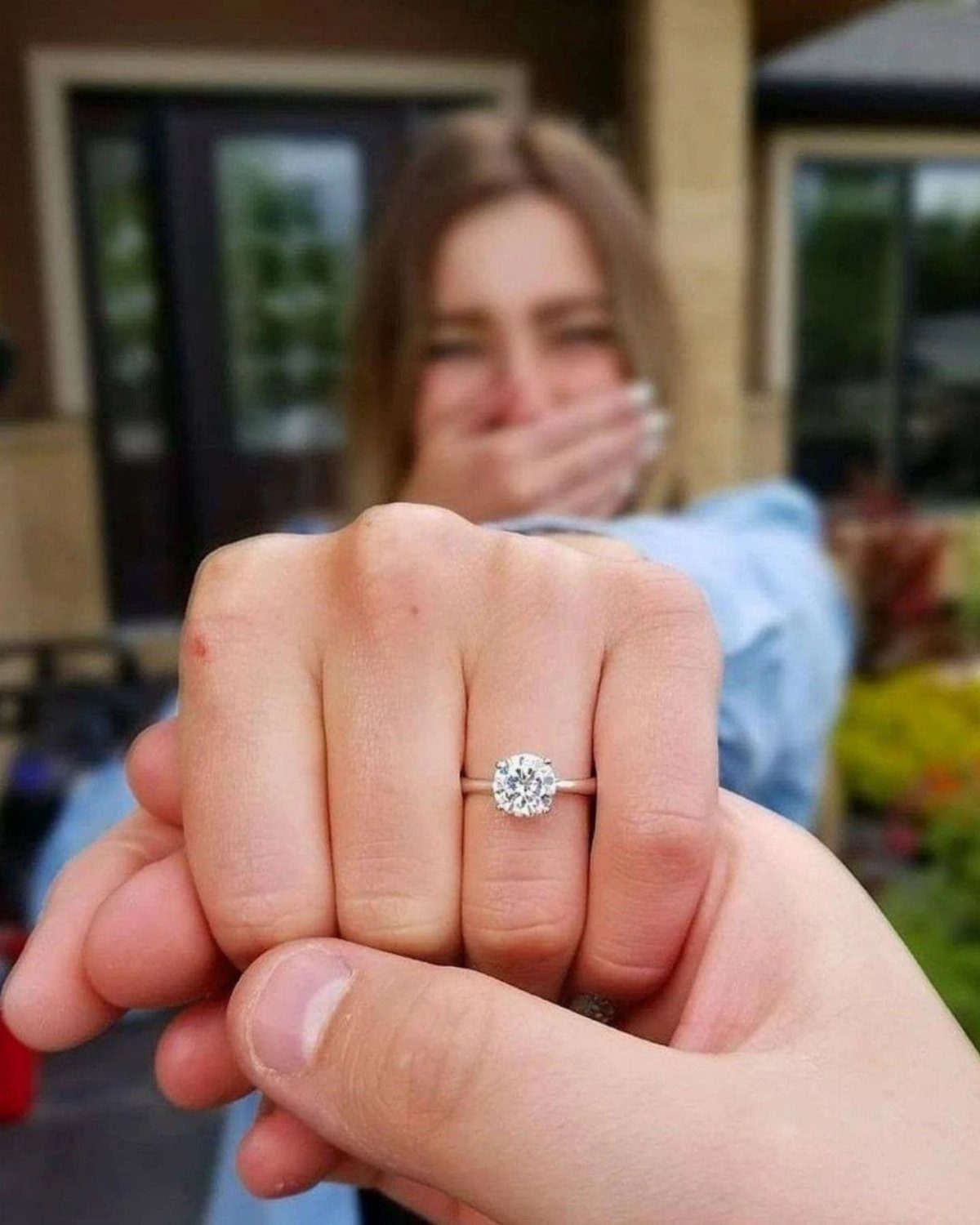
A round diamond solitaire in silver is the reference point every other style gets measured against, so try it on first. Seeing it on your own hand tells you quickly whether you want something plainer or more decorated.
Browse styles by saving pictures of rings you keep returning to, then look for what they share: metal color, stone shape, band width. That pattern is your taste, and it’s more useful to a jeweler than a single favorite photo.
Tips for Buying Engagement Rings
No single amount is the right one to spend on an engagement ring. A ring that fits your partner’s taste and your own budget beats any rule about months of salary.
Before you shop, note what your partner wears every day: metal color, stone shape, how plain or ornate the jewelry is. Those habits predict the ring better than a trend does.
Customization is worth a conversation with a jeweler.
Some makers will build a ring around a stone you already own or choose, for example a round center with a baguette halo on a rose gold band, set in white gold or platinum.
A custom piece can also be something you hand down later, which a catalog ring rarely feels like.
Set your ceiling first and say it out loud to the jeweler. Custom work should be quoted in writing before anything gets made.
How to Photograph Engagement Rings
Natural light is the cheapest ring lighting there is. Stand near a window, away from direct sun, and the diamond throws color instead of a flat white glare.
Keep the background soft and neutral. A blurred backdrop behind 2 hands held together puts all the attention on the stone, and it works on a phone camera.
Clean the ring first. Fingerprints and lotion dull a diamond more than any lighting mistake.
Nails show up in every close-up of a ring, so a fresh manicure in a soft neutral or sheer pink keeps the eye on the stone, while chipped or bright polish pulls focus.
Pale pink, a French tip, or a deep red all sit well beside a diamond, while heavy glitter or busy nail art can compete with it. I’d pick the manicure before the photo, not after.
Take many shots and tilt your hand a few degrees between them. The sparkle shows up at one angle and vanishes at the next.
Understanding Ring Sizes
Get the size right before you pick a ring, because resizing later can be a hassle and some settings, like a full row of pavé, are harder to adjust.
Printable ring sizers and mailed sizers are both free from some online jewelers. The printable one is fine for a first estimate; the mailed one is the better check since it is a physical band.
Measure in the late afternoon or evening, when fingers sit at their usual size; cold hands read small and hot or swollen ones read large.
Try the sizer on more than once, and confirm it slides over the knuckle with a little resistance.
If you are surprising your partner, borrow a ring they already wear on that finger and trace or measure it.
Frequently Asked Questions
What are the most popular engagement rings?
The classic solitaire leads, a single round diamond on a plain band. Rings with accent stones, whether small diamonds or colored gems, keep gaining ground, and most of them are set in platinum or gold.
A solitaire puts all the attention on the stone, so I’d put the budget into the diamond’s cut and keep the setting simple.
How do I find the right ring size?
Use a free printable or mailed ring sizer, which some online jewelers offer. A printed sizer gets you in the neighborhood, but I trust the one mailed to you more, since you can actually slide a band onto your finger.
Check your size late in the day, because cold fingers shrink and warm or swollen ones swell, and look for a sizer that passes the knuckle with slight drag.
What are the 4Cs of diamonds?
Every diamond is graded on 4 traits: cut, color, clarity, and carat weight.
They apply to natural and lab grown diamonds alike, and knowing them makes it easier to judge what you’re paying for. On a solitaire, where the stone has nothing to hide behind, the cut deserves most of the attention.