The 8 rings below run from a plain solitaire to a blue gemstone halo, and what picks one is how she lives: a ring worn daily to work, the gym or the kitchen needs a different shape and metal than one saved for dinners out.
1. Solitaire Engagement Ring
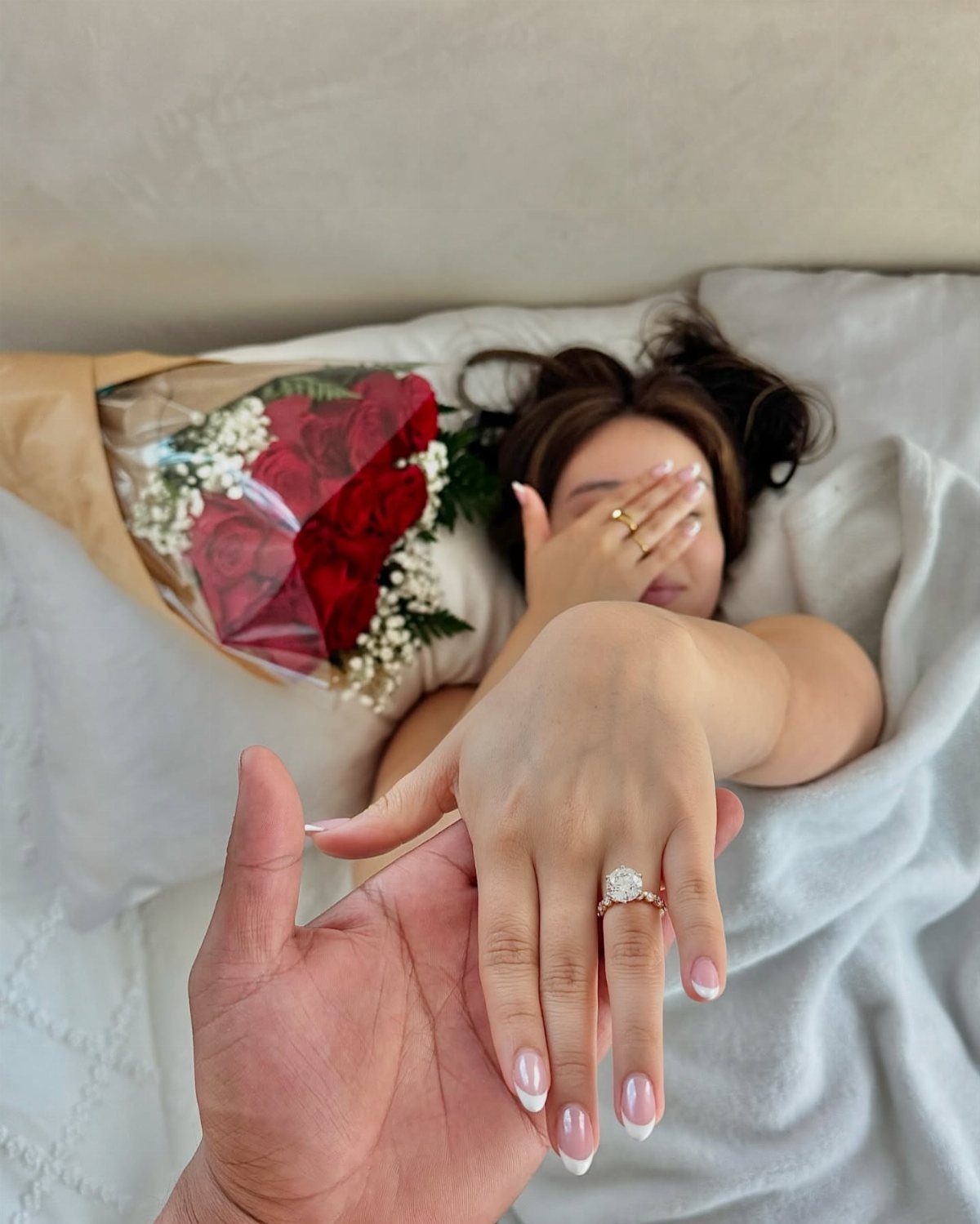
A single stone on a plain band leaves nothing to hide behind, so the diamond itself has to be worth looking at. Put the budget into the stone’s quality and keep the setting simple.
A solitaire pairs with almost anything, from a bouquet of red roses to a plain white tee, which is why I’d pick it if your style changes from year to year.
2. Engraved Engagement Ring
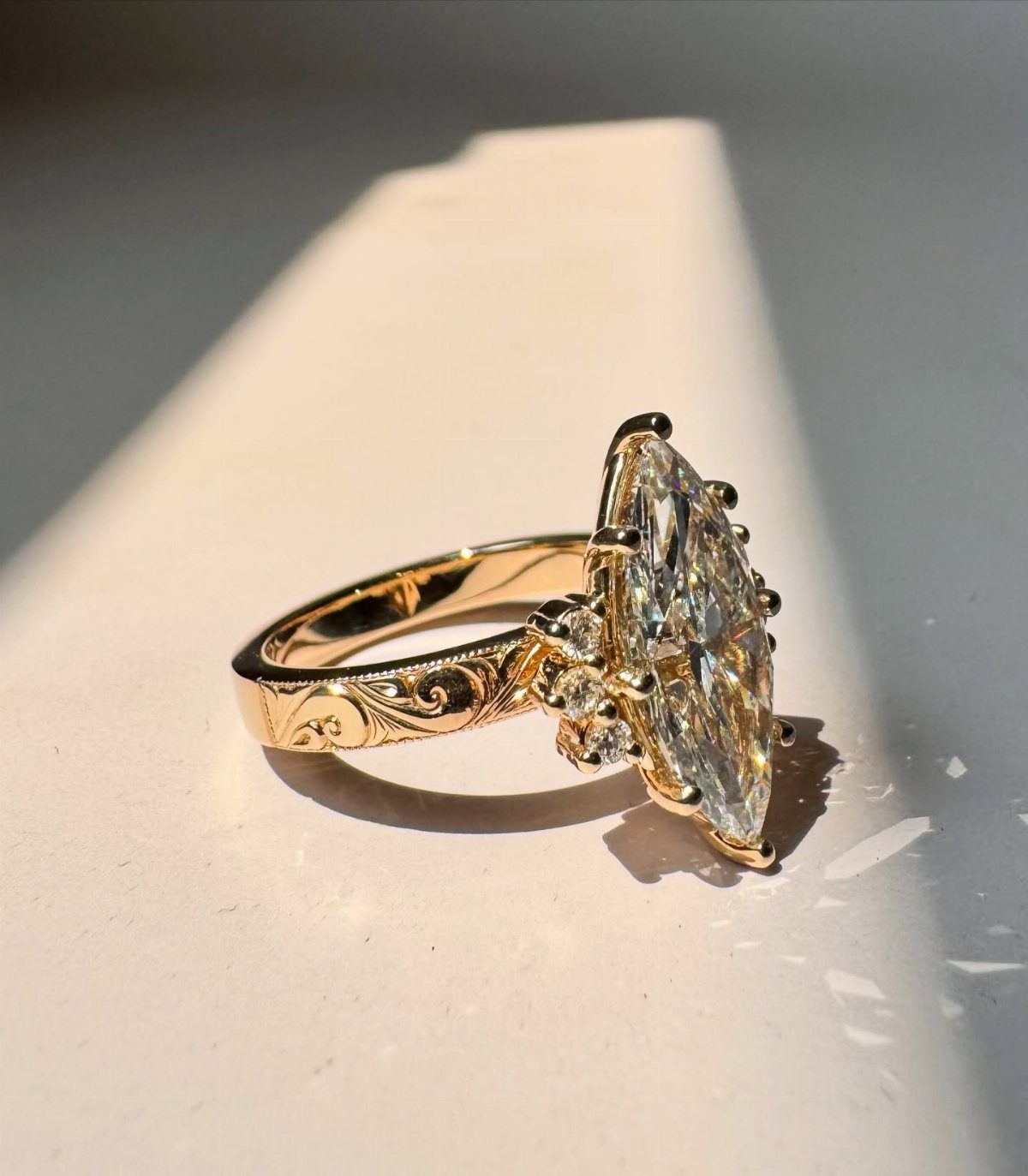
Engraving gives a ring a second life, whether inside the band or along the outside, and a floral pattern on a gold marquise adds character without touching the main diamond.
I like it for anyone after something that feels personal rather than catalog-perfect. Ask a jeweler up front whether the pattern is part of the design or added later, since that affects both timing and cost.
3. Engagement Ring and Matching Wedding Band
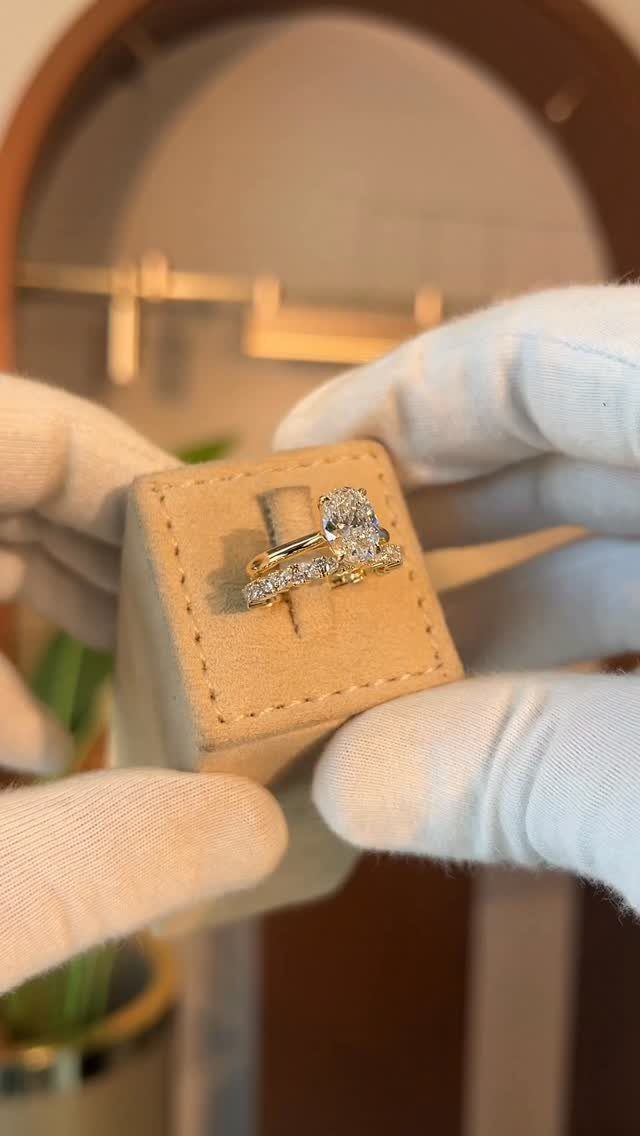
Buying the engagement ring and wedding band as a pair means they sit flush on the finger and the metal matches exactly. Matching gold on both rings, with diamonds set into each, makes the pair read as one set.
Bring the engagement ring along when you shop for the band, or buy the band at the same time.
A band chosen later can leave a gap beside the main diamond, and matching metal is easier to get right the first time.
4. Round Diamond Engagement Ring
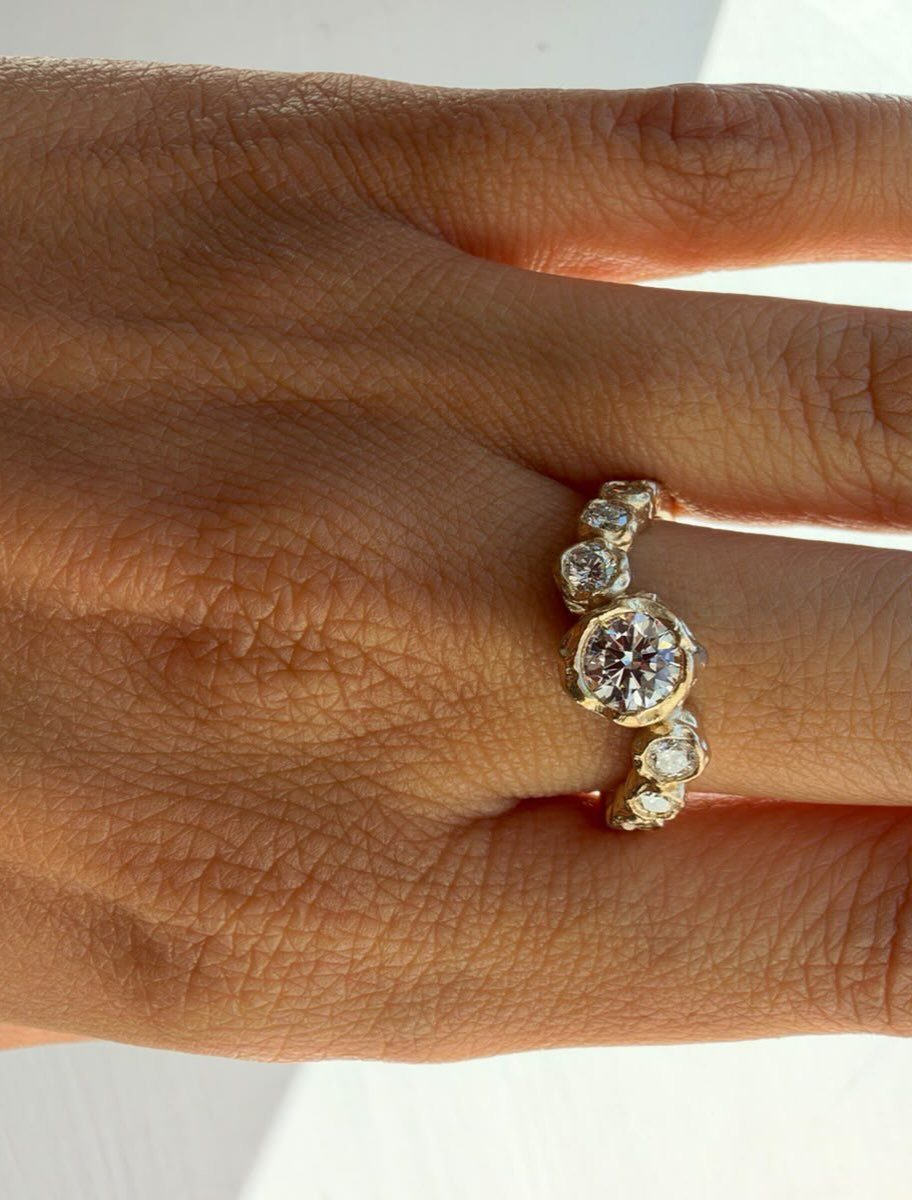
Round is the most common diamond shape in engagement rings, and the familiarity is part of its appeal. Any jeweler stocks it, so comparing prices and settings is simple.
A gold band with smaller side diamonds adds sparkle along the shoulders without crowding the main stone.
If your budget is tight, I’d compare a few rounds side by side in person before deciding, because the shape rewards a careful look.
5. Oval Diamond Engagement Ring
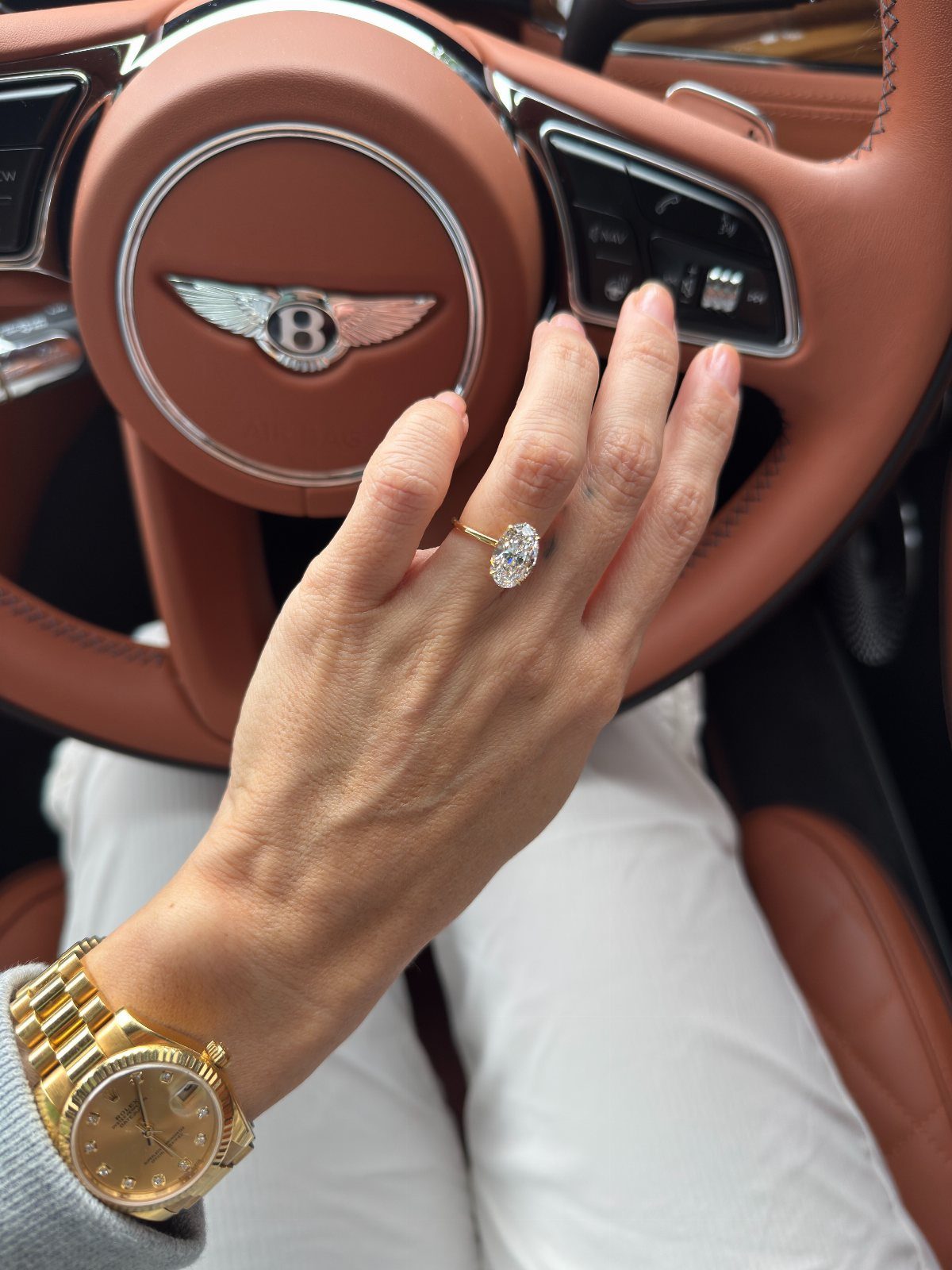
An oval stretches along the finger, which makes a large oval on a gold band look long and elegant. That is the main reason I lean toward it over a round of similar size.
It also suits a minimal band, since the shape already does the work. Check how the ring sits next to a watch or bracelet you wear daily; gold pieces in the same tone tend to sit together well.
6. Blue Gemstone Halo Ring
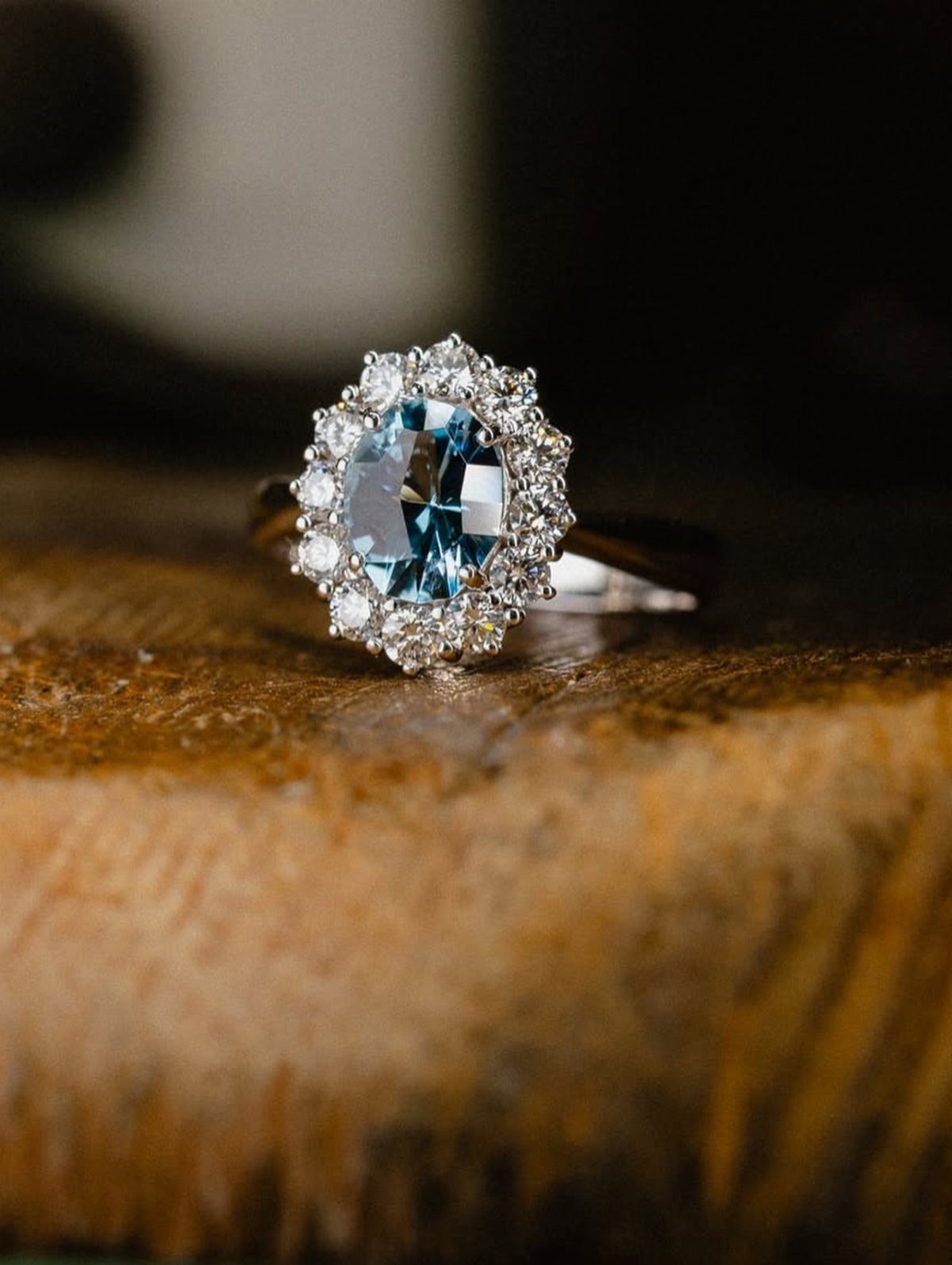
A light-blue oval stone ringed by diamonds is a color choice first and a sparkle choice second. The halo makes the gemstone look larger, which helps if the budget won’t stretch to a big diamond.
Pick this if you want a ring nobody else in your friend group will have. Ask the jeweler how the stone is set and how it holds up to daily wear before you commit.
7. Marquise-Cut Diamond Ring
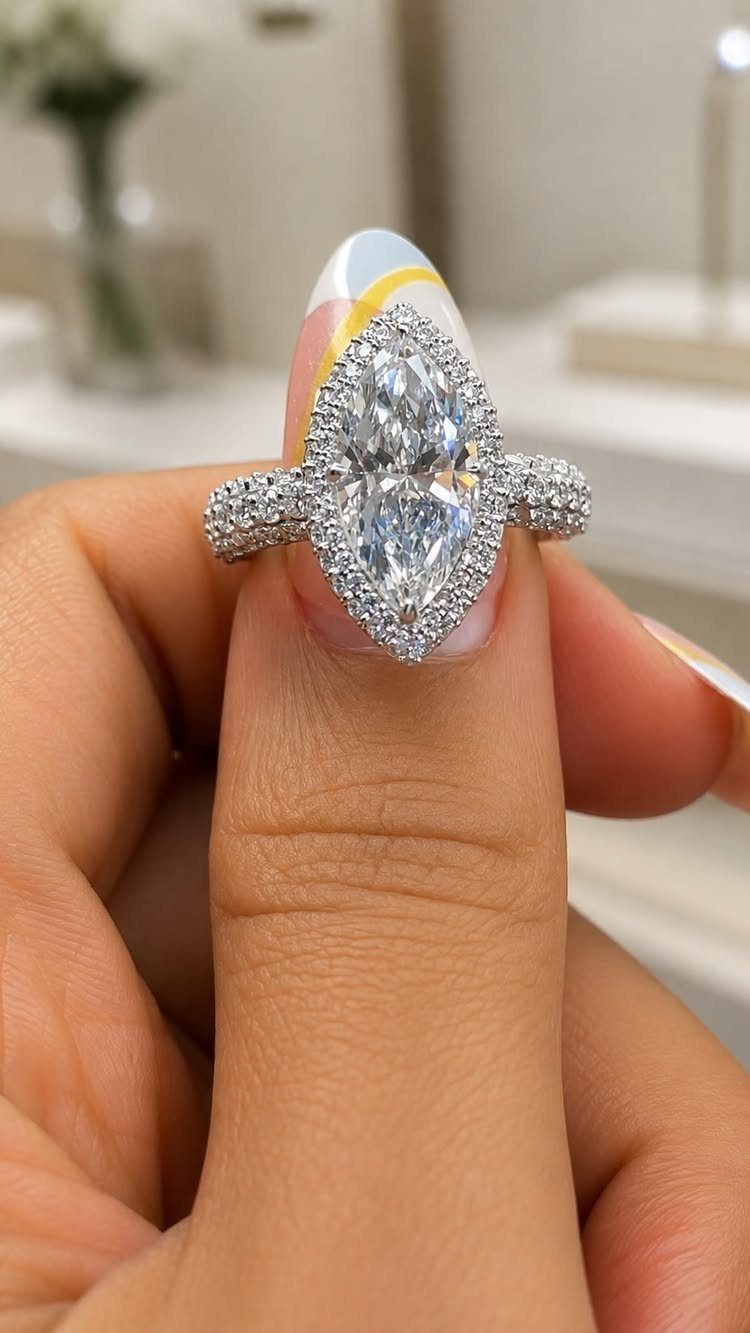
A marquise is a long, pointed oval, and that length is what sets it apart. Diamonds set around the stone and along the band, as in this ring, add sparkle without changing the shape.
I’d choose it over a round if you want a stone that looks bigger on the finger and stretches the hand.
Points are the weak spot on any pointed cut, so ask the jeweler how the tips are protected in the setting before you buy.
8. Square-Cut Diamond Ring
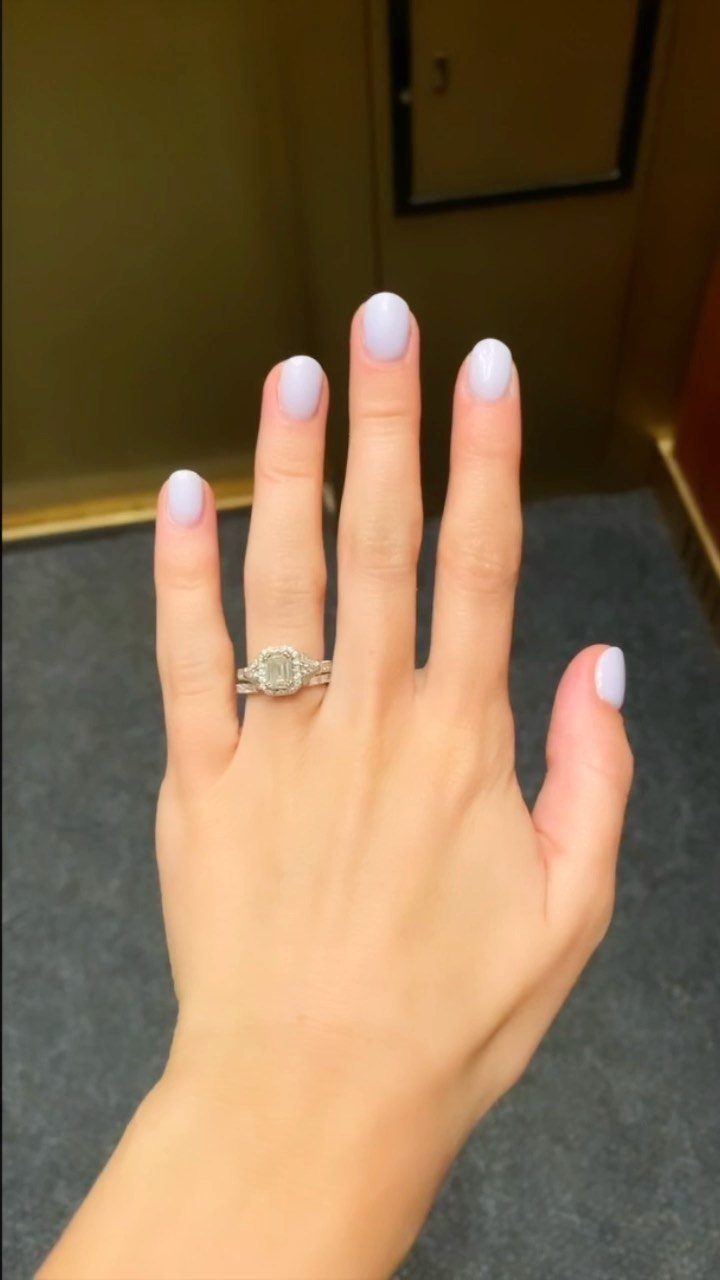
A square-cut diamond on a plain silver-toned band is a clean, geometric ring, and the straight edges give it a look no round stone matches. It’s the one I’d point to for someone who finds a round too expected.
Because the shape is so crisp, a simple band keeps it from feeling busy.
Compare a few stones in person, since sharp lines show off the stone’s cut and any flaws, and the corners deserve a close look in the setting.
Choosing the Right Engagement Ring
Start with her lifestyle, because it narrows the field faster than any trend.
A ring she will wear every day to work, the gym or the kitchen has different needs than one saved for dinners out, and her style tells you which shapes and metals she will actually reach for.
Cut, color, clarity and carat weight all move the price, so decide which of the four you care about most and let the others give a little.
A cut that sparkles in a smaller stone usually beats a bigger one that looks dull. I’d put cut first when money is tight.
Settle the lab-grown versus natural question before you look at a single ring, because it can shift the price of a given size and quality by more than half.
That one choice changes how much stone the same money buys, and it is easier to settle before you fall for a specific ring.
Three-stone and side-stone settings are worth a look if a plain single stone feels too simple.